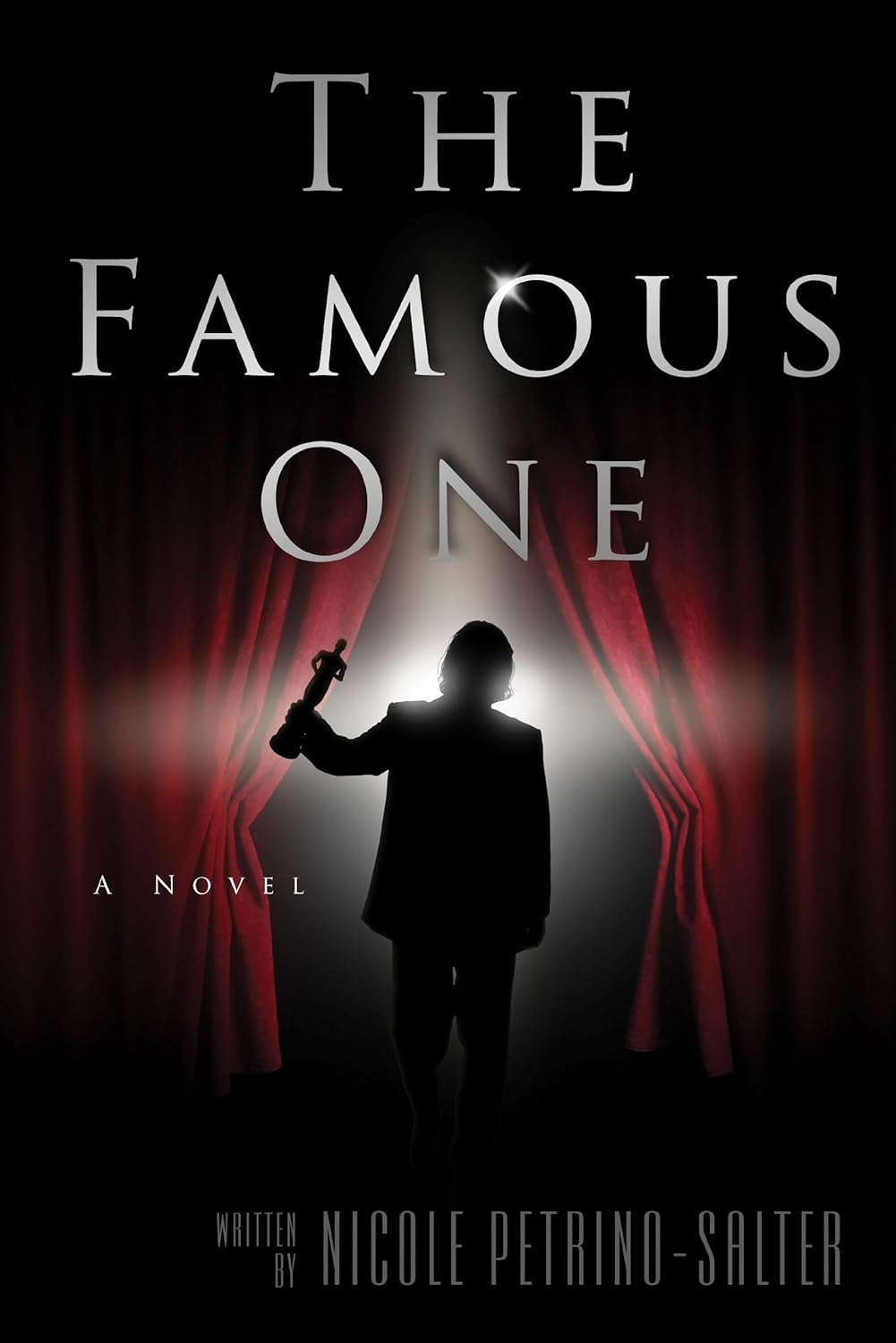
Another cut from my second published novel . . . The Famous One.
From the section titled "Idolized"
Diaries of Desolation
I don’t get it … isn’t that obvious … an understatement of the facts … love is lost … and I can’t find it … wouldn’t you think that if someone wanted to find it they could? … I just don’t get it … I wonder if I ever will …
The letdown after completion of The Night Catches All was nearly unbearable for Joey. He was so restless at times he found himself pacing through his house for no apparent reason. He needed a good book to read, but right now he didn’t have the patience to go find one. He wished Frank Kelley’s new novel was ready, but Frank had assured Joey he’d have the copy in his hands as soon as it was done. He knew he should fly home for awhile, but he didn’t even feel like doing that. All he felt was empty and restless.
Monica found Joey something of interest with a note attached that once again the director had someone else in mind for his first choice. Joey was tempted not to even read the script because he was so devoid of enthusiasm, but he’d learned to trust his agent—she knew him well after all these years, so he grabbed a bottle of bourbon out of his liquor cabinet and began reading without even bothering with a glass. He was enthralled after the first page and totally focused on the character, picturing him and his mannerisms—even his voice intonations—as he read. He called Monica back in the morning to get the information he needed.
Joey didn’t realize what had happened behind the scenes regarding this role until years later. The studio was dead set against Joey starring in the film, but the director Paul Comstock insisted he wouldn’t do the film without Joey after auditioning him, actually threatening all kinds of legal ramifications since it was his screenplay. The studio finally relented but attempted to put all sorts of limitations on what he could do. Paul Comstock found other studios to produce the film which had no objections whatsoever to Joey Parr or whatever Paul Comstock wanted to do with the film because Paul’s work spoke for itself. Just three years before, he’d won Best Director at the Academy Awards for a complex, haunting, and unusual film loosely based on a real-life unsolved mystery.
This film was a sad and dark study of an upright man who failed to address his own weaknesses and character flaws and how being unable to assess himself honestly led to his eventual demise as a man, as a husband, and ultimately as a person, slipping into the darkness of total depravity.
Joey wanted desperately to portray the man truthfully at every phase of his decline. He felt like this character was potentially common to every man—he certainly identified with parts of him. The contrast of this character from start to finish, which did end with his death in the seamiest of circumstances, was the key to making this man come alive on the screen. He had to be believable at both ends of the spectrum in order for people to relate to him and the process. Joey and the director were on the same page throughout the filming, and Paul gave Joey a lot of latitude to experiment and stretch this character. When the film wrapped, Paul, Joey, and the other actors had given it their all. In the sense of the acting involved, the film was a masterpiece, but it was a dark and heartbreaking, gut-wrenching film, and therefore not a box office success.
Father, thank you so much for this one. One of those that had to be written. Truly, can never thank you enough. In the Name of Jesus, Amen.
 Into the Fire
Leave a comment