Into the Fire

Passionate thoughts about the world of writing and the Power of God

  •       Stock-photo-literature-modern-education-background-as-a-art-48622102

    Nobody can define for you what you like. It's up to you. We can tease or mock people for their particular tastes in reading, but if they're devoted to a particular kind of genre or favor a certain author, there'll be no changing it.

    Speaking for myself, I love Vince Flynn. Discovering his work – and I was late to his writing because I didn't know anything about him – was like a fascinating and wonderful discovery. I have Rush Limbaugh to thank for introducing me to Vince when Rush was promoting Pursuit of Honor. Although I'm looking forward to the release of The Survivor with Kyle Mills taking the helm, there will be no replacing Vince.

    Whatever it is you like, there are books to provide the material you prefer. If you're a writer, you know what you want to read and therefore how you want to write. You work to produce the book that satisfies your taste and you try to make it not only worth your time but worth others' times as well. Not an easy task.

    The thing is when you like it, there's no talking you out of it. And there shouldn't be.


    Father, thank you for all the many ways you've given people to express stories. May those of us who acknowledge you as our inspiration do as you ask and be faithful to the call. In the Name of Jesus, Amen.

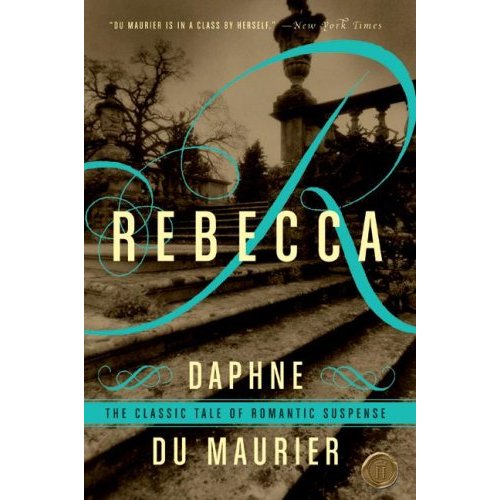
  •        Rebecca1

    The classic novel Rebecca by Daphne Du Maurier is an example of particular style and daring told from the nameless heroine's POV in the late 1930s and early '40s. With a dark and foreboding presence throughout the novel, at first the reader assumes it's from the moody widower Maximilian de Winter but really it's from his dead wife's taunting, haunting spirit penetrating the estate of Manderley and all who knew her.

    The young heroine recalls her meeting of the much older Maxim as the story begins with her reflection of her time as the employee of a brash and unattractive woman who travels to all the European hotspots to meet celebrities and those patrons of high society. The heroine is no more than a shadow to the boisterous woman who may or may not know what a bore she is with her pompous, self-indulgent picture of herself.

    To the heroine's surprise, Mr. de Winter shows an interest in her during their stay in Monte Carlo, and they steal time together until her employer suddenly desires to join her daughter in New York. The heroine is crushed that she must leave this new romance and the man with whom she believes she's falling in love. When he proposes to her in a completely clinical manner, she accepts, stunning her employer who leaves with a warning that she mustn't think he truly loves her.

    Her insecurities abound after a whirlwind marriage and honeymoon in Italy when they return to Manderley, his ancestral estate. The evidence and memory of Rebecca, his former wife who's been dead for almost a year, is current and follows the young bride's every actions and words. Her inferiority is accentuated daily, particularly by the head housekeeper, Mrs. Danvers, who she learns adored Rebecca and has no love or respect for the intrusion of the new Mrs. de Winter.

    Maxim de Winter does little to encourage his bride, leaving her to her elaborate imagination concerning his former wife and their relationship. Her interpretations of his actions mirror those of a love-struck schoolgirl at times accentuating her innocence in life and matters of love as well as her divided and conflicted emotions. Mrs. Danvers intimidates her at every opportunity, and references to what Rebecca would've done or did plague  the heroine. Seeing her handwriting with her sweeping R and grandiose style adds to her ill feelings and discomfort about herself and her doubts about Maxim's love. 

    Everything builds to incorporate the heroine's ongoing awkward position at Manderley and culminates when she takes Mrs. Danvers' ill-advised suggestion for a costume to wear at the great Manderley Ball which the local people clamored for and which Mr. de Winter grudgingly agrees to host if his agent (estate manager) will take care of the planning. The result is stunning.

    When Maxim finally breaks down and reveals the truth to his young wife, it's fascinating to read. The transformation this truth produces does not go unnoticed by either of them. After much ado, fearful expectations and dread, a conclusion is reached. The strange and startling abrupt ending thrusts the story back full circle to the first chapter and a half which could have fit nicely into a prologue or prelude but worked seamlessly as chapters.

    Daphne Du Maurier's Rebecca is an amazing tale of loneliness, jealousy, pretense, devotion, cunning, and malice. One might even call it an elongated coming of age story. With a detailed look at the fears and insights of a young bride facing the entrenched memories of a larger than life woman who preceded her, Rebecca shows the intertwining of darkness and light, truth and fantasy. Well worth the repeat read.


    Father, you've always given to each one. Many never see it, but it's there. Always. Thank you. In the Name of Jesus, Amen.


  •  

    But mark this: There will be terrible times in the last days. People will be lovers of themselves, lovers of money, boastful, proud, abusive, disobedient to their parents, unholy, without love, unforgiving, slanderous, without self-control, brutal, not lovers of the good, treacherous, rash, conceited, lovers of pleasure rather than lovers of God – having a form of godliness but denying its power. Have nothing to do with them.


    2 Timothy 3:1-5 (NIV)

  •                           Th4QUUIQ2G

    Yesterday I spoke of the freedom in the prose of some of the classic novels. As in every generation, different authors will be celebrated as the best of the old writers. And, as expected, some will gush over Hemingway while others will rave about Fitzgerald or Faulkner. I only prefer one of the three, and I have read the other two – not all they've written but some.

    Here's my opinion, for what it's worth – which isn't much. Devoted readers will not squawk about the length of a novel. They'll only complain if a long novel isn't interesting or written well according to their particular tastes. The length is irrelevant. Longer is often better to them. Casual readers prefer quick reads and their preferences as to style vary. They have little patience for dull storylines and think nothing of tossing a book or not finishing it. They've got a whole lot of other life to live so if they decide to read a novel, it better meet their standards whatever those are. 

    Somewhere in between those types of readers are the ones who would like to have the time to read a long novel but consider reading secondary to all their other demanding tasks. Then there are the strict genre-specific readers who have stacks of supermarket paperbacks piled next to their chairs, each one when finished passed along to a like-minded friend or relative. There are those who want their fiction reading to be light and entertaining, leaving very little residual memory. And there are those who read from the past, preferring older novels to contemporary versions.

    It seems readers of the classics invest in those stories while some readers of contemporary fiction rush through them or squeeze them into those short pockets of time allotted for a book.

    I'm a contemporary fiction reader and writer, but sometimes it's freeing to go back to a few of the classics and remember the depth they offered from their perspectives of humanity.


    Father, let us be true when we write, honoring you somehow. In the Name of Jesus, Amen.


  •                   Th4S7THGEV

    There's something refreshing about going back to the not so distant classic novels. I'm rereading Rebecca by Daphne du Maurier and last year I read F. Scott Fitzgerald's Tender Is the Night, both books I read a very long time ago and loved.

    From a writing standpoint, there is such freedom in the prose. Point of view changes within paragraphs, rambling descriptions and internal thoughts. A lot of telling. I find it desirable. It seems by getting away from much of those freedoms and rewriting the rules, we've created some novelists who've lost the pizzazz of real style. Instead we have formulaic prose that tells a story, but if the story lags in any way, the writing isn't enough to carry the novel. It seems I'm a throwback.

    Good writing is good writing whether or not it adheres to modern day rules or those of the past. Sometimes, in some genres, we could use a little less sticking to the rules which supposedly creates interesting writing and more freedom to shift styles without criticism.


    Father, thank you for all the talent you've dispensed to your creation. Thank you for your Word. You are the Creator of words. Please help each one of us who labor to tell stories to tell them well, just the way you would have us do it. In the Name of Jesus, Amen.    

  •      

    Pirates of the Caribbean, The Curse of the Black Pearl. I cannot count the number of times I've watched this movie. So much fun. All the terrific lines and scenes. Even the deleted scenes were amazing. Great acting and chemistry. Perfect.


    Lord, you know how I've prayed. I wait upon you for those who are lost. In the Name of Jesus, Amen.

  •  30330406_EaglewithFlagcopy_preview

    This Memorial Day seemed especially sad. We've lost so many in Special Forces under this president and in suspicious circumstances. Seventy-two percent of the military deaths in Afghanistan (72%) occurred under this president. Former SEALs lost in Benghazi under a shroud of lies. Extortion 17 killed 30 SEALs under flawed conditions aimed at destruction producing a terrible tragedy which implicated intentional efforts to sabotage the peculiar assignment. When Chris Kyle was murdered, this president didn't so much as call his family to offer condolences. Chris Kyle (aka American Sniper) is a hero whose skills saved so many of his brothers in battles. Yet this president brought a traitor in Bowe Bergdahl to the White House Rose Garden after trading five now-active terrorists for him.  

    We are still One Nation Under God whether or not this administration upholds it. We are desperate for God's mercy, His forgiveness, His grace, and His direction. We need our God back in His rightful place of leadership in our America. We need more hearts turned to Jesus instead of humanity. Humanity has perpetually failed and will continue to fall short. Without God anything done is a waste of time.

    We remember those who gave their lives, who fought through fears and braved horrid conditions to protect our nation and preserve our freedoms, sacrificing for what they believed. Such a cost.

    God, please, once more for the remnant, bless the USA. Don't let us fail because we certainly will without you. Let your justice prevail in the hard places and keep us striving to pursue truth. May we be worthy of your calling. Please, Lord, bless the USA. In the Name, Authority, and Blood of Jesus, Amen. 


  •  


    I have fought the good fight. I have finished the race, I have kept the faith.


    2 Timothy 4:7 (NIV)

  •                           ALLOcover

    The third book in the Porter Family Novels, A Love Like Ours by Becky Wade tells the story of two best friends separated at early ages who are reunited as adults involved in the same industry of Thoroughbred horse racing.

    The third and youngest Porter brother, Jake, damaged, scarred, and haunted by his final tour in Iraq where he lost three of his men in an IED explosion, suffers from PTSD and survivor's guilt while training Thoroughbreds for Whispering Creek Horses. Well-respected in his profession, he knows he's barely holding it together most days. To add to his intense struggle his childhood friend has returned to town and asks if she can exercise horses for him. For an indecipherable reason she incites his rage in spite of her beauty, kindness, and determination. Does he resent her for leaving him when she had no control over moving away? They were inseparable friends, and he'd always protected her from her sometimes harebrained escapades and rescues. That part of him hasn't changed. 

    Lyndie James is back in her hometown of Holley, Texas, and her former best friend is now a former Marine sergeant and she thinks of him as "tall, dark, and brooding". She's learned his last tour caused him physical and severe emotional pain, and she's determined to help him however she can – if she can. She's a licensed jockey and has exercised horses at Santa Anita, one of the most prestigious tracks in the world. Jake wants no part of hiring her, but somehow he does.

    (My only peeve – and it's only because I spent 30+ years in horse racing – is the incorrect use of racing terms. No one will know they're incorrect because the average reader has no inside racetrack knowledge. I do know that Becky did some research and tried to be reasonably accurate. It's a lot to learn, and I forgive her for the mistakes. Like I said, no one else will know she made them.) 

    Okay, we all know where this is going because it's a romance novel. And Becky knows romance. You have to have a passion for it to write real romance and to write it well. Becky gets it, she feels it deep and translates it to the page. Using humorous internal dialogue and some offbeat situations with her friend who lives in the same building, Becky is able to take some serious moments and infuse them with laughter, but make no mistake, there are some tear-jerking tender times involving Lyndie's younger sister Mollie and with Jake. The journey to the inevitable end is filled with raw pain, multi-faceted devotion, faith in who God is, intense struggle, longing, rebellion, and self-loathing. It's a study of a wounded soldier who sees himself as never healing, a young woman who needs to be a solid and dependable, loyal and loving friend - and more - to this man whose walls are steel-like impenetrable.

    A Love Like Ours is typical in romance formula only. Becky Wade gives us well-developed and lovable – most of the time – characters with snappy dialogue and the absence of it which speaks volumes. Jake is a smoldering, serious, hotbed of hurt. Lyndie is fun, devoted, skilled, and lovely. It's a story of the inevitable plans of a loving God whose Son knows all the flaws and sins but gave His life for us anyway. It's about recognizing none of us are forgivable but God gave Jesus so He could do it anyway. It's about giving up on our own abilities to do anything and letting God's Spirit work in us to do what's best for us. It's a story about the least of us being given special gifts by a great God who sees what we can't fathom. It's about love, both big and small - and supernatural. It's about loyalty and divine protection which surpasses that of the human kind. It's about sacrifice, intentional and unintentional. And giving when there's nothing left to give.

    A Love Like Ours is a quick and touching read that explores PTSD, loyalty and love, and the power of a relentless God and two friends who grow up to see the world in opposite ways. It's a story of healing and the miraculous touch of a close God. A Love Like Ours might be the best of the series so far – my favorite anyway.


    Father, please continue to bless Becky's writing, to lead her to those places you want her to go, watch over her and keep her safe from all harm. In the Name of Jesus, Amen.   


  •     

    The original film clip of the Michelangelo Antonioni movie Blow-Up starring Vanessa Redgrave and David Hemmings pictured above. It was a fascinating film full of symbolism and "deeper" meanings. I loved it. It's coarse and vulgar at times but not repeatedly or for shock value. Taking place in London and actually featuring a concert with the Yardbirds in one scene, it spoke of times where individuals reached for more meaning in their lives but were stymied to find a sure reality. Searching for truth on their own terms produced nothing, but merging with a surreal landscape left them with relentless emptiness. Filmed in 1966. 


    Father, we were desperate for you then just as we are now. You are our only hope. In the Name of Jesus, Amen.