Into the Fire

Passionate thoughts about the world of writing and the Power of God

  •                         2940045319720_p0_v1_s260x420

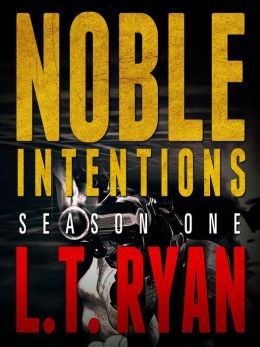
    Noble Intentions – Season One – (Episodes 1 – 5) by L. T. Ryan takes Jack Noble in a strange direction as his services lead him deeper into the criminal element run by the all-world gangster known as "the old man".

    From assassin, sniper, to all-around hit-man, Jack sinks farther into a callous killing machine mode. His ability to eliminate not only "targets" but anyone who gets in his way or could identify him become the accepted norm. When he's supposed to meet with the old man about a particular job, knowing the gangster won't wait if he's late, the diversion of a little girl crying on the oblivious New York City street distracts him. She's looking for her mother who's nowhere to be found. The old man waits as Jack rescues the girl but drives away because of the delay. This is only the beginning of all kinds of chaos and jobs gone wrong.

    Again through Paris, Monaco, and small towns in Italy to complete assignments from the old man and his former French espionage connection Pierre, Jack's outlook falters and he briefly questions himself about why he took the jobs. The unexpected plight of his girlfriend Clarissa, the little girl Mandy, and the need for his best friend and business partner Bear to protect them present difficulties neither Jack nor Bear anticipated.

    The seemingly endless reach of the old man leaves each of them in constant danger. When the job for Pierre takes an unexpected turn, Jack is finally in real trouble with no one to help coordinate an escape.

    Prior to this edition of the Jack Noble Novels, I really liked Jack. However, in this next segment of the series, I found the character less likable, more cocky, and unwilling to do a comprehensive assessment of who he's become. His conscience flares briefly, but he shuts it down with cynical precision. He's allowed himself to retreat from true emotion and assume his confidence and skills will make a way where there is no way. Of course this is expected of men with his training and in his position. There's a hint he's growing tired of it all, wanting to get out, find a way to disappear, but he's put himself in the position of never realizing true freedom. Looking over his shoulder, on the run, rarely trusting, and in danger: this is Jack's life.

    Another thriller from L. T. Ryan, Noble Intentions – Season One  is filled with episodes capturing more intimate looks at multiple characters. I was surprised by the accomplished toughness of Clarissa, not sure of having been adequately prepared for it and from where it came until a casual reference to her past seems to illuminate some training from her dad and Jack not previously acknowledged. I found it slightly difficult to fathom since there had been no previous evidence of her having to hold up under such horrific conditions.

    Little Mandy serves to expose the last little particles of tenderness in the trio of Jack, Bear, and Clarissa. She inspires the utmost protection from them, and although Jack trusts Bear to guard her life, she becomes a perfect bargaining tool for the old man.

    There are some twists at the end of these episodes, one expected, one not so much, and another motivated by guilt.

    This was my least favorite of the Jack Noble Novels because of the deterioration of Jack as a person. Becoming strictly a gun for hire, even though his targets are usually reprehensible, is making him just another hardened killer not much different from the old man's other thugs – just better at his job. Leaving a wake of damage and death, he's immune to what it's doing to him most of the time. He's handling his personal demise with more drink and cigarettes, sardonic humor and taunting – none of it working to his benefit.

    While cautiously looking forward to the next "season" of L. T. Ryan's Noble Intentions, I'm hoping for some kind of personal reflection from Jack Noble, the kind that will bring back some "nobility" to his character. And once again the vacancy in stories without any concept of God amplifies the absence of meaning in life's struggles and tragedies.


    Father, we're desperate for you, whether we know it or not. In the Name of Jesus, Amen.    


  •   030909-1802-24poster1

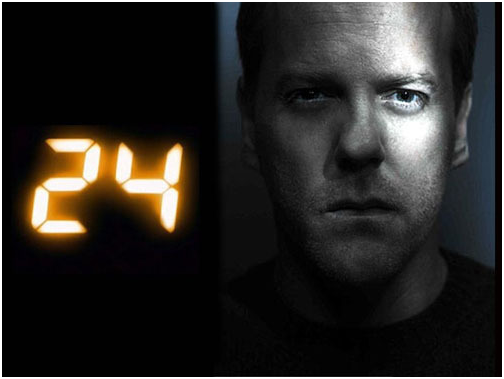
    If you've ever watched the TV series 24, you know what it's like to watch a thriller. I cannot think of another program that is as relentless with conflict as 24. From the first tick of the clock to the last, the action, the tension, the good and evil, rage on at a breakneck pace crammed into the 40 to 45 minute window of the allotted hour segment. I'm actually grateful for the commercials so I can take a breath.

    If you've ever read one of Robert Liparulo's earliest thrillers, you know what it's like to read that incessant drum of conflict and ratcheted up tension. Life and death throughout the pages competing for attention and fulfillment.

    Thrillers do allow for variety. In the Patrick Bowers Series by Steven James the pacing is less intense, but the tension can be palpable. You might call the books "thinking men's thrillers" which is no insult to the fast and furious thriller writers. What I mean by that term in this sense is there are more elements of complex mysteries in the Patrick Bowers Series. The action is dished out in spurts rather than permeating the entire story in each book while the psychological tension is immense.

    I think there are several novels these days that are incorrectly labeled thrillers when in reality, they're mysteries or suspense novels. I'm no authority on genre labels, but you know a thriller when you read one. They stand out because of the extreme "thrills", not the genres of horror, mystery, or suspense, although all of those characteristics are probably present in thrillers. While there is a unique tension to each of these genres, that non-stop, relentless tension separates true thrillers from the other genres.


    Father, thank you for all the types of writers you create. May each one of us find a way to bring glory to you. In the Name of Jesus, Amen.  


  •    Free-sign-print

    Some authors prefer to create villains. Writers can make them as evil as they choose. If you want to read about some of the worst, I suggest you take a look at "Eenie" in Dean Koontz's From the Corner of His Eye or any of the bizarre and intricate bad dudes in the Patrick Bowers Series by Steven James. Evil. Treacherous. Smart. Clever. Creepy. Horrid antagonists. Not for the faint-hearted cozy mystery types.

    So why is it they enjoy making up villains? Touching evil and bringing it to the page? Is it easier to imagine wickedness and inject it into a character than to create a solid "good" character?

    The risk we run with "good" characters is to make them too good, cheesy in their goodness, syrupy sweet if female, or too heroic if male. The choice to truly design a good character, the actual hero/protagonist insures the writer use a serious measure of wisdom.

    Some readers love the syrupy sweet and the major, seemingly flawless hero. Other readers despise those types of characters ranting about their lack of realism. One of the most difficult jobs for me as a writer is to create that "good guy". There really are some cool good guys in this world, but there are also some cool bad boys who aren't necessarily "bad" as in evil or wicked. None of us is without flaws, but attempting to make a male character "good" without making him a hero can be a tough task.

    However, if the protagonist is a Christian, it's far easier to fall into the stereotypical, cliché, too-good-to-be-true categories, although the same possibility exists inwriting villains with the too-bad-to-be-true as the differentiating factor. But that doesn't really ever happen with the evil characters. There seem to be no limits as to the portrayals of the depraved.

    As some of you know, I'm writing my first crime novel/police procedural. If you know me, you know I write character studies, love stories, and I'm soft on action. Not my gig. This particular novel is not a shoot-'em-up-bang-bang story, and of course there is a thread of romance. There is a perpetrator of a murder, but after over 75K words, I just figured out who killed someone. So now I have an antagonist, but he's been mostly faceless and way under the radar until just a few words ago. So what will I do with him. What kind of villain is he? Will he be trapped?

    The "good" guys have been written, and they're certainly not perfect. But I think they're the kind of characters you root for as a reader. "Good" characters. I've enjoyed creating them more than I will enjoy fleshing out this bad guy. I can't tell you why.

    Which do you prefer to read about and write about?


    Father, help me to nail down the characters. Let them seem plausible and real. Please. In the Name of Jesus, Amen. 


  •      Good_Evil_Wallpaper_by_Vermishis

    That seemingly never ending battle between good and evil rages on in life and literature. Yesterday in my review of Thin Line by L. T. Ryan, I mentioned the concept of even within the "good" people the potential for horrible evil resides.

    Christians know human beings are not "good" as some would have us all believe. Yes, they are capable of doing good things, thinking good thoughts, and performing good deeds. However, in God's eyes all of man's supposed "good" is as filthy rags to Him. Why? Because man is born into sin. What that makes man is a self-serving, flesh-driven vehicle who is capable of doing most things for his own fulfillment – or in other words whatever makes him feel the best. His motivations are questionable, although some things he does because of God's inspiration which he neither credits nor recognizes.

    Many unbelievers think man is basically "good". Why, I have no idea. The world is going crazy all around us with hideous terrorism, fraudulent scandals and schemes within our own government, the lusts for power, sex, and perversions are being heralded as admirable and proclaimed with pride. Pits of iniquity belong to demonic strongholds with people suffering from torture and children being sold and used as sex slaves. How can anyone call mankind "good"? If man has existed for thousands or millions of years, how can it be, if he is good, that he is no better than when he first appeared?

    In the crime genres we find detestable antagonists who represent evil. It seems we find less and less honorable protagonists to squelch the evil. This serves to demonstrate the "thin line" between right and wrong, good and evil. Vigilante justice, guns-for-hire assassins, and just plain thugs committing murders for the thrill of it, coat the pages of novels. A few of these protagonists have a moral code, lines they absolutely won't cross, but who knows what they will do if the antagonist threatens or carries out the death of the right person? Vengeance motivates those who seek to exact their own brand of justice. Will they or won't they actually do what they plan to the one who deserves the worst?

    Jesus is the only One who transforms the evil in mankind. It will not be eliminated while we abide in this fallen world, walking in this flesh and blood, but the ability to feel the tug of the Holy Spirit's conviction when we desire to actually commit an act of evil or do wrong, this is what we achieve when we embrace the God of the universe. Without Him our motivation to refrain from wrong can be threatened at any given time with little reason to resist. "Good" people without the Lord fail to realize He is the inspiration to do right instead of wrong, acknowledged or not.

    The war between right and wrong, good and evil will rage on through the pages of novels and in real life. Writers will create atrocities and, sadly, life will continue to offer them up. There is something lost in the pages of books when spiritual truth is eliminated from a story. Oh, yes, the arguments for what is really the truth flare and compete for recognition arguing there can be oh-so-many versions of "truth". Not so. One Truth. One. Otherwise there are just a bunch of variations and copycat theories resulting in anything but Truth.

    It matters what you think of right and wrong, good and evil. What you think will eventually determine where you spend eternity. Like right and wrong, good and evil, there will be heaven or hell. And that's not fiction.


    Father, Jesus came to save us from our sins. We're desperate for you. In the Name of Jesus, Amen.


  •                                    Thin-line-two-thumb

    A popular concept for thriller authors is contemplating the difference between good and evil. Steven James in his Patrick Bowers Series dares to speculate the availability of evil resides in even "good" people - as in the potential to commit an evil act even when they know it's wrong. However, the opposite is rarely true.

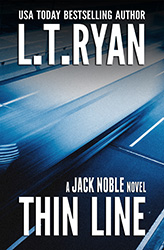
    In Thin Line by L. T. Ryan, Jack Noble believes that line between doing right and wrong is thin, particularly within he and his partner Bear's clandestine framework. This philosophy makes it even tougher to discern who to trust because it seems they alone have each other's backs – and a few of their contacts.

    Jack's former SIS boss Frank Skinner wants to hire Jack to take out a man he says has sold his country out to the highest bidders, namely a certain terrorist Jack should have eliminated years ago when he had the chance. Frank grudgingly accepts Jack's ultimatum: Bear accompanies him on the mission or Jack won't do the job.

    As Jack and Bear prepare with full awareness of how professional and sophisticated their target is, they place the only location they have for him under surveillance in New York City. When there's a death Jack and Bear don't expect, a New York City police detective gets involved. Like everyone else in this strange job, she seems to know more than she should about their business. Add an all-world aging gangster to the mix, and the plot thickens as they say.

    The cover for who wants this supposed rogue agent dead is deep and suspicious, and Frank refuses to expose its source.

    The job takes Jack and Bear to Paris, France, and back to New York City, to New Jersey, and eventually to Pennsylvania before once again winding up in New York. Through all of the confusion and threats, Jack must provide protection for his on-again, off-again, girlfriend Clarissa Abbott, the daughter of his now dead former Commanding Officer. Each new situation becomes more deadly for Jack and Bear, and the information is slow to come and leads to more hidden threats.

    Jack and Bear do their best to sort out the confusion, calling in favors from old friends, fearing they're being set up. The all-world gangster keeps popping up in Jack's life asking for his services while making it evident he knows far more about everything that's happening to Jack and Bear than they do.

    L. T. Ryan has the ability to write the reader into the corners Jack finds himself in, to feel his adrenaline, to look for some solution when it seems there are none. Right to the end, there is no one trustworthy outside of their tight contacts, and the inevitable dangers of their work, past and present, catch up to them in horrible and spectacular ways. It's heart-thrumming thriller writing right up until the partially resolved cliffhanger ending.

    I'm totally immersed in the Jack Noble Novels. Haven't read any like this since Vince Flynn's. Although defintely different from Vince's books, Jack Noble is a unique character who knows there are secrets in his line of work but when those secrets could result in his and his partner's deaths, he will not rest until he figures out the entire picture of what's really transpiring when bodies start dropping or disappearing.

    I highly recommend these L. T. Ryan novels to those who love action, intrigue, confusion, and mayhem. A few language warnings and definitely some violence. Thin Line is a complex and true thriller.


    Please continue to bless Lee with stories to tell. You are the inspiration and giver of every good and perfect gift. In the Name of Jesus, Amen.


  •  

    You are not a God who takes pleasure in evil;

       with you the wicked cannot dwell.

    The arrogant cannot stand in your presence;

       you hate all who do wrong.

    You destroy those who tell lies;

       bloodthirsty and deceitful men

       the Lord abhors.


    Psalm 5:4-6 (NIV)

  •                          Every-Waking-Moment_300

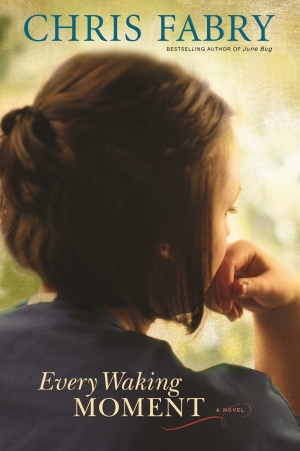
    I believe I've said it before, but two things you can count on when reading a Chris Fabry novel are quality prose and anything but ordinary storylines. Every Waking Moment by Chris Fabry, published by Tyndale Fiction, keeps to those standards.

    Treha Langsam has no memory of a mom and dad or little else to do with her childhood. She "borrows" histories from the residents of Desert Gardens, the combination assisted-living and nursing home where she's employed, because she has no sense of family. Her eyes are constantly on the move, back and forth, her body weaves and her fingers type, and most people outside of the facility are spooked by her odd looks. In spite of her quirks, the community at Desert Gardens has come to love her  because she has the rare gift of making them feel valuable, drawing them out of the prison-like shells sometimes created as a result of their aging, and genuinely caring about their lives before and after residing at Desert Gardens. Her ability to communicate by simple touch and listening amazes staff and relatives alike.

    Until Miriam Howard, the director of the facility, and the one who discovered Treha's rare gift, is replaced and forced into retirement, Treha works carefully and diligently, making true friends with all who know her. Miriam's replacement is the Nurse Ratched of Desert Gardens and Treha is quickly and cruelly disposed of as are two young undiscovered documentarians who have been allowed to film the residents telling their stories because one of them passionately believes in the power of their remembrances to connect people.

    Resident Dr. Jim Crenshaw takes particular interest in Treha, fascinated how her mind can solve word puzzles without seeing them among other high-functioning quizzes. How this plays out at the end of the story is perfect. Miriam Howard can't stay away from Treha once she steps down from her job and Treha is terminated. A complex series of associations between Miriam, Treha, and the two young men cause the making of the documentary to turn up information which might lead to solving the mystery of Treha's past.

    Underneath all the engaging plot points of this story is the unique loneliness of an unusual heroine who seems unable to show emotion while having the incredible ability to inspire it in others. She's intelligent and perceptive but blunt and without much expression, wondering if she will ever be any closer to finding out who she is and if there's any way she can be "fixed".

    In Chapter 26 we get a brief glimpse of how Treha thinks from a recurring dream:

         Her mother came to her, or a woman she supposed was her mother, and took her by the hand, sunlight silhouetting her face and brown hair curling. She was thin, and Treha liked this because it made her think she would not have to be fat all of her life and that one day someone would see her as something other than damaged.

    The characters in Every Waking Moment conjure up all kinds of reactions. Miriam loved her job and the residents at Desert Garden and has motherly concerns for Treha, but she's an unhappy wife and has little appreciation for her husband Charlie who we primarily see through Miriam's eyes. Devin and Joshua, the two young men making the film, are the inspired impractical dreamer and the glass-half-empty sardonic comedian. The reader feels the conflict wearing on Dr. Crenshaw's soul, and a fondness develops for the at first bizarre character and distant colleague of Dr. Crenshaw, Mr. Davidson.

    Treha leads a strange life with a lot of missing pieces and sometimes her lack of emotion makes her feel distant and even annoying, but her determination to find a way to "fix" herself gives her an admirable dimension and demands compassion.

    Faith plays a part in this story, running like a pretty but plain ribbon around a package, and surviving like a reliable cane or walking stick.

    Chris brings so many facets of the story together and wraps it up with one of his classic somewhat unresolved but hopeful endings. Ultimately it's about accepting life and finding purpose in the most dismal, challenging, or boring of circumstances. It's about contentment. He's an artist with words and composes irregular characters in complex unusual situations. If you're looking for something that includes some not unfamiliar plot points but told with an original and interesting cast of characters, experience Every Waking Moment. Full of clever and meaningful "connections" between all kinds of different people, it's a story that will linger after reading The End.


    Father, you know Chris and all the details of the things his family has faced. I pray healing upon each one and ask for your blessing and comfort to him and to his family. In the Name of Jesus, Amen.    


  •                              Untitled

    Of course I'd like to be jaunting off to a hot tropical place, but I'm merely traveling to Novel Rocket. Come and join me as I discuss a coversation I had with a reader. Would appreciate your thoughts.


    Father, please bless those who bless others. Help me to be faithful to you and what you're doing with me. In the Name of Jesus, Amen.

  •                               ThZ6XOWDLR
           

    Those who visit here regularly know there will be novel reviews posted. There will be books I love and books I don't and many – possibly even most – of them somewhere in between.

    Those of us who read a lot of novels and write reviews decide if and what we can recommend to others. We've all read those books we've hated for whatever reason(s), and we know there is next to nothing good we can say about them. I've read a few that kept me shaking my head as I dragged through them because I was obligated to write a review. The obligation makes it very difficult to find a way around insulting the author. 

    As I pointed out in Monday's post, snarky, super-critical, and insulting reviews serve no purpose other than to flaunt an opinion. Telling the truth without decimating an author creates a fine line but a necessary measurement of a particular book's appeal. It's okay not to like a novel. I don't know any author who can please all readers.

    I once reviewed a novel I thought was written poorly. Badly. I didn't like anything about the story. I said so but tried not to be mean. I got some critical feedback. I reviewed another book I didn't enjoy even a little bit and explained why. I got some insulting feedback. All the negative comments were from people who enjoyed the books. One gal was not nice. All this over books.

    Is there a lesson to be learned about reviews? Perhaps. However, those who might need the lesson probably aren't interested in hearing it. They're entitled to their opinions after all. And we are. As readers, most of us realize now and then we're going to buy, borrow, or get free a story we don't like. If we're obligated to give a review, the least we can do is state our opinion with some dignity and respect for the author and for ourselves.

    And never forget: an opinion is just that. Nothing more. No more valuable than someone else's.


    Father, help us to be kind, decent, and honest. Help us to remember there are people at the other end of our words. In the Name of Jesus, Amen. 

  •                                  Deadly-thumb

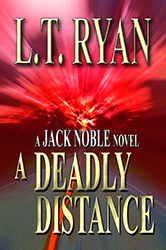
    As you can see, I appear to be hooked on L. T. Ryan's Jack Noble Novels. Quick to read, fast-moving stories, these are great summer reads for thriller fans who don't mind the secretive operations of high-level security, espionage, anti-terrorist, political, and military types of stories.

    Jack Noble is a love him-or-hate him kind of guy. I choose the former because he's basically simple. He's a warrior who will do anything to get the bad guys. And those bad guys don't really want to be on the wrong end of that justice. Consequently, when the bad guys meet up with Jack, they want to spread the pain as thoroughly as Jack can dish it out – maybe moreso because they tend to be exceedingly evil.

    Jack and his boss Frank Skinner inadvertently stumble upon a child-kidnapping ring who sell their victims all over the world. Doing their best to maintain their usual professional approach after capturing one of the pick-up men named Pablo, their hardcore interrogation pries information from him which leads to a house in a neighborhood.

    An invasion rescue is planned but fails to go as planned. In spite of the harrowing experience and emotional tolls, they recover the children. Their new mission is to discover who's at the head of this evil venture, but before they can organize their efforts, the ringleader calls Jack after re-kidnapping a particular child.

    Jack suffers some injuries in the raid, and a female EMT (Sarah) is brought along to their group's secret headquarters to confer with their private doctor and ends up participating in their plans to uncover the leader – much to Jack's dismay. He's afraid she'll get hurt or worse.

    We all wish we could become super-men or wonder-women, but those who work in the clandestine services, military and otherwise, and remain faithful to this country and to a high code of eliminating evil enemies and criminals are as close to supermen and women as exist in the secular world. Their extensive and intensive training prepare them for death but teach them how to survive almost anything. Pain is secondary to the mission, and they're amazing in what they can and are willing to do, endure, and accomplish. Jack Noble is one of them. Yes, he's cocky at times, humble at others, daring, wired hot, extreme, and will do whatever it takes to bring down a bad guy. Occasionally he has to be reigned in.     

    (Don't get me wrong: devoted missionaries fill this bill as do Christians suffering under horrendous persecution, imprisonment, and torture for Christ. They have the highest calling and are the true heroes/heroines.)

    Written in Jack's first person POV, we experience Jack's rage, pain, and sense of justice. His insightful deductions usually work well for him in his psychological battles. He's cunning, viscious, and tough. And he's all man. His deep thoughts only happen in his head, and he's definitely not an orator. A man of few words and lots of action, his name suits him.

    The title A Deadly Distance will explain itself within the story. Prepare yourself for considerable violence, very little bad language, a few brief sexual innuendoes, and an interesting and satisfying conclusion. Highly recommend L. T. Ryan's second edition of the Jack Noble Novels.  


    Father, you know Lee. I don't. Please bless him and show him what he needs the most. In the Name of Jesus, Amen.