Into the Fire

Passionate thoughts about the world of writing and the Power of God

  •   PMO2498

    This picutre provides a perfect visual for our earth bound by the dirty chains of sin.

    It reminds me of the diminishing pockets of innocence and how difficult it is today to allow children to remain untouched and unscathed by the growing and brazen onslaught of sin. Parents who must send their kids to public school receive the brunt and scourge of the degradation of humanity as more and more we learn how the government's curriculum turns to indoctrination and propaganda for an evil world and its ideas of "good". What some schools inject into kindergarten classes would curl the tiny hairs on a bald head. False history and evil ways and those who are willing to "teach" such things as sex education to little ones own character flaws so deep it's mind boggling.

    It's impossible to ignore the slide into depravity of this world.

    For those of us who write contemporary fiction, we must decide how to address the circumstances of our current world. Let me state this fact first: I see nothing wrong with "sweet and light" novels whose approach to life in the 21st century focuses on "smaller" conflicts and situations between characters. By smaller I mean less dominated by serious issues where characters have experienced some ugly difficulties – and where these difficulties are given real portrayals (sans graphics) of ugly situations. This is not to say that "sweet and light" literature does not address serious and difficult issues. Not at all. It's how they address these various circumstances and experiences that separates them from the tougher depictions of the world's influence and effects.

    It's important to add I can understand why some readers prefer the sweet and light novels to those which have been termed "gritty," "edgy", or "raw". Having to face the challenges in today's world can make the strongest among us wince and wish to escape. This makes it easier to see why some readers just want something "easier" to read, something which will get them away from the perversions and despicable behaviors seen throughout the world everyday – at least for a few hours.

    Now here's the "but" in this post. Authors who choose to give a portrayal of the uglier aspects of today's life on planet earth cannot be faulted for this choice. Especially authors who are Christians. Not every individual is called to do the same thing. Boring doesn't cover how incongruent with God's creativity that premise would be.

    Writers tell the stories on their hearts. Granted some professionals can create a storyline from a publisher's suggestion or specific genre need, but many writers don't have or desire that ability. And many writers simply don't do the sweet and light. They do the hard and tough, the ugly and depraved, but the caveat comes in the spirituality of portrayals, effects, conclusions, and decisions. Though these stories command a different reader, they're just as necessary in the marketplace as the lighter choices. Reality is often harsh and it demands storytellers to tell it like it often is. The types of readers who choose these novels want to know there are authors out there who understand what it can be like in a cruel world, but in that process they hope to find a measure of good, of hope, of a one true God to be there for them even in dire straits.

    Heaven isn't here on earth. Our prayer for "as it is in heaven" is often to experience the closeness of Jesus, our little breaths of heaven in the midst of sorrows and depravity, our shared hopes for the lost, and a Savior who is real in even the darkest places. That is why some of us write it a little more raw than others.  


    Father, help us to endure the travesties of this current world. May your glory be proclaimed throughout this One Nation Under God. We're desperate for you, Lord. In the Name of Jesus, Amen.     



  •   Spring-green-road-landscape-free-desktop-598x336

         Please visit Novel Rocket today and answer my question . . .


    Father, once again thank you for your incredible ways of provision. In the Name of Jesus, Amen.

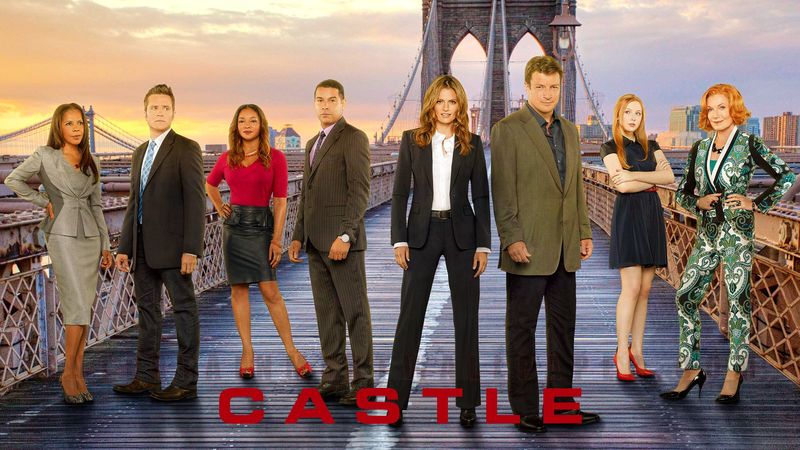
  •    Castle-tv-show-wallpaper_093545713

    It isn't very often that I can singularly identify the best episode of the several TV series I watch. Over the years I usually have my specific favorites – as in multiples. But I must say the May 4th, 2014, episode of Castle was by far their very best. Ever.


    Father, once again I thank you for the amazing talents you give freely. It's often a joy to watch others do what you designed them to do. To watch them excel and to reach new heights brings much pleasure. I pray each one would know who has given them their capabilities and look to you with gratitude. In the Name of Jesus, Amen. 

  •                                       Th7S287D5Y

    I didn't attend college for long. One year and one quarter, separated by a year of working and a trip to Europe. My favorite class was my playwriting class in which I pulled an A. Hallelujah!

    My teacher/professor assigned the writing of a play and then we had to read them out loud with members of the class taking different parts. Those were the rude awakening moments when we realized all of our mistakes.

    My first play was sheer melodrama and to my dismay the ultra-serious portrayal turned out to be laughable. Talk about embarrassing. I regrouped on the next one and the next one. Much improved over the first effort, the melodrama sufficiently reduced.

    Here is one definition of melodrama:

    A dramatic presentation characterized by heavy use of suspense, sensational episodes, romantic sentiment, and a conventionally happy ending

    By definition alone, there's nothing wrong with melodrama. However, within that definition we can see the possibilities for potential exaggeration. This same tendency to overemphasize certain dramatic tendencies can also apply to novel writing. Melodrama has gained a negative connotation over the years, but it need not be so in its proper dosage. As with all dramatic content, the key is to frame it with the right emotional impact depending on the circumstances and the personalities of the characters. There's nothing simple about the actuality of getting it right, but as writers, we keep after it until we reach the balance that satisfies us and hopefully those who read our work.


    Father, we're always desperate for you, for your direction, guidance, and peace. Help us to get our life right. In the Name of Jesus, Amen.    

  •  Impact

    Reading fiction is a practice, a hobby, an enjoyment, a treasure for those of us who infuse stories into our bloodstreams. We read novels because they provide us with all kinds of experiences in places we've either been or will never see in person, during the past, present, or future, and with people we'll either like, love, or hate who have all kinds of problems either just like us or like those we hope to never have.

    So what happens when a book we read leaves us with a negative impact? It touches us alright but not the way we'd hoped. In fact, we wish we'd never selected it, started it, finished it, bought it, taken it from a friend, or promised to read it. We hate the stupid book.

    There are two movies which come to mind immediately when I think of examples with negative impacts. I would add a third, but I didn't bother to finish watching it. I won't tell you what they are because I don't want to insult you. I hated them, although they were completely different kinds of films, one historical, one contemporary (but many years ago), they had one thing in common: arrogance. And by that I mean the older then-contemporary movie presented its slow-moving story of pathetic characters who appeared to think of their individual dilemmas as important, attaching such drama to their baseless personas while the producers and director assumed the audience would find their situations valuble somehow to the understanding of life in general. The historical film took a piece of history and gave its own interpretation of an event but not without the token sex scene and an exaggerated portrayal of the villainous powers-that-were. Pretentious wastes of a lot of money. Of course both films were critically acclaimed. I hated them. Totally. 

    If you ask readers what produces a negative impact from a novel, it will depend on who you ask. Christians and unbelievers might agree on two similar responses: uninspired/unlikable characters and lousy plots. Beyond those, there might be some division in additional factors.

    So, for you, reading a novel, what leaves you with a negative impact? 


    Father, as writers we can't write for everyone, but we can always ask you for assistance to reach those to whom you direct us. Help us to follow your lead. Always. In the Name of Jesus, Amen.   

  •  


    You adulterous people, don't you know that friendship with the world is hatred toward God? Anyone who chooses to be a friend of the world becomes an enemy of God.


    James 4:4 (NIV)

  •                       565376-topic-ix-0

    Christian fiction writers preach "No preaching". We've all heard – or said – "Nobody wants to be preached at (or to) while reading a story." "Show don't tell." There are many readers in the general market who write apoplectic one-star reviews on Amazon after "mistakenly" reading a Christian novel. At the mere mention of God or Jesus, all hell breaks loose from these people. With accusations of religious drivel ruining the story or wielding rants about being preached at/to, some secular readers want no part of "Christian Fiction".

    Some authors who are Christians dance around the label and refuse to see themselves as writing "Christian Fiction". Others desire to attempt the "crossover" route, appealing to the lost instead of "preaching to the choir". Some writers insist the portrayal of Christian principles in stories will serve as a lead-in to seeking salvation or God in general.

    The paradox comes in wanting to reach the lost but needing to share the gospel. A Christian can't forfeit who he is in his heart. "Principles" don't necessarily point to God. And the lost won't be interested in Jesus unless the Holy Spirit has been preparing their hearts to recognize the good news.

    Christian authors vary in not only their abilities to effectively insert the gospel into stories but in how they manage to make a way for God to be included. Some do it better than others, are far less preachy and much more organic in their approach. However, no matter how well a story is written, if an unbeliever "happens" upon it with no openness in his heart to accept a plot or characters which include Christian elements, the novel will be unfinished, trashed, or at a minimum roust complaints.

    Christian Fiction has many stigmas attached to it, some earned and some ridiculously false. Some magnificent writers have constructed meaningful, award winning prose with a Christian message.

    As a Christian author, I must tell the story God has planted in my heart. If He wants a major role in that story, He shall have it. If He wants a more subtle presence in the story, He shall have that. I'll do my best to write what He wants me to write, but in the end it's no doubt going to be "Christian Fiction" because that's the world where I live.


    God, you're it. Everything. All in all. The works. Thank you, Jesus. Holy Spirit, fill me up with everything I need. In the Name of Jesus, Amen.  


  •   Inspiration_wallpaper_by_naomi89-d2yhfs5

    Is there such a thing as the "wrong" inspiration? Can competitive juices compel inspiration? I suppose they can. Think of sports. The thrill and drive of competition makes athletes strive to get better. And sometimes it's the competitive desire inspiring a performance which exceeds expectations of both the athlete and those around him.

    Speaking as a writer and from a spiritual standpoint, "wrong" inspiration could be finding a dark place more interesting and stimulating than the possibilities of approaching a story from a lighter point of view. You know by my reading and television preferences, I don't mean the carefully constructed stories which illustrate evil are the basis for "wrong" inspiration. On the contrary, I believe contrasting good and evil is one of the most effective (and age-old) ways to make meaningful stories. In order to accomplish that, dark must be demonstrated. However, dwelling in that dark place can be dangerous in so many ways.  

    As an author, it's important not to compare oneself to other writers in the sense of measuring abilities and claiming to be "better" than someone else. An author can easily be discouraged by the success of those he considers "lesser" writers. It's important to recognize readers often don't use the same measuring sticks for fiction that writers do. Writers are trained to notice styles, tendencies, somewhat insignificant things emphasized by some professionals as the impeccable "rules of writing" – things that make most readers' eyes gloss over with the look that says, "What are you talking about?" Comparing oneself, as in the better or worse category, usually leads to disappointment, envy, or resentment.

    However, using competition as inspiration doesn't have to be all bad. Deciding to write more effectively, more beautifully, more tension-laced, because of a favorite author's work(s) compelling one to climb to a higher level? Deciding to strive for a more striking way to tell the story nagging at one's heart? Being challenged by another's prose and depth and wanting to achieve that kind of effect? Perhaps a certain kind of competition isn't wrong at all.


    Father, we're all desperate for you, whether we know it or not. We need your direction, your encouragement, your support, and your presence always. Help us to discern it all to be the ones you designed us to be. In the Name of Jesus, Amen.    

  •                Untitled

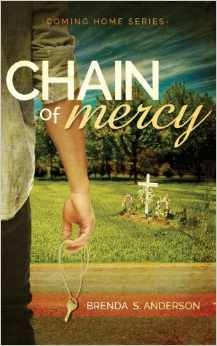
    Richard Brooks is a talented former executive who resurrects failing businesses and has earned himself a stellar reputation until one evening following his angry exit from a party at his boss's home. That night changed his life and sent him back home to Minnesota after living the high life in a New York state of mind. Self-imposed penance leads him to a janitorial job, and the inability to forgive himself for the fatal results of that evening keeps him chained and enslaved within a personal prison.

    Sheila Peterson is a corporate snob who thinks she's too high up on the food chain to be seen with the handsome janitor, but, having just broken up with her latest beau, the janitor's looks and sex appeal make him worth a gamble. 

    Richard has been on the run from his Christian roots. Sheila's experienced only hypocrites as supposed Christians and bristles at the mention of God. Although Richard retained some of his grip on a partial morality in New York, he mostly embraced a worldly lifestyle, and that lifestyle led to the horror that transpired on the fateful night he can't forget or erase. Sheila is a slave to her self-centered desires, has no real understanding of commitment, and thinks she will do anything to preserve her career-climbing ways.  

    When these two Type-A's clash, neither expects the dalliance to last. Richard is determined not to allow their acquaintance to become sexual, having been severely bruised by his near past. Sheila is looking for casual sex. Neither expects what they get. 

    Intermingled within the story is a young college student who also suffers from guilt and misplaced bitterness, spurred on by the event which changed Richard's life.

    Brenda S. Anderson tells a story about broken people who have not only been let down and deeply hurt by others, and have caused equal pain to others, but have decided they're alone in solving life's heavy hurts and problems in spite of the continuous messes they keep foisting upon themselves and each other. One has turned pain into penance with no forgiveness allowed, and the other has used the pain to fuel self-sufficiency and cynicism.

    Richard is likable, typical in the rejection of his faith. Sheila is rarely likable, a true 21st century worldly career woman who seldom lets her agenda slide – even as she finds her attraction to Richard more involved than she planned. Sheila's vulnerability only surfaces occasionally when the events of her young life press their memories into her present. Her past gives her nightmares and not much sleep.

    With faith, abortion, lifestyle choices, bitterness, and unforgiveness as the driving forces behind the co-protagonists' stories, Chain of Mercy delivers the only hope worth pursuing and brings this love story to its expected and logical conclusion, leaving no loose ends. With family playing a strong role in the background, both good and bad, God's love and forgiveness find their ways into the hardest hearts bringing mercy to those who need it most.    

    Chain of Mercy is Christian fiction presenting characters who must learn firsthand how incapable they are of removing the chains that offer them no mercy.  


    Father, bless my sweet friend Brenda in all she does for you. Continue to fill her with stories just for her to tell. May she experience all you have for her and continue to feel your pleasure when she writes. In the Name of Jesus, Amen.     

  •   Understanding-road-sign-247b0d

    Sometimes we who are blessed to have our sight call those places we can't see "blind spots". When driving, our mirrors capture most images and the new technology in some vehicles sees for us, but anyone who's driven "older" cars knows all about the "blind spot".

    Many of us who write have blind spots with our writing. We don't understand how or why a reader can't "see" what we're saying – or what we're trying to say. It's clear to us, it rings true for us, but for someone else, it's foggy. They don't get it.

    So what does that mean? It means innumerable things. One of those less-often-considered things is it's not the author's fault. Some readers shouldn't read some novels. They aren't the target audience, and chances are they won't appreciate the subject (plot), the reactions of the characters, the dialogue, and/or the conflict and solutions. There's much to be said for reaching a target audience with a book.

    For example, many unbelievers can be the harshest and worst critics of Christian fiction. They don't understand it, and they don't want to. They want to criticize the premise of Christianity and therefore all things relating to the specific spiritual aspects in the story come under assault. They detest when characters default to spiritual principles and seek God for help. The irony comes when Christian authors direct their writing to reach the lost. It's a noble endeavor, but only if it's Spirit-led will it succeed because some readers' hearts just don't want any part of a Christian's view of and relationship with "a God".

    Understanding the motive(s) for writing a story, the desire to effectively communicate whatever that story entails, and the polish to pull it off lies with the author, but if a non-target reader gets a hold of the book and doesn't get it: so be it. If the author has done his job, he can be satisfied with the negative impact on someone outside his target range by realizing his expectation to reach that kind of reader wasn't his intention.


    Lord, your writers want to reach the world with their stories, but it's not always the reason you have us write fiction. We need to follow your instructions, whatever they are and wherever they lead. Please help us to do just that. In the Name of Jesus, Amen.