Into the Fire

Passionate thoughts about the world of writing and the Power of God

  •                     17706872

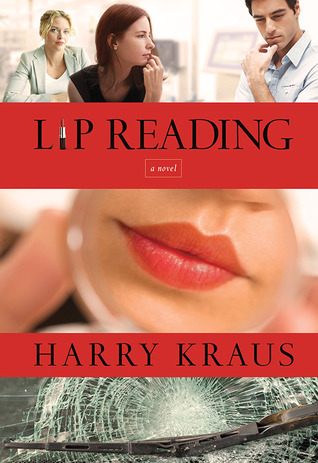
    Lip Reading by Harry Kraus (MD), published by David C. Cook

    I've been a fan of Harry Kraus for many years, but his recent novels haven't resonated with the same appreciation for his earlier books. Lip Reading, the current CFBA novel up for review, hasn't changed that opinion. Which makes this a difficult review.

    The novel has a similar backstory to Chris Fabry's novel Dogwood, but Lip Reading is situated in the medical/pharmacological fields. We can count on Harry to give us authenticity and complexity, and Lip Reading provides no exception. With the study and development of a synthetic substitute for blood, to avoid the dangers of transfusions in sick or injured patients, as the front and center objective of two now older and former high school sweethearts, the race is on between two "big pharma" companies to invent this potentially multi-billion dollar product.

    The former sweethearts, who work for competing pharmaceutical research companies, haven't seen each other in many years due to a complex chain of events which happened on a Halloween night back in high school. That single event provided the impetus for the intense research to develop the synthetic blood product.  

    When the story begins with PHD Becca Jackson in Kenya to promote a drug manufactured by her family's company, she must listen to unexpected consequences of the test natives who had taken the drug. One of the practicing doctors there makes sure she gets his message, which is the need for some kind of compensation for the victims, before she returns to the states. 

    In the meantime, Noah Linebrink's boss, CEO of his competing pharmaceutical company, requires Noah to contact his old girlfriend to attempt to hire her away from her family's company. Noah attempts to argue the unlikelihood of that proposition, but his boss won't take no for an answer. This launches an awkward reunion between the two never-marrieds, and from this point the obstacles involving an old romantic triangle, a severe health condition, old threats renewed, and new threats leveled, occupy all the space between discovering how hemoglobin molecules must "fold" correctly to imitate real blood.

    Admittedly, the story is interesting in its objective, but if I didn't know this was a Harry Kraus novel, I never would've pegged him as the author. Certainly the authenticity when discussing anything medical is there, and perhaps just a bit overdone, but the dialogue, the excessive focus on lipstick brands and colors, the spark-less"romance" especially - all of it just didn't sound like the Harry of old. The significance of the title comes toward the end but almost falls under "too little, too late" to generate meaningful emotion for me. The reason being: I could not find one character to like. Not one. I don't think that's ever happened to me. In novels where I didn't like the protagonist(s), I could usually find some peripheral character to appreciate. Zero in this story. None. Nada. Zippo. Wait: Noah's dead father sounded like a good man.

    The "romantic" triangle truly put the three adult professionals back in high school angst, and moved the story into teen reading. The ending became predictable, martyr-ish, unsatisfactory, and the cafe scene-slash-resolution between Becca's dad and Noah held little redeeming value because, for the entire novel, Becca's dad got away with being a mean guy who did whatever he wanted to do without repurcussions. Becca's mom see-sawed between a classless snob and a doting mother who couldn't figure out the difference between right and wrong.    

    I really don't enjoy doing reviews like this because criticizing authors hurts. However, if you go to both the Amazon and Barnes&Noble reviews, you will find the majority of readers gave Lip Reading by Harry Kraus 4 or 5 stars. My opinion of this book is the exception, and it gives me no pleasure to write a bad review.


    Father, continue to bless Harry in all he does for you, wherever he is. Make his paths straight and illuminate the road before him. Encourage him as only you can do. In the Name of Jesus, Amen.   



  •      Can-stock-photo_csp10245087

    Sometimes disappointment is impossible to avoid. People, places, things we love all can bring it – even when we least expect it. Handling it remains the challenge throughout life.

    I've been disappointed in the Christian fiction publishing industry for several years for a variety of reasons. Those of you who've stayed with this blog have read enough posts registering my complaints to fill a small vehicle of some kind. It's one of the few disappointments I can handle because I believe the business of the publishing industry should be based on the consensus of those who own and manage the various houses. Plain and simply: it's their business.

    What I don't handle well are some of the opinions by professionals and readers alike who stipulate what "should" comprise Christian fiction according to their self-righteous interpretations of selected scripture verses applied to creating literature. If you're interested in my responses to that kind of thinking, you can read them in the comment section of this particular post over at the Novel Rocket site.

    If you have an opinion you'd care to add, I would like to hear it.


    Father, we need you to take us through the many disappointments in our lives, and we need to allow you to do just that. Help us to listen to you and to obey. We're desperate for you. In the Name of Jesus, Amen. 

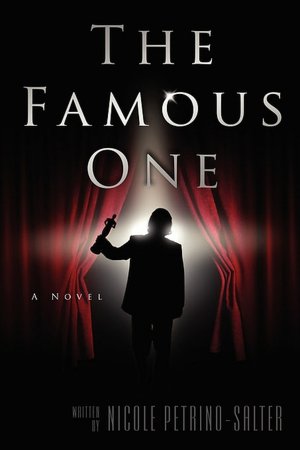
  •                      The Famous One

    Authors want readers. Otherwise, why write? Other than journal, diary, or note-taking, why go to the trouble, angst, effort, and decision to write a novel? And having written one, why not want others to share in your story?

    There is much that goes into writing a book. It's understood that non-fiction requires research, but fiction requires as much, if not more, research. If writing period pieces, much must be documented to make the story authentic. If writing contemporary, the particulars of society, whether it be small-town life or big-city strife, there must be a knowledge that permeates the pages. In other words, the research takes place in life experiences and the desire to portray characters as real people from the inside out. Physically, emotionally, and spiritually. We are three-dimensional after all. 

    But the real resarch for contemporary fiction isn't just cell phones and Starbucks. It's a study of the same part of human existence that drives people to do what they've always done. Whether or not the issues are current, the heart condition of humanity remains the same since The Fall. Now unbelievers will dispute the fall of man, atheists will insist on the integrity of the evolutionary process to bring some kind of utopia, but by sticking to their theories which supposedly date back to billions of years ago, human beings haven't made much progress from the muderous, envious, pious, critical, and argumentative tendencies in their characters. And they never will if left to their own intentions and devices to attain what they want.

    So for those of us who write primarily character studies, we seek readers who can relate to our created characters. We attempt to write characters with whom different kinds of people can indeed find empathy, sympathy, either like-minded or opposite reactions to them. We want a relationship between the reader and the characters in the stories.

    Now I've said dozens of times before today that my work is not for the "sweet little romance" crowd. My novels are romantic, redemptive, and a little bit raw, but I know some readers who comprise the major demographic of CBA literature would be offended at the content of my books. Although I honestly can't understand it given the nature of the stories – and even the characters – I realize the probablility of offense is a fact.

    I need the atypical CBA reader to take a chance on my contemporary novels – those who don't view real portrayals of the world without Jesus as offensive and heretical to real Christian fiction.  

                          136615909


    Father, thank you for these stories and the ones still on my computer. One day . . . Apart from you, I can do nothing. In the Name of Jesus, Amen.

  •  

    "And afterward,

       I will pour out my spirit on all people.

     Your sons and daughters will prophesy,

       your old men will dream dreams,

       your young men will see visions.

     Even on my servants, both men and women,

       I will pour out my Spirit in those days.

     I will show wonders in the heavens

       and on the earth,

       blood and fire and billows of smoke.

     The sun will be turned to darkness

       and the moon to blood

       before the coming of the great and dreadful day

       of the Lord.

     And everyone who calls

       on the name of the Lord will be saved;

       there will be deliverance,

       as the Lord has said,

       among the survivors

       whom the Lord calls."


    Joel 2:28-32 (NIV)

  •  Deserts_wallpapers_435

    Traveling in the proverbial desert, there is no end in sight. The circular reasoning of paths repeated, mirages giving false hopes, and the searing heat of weighing unthinkable options comprise the desert experience.

    For now, I'm there. Wherever that is.

    As a writer, I'm dry. As a human, I'm soaked in tears. As a woman of God, I'm tasting sips of supernatural water to sustain me. And I know there is purpose in it all.

    This isn't new, though every new desert has its own particulars and visuals. Most of the time I bring these desert experiences upon myself. This time I think it's coming from the external sorrows of others and the choice to read instead of write. Again.

    Life can go from oasis to desert to oasis to desert. Through every experience we can choose to remain faithful or go off chasing mirages. I know this because I've chased plenty of them. No more. I wait. I absorb the stifling heat and endure the stinging salty water of my tears.

    If you wonder how I really am: I'm good. Don't worry. Been here. Done this. And the Lord is faithful. Even when I'm not.

    And you?


    Father, thank you for always always rescuing me. In the Name of Jesus, Amen.  

  •     ThSDYUXY91

          Gone to Novel Rocket today. Please come visit me there.


    Father, thank you for the words to say when none seem forthcoming. In the Name of Jesus, Amen.

  •                                9781401685249_p0_v2_s260x420

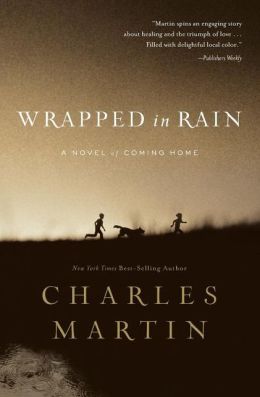
    The first Charles Martin novel I read and reviewed was back in June of 2012. That was Chasing Fireflies published in 2007. I've finally added my second Charles Martin novel, Wrapped in Rain, to the mix, published in 2005 by Thomas Nelson. No excuses for my slowness in joining the long line of appreciative readers, especially since I truly enjoyed both books.

    Wrapped in Rain tells the timeless story of Tucker Rain (aka Tucker Mason by birth) and his half-brother, same father Rex Mason, Matthew Rain (aka Matthew Mason). Housed in the massive mansion known as Waverly Hall by the heartless and cruel Rex Rain, who turned anything he touched into more money to indulge his wanton ways, but raised by their loving and God-honoring housekeeper Miss Ella Rain, the two youngsters grew up in fear and loathing of their father whose only attention to them was given via fists and painful outbursts or by his outright ignoring their existence. They learned to hide in massive unused fireplaces and wherever they could to escape his drunken rages while they waited for him to leave again on business.

    As it turned out, Miss Ella Rain suffered his serious wrath along with the boys, but she never quit praying for the man or "her" two boys. She gave them her time, her deepest love, and taught them to develop their skills under her encouraging instruction coupled with her strict but loving discipline using the bible as the ultimate authority.

    Tucker tells most of the story from his perspective, having achieved recognition the world over for his photography. His brother Matthew, who everyone calls Mutt, hasn't faired so well. His scars from Waverly Hall and Rex Mason are more obvious and he's spent the last several years at Spiraling Oaks under the sensitive care of "Gibby", his psychiatrist. Hearing so many voices which orchestrate much of his reactionary behavior, Mutt finally decides it's time to leave Spiraling Oaks. He escapes, and Gibby calls Tucker.

    In the middle of rescuing his brother, Tucker finds himself rescuing his childhood first love Katie and her five year old son Jase. Divorced and trying to outrun a violent ex-husband, Waverly Hall, Miss Ella's old cottage, and the barn which houses Miss Ella's brother's and Tuck's stallion Glue suddenly have new residents.

    With stunning visuals painted with careful words, Charles Martin fills in most of the blanks with multiple flashbacks and Tucker's running conversation with the deceased Miss Ella who typifies the Holy Spirit. There are all kinds of pain in this story with much needed healings, forgiveness, emptiness, and resolutions. With a satisfying and hard-fought-for happy ending, Charles Martin gives us pain and pleasure, sorrow and joy, rare bits of humor and absurdity, and the tough journey of unmitigated evil versus unfettered goodness. When the remembrance of Miss Ella's incessant faith finally overcomes the residual evil crushing Tucker's soul, the results give him back his hope for a life worth living.

    As a sidenote, I glanced at the Amazon reviews of Wrapped in Rain and was somewhat surprised to find a "one-star" account which gave a picture of some of today's culture. The questions posed by this female reviewer depicted the immediate reliance and dependence on government intervention via Child Protective Services, etc., to solve this situation. I wondered how she could've read this story and not understood the isolation of the inhabitants of Waverly Hall (let alone how incompetent the government can sadly be in these kinds of situations), the mindset and heart of a faith-filled and loving black woman whose call it was to take care of those boys at all costs. She obviously didn't like the story but possibly for all the wrong reasons.

    Charles Martin created a somber but beautiful tale of lonely, broken, and needy people who were united in their adulthood and given another chance to break away from a past that wanted to define their present. Instead, a gentle, loving housekeeper's faith conquered all the evil, and love did in fact win just like Miss Ella said it would. Her memory soaked them in love and wrapped them in rain.


    Father, you have those stories we need to tell. Help us tell them to honor you. Lead us and may we always follow. Please continue to bless Charles Martin as he follows your lead. In the Name of Jesus, Amen.              


  •      https://www.youtube.com/watch?v=g5W4k6vD2WY&feature=player_detailpage  


    The late 60's and early to mid-70s were definitely a time of not getting "satisfaction". A new wave of irresponsible behaviors, philosophies, sexual revolution, and unrest typified the segment in time known to some as the "Love Generation". In reality it was anything but love and could've just as easily been labeled – and probably was by someone – the "lust" generation. As a result of the changing times, those of us who were coming of age in this time period experienced much confusion and no satisfaction.

    Young people were inundated with all kinds of illegal drug use finding its way into a sort of hip-ness and cool, tempting all who had no solid ground of information, no reasonable way to examine what was being offered, or no resistance to being "cool".

    Everything from music, to dress and appearance, to expressions, exploded in favor of unguarded behaviors, loose morals, and the tearing down of anything that restricted them. The leftwing political slant erupted with anti-war protests, lauding communism, and "dropping out" of society's restrictions.

    It was a time of dissatisfaction with "the norm", a time to burn bras while touting women's values. The Jesus Movement sprang up but was often coupled with the smoking of marijuana and more "free" love. Those who legitimately found the Lord during the chaos presented a sound gospel to any who might desire real Truth and a way out of the churning whirlwind of wanton lusts.

    Sometimes I wonder how I made it through that tumultuous time intact. At other times I recognize I didn't. The music of the day lured me into false actions preempted by wrong thinking. Times swirled with excitement, and the truly great musicians of the day tempted naïve young people with serpentine lyrics into activities and positions some would never escape.

    There came a day when I saw it all for what it was: a façade designed by the enemy of our souls to trample on values and exploit the shallow thought processes of the day. I grew up. I wanted more from life than the "drugs, sex, rock 'n' roll" "cool-ness" of that era. But I didn't know how to find what I wanted, what I didn't have, what I needed. I could not get "no satisfaction".

    Until the Lord Jesus Christ rescued me. He used a painting, a young professional quarterback, and the aching in my heart. Bingo. Life saved. Values returned. I finally had it: the Way, the Truth, the Life.

    Bona fide Satisfaction.  


    Jesus, why you value me I have no idea, but I am so utterly thankful you did and you do. You are the ultimate. Thank you always. In the Name of Jesus, Amen.    

  •   Feeling_free____by_sweetsalt21-d3e2sqx

    So much to restrict us, to tell us what to write, how to write, what to think, do, and emulate as writers. Not unlike life in general.

    We are bound to responsible behaviors and creativity. It's important to stand for value and honesty, integrity, truth, beauty. All the things that make life doable in the best sense.

    Although some would disagree, the spiritual aspects of creativity and conduct define us as people.

    No one will argue that religions occupy a large part of human life. And, although atheism isn't regarded as a religion by those who profess it, their unbelief is adhered to, defended, and practiced precisely as a religion. Whether they like it or not.

    Writing is an experience some do for fun, merely for expression. Others do it to earn a living because it's a practice they've studied, perfected, and turned it into their careers. Still others aim for that level with their writing, to be recognized, to be productive, to be regarded as a professional in their chosen field.

    Writing fiction often gets bogged down in do's and don'ts, stifling the freedom in telling stories. It's no secret there must be some guidance in the process, but reading the literature of the past ensures us what is now preached from the writers' pulpit will one day be passé and considered less than stellar writing.

    When freedom and honesty permeate fiction, a reader is released to experience the story unbound by instruction, restrictions, trends, or commonplace assumptions by writers who wish to stick to "what sells".

    And when freedom, honesty, and the heart of a writer are released to flow from the pens or keyboards of writers . . . the experience is unleashed.

    Unbound . . .


    Father, your release to write unbound is a great gift. Thank you for your liberties. Remaining true to you . . . In the Name of Jesus, Amen.

  •  

    "Not everyone who says to me, 'Lord, Lord,' will enter the kingdom of heaven, but only he who does the will of my Father who is in heaven. Many will say to me on that day, 'Lord, Lord, did we not prophesy in your name, and in your name drive out demons, and perform many miracles?' Then I will tell them plainly, 'I never knew you. Away from me, you evildoers!'"


    Matthew 7:21-23 (NIV)