Into the Fire

Passionate thoughts about the world of writing and the Power of God

  •  

                              571090_300

    I realize and am quick to admit that what I may think is absurd when it comes to dishing out writing rules might not be agreeable to publishing professionals. Does that change my mind? Nevah . . .

    I will also agree to a certain value in establishing writing rules in order to direct those who failed to learn – or were never taught in today's public school systems - what is proper grammar, the basics of English, literature, constructing essays, term papers, stories, and book reports.  And the difference between formal "proper" grammar and the spirit of writing fiction which includes working dialogue for the novel's timeline, can contain slang expressions, and, if contemporary, does not rely heavily on the lack of contractions.

    I think it's absurd to require certain eliminations as if there is never a need for particular elements of style, words, situations, etcetera. Prologues, for example, are said to be useless. Adverbs as well. And multiple other "requirements" to get a manuscript past the initial reader. To insist upon a certain uniformity in writing quashes the opportunities for writers to demonstrate unique styles and express atypical voices. To demand adherence to a set of rules decimates originality and instead creates predictable, boring literature.

    Which is absurd.   


    Father, so much in this world is absurd. Sometimes it's hard to look past it, ignore it, combat it, and sift through it to find and embrace the beauty and truth. We're desperate for you, Lord.
        

  •  

                                           ThCAGXZ0TC

    Traveling down the road today to Novel Rocket. Come with me?


    Father, thank you for your grace and beauty. Thank you is never enough. In the Name of Jesus, Amen.

  •  

                               ThCA54MZF1

    Life is full of storms. All kinds. There are usually a few that stand out in our minds over the years of life. Be they actual weather, emotional, or spiritual storms, we recognize we don't escape planet earth without experiencing our share of them.

    I find it peculiar when writers are advised to never start a story with a weather scene or opening line. But then I find most of the writing instructions odd for the simple reason that making blanket statements about creativity defeats the entire purpose of prose. It's like telling a writer no matter what you say in a particular circumstance, it'll be cliché. Overdone. There's simply no way you can write it with originality. Baloney – or bologna, if you prefer.

    Weathering the inherent nature of storms requires stamina, strength, and perseverance. Sometimes there's no satisfying outcome other than survival.

    How do you weather those times when writing drags you through the emotional storms and leaves you without substance? You've survived the storm only to sit in the quiet and contemplate the emptiness surrounding you. Words have disappeared, sentences are displaced, ideas sluggish. Is it just another storm to weather, or is it over? Has writing left you behind in the rubble with no rescue?


    Father, you know where I am at all times. Desperate for you always. In the Name of Jesus, Amen. 

  •  

            
    Slang


    A wonderful tool for fiction if used properly in conversation, slang can define characters and add colorful dialogue. The key, as with any part of constructing stories, is to use it well.

    My personal favorite reaction to things I like: Cool! Yes, it's old, but it's tried and true and has survived generations. If your dialogue is too hip for your perceived audience, you might lose your readers for the moment. Make the slang work for you by fitting it to the character and circumstance.

    Different slang expressions can be relevant to particular areas of the country – or wherever you've situated your location – but misunderstood in other places. Decide if the meaning of the expression can be discerned regardless of its pertinence to a specific area.

    Slang is commonly used in many simple conversations and can express a commonality and casual familiarity among characters. It's a useful writing tool when inserted for the right effect(s).


    Father, thank you for all the avenues we pursue in writing, for helping us develop our stories and put to use the multiple ways you've given us to tell them. In the Name of Jesus, Amen.

  •  

               
    0529-couple-kissing-sex-peak_sm


    That is if you write romance for the CBA. Romance best not be linked to sex or portrayed as leading to a sexual conclusion if you happen to write in the romance genre for Christian fiction.

    The interesting irony in this proclamation is you can exhibit both a world's-eye-view and a godly view of sexual encounters if you write in a different genre. Go figure. The most current example of this appears in the thriller Singularity by Steven James. I won't tell you what a robotic appendage can do, and neither does Steven in graphic terms, but left to our imaginations . . . well, let's just say the images are definitely sexual. In this same novel there are hookers, upper echelon call girls, and a genuinely seamy side to Solomon the pimp's lair.

    But in romance novels? Not a chance. Reviewed here, Becky Wade's first CBA novel (she wrote for the general market initially) elicited cries of outrage because of a few words she used. Written with complete authenticity, it's the way a real romance novel should be written. Her second novel arrived with toned down language (as if it needed to be) and subdued romantic elements. Too bad.


    Free-love-friendship-wallpapers6


    So, romance is for women, but the romance I've found in most CBA novels is thin, cliché, and shallow. It fails to deal with the sexual attraction innate in romance. It fails to deliver the reality of sexual challenges that romance presents. For Christians who desire to keep themselves pure for their marriage partner, it doesn't come without trials. For the worldly men, women, and young people who are slaves to their hormones and desires, sexual attraction/romance can lead to all kinds of disappointments and lack of fulfillment. But yet, in most Christian novels these terrifically important issues are bypassed for the sake of pseudo or incomplete romance.

    Thus the title of this post . . .


    Father, you gave us sex. You deemed it good. You made commitment necessary for true enjoyment. Your ways are higher – and far more satisfying. If only people knew . . . In the Name of Jesus, Amen.


    Related articles

    Sex, Lies, and . . . Christian Fiction
    Sex Appeal (Fair Warning!)
    Rewriting the Rules of Romance
  •  

    An oracle is within my heart

      concerning the sinfulness of the wicked.

    There is no fear of God

      before his eyes.

    For in his own eyes he flatters himself

      too much to detect or hate his sin.

    The words of his mouth are wicked and deceitful;

      he has ceased to be wise and do good.

    Even on his bed he plots evil;

      he commits himself to a sinful course

      and does not reject what is wrong.

    . . .

    Continue your love to those who know you,

      your righteousness to the upright in heart.

    May the foot of the proud not come against me,

      nor the hand of the wicked drive me away.

    See how the evildoers lie fallen –

      thrown down, not able to rise!


    Psalm 36:1-4; 10-12 (NIV)

  •  

                                       21_yellow_black_5

    Five opening lines:


    The rain assaulted the trees, the gutters, hard and cold, leaving even the midday seeming like the darkness of evening. (The Fixer)

    Now he wondered why he thought this would be a good idea as he stepped onto the first of five stairs that led up to the front door. (Destination)

    Faith Daniels looked up as the tiny bell over the door tinkled quietly. He was the first customer of the morning, the darkness remaining outside as he walked in and closed the door. (Wounds and Healings)

    Claudia Madelyn Rutheford hated her name. (Sweet Release)

    It was hard to say what witnesses noticed first — the shrill piercing screams or the nearly naked young woman uttering them. (Race)


    Father, you give life to words. You give words to live by. You give life to stories. You give words to writers. Thank you for them all. In the Name of Jesus, Amen.

  •  

                                   Open-doors


    The open door we desire . . . leads to the fulfillment of dreams, careers, accomplishments, relationships, and goals. Christians accept the door is opened for us by the Lord God, and we quote clichés about when God shuts a door, He opens a window. That is, some of us do.

    In the writer's world a door sometimes whisks open only to close before you get your proverbial foot inside. The window of time between submissions of manuscripts and acceptances or rejections does not go swiftly, but when the door shuts, it seems like a quick slam.


                            Closed-french-doors-1133416


    The perception of that closed door varies depending on the acquisition editor's response. If they bother to add a few words of encouragement accompanying their rejection note, which can be a rare occurrence, the door shutting might feel like the picture above instead of the loud echo and reverberation of a slam. Many writers experience both methods.

    Some writers take all open and shut reactions in stride and persevere until they either pick the lock of a particular publisher's door or finally a particular publisher says, "Bring it on" referring to their manuscript.

    Nowadays many authors choose not to wait for that door to be opened to them and burst through the publishing hurdles by engaging in e-publishing. They decide the multiple doors to various publishers which are locked when they knock, no longer seem like the preferable option.

    Of course there are important drawbacks to each choice. In both instances marketing can be a huge deterrent, and in both cases the majority of implementing marketing lands squarely in the lap of the author. Selling books means you make your publisher happy – whether that's you or a traditional publisher.

    We writers know well the case of the open and shut doors, and we can tell you the windows are sometimes painted shut. We labor over the words, but sometimes we don't know how or where to peddle them. We're tempted to take an axe to some of those doors, but we understand that's not correct protocol. So . . . we wait. And hope the Lord will escort us through one of those doors – the one He's holding open just for us. 


    Father, you lead, I follow. Apart from you, I can do nothing. In the Name of Jesus, Amen.


  •  

                          
    51d7fVCxoML__SL500_SX250_


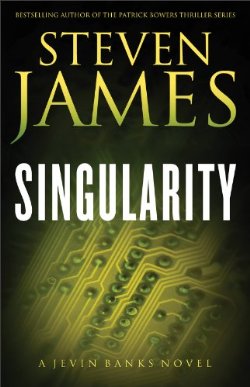
    If you've never read a Steven James novel, here's what you can expect: an absolute thriller chocked full of evil, fear, intensity, intelligent characters, deep and complex plots, morality issues, faith references and examples mostly in the undertone of critical decisions involving the threat of death, and stellar writing with his Master Storyteller credentials fully exposed. No shortcuts, no triviality, no pedestrian prose or dialogue. Always an intriguing end to a fully exhausted story.

    Jevin Banks is a famous illusionist (often referred to as a magician which he refutes) who plays the Las Vegas Strip at a big casino owned by a billionaire. His friend and partner, the kooky Xavier, his assistant and love Charlene, a body double for him and Charlene, his friend and computer genius Fionna, single mother of four brilliant children, compose the basic entourage of Jevin Banks' group. He, Xav, and Charlene are in the Philippines to watch another of their young illusionist/protégé friends (Emilio) perform a "buried alive with Cobras" trick in Emilio's homeland when suddenly it all goes terribly wrong. Almost immediately after learning of Emilio's fate, Jevin and Xav realize Emilio's been murdered, but they can't convince anyone there to follow up on their realization. They bury their friend in his homeland and return to Vegas determined to find out why.

    What happens during their search involves piranhas, robotic accessories, human experimentation, the notorious Area 51, a feared pimp named Solomon, a cartel drug lord named Jesus, a sociopathic call girl named Calista, and a psychopath who likes to be called Akisanya.   

    Singularity is the second Jevin Banks novel in Steven's new series, the first being Placebo. I'm not even going to attempt to explain the meaning of "singularity" in this story. You'll learn more about robotic access and control than you'll care to know. And fused with the plethora of possibilities for manipulation of robotic replacements, you'll find yourself in the emotional, physical, and spiritual quandaries of merging man and machines to replace aging and making decisions.

    Jevin Banks is challenged at every level of his humanity in this story and makes strides in his personal recovery from losing his wife and twin boys. Packed with action and philosophizing, the pure evil and the attempted good of humanity clash and wrestle to a satisfying but leading conclusion.

    Singularity is a step up from Placebo, but I recommend you begin the series at the beginning and proceed to Singularity. If you want detailed and unusual, thought-provoking literature, grab and devour a Steven James thriller. 


    Father, I ask your continued blessings upon Steven James. You've given him such intelligence and talent in storytelling. I pray he persists in using it for your glory. In the Name of Jesus, Amen. 

  •  

                                     
    ThCAQKEL5R


                                                   See ya later.


             Father, thank you. For it all. In the Name of Jesus, Amen.