Into the Fire

Passionate thoughts about the world of writing and the Power of God

  •  

                               
    No-error-sign-md


    If you like baseball, you know errors are often disastrous for the team committing them and embarrassing for the player who makes them. Major league players making key mistakes can cost them the game. They're unacceptable, disappointing, and distressing when they happen at critical moments. The crowds tend to react unfavorably with unified groans or worse. Errors are the bane of baseball.

    Well, errors can be the bane of fiction too. I'm not talking about typos and other mistakes which are found too frequently in printed and e-books these days. Although annoying to see them, I'm speaking of those errors which give the reader an unpleasant jolt of disbelief. Suddenly a character acts like someone other than who he's been portrayed to be for most of the story. A tool is available in the nick of time where no tool should ever be. An angel appears to save a person when there's been no hint of spiritual references in the story. The "deus ex machina" plot device can scream "Error!" to sophisticated readers who don't tolerate mediocrity in storytelling.

    Writers strive to avoid error-free fiction, but it isn't as easy as it might seem. We do find ourselves in difficult situations in our stories which demand a sound resolution. The problem is we can't find one so we tend to invent something to give a quick and even logical solution. However, the "solution" isn't plausible. It's too convenient, too easy, too . . . unbelievable.

    Do you use a particular method to avoid these kinds of errors? And have you read novels which failed to correct them?


    Father, we need your assistance in all things. Big or small. With all that we do. We're desperate for you, Lord. In the Name of Jesus, Amen.   

  •  

        Guarantee-seal


    When a writer attempts to write a story with serious intent and hopes to, at the least, touch some hearts, make readers feel either positive or negative emotional responses, and leave a lingering association with them as the pages end, it's unsettling to realize there are no guarantees that even his/her best effort can accomplish this purpose. And I should note the negative emotional responses would be intended not as reactions to the writing style, plot, or anything other than the sought after direction and conclusion to the story.

    I wrote this post to illustrate an additional purpose to putting words on the page to tell a story. While authors can speak modestly of their work or gloat about their multiple novels and sales, few of us can claim to have written a novel that transcends the "norm" in our genres. We hope to provide enjoyment for those who either purchase our work or receive it as a gift, but just because we invested a lot of time and even more work into perfecting that story, we face the obvious: Zero guarantees our intentions will be realized.

    I absolutely do want to write those novels that will remain timeless in capturing the essence of the human condition with characters who depict our weaknesses and flaws, our singed emotions and our passionate desires, and who resonate in multiple ways with the readers who pick up the books to experience the stories.

    Very few things can produce guaranteed satisfaction, certainly not in the arts. While skills and expertise can be appreciated in those pieces of art, those works of fiction, those sounds in music, few can give guarantees of satisfaction to the general populace who experience them. In spite of the talent – or lack thereof – most art has its devout followers and its sincere critics. The artist/writer/musician cannot please everyone. 

    But they persist to please, to hold rapt, and to ascend to a heavenly purpose in spite of the no guarantees that perpetually accompany their creations. 


    Father, we know the danger of trying to please man, especially over obedience to you. Help us all to do as you ask above all else. In the Name of Jesus, Amen.  


  •  

                          
    9780805448535_p0_v1_s260x420


    http://www.amazon.com/s/ref=nb_ss_gw?url=search-alias=aps&field-keywords=Certain%20Jeopardy%20by%20Jeff%20Struecker%20and%20Alton%20Gansky

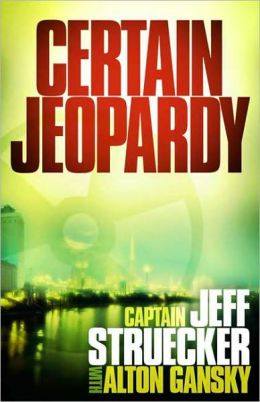
    If you want authentic military thrills, Captain Jeff Struecker teams with author Alton Gansky to put together an intense story about a journey to Venezuela that morphs into something totally unexpected, acutely dangerous and, as things go terribly awry, with little chance of succeeding. Going from observation status to "certain jeopardy" involves the separate kidnapping of Hector Cenobio, a respected nuclear physicist, and his wife and two young children organized by Islamic terrorists from Iran and an upper minister in the Venezuelan government.

    Six Special-Ops men get "the call". Team leader is at a civilian doctor's appointment, one team member is mountain biking with his brother, and one must leave his pregnant wife and young children, while the others all respond with the requirement to be at headquarters within an hour. They all arrive, joke around, receive their instructions, their comnmercial flights, and are on their way.

    There's a secret meeting at a local family restaurant which results in a murder. When the murder is tied to the mission, the  mission radically changes and everything ratchets up for the six Americans.

    The discovery of a past failure of one team member's actions to get a critical instruction taken care of causes the danger to amp up and sends the group into premature actions, putting everything at risk. With death seeming like a real option to each member of the team, the mission requires constant improvisation and critical decision making on the fly.

    Meanwhile back at home, the teenage son of the team's leader has a major chip on his shoulder and gives his mother grief after frequent arguments with his father, the pregnant wife of the assistant team leader is about to lose her baby and possibly her life, an argument with his ex-wife over child-support precedes the mission for another team member, and life strains at both ends for these families.

    Certain Jeopardy is filled with tension, conflict, and the need for impossible decision making. Well-written and a genuine thriller, Captain Struecker and Alton Gansky make an incredibly cohesive team and present a believable scenario of Spec-Ops soldiers in horrific situations, doing all they can to make the mission work under impossible conditions.

    I must admit as per my usual conduct where the military is involved, there were plenty of tears shed toward the end of this story. Christianity is presented perfectly as a way of life for individual characters with equal exposure given to those who don't believe. Resolutions of faith for the unbelievers were left open for another story.

    Highly recommend Certain Jeopardy published by B&H Publishing Group for thriller readers – especially those like me who admire the military and Spec-Ops.


    Father, thank you for teaming up these two wonderful men of faith. Thank you for the dedication and years of service to the military given by Captain/Chaplain Struecker, for the giftings to this soldier of bravery and courage, but most of all for his devotion to you, and thank you for Alton Gansky who has dedicated his gifts to you for many years. Please bless these men in their individual writings and their team stories. Keep the inspiration coming for them, Lord. In the Name of Jesus, Amen.


  •  

     
    SilentMovieCard-NTSC-DVwidescreen


    I wrote this post on titles last year:

    http://hopeofglory.typepad.com/into_the_fire/2012/03/titles-of-novels.html.

    Are you satisfied with the titles you've attached to your work? Is naming your stories a struggle for you?

    I love titles with dual meanings. The innuendoes surface somewhere along the pages of the novel, or the title takes place in conversation between characters and gives relevance to the deeper message.

    Honestly, I love good titles. Of all kinds. One word or a few. Good titles just add another dimension to the story and reveal something worthwhile about the book.

    So, can you think of some of your favorites? You can either list them for the specific genre(s) or throw out a few you like, including your own. I'm easy.

    Here are some of my own that I love with dual meanings:

    Hope of Glory

    The Famous One

    Breath of Life

    Destination

    The Fixer (for its genre, it works)

    Race (WIP)

    Here are some from other authors:

    Comes A Horseman; Germ; Deadfall (Robert Liparulo)

    Almost Heaven (Chris Fabry) (Although I love Chris's writing, I loved the title better than the book this time.)

    The Last Man; Kill Shot; Consent to Kill; The Third Option (Vince Flynn)

    Back on Murder; Pattern of Wounds (J. Mark Bertrand)

    Less than Dead (Tim Downs)

    Unforgotten (Kristen Heitzmann)


    Father, thank you for the beauty and talent you disperse, but most of all thank you for the salvation you offer to all. No words to express that kind of gratitude. In the Name of Jesus, Amen.


  •  

    The floodgates of the heavens are opened,

      the foundations of the earth shake.

    The earth is broken up,

      the earth is split asunder,

      the earth is thoroughly shaken.

    The earth reels like a drunkard,

      it sways like a hut in the wind;

    so heavy upon it is the guilt of its rebellion

      that it fails – never to rise again.


    Isaiah 24:18b-20 (NIV)

  •  

                      
    Th

    Who can know them? Once in awhile we are given notice of impending actions, but most of the time we are called by faith to believe in what we cannot see, to trust not in ourselves, and to walk in the Spirit. It's a tough go. But it's the best "go".

    Lee Hough wrote the following entry to his CaringBridge page. It makes me sad because it seems his battle with brain cancer is coming to an end. He will be the victor, but it's not easy to view it that way from down here. God's not limited by time or disease. That's all there is to say. Please pray for him and his family.


    "As many of you already know, I received a clear MRI on my brain back in February of this year.  But then I began to have regular headaches again (one of the symptoms that first indicated something was wrong two years ago).  So, in June a different type of MRI test revealed the cancer had spread all throughout the right side of my brain and into the brain’s corpus callosum, which is the connecting area between the two hemispheres. With that discovery, the oncologist predicted I had about two months to live.  That was seven weeks ago.  I have since retired from my work as a literary agent with Alive Communications. In light of my circumstances, my car mechanic and good friend, Hugh, recently asked, “How do you know Christianity is the only way?  The one true religion out of all the others?”  By the tone of his voice, I could tell this wasn’t simply an academic question for him.  He really wanted to know. And your answer? Christian theologians and philosophers have studied the world religions and have written brilliant, comprehensive responses to Hugh’s question over the centuries – but unfortunately none of that was on the tip of my tongue that morning as the two of us stood there in the middle of his car junkyard.  Even if I had had some impressive argument to wow Hugh with, something about serving up an argument to his question felt wrong to me. I think he was looking to hear something spoken out of conviction by me rather than cleverness. Truth be told, looking back I wish that I would have just simply said, “How do I know Christianity is the one true faith?  Because Jesus Christ was crucified, died, and on the third day was raised from the dead.”  And where does this answer come from?  From whom?  An eyewitness.  The Apostle Paul laid down this cornerstone confession for the early church after he himself saw Jesus alive: "Now, I want to remind you of the gospel I preached to you . . . by this gospel you are saved (1 Corinthians 15:1-18): For what I received I passed on to you as of first importance:  that Christ died for our sins according to the Scriptures, that He was buried, that He was raised on the third day according to the Scriptures, and that He appeared to Cephas, and then to the twelve.  After that He appeared to more than five hundred of the brothers and sisters at the same time, . . . then He appeared to James, then to all the apostles, and last of all He appeared to me also." So, tomorrow, Friday, I’m headed back out to Hugh’s junk yard to say those words that have been the bedrock of our belief for 2,000 years.  I’d like to close this Caring Bridge with these beautiful contrasts from Paul: *  That we are sown a perishable body, but raised imperishable.    (1 Cor.15:42) *  Sown in dishonor, raised in glory (43) *  Sown in weakness, raised in power (43) *  Sown a natural body, raised a spiritual body (44) My friends, we’ve prayed for healing and whether that may still yet happen in this temporal world or not, I believe I’m about to receive that permanently.  Thank you all for showing Paula and I Jesus in the way that you have prayed, loved, and supported us through this journey. Sown in weakness, raised in power. Lee"


    God, you know Lee. You know the pain and trials. You know the outcome. I always ask for a miracle because you are able to do those things we can't explain. However, like the Hough family, I accept your results, knowing those left here will suffer sorrow. Please, if you choose not to heal Lee here, give his family all they need to go through this utter sadness. Please. Thank you for Lee, a true gentleman, a good man, a Christian to the end and beyond. In the Name of Jesus, Amen.                         

  •  

                           
    ThCAOPGHX8


    Writers know all about alter egos. They usually have many. They have to. The good, the bad, the ugly, and all the squishy parts in between those familiar identifications.

    If we can't look deep inside ourselves to find the essence of many characters, we often manage to make them cliché. Of course we hope we can't fit inside the skin of a serial killer, or an adulteress, or even a small time crook, but in spite of our queasiness at attempting to visit those mindsets, we must feel the depravity that accompanies those actions and portray them without a carbon copy character. Not an easy task to do evil well. Unless . . . well, we won't go there.

    Which is precisely why we sometimes struggle with our bad characters. We earnestly try to avoid those kinds of actions in our real life, but we can find emotions or desires for revenge, unforgiveness, infidelity, lying, cheating, and even murder if we profess to be honest and are willing to delve deep enough into this thing we wear called flesh.

    Alter egos assert themselves in conversations, day or night dreams - even blog posts. We object strongly or silently condone getting even. How much more can we write these kinds of emotions which inspire actions in our characters?

    Do you have an alter ego when you write? Will you admit to it?


    Father, the war continues between our spirits and our flesh. Please hold us steady in you but give us critical insight into this flesh to portray it, not glorify it, in writing. Help our stories show the battle as it truly is. In the Name of Jesus, Amen.  

  •  
    King-maxwell-show-page-594x207


    King and Maxwell is entertaining, laying the groundwork for the continuation of this series. I like it. Good chemistry between the actors Jon Tenney (playing Sean King) and Rebecca Romjin (playing Michelle Maxwell), not bad writing which I think will improve as more history is laid down for the characters. Anyone else watching this series?


    Lord, thank you for the talent you give to so many. If only they would use it for your glory . . . In the Name of Jesus, Amen. 

  •  

     
    OpenOffice-Writer


    Either you are or you aren't. A writer. Creative or otherwise. Yes or no. Enough of the foolish declarations and self-doubts, false humility, fearful murmurings of how you can't really call yourself a writer. Enough! Pick one: writer or not.

    Being "published" does not define you. It no more makes you a writer than running makes you a marathon man/woman. If you're not a writer, what are you?

    It's time. Writer up! Either be one or don't.


    God, thank you for giving me the privilege of writing words in stories. I love writing. Thank you for all of it. In the Name of Jesus, Amen.  

  •  

                                
    5959221643_7_deadly_sins1_xlarge


    The relative definitions of "right" and "wrong" from those who choose not to believe in a deity or choose to define creator as superior-intellectual aliens or as some abstract fluid and distant entity far removed from everyday life, naturally recoil at the biblical references to sin.

    Sin is a dirty word. Personal. Antagonistic. Prejudicial. Restrictive. And no one wants to admit to it.

    One person's "wrong" is just another person's "right". We're seeing this more and more as some collegiate professorial types are now calling pedophilia just another sexual persuasion not unlike hetero/homo-sexuality. Certainly not "sin".

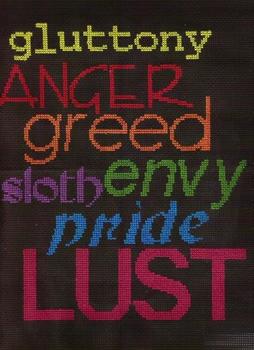
    As a full-fledged sinner type, I can testify as to what the hell is wrong with sin. First off, it's hell-ish. If behavior goes unchecked, the nature of mankind is to corrupt whatever he chooses to do. Without some restrictions as to what's acceptable and upright, murder, mayhem, and misery prevail. If this wasn't the case, utopia would've arrived by now. Clearly, it has not. Ever more clearly is the disintegration, rebellion, and repetition of heinous behaviors from mankind manifesting themselves in the gruesome and barbaric live murders of full-term babies, the perversions of beastiality still present, pornography of all types on the rise, homosexuality and transgender supplications lauded, and the direct evidence of lying, cheating, and even murder from the higher-ups in government. This world is full of sin. And it isn't pretty. And rather than deteriorating in the amount of demonstrated conduct, it's on the rise.

    The underlying problem with sin is that much of it is accompanied by a little fun or a lot of fun. When you inject entertainment into the mix of right and wrong, suddenly there are innumerable excuses as to why sin "isn't so bad". The human flesh loves to experience gratification of many – perhaps any – kinds and will propel us forward into doing things we sense are not particularly good for us in the long term. But, boy, that short term thrill can justify the moment. At least until the remorse sets in to those whose consciences are not yet seared.

    Conscience in and of itself can provide reasonable arguments for not doing something which can be harmful to us or others and can establish a distinct right and wrong. The problem with conscience is it can be influenced by the effects of sin. If you betray your conscience enough times, repeatedly, it disappears as a warning label and provides no strong objections to the bad behaviors and consequential choices. And if the consequences seem minimal – which really they rarely are – there's all the more reason to rationalize what you've done. You develop a resistance to the severity of the outcomes because of your desire to continue certain behaviors. Sin is definitely addictive.

    The final example of a life of sin is the one displayed on your face, tattooed in your eyes. You might not look like a meth-head in physical appearance (which really is a picture of a life given over to sin), you might be beautiful or handsome in physical stature, but there is one detail you cannot prevent if sin is your lifestyle of choice: hardness. It will scream its presence from your eyes, your expressions, your attitudes, your general countenance. It cannot be disguised or hidden. In fact, it will eventually become blatant. Its level of decadence will be worn as skin, your flesh. Unrecognizable to others of like-minded living and even to you when studying your image in the mirror, you cannot be separated from it by your own doing.

    And once you embrace sin, indulging it as a chosen companion, the cure for your woes becomes a distant vision, unclear and blurred. It's still there in its brilliance, but you can't see it well even in moments when you try. You begin to wonder if it was ever real.

    So. These are "WTH is wrong with sin?!"

    Romans 6:23


    Father, you delivered me from my life of sin and you took the hardness and washed it away with the Blood of the Lamb. There are no words good enough to explain the Glory. In the Name of Jesus, Amen.