Into the Fire

Passionate thoughts about the world of writing and the Power of God

  •  

    The sting of death is sin, and the power of sin is the law. But thanks be to God! He gives the victory through our Lord Jesus Christ.

    Therefore, my dear brothers, stand firm. Let nothing move you. Always give yourselves fully to the work of the Lord, because you know that your labor in the Lord is not in vain.

    1 Corinthians 15:56-58 (NIV)

  •  

    Truth is hard to come by in politics . . .

    http://www.ijreview.com/2012/05/4647-navy-seals-slam-obama-over-bin-laden-campaign-ad/

    And giving credit where credit is due is exceptionally difficult for this president . . .

    http://www.ijreview.com/2012/07/10884-former-navy-seal-team-six-commander-launches-pro-romney-pac/


    Father, please have mercy on this nation. We know the time is coming when the vast mercy you've shown to this nation and all others will be rescinded as hearts continue to turn cold, but we ask for it now. We ask you to remember your remnant. We ask for conviction in our faith. We ask for your justice tempered with your mercy. We ask for deliverance from this evil. Please. In the Name of Jesus, Amen.


  •  

    I figured out a way to list five categories so I could include any number of authors in each one. So in the spirit of Five, in no particular order, here are five favorite genres and some authors I love that fit into them. Fair enough? It's gonna have to be.

    Thrillers:

    Robert Liparulo, Steven James, Vince Flynn

    Crime/Mystery/Suspense/Horror:

    J. Mark Bertrand, Sibella Giorello, Mark Mynheir, Brandilyn Collins, Tim Downs, Mike Dellosso

    Legal/Medical:

    Randy Singer (some), Robert Whitlow (some), Harry Kraus (MD)

    Military:

    Don Brown, Oliver North

    Contemporary:

    Lisa Samson, Susan Meissner, Travis Thrasher, Randy Alcorn, Gina Holmes, Tosca Lee (had to throw Tosca in here somewhere!)

    To name a few.

    And since I can't leave out Romance, I must include it in my closing comments. CBA Romance is rarely done well so I have only two authors to mention out of the multitudes that write it, and I'm writing myself into this category as well. If I can do nothing else, I can write romance. Whether or not it's good is up to the reader, but I know romance. Here we are:

    Kristen Heitzmann, Becky Wade, and moi.

    Lord, you've given your people so much talent to use in so many ways to bring glory to you. May that be my sole and soul objective. I wish to honor you. In the Name of Jesus, Amen.

  •  

                   ThCATEJTBA

    Straddle

    I have one foot lodged in the niche of the Ancient Rock,

      but the other foot
    pulls me away as it pushes down

      in the sinking sand

    Straddling the abyss of faltering commitment.

    Before too long, a decision will be made,

      for I concede I will
    not be split in two.


    I feel like I am already—

      split in two, I
    mean.

    The one firm, steadfast, simple,

    The other fraudulent, slippery, sordid.


    I recall the strength of joy,

      though not clearly
    now.

    The fog is rising up from the foamy sea of doubt

      obscuring my senses

      of all things real,
    leaving only images overwhelmed

      by grey.


    The leaning is toward morose,

      its tentacles
    embracing me,

      illicit in its
    touches,

    but I’m somehow drawn to them

      like the whispers of
    fine wine,

    seducing me into a bed of the dead.


    Decisions!  Why must I
    always make them?

    I’m weary of trying to make them.

    Demands of honor and rightness—

      those foreign allies
    pestering me in silence.

    Apathy and Compromise stalking me

      with loud and
    jeering chorus.


    My muscles ache as the pull of separation

      presses against
    them.

    Can I now move to either side—

      or am I doomed to
    neverending, abysmal freefall?

    My support giving way to indecision

      as I glance between
    my legs?


    The horror of such an impasse

      creeps up my
    outstretched loins

    and registers the deception.


    My sickness has corrupted my vision,

      the exhaustion has
    left me fragile

      and immobilized.


    I now lunge hard toward the Rock

      but the sand sifts
    further away

      because of my sudden
    shift,

    and my body sinks with my foot.


    A scream erupts—it is my own,

      though distant and
    unfamiliar.

    I hardly recognize my plea—

      for it has a new
    desperation

      in the tone.

    One I’ve never known.


    There is a breakthrough in the sand—

      only doom awaits as
    I am up to my knee

      in the cold wet
    granules

    And I cannot hold apart my legs,

      the pain will
    overcome me.


    I remember standing on the Ancient Rock

      contemplating the
    shapes of sand—

      the castles, overrun
    by charging waters,

      becoming the anatomy
    of many things,

      and dissolving in
    the wasting waves.


    Why was I drawn to them when I saw their destruction?

      When I knew their
    taunting, teasing

      promises of
    fulfillment

    were as flimsy as the structures

      which disappeared
    the instant I experienced them?


    Is my devastation assured?

    Has every attempt to salvage my wayward soul

      been skewed?

    Half-hearted efforts to seek the respite of the Rock?

    My secret desire to claim all I can from the lying sand?


    No more!

    As weak as I am, I cannot reach for safety.

    I cannot see victory—my view is concealed.

    If there is mercy, I am in need!

    Desperate to escape the sands of death.


    The Rock becomes my focal point.

    For now I realize it is the only solid form

      in this life—

      so fractured is my
    own, divided and

      unmanaged.


    I yearn for rescue, but am powerless.

    The tears come unbidden, but from true sorrow.

    Calamity and Ecstasy have bartered for my attention—

      and received it.

    When did I ever rest between them?


    Why have I wasted such passion

      pursuing paths of
    little value?

    I surrender now.

    Allow me sanctuary, and I will destroy

      the paths of wicked
    ways—

      or at least subdue
    them.


    Grant me the firmness of your strong surface,

      the depth of your
    crevasses

      holding me, secure.

    I need you.

    To lift me from this death grasp,

      to refresh my
    parched and withered spirit,

      to allow me the
    renewal of clear vantage.

      Of full breath,

      of hopeful seasons,

      of gainful energy to
    explore beyond the surface

        of your massive
    parts.


    For it is now that I come to know you

    in all your beauty and refuge.

    Now at my darkest moments,

    where need is truly measured,

    I reach for you.


    Only to learn you wait . . .

      For that moment when
    I relinquish

      my hold, my stance,
    on everything I am and

      give it up to you.

                ThCAI1ZXMD


    Father, thank you for your love, your rescue, your steadfast mercy. In the Name of Jesus, Amen.

  •  

                                    113851523

    *Special thanks to Tim George for gifting me with a Kindle copy of The Tenth Crusader by Kirk Outerbridge, published by Marcher Lord Press.

    Once again Kirk Outerbridge reunites us with the future world of partial and full cyborg bodies, neural nets plugged into neck ports, miracle treatments to retain youth, and the hero, former General Rick Macey who's 120 years young – or is he 112? No matter. He's an old man by our standards, but he's obviously a handsome and virile hunk in his reassembled body.

    Rick Macey loves and is married to a shrew named Sheila who doesn't share Rick's Christian faith. She's the CEO of Miracle Treatment and possesses the worldly definition and personality of the female corporate type. When Rick must once again postpone their honeymoon to investigate a political assassination in the Philippines, Sheila shows him no mercy in her all out rant, and he departs without further contact with his wife. He assigns Bobby, his young friend and computer geek-extraordinaire assistant to look after her while he's gone.

    What he doesn't share with either of them is his intimate history with the individual who's committed the assassination of the female speaker for the big event in the Islamic hotbed of the Philippines which is going to unite all of its religions under the IAO which stands for Islamic Alliance of Oceania in a big celebration in just a few days. So far the woman's death has been hushed up, the powers-that-be counting on Macey to resolve the situation.

    Hooking up with a female Muslim police detective, "Salim", and an overweight Latino coroner, Macey does his best to get along, but there's resentment toward him calling the shots since Salim was pulled off an important case to assist him. 

    The Tenth Crusader is an ambitious novel with multi-level plotting, high-action cyber war, religious conflicts, and amazing imaginative constructs. With a reference to Woody Allen by Macey in a shocking revelation amid scenes with cyborg ladyboys, the story presents all kinds of conflict, confusion, and conviction.

    Kirk Outerbridge has written another entertaining futuristic novel leaving the door wide open for further Macey books in the final scene. I'm all for them because Kirk is able to give Macey that vulnerable hero complex who doubts his abilities as a Christian and a husband. He wrestles with the façades that must stay in place for him to do his job effectively. He struggles with his past, his faith, even lust. His convictions are nearly shattered in this story.

    I have a few minor complaints. The multi-level plotting is its own worst enemy at times. So much is going on that when the scenes switch to yet another situation, it can be difficult to catch up or return to previous circumstances and character connections. There are several "messages" within this story, but as valid as some of them are, it's a bit hard to decipher them because at times the points dart back and forth with seeming sympathies for both sides of important and opposite issues. Sometimes when we authors try to do too much, we fail to do enough to make our main objectives clear. Also, Macey becomes an uncharacteristic wuss around his totally unlikable wife. His repeated confusion about his conduct doesn't always fit with his age factor. Finally in a late scene where there is blood evident and an assured death, it's later learned there was no "biological material" in the found corpses. If so, why was there blood present when every indication was given that the individual had died? If not, that particular scene was misleading.

    In spite of my problems with parts of the novel, I found Kirk Outerbridge's The Tenth Crusader a strong followup to his original Eternity Falls where we were first introduced to Rick Macey. As far removed as the genre is from my preferences, Kirk has proved himself a worthy and enticing storyteller. I will gladly read another Rick Macey story. Kudos to the cover designer for such a fitting and striking cover on The Tenth Crusader.

                      115458326


    Father, I pray your abundant blessings over Kirk and his family. Please continue to supply his imagination with the original stories you've given him to tell. Watch over him and may he honor you in all he does. In the Name of Jesus, Amen.      

  •  

    . . . is not necessarily the writer in me. Okay. You knew that. But think about it. Somewhere within the mindset of Christian readers and some writers, many expect and impose their preferences on the rest of us. The question is why?

                         Angry
        

    If you're a parent, you know how different your children can be. What works to establish boundaries for one child produces frustration or rebellion in another. If you're a friend, consider those personalities of your BFFs. What makes one cry will make another laugh. What makes one don a crusader cape will produce indifference in another. Contemplate bosses. One will encourage participation and hard work. Another will discourage effort and breed contempt.

    Jesus knows us all, believer and unbeliever. The Holy Spirit can minister to anyone, call anyone, convict anyone, but He stops at demanding anyone follow and obey. That choice belongs to us as individuals.

    So why do some readers and writers demand others follow and obey their rules for content and expression in fiction?

    Standards for novels are set by publishers. If they choose to move the margins, that's their perogative. The general market's standards seem to be unlimited or undefined. CBA publishers use varying degrees of restrictions and most of them look like a chastity belt compared to the ABA.

    The controversy is built on biblical interpretations of key verses applied to storytelling. The verses used depend on which charge a particular reader (and sometimes another writer) is leveling toward words or situations depicted in the scenes of novels. Yes, novels. Stories. Designed to portray people, places, and things interacting in this world or fantasylands. Told with historical or contemporary or futuristic backgrounds. Written in first, second, third, omniscient, or all of the aforementioned points of view. Delivered as allegories, action tales, mysteries and thrillers, crime fiction, romance, westerns – all modes of fiction.

    I've never bought into the comparison of novels to the parables of Jesus. Jesus gave vignettes of life geared to the understanding of the everyday man. Jesus also stormed the temple tipping over tables in righteous anger, and he called the Pharisees a "brood of vipers", "dead men's bones in whitewashed tombs". Neither gentle nor shy about leveling poignant insults to those who deserved them. He understood the heart of man. Still does even when we humans don't understand our own. The heart is where He looks.

    The approach to stories by many authors is to take a look into the human heart. To show the workings of human thoughts, actions, emotions, and beliefs. Whether in drama or comedy or thriller, whatever genre, different approaches tell the stories of human viewpoints. Expressions of those viewpoints are as diverse as the authors themselves. It's clear by observing people that God is the originator of diversity. He brings along those who choose to be His people at the individual speed and comprehension levels of the individual. He knows each one's vulnerable areas and every time there's failure.

    The conflict continually arises when some readers decide what can be included in stories identified as Christian literature. In reality the publishers have already decided this. However, irate objections produce results. Publishers do respond to negative onslaughts. Christian publishers are known to cave in to those vocal complaints which self-righteously proclaim what is "acceptable" for all readers not just themselves.

    Yes. Self-righteously. "Offended" by words or commonplace circumstances which incite their holy-meters in a negative way, they insist certain situations will – or should – be repugnant to any Christian reader, negating the spiritual makeup of the writer and the judgment of the publisher. Using scripture to define their points of view, they contend authors/publishers should never be responsible for causing believers to stumble or misleading their thought processes to start meditating on the unlovely, untruthful, ungodly, for heaven's sake. Stories. Not mandatory reading. Stories. Books that you can stop reading at any given point in time and probably return for a full refund because of your "offense".

    Please don't mistake these frequent posts expounding on this topic as championing the cause for cuss words, sexual content, vulgarity, or anything else you see regularly in ABA fiction. It's not about general content. Christian authors write for multiple reasons, but ultimately they all answer to the One who's given them their talent. This is significant, is it not? We can judge another's writing for ourselves and choose not to recommend it because it pushes our standards in what we feel is a wrong direction. But we cannot universally state the particular author has crossed the line we constructed and expect all Christians to abide by our judgment. Harping on words and situations in fiction eliminates the ability to create contrast, to demonstrate the human struggle.

    You know what "offends" me? An overabundance and neverending supply of particular novels which exalt a religious lifestyle as if it's a biblical and holy example of the Word of God. Have I ever written an angry letter to those publishers who shell them out like bullets from automatic weapons? No. Will I? No. It's not up to me to answer to the Holy One for them.
           
    The writer in me must answer to the Spirit of Truth. And I'm thankful for that. I don't answer to the critical Christian who assumes everyone walks in Christ by his righteous perspective, like he alone can interpret the scriptures and flawlessly apply them to storytelling. The reader or writer who assumes he must be my judge or the presiding director of what stories constitute and must include to contain a Christian perspective is taking on more than he has been assigned. And that, for me, is more offensive than a few words or situations in a redemptive novel. 

        Judge_holding_gavel_in_courtroom_pe0073668


    God, you are righteous and holy and just. You are Love. You are Truth. The Blood of Jesus washes over me. My repentance and acceptance of the sacrifice of your Son gave me new clothes of righteousness because of Jesus. I do not take my position in Him for granted. I acknowledge that grace is not an enabler for sinfulness. My desire is to be obedient in all things even when I fail and ask forgiveness. You right my soul. You don't condemn me. You allow me to grow in you and hear the Spirit of Truth. You give me wisdom when I ask. You show me the Way, Jesus. Holy Spirit, help me to always hear your voice and heed your instructions. I love you. Apart from you, I can do nothing. In the Name, Authority, and Blood of Jesus, Amen.         

  •  

                                       Safe_image

    The 2012 Christy Award nominees are:


    Winners are now highlighted in red:


    CONTEMPORARY ROMANCE

    • My Foolish Heart by Susan May Warren (Tyndale House Publishers)
    •  
    • Larkspur Cove by Lisa Wingate (Bethany House, a division of Baker Publishing Group)
    •  
    • Wolfsbane by Ronie Kendig (Barbour Publishing)

    CONTEMPORARY SERIES, SEQUELS, AND NOVELLAS

    • The Amish Midwife by Mindy Starns Clark and Leslie Gould (Harvest House Publishers)
    •  
    • Dancing on Glass by Pamela Binnings Ewen (B&H Publishing Group)
    •  
    • The Touch by Randall Wallace (Tyndale House Publishers)

    CONTEMPORARY STANDALONE

    • Dry as Rain by Gina Holmes (Tyndale House Publishers)*
    • Promises to Keep by Ann Tatlock (Bethany House, a division of Baker Publishing Group)
    • Words by Ginny Yttrup (B&H Publishing Group)*

    FIRST NOVEL

    • An Eye for Glory by Karl Bacon (Zondervan)
    • Southern Fried Sushi by Jennifer Rogers Spinola (Barbour Publishing)
    • Words by Ginny Yttrup (B&H Publishing Group)*

    HISTORICAL

    • Forsaking All Others by Allison Pittman (Tyndale House Publishers)
    • Mine is the Night by Liz Curtis Higgs (WaterBrook Multnomah Publishing Group)
    • Wonderland Creek by Lynn Austin (Bethany House, a division of Baker Publishing Group)

    HISTORICAL ROMANCE

    • A Lasting Impression by Tamera Alexander (Bethany House, a division of Baker Publishing Group)
    • The Maid of Fairbourne Hall by Julie Klassen (Bethany House, a division of Baker Publishing Group)
    • To Die For by Sandra Byrd (Howard Books, a division of Simon & Schuster)

    SUSPENSE

    • Over the Edge by Brandilyn Collins (B&H Publishing Group)*
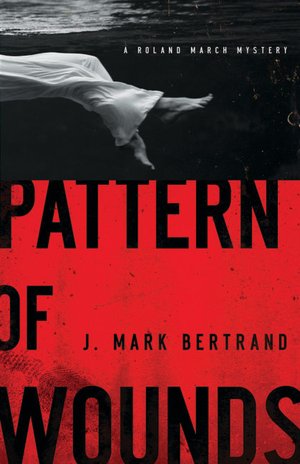
    • Pattern of Wounds by Mark Bertrand (Bethany House, a division of Baker Publishing Group)*
    • The Queen by Steven James (Revell, a division of Baker Publishing Group)*

    VISIONARY

    • The Chair by Jim Rubart (B&H Publishing Group)
    • Forbidden by Ted Dekker and Tosca Lee (Center Street, a division of Hachette Book Group USA)
    • Veiled Rose by Anne Elisabeth Stengl (Bethany House, a division of Baker Publishing Group)

    YOUNG ADULT

    • How Huge the Night by Heather Munn and Lydia Munn (Kregel Publications)
    • Merchant’s Daughter by Melanie Dickerson (Zondervan)
    • Waterfall by Lisa T. Bergren (David C Cook)


    List courtesy of WynnWynnMedia: http://wynnwynnmedia.com/news/


    * Marks the novels I've read. My total is five. Five good novels, some very good novels. Keep in mind these categories are eliminated from my reading: Young Adult; Historical; Historical Romance; and the Novellas part of the Contemporary Series, Sequels, and Novellas.

    I would hate to have to choose the winner of the Suspense category. The three novels are so different and all very good.

    Also keep in mind that the Christy entrants are paid nominations by the publisher of each novel.


    Father, again I ask you to continue to bless your writers as they honor you. Give them more stories to tell and direct their steps. May they always strive to be pleasing to you. In the Name of Jesus, Amen.


  •  

                        102792911

    The Christy Awards are coming up on July 16th in Orlando, Florida. First of all, will you be attending since Pattern of Wounds is nominated in the Suspense category? Now for a more difficult question: do you think they should add an additional category for Thrillers since this isn’t the first time novels which don’t easily fit into the Suspense category have been thrown together with those that do?

    JMB:
    I attended ICRS, where the Christy Award ceremony is held, last summer, and was hoping to get there this year, too––especially given the fact that Pattern of Wounds is a finalist––but I couldn’t make the schedule work, so the always-excellent live blog will have to do. Since I had the privilege of being a Christy judge for a couple of years some time ago, I know a little bit about the process. My guess is, if there were enough novels like mine to justify a separate category, they’d create one. But there’s not a lot of serious crime fiction in the evangelical market, and it’s not too much of a stretch to move it under the suspense banner.

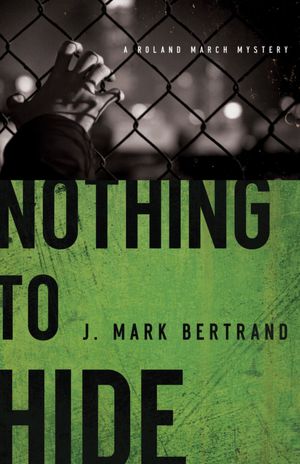
    For most authors it’s difficult to reflect on a past novel after releasing another (Nothing to Hide), but is there anything unique you’d care to share about the writing of Pattern of Wounds or personal feelings about that particular story?

    JMB:
    None of my books are what they appear to be. On the surface, you see this CSI forensic thing happening, a convention genre trope, but if you read closely you find that the assumptions are being undermined. In Pattern of Wounds, the trope in question is the serial killer story. I hate them. Of course, they’re perfect for the novel, since you can unveil a series of ever-more-ghastly, ever-more-inventive murders, but what the serial killer trope says about our concept of evil is something else. That’s the question I wanted to explore.

    Pattern is my “problem of evil” book. I’m passionate about it, so it’s a pleasure to see the book honored by the Christy judges.
                         Nothing to Hide

    How do you feel about awards for writing?

    JMB:
    The trick is to enjoy the recognition without letting it influence you. I’m not indifferent to the recognition. There’s a part of me that really craves it. As a novelist, you’re a loner much of the time, unsure whether anybody really understands or sympathizes with what you’re trying to do. So it’s nice to get some confirmation. But I think writing awards are a lot like medals for heroism––wonderful to receive, but not something to chase after. Chasing after them is risky. 

    As you know the marketing and publicity people love to label everything, but authors don’t always align with their assessments. Give me your description of your Roland March Mystery Series.

    JMB:
    It’s a series of crime novels, specifically detective stories, written by a man interested in a bunch of murky questions which are ultimately theological. If books published by evangelical houses weren’t tucked away in the inspirational section––a rather inappropriate heading to file novels like this under––they’d go nicely on the same shelf as James Lee Burke, Michael Connelly, and Ian Rankin. In fact, it was reading Burke that convinced me the crime novel could be an ideal form for exploring the kind of themes I’m obsessed with.

    Roland March is a damaged man with a lot of submerged pain. Is there anyone in particular after whom he was fashioned? In your mind how did he become who he is initially?

    JMB:
    If you read the three books that have been published along with the excerpts from The Kingwood Killing posted at jmarkbertrand.com, you can see how March went from a promising, idealistic police officer to the mess he is today. The mess is good, if you ask me. It shows he hasn’t been able to do this kind of work so long without being altered. I despise the heroes of commercial fiction who might as well have been snipped from a Sears catalog, upright and unscathed. They’re interchangeable. I’m not interested in reading about them, or writing about them. March isn’t based on any one person. Perhaps he’s an alter ego, heavily disguised.

    An actor to play Roland March? Soundtrack artist to do the scores? Director?

    JMB:
    If you took Philippe Noiret around the time he did Coup de Torchon, looking kind of scruffy and put upon, stuck him in a suit and put a gun in his hand, I’d be happy with that. I’d love a soundtrack by Michael Nyman or Philip Glass––though I’m sure March himself would prefer Johnny Cash. Maybe Anthony Minghella as director, since he was so good at adapting books. If I had to use living actors and directors, I’m not even sure where to begin. 

    The main thing, to me, would be capturing the mood of the books. People think of Texas and reach for hyperbole and ten gallon hats. That’s not what these books are at all. 

    I’d better stop thinking about it … 

    Your research for these novels?

    JMB:
    Living, mostly. I’m not being flippant here. A lot of well-researched books ring false because they don’t capture the truth about life. I try to get the details right, but trust me, it’s not about the details. The facts in fiction are just part of the illusion. I’ve always been fascinated by crime and detection, so I don’t have to reach far to get the facts right.

    Mark, anyone who’s read your novels, visited your websites over the years, or has had the pleasure of speaking to you in person recognizes the quality of your talent, the depth of your intelligence, and the gracious nature of your personality. In evaluating your writing, what do you consider your greatest strength?

    JMB:
    Thank you very much. I believe very strongly in what I’m doing, so consequently, I’m not at all objective. My greatest strength is also my greatest shortcoming: subtlety. I’m content not to spell things out. I write for those who have ears to hear, eyes to see, etc., which takes some discipline, because people have to look closely to see what’s going on. 

    Considering your MFA, how do you evaluate the so-called rules of writing common to Christian fiction?

    JMB:
    To answer that, I have to break a taboo of today’s Christian fiction and get preachy. Feel free to skip to the next question. 

    Still with me? All right, then.

    Let me channel Mark Noll and make a pronouncement: “The problem with the evangelical novel is that there is no evangelical novel.” Someone can be superficially Christian, but not deeply so. On the other hand, someone can be deeply Christian, but not superficially so. Most evangelical fiction falls into the former category as a result of the formula by which it was manufactured, which joins the conventions of late twentieth century commercial writing with a watered down version of Joseph Campbell’s hero journey. The “spiritual content” calls a lot of attention to itself in the way a boisterous hypocrite might, but under the surface there is nothing especially Christian about the ideas the story explores. 

    Walker Percy called postmodernity the “theorist-consumer age,” and in this sense I’d say evangelical fiction is quite postmodern. It justifies itself with an appeal to the consumer––this is what readers want––while at the same time throwing mud at the deeply Christian writing that went before and is trying to go again. The idea is, the consumer is a christened consumer, therefore what she wants must be Christian. (But would you attend a church where the preacher only tells you what you want to hear? If not, then why would you hobble your reading with such provision?)

    Now when people talk about Christian fiction, there are typically two trends: the old-style preachy stuff and the new-style soft-pedaling stuff. I’d lump them both together as two sides of the same coin, like liberalism and fundamentalism. They’re at odds, but they share the same underlying assumptions. Either you get beat over the head with the message, or there’s not one. 

    Writers like me represent a third way. I’m an author with theological concerns who wants to work out certain big themes in fiction. I’m not interested in Campbell’s mythos as much as the Bible’s. High-minded Christians sometimes lament the end of the great literary tradition embodied in authors like Mauriac, Waugh, Graham Greene, Flannery O’Connor and Walker Percy. That’s the lineage with which I identify and from which I draw inspiration. Unfortunately, these high-minded readers have learned not to expect this sort of writing from evangelical houses. They’re the people who tell me they love my work, they just wish somebody else published it. 

    But frankly, my work illustrates a truth, which is this: within the larger stream of “evangelical fiction,” there are authors doing things differently, pursuing that older line of enquiry. The problem is, the market tends to punish you for this kind of thing. Maybe it comes down hard, maybe it takes no notice at all. 

    Now I realize this doesn’t touch precisely on the “rules,” but I think it does speak to the foundation underlying the rules. 

    (I agree, Mark.)

    Publishing is in flux with the e-reader “revolution”. Do you have an opinion on the state of publishing?

    JMB:
    The good news is, it’s easier than ever to publish and distribute books. The bad news is, it’s easier than ever to publish and distribute books. This is a golden age for the author-as-entrepreneur and a not-so-golden age for the author-as-artist. People who are better at writing books than writing ad copy still need marketing support and intelligent publishers to find their audience. Things will be better, though. Publishers will emerge who understand how to do their work in the new environment. This will hurt book publishing the way Gutenberg hurt scribal copying. In the end, a new balance will emerge.

    J. Mark Bertrand, who is he really?

    JMB:
    He’s a very flawed, over-educated, insecure, egotistical, bearded person in tortoiseshell glasses, an obsessive craftsman, enthralled by nostalgia, tragedy, and minor keys, sometimes sincere, sometimes bluffing, sometimes sincerely bluffing. With Hamlet he sees that time is out of joint, with Scaramouche that the world is mad, and his nostrils are filled with what C. S. Lewis once called “the stench of the holy.” 

    I’ve had the privilege and pleasure of speaking with you and meeting your lovely wife Laurie. Is Laurie your first reader? Does she influence your work in any way?

    JMB:
    Laurie allows my work to continue, which is a significant influence. She has always been supportive of this quixotic journey. Sometimes she’s a first reader. Sometimes she has things read aloud to her while she’s in the middle of something more interesting. 

    There has been a lot of discussion on the restrictions placed on writers of novels in the Christian publishing industry. Do you feel the restrictions create any dilemmas for writers or have they affected your work at all at Bethany House?

    JMB:
    The thing about the world of evangelical publishing is that, like an adolescent boy, it’s fixated on sex and language. Either there’s too much of it, or there’s not enough of it. When we mature, we’ll defer to authors on such matters. I’m with Walker Percy when he says “the only rule I follow is that anything is allowed that serves the artistic purpose of the novel.” So long as the debate rages, artistic purposes that don’t center on sex and language are prone to be overlooked. The Song of Solomon would have a hard time being published in CBA, sure. But so would the book of Ecclesiastes. 

    What is your relationship with your editor and has it been the same individual for all three novels?

    David Long acquired the books and was my editor throughout. He and my line editor, Luke Hinrichs, were supportive throughout the process, offering good feedback. Dave has great taste in fiction, is a novelist himself, and is willing to take risks when the quality is there. Bethany House has a number of strengths, but its best asset by far is editorial. 

    Your article (http://byfaithonline.com/writing-about-reprobation-2/) gave an extensive examination of noir literature and film. Do you classify your Roland March Mystery Series as fitting into your description of American noir?

    JMB:
    I’m not a noir writer in the literal sense––it’s not about being faithful to the code for me, or dabbling in pastiche. Rather, I claim noir as one of my influences, especially in its honesty with regard to corruption. For one kind of theologically-minded author, the rational puzzle stories of the Golden Age remain appealing. But I’m not of Aquinas so much as Calvin. 

    Current WIP? What can you tell your devoted readers?

    JMB:
    I never give details about what I’m working on if I can help it. Let’s just say, I’m writing crime fiction of one sort or another, and while the next book won’t be about Roland March, I hope to get back to him in time. If enough readers latch onto him, he’ll be back.

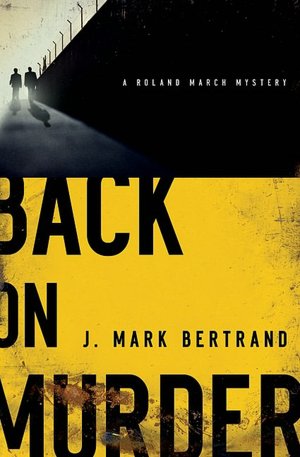
    As a Christian who writes, the faith thread runs like a thin line through all three Roland March novels. You primarily introduced it through a young pastor and his wife in Back on Murder. You’ve never degraded it even when March punches some holes in the clichés. What is your desire for readers from your Christian audience?
                          102601693

    JMB:
    March tends to know his Bible better than his evangelical critics, which means the platitudes never work with him. To me, there’s a value in seeing the world through his eyes––indeed, from seeing the church through his eyes. The vision of the church in Christian fiction is rarely prophetic, only affirming. March’s astringent observations may be just what the institution needs.

    (Again, I agree.) 

    You recently revealed in an interview that you wanted “deep readers” for your audience. Do you think this is a common desire shared with Christian publishers?

    JMB:
    Publishers are a varied lot, just like authors. What we all have in common is the desire to sell books. Most of us also want to be proud of the books we sell. Given the choice between books you can be proud of but can’t sell and books you can sell but can’t be proud of, I’d like to think most of us would prefer the former. Obviously, most publishers feel they have to dabble in the latter, too, just to make ends meet. A lot of writers do, too. There are bills to pay, and so on. Given that fact, you can imagine what a balm, what a consolation, what an absolute delight it is to hear from a single deep reader, who didn’t just skim your book but took its full measure. When those readers become enthusiastic and start recommending your work, that’s bliss.

    Your final thoughts on the industry as a whole?

    The important thing––indeed, the only thing––is the books. I’ve written three novels that aren’t like anything else in the industry, and they’re in print. If you can say that much, you have nothing to complain about. Writing is what I love, and all I want out of life is to keep doing it. The only way I can think of to make sure of that is to do it well and with all my heart. 


    Father, thank you for my friend Mark. Thank you for his love for you and his desire to wrestle the tough issues of our faith. You're always up for a good wrestle, Lord. I pray your continued blessings on him and Laurie, your divine protection, your multiple inspirations for the craft which he masters and in which he glorifies your touch on his life. I pray for many stories to tell, designed just for him. In the Name of Jesus, Amen. 

  •  

    But as for me, my feet had almost slipped;

    I had nearly lost my foothold.

    For I envied the arrogant

    when I saw the prosperity of the wicked.


    They have no struggles;

    their bodies are healthy and strong.

    They are free from the burdens common to man;

    they are not plagued by human ills.

    Therefore pride is their necklace;

    they clothe themselves with violence.

    From their callous hearts comes iniquity;

    the evil conceits of their minds know no limits.

    They scoff, and speak with malice;

    in their arrogance they threaten oppression.

    Their mouths lay claim to heaven,

    and their tongues take possession of the earth.

    Therefore their people turn to them

    and drink up waters in abundance.

    They say, "How can God know?

    Does the Most High have knowledge?"

    . . .

    When I tried to understand all this,

    it was oppressive to me

    till I entered the sanctuary of God;

    then I understood their final destiny.


    Psalm 73:2-11; 16-17 (NIV)

  •  

    Uncontrolled debt:

    http://www.newsmax.com/Newsfront/trillion-deficit-Obama-fourth/2012/07/12/id/445188?s=al&promo_code=F748-1

    A vote to expose the majority: "A bipartisan majority of the House of Representatives voted overwhelmingly yesterday to repeal pro-abortion ObamaCare." ACLJ


    Father, always we're desperate for you. Please have mercy on us. In the Name of Jesus, Amen.