Into the Fire

Passionate thoughts about the world of writing and the Power of God

  •  

    The Fast and Furious fiasco rages on with no help from the Admininstration. With the President's insistence on claiming Executive Privilege for the Attorney General and the President's part/knowledge of the plan, he's admitted there are things they don't want known about what is considered an illegal program. This was not the intention for the use of EP.

    http://www.newsmax.com/Headline/coburn-fast-furious-healthcare/2012/06/21/id/443101?s=al&promo_code=F43C-1


    God, help our nation. Please remember your remnant. Forgive us for our many sins. Restore us with your presence. In the Name of Jesus, Amen.

  •  

    9332923-one-3d-render-of-a-judge-hammer-and-a-nameplate-with-the-word

    Five things I learned about Christian readers and writers in the last two weeks:

    1. For some there is a definite double standard applied to their reading. Apparently with general market/secular literature they can scan right over those foul, vulgar, lower standard words – not liking them but accepting them – but in Christian Fiction, they're all a no-go. A vehement castigating no, and some of the words they won't "allow" without protest don't offend all Christian readers.

    2. They have a blind spot where those words are concerned. If an author or other readers defend them, they continue to cite scriptures (and other sources) about unwholesome (vulgar, etc.) language and offending people. They fail to see that some of their interpretations of said scriptures aren't shared by their brothers and sisters, concluding their viewpoints rate higher consideration while resenting being called legalistic.

    3. They're vocal, persistent, and insistent even though reading a novel is a choice, not mandatory.

    4. Some writers have no trouble surrendering potentially offensive words although they didn't include them to be offensive. In fact in most cases they didn't realize those words or circumstances would be considered offensive.

    5. I don't get it.


    God, you're the just judge. Thank you for that. In the Name of Jesus, Amen.

  •  

      Dreams_by_whisperfall

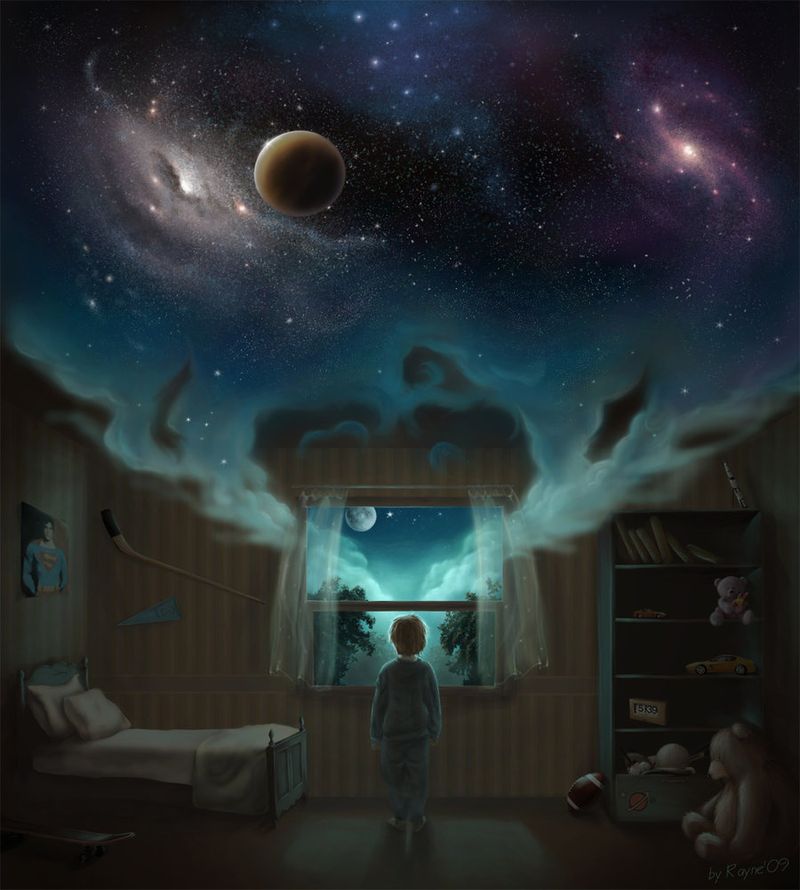
    All kinds of people, professionals and non, speculate about dreams. The bible speaks of interpreting dreams, prophetic dreams, and the significance of dreams and visions. For males and females, young and old, dreams come in the night or during the hours when sleep offers them the playfield of their minds, presenting the fantastical, the horrific, the frustrating, the silly, or the telltale scenes of problematic issues in our lives.

    But how about those inspirations we develop in our childhoods? The ones we refer to as dreams for our futures. We explain with confidence to our parents or friends what we hope to be when we're "grown up". From the silly to the profound, from the weekly variations to the unflinching constants, we learn at different times just how hard making a dream come true can be.

    We've been told by the famous, the infamous, and the next door neighbor to "Never give up!" It's assumed if you're willing to work hard enough and long enough, that dream you've been nursing along will eventually come to fruition. And for some it will.

    So what happens when it doesn't?

    As Christians, we're not so different from unbelievers when it comes to dreams. Are we? We possess our expectations, our desires, our plans and designs of what we expect our dreams to be, to look like, how we hope they'll play out. We set in motion the efforts and hard work to make those dreams come true. Don't we? And we pray.

    Many of us when forming our dreams are not quite willing to fully submit them to our Father. We fool ourselves a bit by rationalizing our desires to accomplish certain dreams we've set before us with acknowledging our gifting in this area, our obvious talent, and the call placed upon us by the Holy One. How could He want anything less than the formulated plan we've assumed is the just right path to this magnificent dream?

    And when the dream stalls? When the dream slams against obstructions like the ocean assaulting rocks? When the frustration overtakes the fervor? When the hint of anger pricks our prayers? When confusion rents our consciousness and our thoughts jerk like a balloon flapping in the wind? What of "the dream" then?

    In my experience with multiple dreams dissolving into particles so small and invisible you couldn't find them with an electron microscope, let me share what I've learned about dreams. Dreams arise in us when we love something. We thrill at the prospect of making the dream an ongoing project in our lives. We imagine what success in accomplishing this thing will feel like. How we'll give "all the glory to God for what He's done in our lives". And so on. Here's the thing. Real God-engineered dreams aren't about our successes. They're about our obedience to Him. Dreams from our Lord issued to us by the Holy Spirit's mandate involve obedience and total surrender to His goal. The pleasure – and true success – come from the celebration of what He worked into existence using us. Man-made dreams are all about us, what we can do, how we take them on and make them ours. Every day man-made dreams are realized. Most of us have realized one or two. Some small. Some large.

    But when the surrender of the man-made dream lies at the feet of Jesus, and He replaces it with what He had in mind for us all along, somehow it's better. If we'd considered it before the surrender, it wouldn't have pulled us in. It wasn't what we wanted, thought we needed, or even considered relevant. In fact we might've ignored it. But when we get to the end of ourselves, seeing who we really are, we don't want any more dreams that originate without His anointing, His divine instruction and design, His personal touch. Nothing we create without Him is worth what it costs us.

    In this old song (the first one in this link) we can see the futility of holding onto certain dreams. They continue to play out in our heads but accomplish nothing in reality. Whose dream do you want?

    So. Are ya "livin' the dream"?


    God, help us to complete what you have given us. May your intentions and designs compose our dreams. In the Name of Jesus, Amen.
  •  

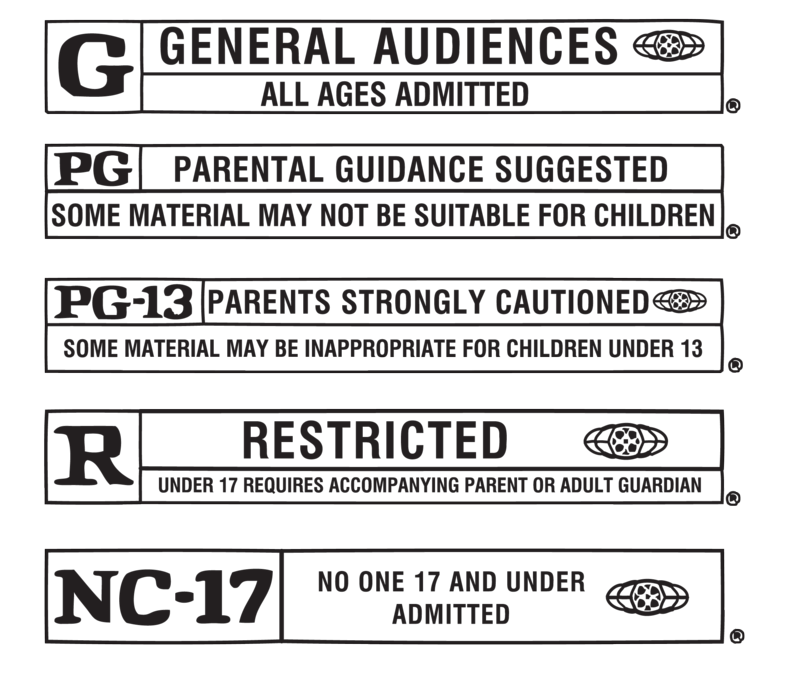
    We all know clothing comes with labels, some sewn in, others stamped on. Films come with labels – we could certainly argue about the validity of said labels (or ratings), but they attempt to identify who the viewers "should" be or will be in the case of R-ratings, etc.

     Movie_rating_labels_by_fairyfindings-d45tuzt       
    It's been discussed occasionally whether or not novels should be labeled. After the hooplah over the Becky Wade romance novel, This Stubborn Heart, some might once again bring up the possibility of labeling fiction. I don't know what position to take on this idea. I would have no objections whatsoever labeling my work  "For adult readers" because they are precisely for whom I write. But is it necessary?

    Readers and writers would still interpret the simple word "adult" differently. To some I'm sure it would be signaling an R or NC17 film rating, and since the novel would be considered by unbelievers as "Christian Fiction", I wonder if they might give it a PG13 since some unbelievers want our beliefs censored or censured and certainly not available to their kids, not because of any sexual issues but because of heaven-or-hell-forbid: God-related issues.

    To my way of thinking anytime you pick up a general market novel you're taking a risk. There can be all manner of foul language, sexual escapades in vivid or graphic detail, and much more. Not always of course, but the possibility exists. Even Christians accept this. However, when it comes to Christian Fiction, those same people reading the general market novels want squeaky "clean" from their Christian novels. And I've come to think "clean" is a meaningless word to describe Christian stories. What in this life is "clean" when it concerns human existence?

    Some people can't even say "heck" without coming under fire from others. And since when is the word hell a "swear" or cuss word? Hell is a real place. Now I can understand how it can be considered a curse if someone tells another to "go to hell", but beyond that what is so foul about uttering this word in a frustrating or negative circumstance? But it's a no-no in Christian fiction.

    Do we label Christian fiction? Do we need new imprints established to publish those novels using words like hell and damn, boobs or breasts, and any other words which bring out complaints from a portion of Christian readers?


    Father, your word tells us there are neither Jew nor Greek, slave nor free, male nor female in Christ Jesus. Yet we've broken down our oneness in the Spirit and categorized and ritualized our faith into compartmental religion. Help us, Lord. We're desperate for you. All of us. In the Name of Jesus, Amen. 

  •  

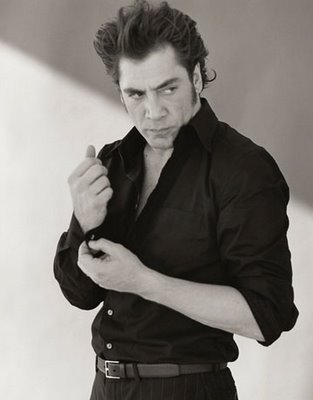
    How do you like your novel villains? Obvious? Subtle? Quirky? Bloodthirsty?

                  Javier-bardem

    I suppose it depends on the genre how we expect to read the villains portrayed. Horror gives us the gamut of possibilities. Romance clamors for subtlety. Historicals make for snide and often handy with a weapon.

    Have you written a full-fledged villain? If you did or plan to do so, how will you write him – or her?


    Father, we know who inspires evil. We also know he's defeated. But that leeway he's allowed for now can be crucial in our battles waged in the spirit realm. Thank you for the power in the Name of Jesus, the Blood covering, and the instructions on how to wage war against our enemy. In the Name of Jesus, Amen.

  •  

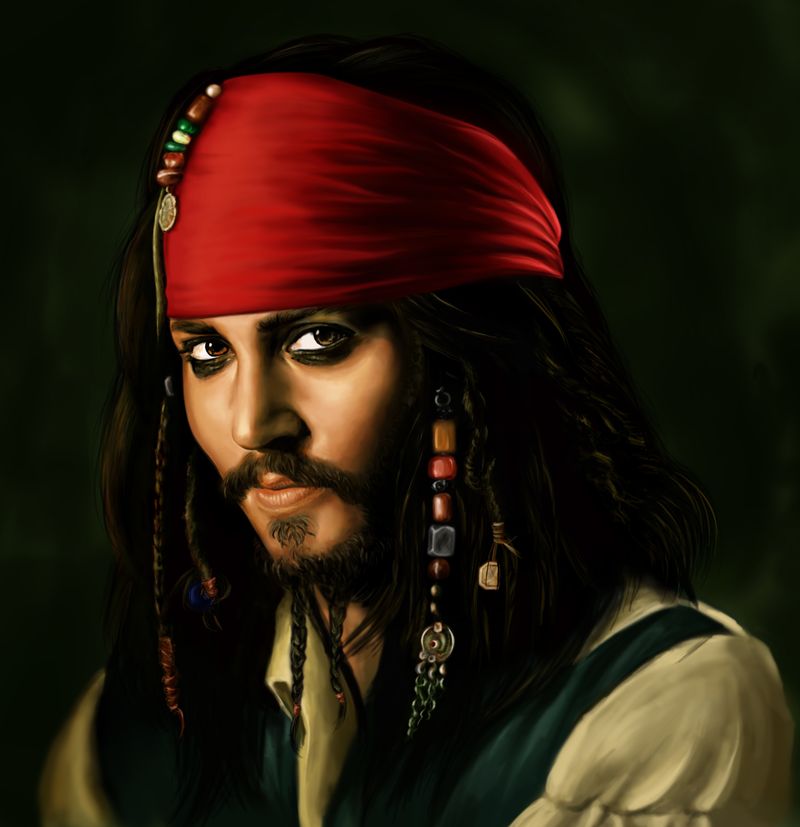
      Captain_Jack_Sparrow___Tribute_by_marAttacks

    I know. You probably just thought of a dashing hero or a horrific villain. But those aren't the dangerous characters I mean. Nope. The dangerous characters I'm referring to are those about whom we could care less.

    Characters who drag us through their stories without inspiring any engagement with their personalities, their dilemmas, their quirks, or anything else about them are the most dangerous characters we can create because they can kill readers' attention like nothing else. If one or two of these characters pop up within the story, okay, but if we make our protagonist(s) someone who doesn't incur our emotional investment, we've defeated our purpose in centering our attention on him or her.

    The reason I mention this is because I've had to force feed myself a couple of novels in recent times with main characters who I don't like. Not even a little. Of course some people might like them, but I'm a fairly forgiving reader. I give authors a wide berth with their novels. However, if I can't muster even a minor interest in their protagonist, why do I care what happens to them, around them, or with them? I don't.

    One of my film favorites is illustrated above.

    Can you identify what makes you not care about a character?


    Father, you care about all of us characters. Hard to imagine, but you do. Thank you for that. In the Name of Jesus, Amen.

  •  

    Then Jesus told him [Thomas], "Because you have seen me, you have believed; blessed are those who have not seen and yet have believed."

    Jesus did many other miraculous signs in the presence of his desciples, which are not recorded in this book. But these are written that you may believe that Jesus is the Christ, the Son of God, and that by believing you may have life in his name.

    John 20:29-31 (NIV)

  •  

    Sometimes I shift and move not wanting to be awake but there nevertheless. So I look your way, strain to hear the inhales and exhales, and I watch you sleep. You've always looked good sleeping. Handsome man that you are, mature now. Those long thick wavy strands sheared to the short dark style. It all looks good on you. I'm still captivated. Your mouth closed, your moustache streaked with gray, one arm cranked around your pillow, the sheet and blanket tossed back halfway sometimes. You sleep sound. At peace. Even through my tosses and turns. The tumult silenced. I'm grateful not to disturb you. Love's forms. Years in the making. Finally real.

    BlueHeartLoveDesktopWallpaper


    Father, thank you for the one I love. In the Name of Jesus, Amen.

  •  

    No. Not a child. Way past that! Let's talk about what we expect. To get. To own. To do. And how do we expect to obtain those things or ascend to those places where we expect to go?

    I'm grateful for my parents teaching those very important things to me must be earned. Worked for. Some require much more effort than others, but there is truth in the old adage which tells us the harder we work for something the more it tends to mean to us.

                 0

    Don't get me wrong. I had plenty of things growing up. More than I needed. My parents were from the generation who suffered through The Depression and wouldn't allow that kind of difficulty to plague their children. My dad worked hard from his days as a young boy in the hardcore town of Butte, Montana, to the leisure days from having earned a good living in a career he loved. The son of immigrant parents whose father was a cobbler, he worked on street corners as a little boy selling newspapers, then flowers, helped his tough father work on shoes and boots in his shop, and of course he did what nearly everyone in Butte did at one time or another: he worked in the mines. When he fell in love with my mother, he knew he wanted something better for her and their eventual family, and as soon as he could, he moved from Butte with his wife and young son to Seattle, Washington, where he went to work in retail. His hard work paid off, and he retired an Executive Vice President of a respected retail chain.

    He set before me an example of what devotion, passion, morality, and godly principles could accomplish in a life that never got a real education or had anything handed to him. My dad was a great man who loved people and gave his best to every kind of work he did. And was rewarded.

    Sometimes we forget the blessings of hard work. We get so bogged down in the weariness of pursuing the goal we forget the additions to our character, to our perseverance, to our direction in this life. Writing and publishing present multiple challenges for some of us. There are some who breeze through the process and experience some fast success. I've seen it happen in the horse racing industry the same way. Newer members to the racing community somehow acquire a champion and gain a quick taste of fame and fortune. "Nobodys" are discovered in cafes and become Hollywood stars. We all know the stories. With Christians it's not supposed to be about our individual successes no matter how hard we work toward that end. It's supposed to be how we labor to accomplish what the Lord has designed for us to do. It isn't always like that, though, is it?

    Sometimes it becomes a matter of expecting the Lord to do as we wish. In reality it's more like what is the Lord expecting me to do? When we can ask that question from our heart to His, we're well on our way to that success factor.

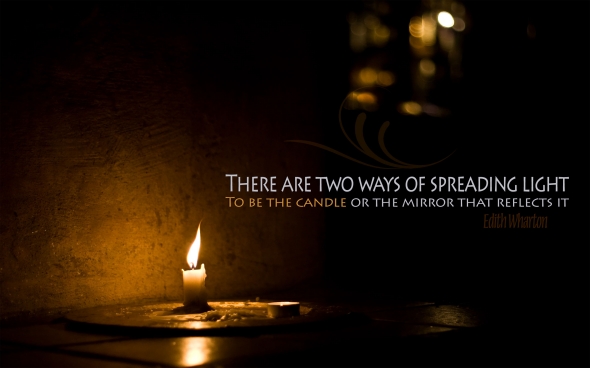
      InspirationalQuotes8

    Father, help us to operate from your perspective. Help us to seek after you with whole hearts determined to gain more of you, less of our flesh. In the Name of Jesus, Amen. 

  •  

    Certain things we get to do in life bring us particular joy or contentment. Today is one of those days for me. Not because of what I wrote but because of where my guest post occurs. For that I'm grateful to one of my favorite authors, Gina Holmes, for affording me the pleasure and honor to appear on her site:

    http://www.novelrocket.com/

    Interesting or not (to my readers) this post was written before all the hooplah about Becky Wade's novel.


    Father, thank you for my life, for the innumerable ways you've blessed me, so undeserving of it all. Thank you is never enough. In the Name of Jesus, Amen.