Into the Fire

Passionate thoughts about the world of writing and the Power of God

  •  

    Since they have rejected the word of the Lord, what kind of wisdom do they have?

    . . .

    From the least to the greatest,

     all are greedy for gain;

    prophets and priests alike,

    all practice deceit.

    They dress the wound of my people

     as though it were not serious.

    "Peace, peace," they say,

    when there is no peace.

    Are they ashamed of their loathsome conduct?

    No, they have no shame at all;

    they do not even know how to blush.

    So they will fall among the fallen;

    they will be brought down when they are punished,

    says the Lord.

    Jeremiah 8:9b;10b-12 (NIV)

  •  

    A young girl wanted to pass out encouraging Bible verses to her classmates at school, but the school principal demanded she immediately stop.

    In another case, one state demanded a Christian daycare center remove Bible verses from its walls because they could "intimidate" or "frighten" children.

    These situations are not only ridiculous, they are legally wrong. The attack on religious liberty in America continues at a frightening pace, and it targets our children. We need your support to keep fighting these battles.

    Because of your support, we successfully defended religious liberty in both of these and many other cases this year. Yet, we are contacted about similar violations on a weekly basis.

    The ACLJ has won many of these religious liberty cases at the Supreme Court, and the law is clear; however, we can only take on these cases with the resources you provide.

    Thank you for standing with the ACLJ in defense of religious liberty.

    Jay Sekulow
    ACLJ Chief Counsel


    Father, we continue to ask for your grace as we repent of our nation's and our personal sinful attitudes and actions. Remember your remnant, Lord, as we seek after you. In the Name of Jesus, Amen.

  •  

                               157742270


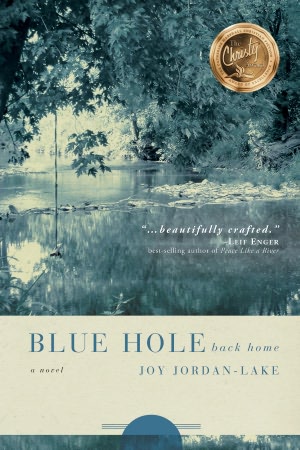
    Back in 2008 David C. Cook published the Christy Award winner Blue Hole Back Home by Joy Jordan-Lake. For some the story, voice, and theme are reminiscent of the classic To Kill A Mockingbird. Blue Hole Back Home takes place in a fictional small town in North Carolina where the local kids spend their sweaty summers cooling off at what they call the "Blue Hole". The boys do calisthenics off the rope swing, and the girls swim and sun themselves in the hot Carolina heat.

    In 1979 a new girl appears at school and one day Shelby Lenoir insists her older brother Emerson stop along the roadside and invite the girl to jump in the bed of his pickup with her and the three more boys who comprise their ragtag group. "Turtle", as Shelby is affectionately called, introduces Farsanna to Emerson, her brother's and her best friend Jimbo, her cousin who speaks like an English professor, and another sulky boy they call "Welp". Since Farsanna comes from Sri Lanka, her color creates a stir in their small town and introduces these young people to vile behaviors, prejudice, hatred, and violence beyond anything they could anticipate. Attempting to ignore the agitation and increasing unrest the arrival of Farsanna's family causes, there comes a point where it can no longer be set aside or left alone.

    Joy Jordan-Lake portrays the fear, ugliness, and incredible tension produced by the entrance of a young black girl into the lives of a community where a group of kids struggle with welcoming her while others of all ages choose to hate her and her family because of their skin color. The story is told as a memory when the adult narrator sees an individual that reminds her of the one summer in her past which changed everything about her coming of age – where normal and naive transformed into a terrifying realization of what hate could do if left unchallenged. Remembering the experiences of the swimming hole that wasn't blue where it all seemed to begin, the reader is transported to the southern summer days and nights spent with a group of kids who attempt to do right by forming a friendship with a girl from a different land only to find there are far more who desire to do wrong.

    With truly striking writing that captures the insecurity and emotionalism of the teen years, the cost of taking a stand against terrible wrong, and the actions and thoughts of the faithful and the faithless, Blue Hole Back Home presents a bittersweet reading experience. The underlying tension is relentless from the moment these unsuspecting kids pick up Farsanna and induct her into their "mangy" grouping. Mostly we hear the story from Turtle's perspective, her unbelieving heart, the peer pressure she never confronts, her jealousy of this lovely girl she can't quite fully embrace, and her paralyzing fear when bad things turn worse. We learn from her adult conclusions the toll of this particular summer at the Blue Hole Back Home and the steep price of regret.

    Ultimately the story is hard reading because of its basis in reality. But worth it. Listen to a sample of this amazing novel here:

    http://www.youtube.com/watch?feature=player_embedded&v=8bgUA4t7sl8

    Oh, Father, how much it hurts to see man's inhumanities to each other and all living things. We are full of sin and need your cleansing daily. God, forgive us. I pray your blessings for Joy, for her heart to create meaningful literature, to insert the honesty and travesty of those things of which we're all capable. May she continue to seek you in all she does. In the Name of Jesus, Amen.   
  •  

    ***Second mini-rant***

    I appreciate authors. So much. Authors have given me hours and hours of reading pleasure. That "pleasure" often resulted in tears and sorrow, mirth and laughter, fear and tension, or sighs and heartthrobs. Novels are king – and queen! They tackle it all. A few come off profound. A few stick around for a long time. A few annoy for various reasons. And, yes, a few bore mercilessly.

    Since I write novels, I know how important affirmation becomes. How some meaningful responses reward my efforts and work my emotions. I also know how unfavorable words cut to the core of who I am. Depending on who they come from and how they're expressed determines how deeply the wound is slashed. It's the way it is with me. However, I don't expect readers to "pretend" they like a book when they don't.

    Just so you know, if you're a published author and I take the time to send you an email expressing how much I enjoyed your book, I mean it. I don't have an agenda other than to let you know your story was a hit with me. And if I make the effort to contact you, chances are the novel was a big hit with me. I do this for two reasons: I would greatly appreciate hearing how much someone enjoyed my work, and if you have the time to engage in a mutual discussion of writing, I'm in. If not, fine. But, please don't condescend to me and wish me "luck" with my "writing career" as if you're afraid I'm going to be a pest and plague you with emails.

    Don't ever wish me "luck". I don't believe in "luck". I happen to hate the expression: "Good luck!" It's meaningless, filler, generic, "I don't know what else to say", and hope this satisfies. Luck is a fabricated nothingness attached to bad or good things. The only time I use the word luck is when I say "Good luck with that" meaning it ain't gonna happen, baby. How 'bout "warm thoughts"? Really? What is warm about thoughts? We might wish to transpose warmth to thoughts across the e-waves or miles or wherever, but, sorry, thoughts are invisible creations in our minds and although if expressed might raise our temperatures, I'd rather be wished "baking bread in the oven" or "fresh alfalfa" because at least then my sense of smell will conjure up their lovely aromas.

    I'm sorry. Snipey, huh?

    Humility. Just show me humility. Please?

    Father, I know. Sometimes I confess people get to me. Your patience is beyond what I can imagine. Thank you for using it with me. In the Name of Jesus, Amen.

  •  

    ***Okay. Mini-rant coming. If you're easily offended, best leave. You've been warned.***

    Some published authors often struggle with pride. Only they don't see it. First novel releases and boom! They're now in the elitist crowd – recognized by agents, publishers, insiders, other authors. They've "made it". And they have. Kudos to each one of them. Perhaps they'll be successful and write bestsellers. Cool! Maybe in some people's eyes this accomplishment affords them the "right" to now coin clichés and give instructions about how to write, how to get published, and all the rest of it.

    I don't think so. I think writers can contribute the most to the writing community by honestly admitting what's worked for them. Writing fiction is a unique experience. Creative writing courses, Masters in writing, the gamut of ordinary or professional instruction do not a writer make. I'm tired of hearing the lists of what's acceptable and necessary to sell manuscripts and following that books. Because I've read too many novels which don't pass my inspections. Following instruction does not guarantee a superb story well told or the promise of a contract.

    I know teaching is necessary for writers. Most writers start somewhere learning the craft. Hopefully early in school. Their ambitions might be postponed until later in life, but the desire to write is either blatant or hides from them until the time is right to explore the avenue of making words into stories. Understanding the process uses many forms. Once the grammar issues are resolved, some learn more from the actual reading of novels than from the reading of writing instruction manuals.

    Knowing the ability and opportunity comes from God's heart – or perhaps I should say: remembering this – presides over it all. This is often overlooked or under-mentioned when pontificating on what "works" in writing.

    To be continued . . .

    Father, we are the beneficiary of all that you have. How can we forget or ignore that? Apart from you we can do nothing. In the Name of Jesus, Amen. 

  •  

    One of my favorites:

    http://www.youtube.com/watch?v=dRqj61J-J8s&feature=related


    Father, I honor you. Jesus, I love you. Holy Spirit, help me to listen. In the Name of Jesus, Amen.

  •  

    We spent most of the week pointing out the attitudes of some Christian Fiction readers who are Christians. Judges and determiners of what Christian Fiction should be, contain, or do make themselves known in the public forum of booksellers who provide the opportunities to submit "reviews".

        Angry-man3

    Also out there in that public forum are those readers who "mistakenly" manage to read Christian Fiction and then complain about being bushwhacked by those dang Christian authors who dare to include faith issues in their fiction. First of all how anyone can "mistake" a Christian novel for anything other than what it is I have yet to figure out. Back cover copy makes clear there are God things in the story. Now how those characters or plot points actually appear in the novel can be barely discernible or preachy or somewhere in between. Nevertheless, I've yet to see Christian Fiction "disguised" in the back cover copy. And furthermore, if a reader misses what a book is about, it's his fault. Not the author's. Not the publisher's. Whining about how a novel wasn't what the reader thought it was - or should have been – only makes the reader look foolish. Haughty. And mean-spirited. Not that they care. They seem to take pleasure in demeaning the novels, the authors, faith in God, and dispensing those one stars.

    Believer or unbeliever, you're entitled to your opinion. That "entitlement" factor gives some readers the impetus to reveal who they are as people. Sometimes this is really not a good thing for them. Criticizing a novel can be done without making it a personal assault on the author. It's okay not to like a story or the characters, and it's expected that some will express their disappointments. This can and should be done tactfully if for no other reason than to give the unhappy reader's opinion credence.

    Father, help us as believers to be fair, kind, respectful, and just. In the Name of Jesus, Amen.

  •  

    For the Lord is our judge;

    the Lord is our lawgiver;

    the Lord is our king,

    it is he who will save us.

    Isaiah 33:22 (NIV)

  •  

    Defunding the major abortion provider:

    http://aclj.org/planned-parenthood/defunding-planned-parenthood-defunds-abortion?sf4318019=1


    Father, this nation is at your mercy. We repent for our many sins. We ask for your forgiveness and that you would turn this nation from its wicked ways. Please heal our land and remember your remnant. In the Name of Jesus, Amen.

  •  

          521111-a-horse-laugh


    Yesterday I took a break from our discussion centered on the self-appointed judges of "appropriate" Christian Fiction. Although I'm a gut-level serious person, possess the "prophet mentality" which tends to see things in black and white, am not a nominal Christian, don't drink, smoke, or do drugs (but once did before meeting Jesus), and absolutely believe the Word of God as literal Truth, I still love to laugh and have fun.

    Having harmless fun. Laughing hysterically – which is rare – but oh so enjoyable. Setting aside serious reasoning for a short time – doing these things which balance out the woe and worry of life on planet earth. What these kinds of things constitute varies dramatically for different ones, but at their core is the release of the spiritual negatives to embrace some positives. Jesus laughed and still does I believe (at least at me – He'd have to). And shares in fun.

    I guess that's one of the things that struck me about the criticisms of Becky's novel. What harm is there in having fun? I will grant you that "fun" presents all kinds of imaginative possibilities, but we're talking fun without drugs or getting drunk or causing danger or acting smutty. What is wrong with having fun?

    We needn't worry about what the world thinks of us unless we misrepresent Jesus Christ. And so often the misrepresentations get all the attention, all the bad press, all the notice. We all make errors in judgment, we all commit sin. We struggle with our conduct right along with worldly people. But we know the difference. We recognize when we fail. We choose how we handle those failures.

    It's been said that Christians kill their wounded. I've seen it happen more than once. Enough, in fact, to have given this idea credence. What is it with us that we feel the need to point out everyone else's failings in order to somehow inflate our holiness? One of the problems with doing this is precisely as Jesus explained and warned: no one is without sin. So throwing stones at others' "mistakes" or "sins" sometimes only emphasizes our own. And sometimes what we deem "sinful" really isn't. Gasp! Yeah, it's true. The fact that some individuals think a friendly game of poker is sinful proves this beyond question. There was no sin in the games in Becky's novel.

    (I'm not saying that playing a card game with "gambling" couldn't be harmful to someone who's addicted to gambling, but in this little romance novel that just isn't the case. At all. Come on.)

    Fun isn't defined by other people. Fun is experienced by Christians who enjoy multiple kinds of games, activities, and laughter. Isn't it?
     

    Father, help us to smile, laugh, and have fun. To find freedom in fun. A merry heart . . . In the Name of Jesus, Amen.