Into the Fire

Passionate thoughts about the world of writing and the Power of God

  •  


                                 144785334


    No surprise to my readers that Robert Liparulo is a favorite author of mine. So happy to see his new novel The Thirteenth Tribe come up in the CFBA Tour, I immediately signed up. Published by Thomas Nelson, The Thirteenth Tribe will supply a unique premise and take you on a journey from an archaelogical dig site on Mt. Sinai to the catacombs of Paris and back to a specific location in the USA.

    Jagger Baird is your prototypical tough guy with a tender heart toward his wife Beth and son Tyler and a hefty beef with God. This former Army Ranger doesn't resent his wife's Christianity or his young son's faith, but for him the car accident that took his closest friends' entire family and left Jagger with a prosthetic arrm and "fractured" memories also left him with a major grudge against this God he can't understand. As much as he distrusts God, he loves and trusts his wife for handling his withdrawal and distancing himself from her and Tyler after the accident. Jagger lands a security job on the Sinai dig site with lodging for his family at the monastery of St. Catherine's. This new gig is his way of establishing a fresh beginning for his family. One of the senior monks has taken a liking to them and particularly to Jagger's little boy, eager to show the home-schooled child and his mom the many historical pieces of the monastery in the ancient layered city.

    The strange arrival of two helicopters at different times in restricted air space sends Jagger on a search for an individual perched up on the hills above the site. This sets off the beginning of non-stop conflict where Jagger is forced to trust a stranger called Owen who also arrives via air after unexpected explosions and tragedy. When everything goes absolutely wrong, Owen is the only one who supplies potential solutions to the havoc playing out in Jagger's family.

    In some ways The Thirteenth Tribe is a typical Robert Liparulo thriller. Guys and gals, you know you're going to get lots of explosions, multiple weapons, fighting, wounding, dying, and high-tech scheming and execution. In many ways Robert is ahead of his time. He takes the most sophisticated technology and stretches it to the next level while mixing in historical facts and antique weaponry to demonstrate how the art of killing remains the same.

    The Thirteenth Tribe twists our thoughts with its premise and shows us the struggles of Jagger Baird who doesn't argue against the existence of God but resents His perceived cruelty, epitomizing the anguish of the soul most humans must face and conquer to become a believer. And that conflict is what separates this novel from other Liparulo thrillers. It doesn't touch lightly and bounce away from the subject: it tackles the problem headlong and wrestles with it. It's a bold step for Robert as a writer because I'm sure over the years he's gained a lot of fans who haven't been challenged by faith issues in his stories. There's always been a thread of spiritual content for anyone to see in his previous books, but this story leaves no doubt about the gospel. I say: Bravo! 

    At the heart of this story, which starts at a moderate pace but accelerates with a rush, is a depiction of the human condition. Lost, helpless, subject to fake and phony spiritual theories, closed to truth, we either come to the end of ourselves or we don't. We either exalt our false ideas or we discover how very little we know of the big scheme.

    With some quirky and bizarre characters and concepts, some subtle – some not – symbolism, and a clever and well-delivered surprise toward the end, The Thirteenth Tribe fires on all of its high-octane cylinders.

    http://www.amazon.com/13th-Tribe-Immortal-Files-Novel/dp/1595541691/ref=sr_1_1?ie=UTF8&qid=1333413344&sr=8-1

    http://www.robertliparulo.com/

    Lord, you know the blessings I pray over Robert. Please continue to reward him for his graciousness to others. Supply the stories you have for him to tell and bring the increase. Please protect him and his family and keep them safe from all harm. In the Name of Jesus, Amen.   

  •  

                          Computer-server-room_~x10426842

    Time and time again we're reminded of the brilliant but criminal elements hacking into computer systems such as the Pentagon's, multiple credit card companies, banks, and various other venues in order to steal all kinds of secrets and personal identities. 

    Entire business systems collapse for a few hours or a few days for no apparent reason and techs must hustle to get these complex systems back online. Records disappear into cyberspace. Certain important messages go unreceived or unretrieved.    

    To date there is no absolute fail-safe computer system that someone can't hack - in spite of the sophistication of the best.

    So why do I have to be penalized for not banking or paying bills online?


    Father, you never lose our words, our deeds, our hopes, or fears. You never break down. You never slumber or sleep. You know. Help me to live to please you. In the Name of Jesus, Amen. 


  •  

                         152013535


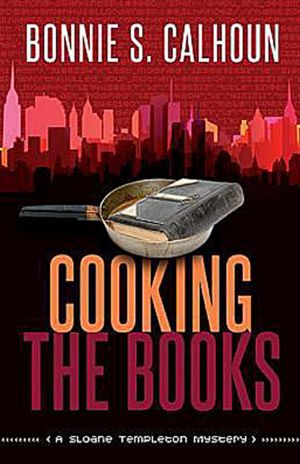
    The first book for April's CFBA Tour features the first novel from the lady who makes this all happen. One of the busiest women on the planet – and particularly in supporting Christian Fiction online – Bonnie S. Calhoun gives us the sometimes hilarious Cooking the Books published by Abingdon Press. If you'd like to read an interview with the *giggle, snort* master of communication, go here.

    Cooking the Books presents Sloane Templeton, divorced and displaced Cyber Crime Unit forensic computer geek, who takes over the ownership of Beckham's Books and Brew bookstore after her mama's sudden death. Fifi, her mother's longtime friend and manager of the store, knows everything about the place except for the operation of the computers which is Sloane's specialty. We're thrust into the conflict of the big developer wanting to purchase the bookstore, hoping if they can get Sloane to sell, the other small shops in the area will follow suit. However, Sloane has no intention of selling her mother's building where she also lived in a multi-level apartment above the bookstore that Sloane now occupies. This shop and home is all Sloane has left of her mom besides Fifi and her mom's sister Verlene. 

    Pistol-packin' Fifi assists Sloane in realizing the value of a particular antiquated book that her mother traveled to Europe to purchase. Aunt Verlene, who fancies herself an apprentice chef, has also happened upon a very valuable book which she hopes to cash in on only Aunt Verlene doesn't follow Sloane's instruction to keep silent about it, which leads to all kinds of trouble. Trey, Sloane's gangsta ex-boyfriend isn't happy about Sloane's new crush, Andreas Comino, Greek shrink who has a practice not too far from the store, and threatens Sloane with violence which is why he's her ex in the first place. His threat of physical violence is accompanied by unrelated heavily cyber-incrypted threats to Sloane for which she must contact a friend in her old unit to get help in discovering their source.

    Mixed in with these colorful and often amusing characters are the Mick Jagger lookalike hairdresser, the Denzel Washington lookalike detective, the elderly group which occupies time and space regularly at the bookstore and who are all packin' heat, and the weird woman who talks to herself, shifts moods and lucidity, and draws sympathy from Sloane.

    Just when we get comfortable with the humorous dialogue and flow of the story, the drama increases. The clues get jumbled and the suspects begin to expose themselves in subtle ways. The tension rises and climaxes with fear and violence, but ultimately humor prevails. 

    One thing I might say is negotiable in this story . . . I'm not anti-prologues as so many professionals seem to be. I think they often serve a purpose. This one – maybe not so much. I don't think it adds – or subtracts – from the story which is why I think it's negotiable.

    The story is really centered on Sloane's adjustment to life outside her comfort zone in business and relationships. She recognizes her inability to connect to the bookstore's value, and she struggles with faith issues. She's a spitfire when pushed except with Aunt Verlene, and she longs to do the right things but often fails to discern what those things are. Sloane Templeton, self-depracating Red Velvet Cake fanatic, makes us love her even when she's wrong. The ability to gain our sympathy when her decisions cause us to question her is a sign of good writing.

    Well done, Bonnie. If you want to read a unique voice in CBA fiction, pick up Cooking the Books by Bonnie S. Calhoun.


    http://www.amazon.com/exec/obidos/ASIN/1426733887

    Father, few people can keep up the pace that Bonnie does. I pray your divine protection over all of her efforts, and I ask that you would continue to supply the stories you have for her to write. Please help her to rest in you. In the Name of Jesus, Amen.


  •  

    Therefore my dear friends, as you have always obeyed – and not only in my presence, but now much more in my absence – continue to work out your salvation with fear and trembling, for it is God who works in you to will and to act according to his good purpose.

    Philippians 2:12-13 (NIV)

  •  

    1. In 1968 Bobby Kennedy was shot and killed by a Muslim male. 
     
    2. In 1972 at the Munich Olympics, athletes were kidnapped and massacred by Muslim males. 
     
    3. In 1972 a Pan Am 747 was hijacked and eventually diverted to Cairo where a fuse was lit on final approach and it was blown up shortly after landing by Muslim males. 
     
    4. In 1973 a Pan Am 707 was destroyed in Rome, with 33 people killed, when it was attacked with grenades by Muslim males.
     
    5. In 1979, the US embassy in Iran was taken over by Muslim males.
     
    6. During the 1980's a number of Americans were kidnapped in Lebanon by Muslim males.
     
    7. In 1983, the US Marine barracks in Beirut was blown up by Muslim males.
     
    8. In 1985, the cruise ship Achille Lauro was hijacked and a 70 year old American passenger was murdered and thrown overboard in his wheelchair by Muslim males.
     
    9. In 1985, TWA flight 847 was hijacked at Athens, and a US Navy diver trying to rescue passengers was murdered by Muslim males.
     
    10. In 1988, Pan Am Flight 103 was bombed by Muslim males.
     
    11. In 1993, the World Trade Center was bombed the first time by Muslim males.
     
    12. In 1998, the US embassies in Kenya and Tanzania were bombed by Muslim males.
     
    13. On 9/11/01, four airliners were hijacked; two were used as missiles to take down the NYC World Trade Centers and of the remaining two, one crashed into the US Pentagon and the other was diverted and crashed by the passengers. Thousands of innocent people were killed by Muslim males.
     
    14. In 2002, the United States fought a war in Afghanistan against Muslim males.
     
    15. In 2002, reporter Daniel Pearl was kidnapped and beheaded by Muslim males.
     
    Not prejudice. Just facts.
     

    God, everyone needs you. Jesus, you will always be the Way, the Truth, the Life. Holy Spirit, you lead the way to forever with our Lord God Almighty. We are all desperate for you. In the Name of Jesus, Amen.

  •  

    http://aclj.org/obamacare/health-care-fight-abortion


    Father, we need your intervention, your direction, your forgiveness, and your mercy. Desperately. In the Name of Jesus, Amen.

  •  

    We often get in discussions with fellow readers over certain aspects of the novels we read and write. If we're the author of the object of conversation, we're kind of suspect in our responses because of course we're prejudiced on our behalf. We like our novels and want to defend them. We want the reader to understand why we made those specific writing choices. It matters to us if we succeed or fail. The truth is, more often than not, we will do both.

    As a reader, liking a story does not automatically insure we will like the writing used to tell it. Loving the writing does not guarantee we will like a story. Sometimes we tolerate that which we don't like in order to relish that which we do. This has happened to me on a few occasions, one way or the other.

    And just because we spot what we consider weaknesses in a book doesn't necessarily mean we don't like it. Let me give you an example from my reading. Chris Fabry's first adult novel, having been a multi-published author of children's fiction, is Dogwood. I loved this book. I mean I loved it. However, that doesn't mean I saw no flaws or that it was perfect. In fact, the bad guy in law enforcement was the stereotypical bad guy in law enforcement. And I, to this day, still can't decide if I liked the ending. Most of the time I don't. But I love the book, recommend it and Chris Fabry to anyone who appreciates lovely and meaningful writing.

    So. I must confess it hurts to hear what readers consider a weakness in my writing. That thick skin I'm supposed to adorn over this onion skin, barely layered over my emotional makeup, will not show up, grow, or cannot be conjured into existence no matter how much effort I make to manufacture it. Just a fact.

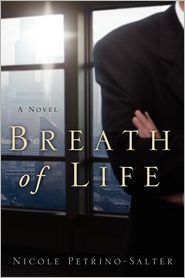
    To illustrate my point, I'm going to share a few weaknesses in Breath of Life according to a couple of respected female readers who took the time to read the novel:

    First of all, the relationship between the hero and heroine was not enough to sustain the story.

    The story ended abruptly. These readers wanted more information about and reactions to the climactic event.

    Valued opinions, and, yeah okay. Of course I can defend my decisions to do the story the way I did it, but my defense doesn't really matter because it doesn't change how they felt about the book.

    Now from the other side, those who really enjoyed the story had zero complaints. One male reviewer gave it a stunning review and made no mention of these weaknesses.


                                136615909
            

    The point in recognizing weaknesses is whether or not they resonate with who you hoped to reach and/or entertain with your story. If you fail your target audience, then those weaknesses will be a factor when another of your books is considered for reading. And if the weaknesses resonate with you as the writer after getting over the gut-punch reaction, then you can use that commentary to avoid similar weaknesses in your next effort.

    Or at least try to . . .   

    God, thank you for every story. Help me tell them how you want me to. Help me honor you with my efforts. In the Name of Jesus, Amen. 

  •  

    You know me. Passionate: right or wrong. All in or not at all.

    I cry easily. At commercials. In movies. Over television scenes or episodes. Book incidents and endings. Memories. Instrumentals. Lyrics. Almost always anything concerning animals.

    But I also cry hard when I fail the Lord – and that's not always definable to or for others. I just know. And when I fail those I love.

    And I weep when people touch my heart.

    Coming soon I will review Robert Liparulo's new novel The Thirteenth Tribe for the CFBA Tour. It's a wild and unusual ride as his stories always are. He recently stated the Lord was leading him in a little bit different direction. Faithful Liparulo readers will easily spot the "difference". More about that in the scheduled review.


                   144785334


    With no inkling of the discovery in the Acknowledgements section at the end of the novel, which I deem important and often telling, after reading a few paragraphs of names, I saw my own in the midst of others receiving thanks for "constant friendship and encouragement". Somehow that touched me so deeply, I sobbed. Cried out loud.

    I've been a fan of Robert's writing since Comes A Horseman. His voice is his own. His pacing is unequaled, his imagination fantastical, and his research impeccable. He's generous with his time and friendship like few bestselling authors are. I'm honored to call him a friend. And for him to acknowledge our friendship like he did, well, it speaks volumes about his character. Pun and cliché intended.

    Thank you, Robert. You made me cry. Again. In a good way.

    Father, you know Bob's heart and soul. You called him to write, and you designed him to ride the waves of his imagination which you stretch and bend into fantastic tales. I pray your continued protection and anointing upon his life, his family, his inspiration, and his actions that reflect you. For every blessing he provides for others, I pray you would return blessing to him tenfold. Reward his generous heart and soul. May he continue to hear your voice and use your insights. Encourage him as only you can do, Holy Spirit. Thank you for bringing him into my life. In the Name of Jesus, Amen. 

  •  

    From yesterday's post:

    "Philippians 4:8 addresses the need to focus our thoughts on wise (godly) principles to preclude our actions with others and in general. To reel in those errant thoughts that lead to conflict and argument, emphasis on the flesh and world, and dependence on oneself instead of on what God provides spiritually, emotionally, and physically. To suggest that story must adhere to all of these perfect standards for thought and meditation which are supposed to lead us into right actions seems like a total stretch as requirements for publishing novels. And since we're in stretching mode, these requirements, as listed here for being in compliance with scriptural instruction for our mental and physical actions, really do not provide a realistic approach to story. However, they do contribute to a much criticized and often deserved stereotype for Christian fiction."

    This instruction for us as Christians specifically refers to our thought processes and meditations preceding our actions and conduct. I'm a little troubled that this instruction is used as a base model for writing fiction. In my analysis of storytelling I don't see how the employment of desired perfection in the execution of these thoughts which leads to godly behaviors applies or pertains to the telling of stories that demonstrate the diversity of conflicts, failures, good, evil, faith, and unbelief in all kinds of characters. First of all, it's a rare (and potentially boring) novel that contains only Christian characters. And since it's beyond farfetched to expect worldly people/characters to adhere to biblical principles, what is the point of using this particular scripture as a guideline for creating fiction?

    Now let's look at the blatant contradiction in some of the points listed in this "standard".

    1. It must be true. This means that it must be authentic and must correspond to reality. We want to promote content that embraces reality as God created it, not content that “sugar coats” reality or tries to make reality something it is not.

    Okay. "Making reality something it's not." Reality is precisely and often steeped in lies, corruption, faithlessness, perversion, need I go on? So just how is a writer supposed to portray this reality authentically and without a sugar-coating in light of the following requirements?

    2.It must be noble. This means that it must raise us up and make us more like God. The opposite is to debase or degrade. We want to promote content that ultimately motivates people and calls forth their best qualities.

    Exposing the raw and ugly truth can accomplish this goal. Given the reality of portrayal, readers can evaluate story, content, personal reflection. "Make us more like God" is poorly stated and makes me think of satanic desires. And, besides, let's be "truthful" and "noble" here and express the desired emulation should be of Jesus. But then again, how does this pertain to writing Christian fiction if not to specifically preach or indoctrinate?

    4.It must be pure. This means it must be chaste, modest, clean. We want to promote content that promotes holiness and offers a necessary corrective to current trends to sexualize everything. This does not mean that we are opposed to sex, of course. But we want to make sure that our content advocates a view of sex that is consistent with Christian morality. Avoid descriptions of the act, specifically the following: kissing below the neck; sexual touching; visible signs of arousal or sexual attraction; nudity; double entendre; sex outside of marriage.

    You know this rankles me in ways I can't even begin to express, but I'm going to try. "Chaste, modest, clean." Sanitized sexual attraction. As if it doesn't exist any other way. As if Christians are never tempted sexually. As if Christians never succumb to the world's views of sex. As if "clean" somehow implies that sexual attraction and the act itself is dirty, vile, and unseemly for any Christian. It's amazing Christians have children. "Kissing below the neck; sexual touching; visible signs of arousal or sexual attraction; nudity; double entendre; sex outside of marriage." Right. Nothing that will indicate Christians are human beings. Nothing that will give an honest portrayal of worldly characters or Christian characters who don't know, realize, or understand God's view of sexuality. This makes for sterile and unreal portrayals of romance, of sexuality, of marriage, and/or male/female relationship/attraction. It results in a surreality, untruths, and ignoble suggestions about the origin of healthy sexuality. And I resent it all. I do.

    6.It is of good report. This means it must be commendable or of high reputation. Again, the emphasis is on that which represents the best, that which anyone could read or hear and agree that it is well-written or well-spoken.

    The suggestion that "anyone could read or hear and agree" about anything in fiction is ambiguous and ludicrous, if not laughable. And to imply that if the previous instructions, if followed, will lead to this unanimous conclusion brings visions of monks in caves who never venture forth into a world which needs the real Truth. Unabashed, unashamed, intentional, and poignant. Christians read Christian fiction, but the hypocrisy of eliminating anything that in fact addresses and portrays the realities of this world and the contrasts to The Way, speaks for exactly why Christian fiction continues to be spoken of with ill regard.

    Thank God for those authors and publishers who allow truth and reality to be published in their "Christian fiction".


    God, you know me. My heart. My desires. Lord, I need you. Your understanding. Your direction. In the Name of Jesus, Amen.

  •  

    What is story? Short, long, novella, novel, epic, saga. Simply stated all stories depict situations with characters, human and otherwise, experiencing something. The present, the past, the future, the imagined. Structurally, there's a beginning, middle, and end, none of which must be definitive and rigid but must simply create a continuity for whoever the intended reader is expected to be.

    In the world of literature professional gatekeepers set standards for their publishing houses. It's accepted that Christian publishers' requirements are more stringent and within this category of publishing, some moreso than others. Few things in recent times have created more controversy within the industry. There's a call for opening up the reach of Christian fiction to eradicate the stereotype of "clean", "formulaic", "predictable", and "preachy" associated with the Christian fiction label.

    I've included here a reprinted partial set of standards listed by a well-known Christian publisher. I had seen similar standards with a few more specifics in another romance line which is noted for its rigid rules for publication. This is not a romance imprint. I must admit this list surprised me because of the particular publishing house. I've highlighted specific instructions which suggest a certain hypocrisy and conflict.

    Philippians 4:8 addresses the need to focus our thoughts on wise (godly) principles to preclude our actions with others and in general. To reel in those errant thoughts that lead to conflict and argument, emphasis on the flesh and world, and dependence on oneself instead of on what God provides spiritually, emotionally, and physically. To suggest that story must adhere to all of these perfect standards for thought and meditation which are supposed to lead us into right actions seems like a total stretch as requirements for publishing novels. And since we're in stretching mode, these requirements, as listed here for being in compliance with scriptural instruction for our mental and physical actions, really do not provide a realistic approach to story. However, they do contribute to a much criticized and often deserved stereotype for Christian fiction. 

      Rules

    Reprinted in anonymity here:

    Philippians 4:8 provides the inspiration for an expansive content program. It says:
     

    "Finally, brethren, whatever things are true, whatever things are noble, whatever things are just, whatever things are pure, whatever things are lovely, whatever things are of good report, if there is any virtue and if there is anything praiseworthy—meditate on these things."
     
    Notice the word whatever. It is repeated six times and then followed by the word anything. Based on this verse, we believe that Christians are free to think, write, or speak about anything—whatever they want!—provided it meets eight minimal criteria:

     1. It must be true. This means that it must be authentic and must correspond to reality. We want to promote content that embraces reality as God created it, not content that “sugar coats” reality or tries to make reality something it is not.

     2.It must be noble. This means that it must raise us up and make us more like God. The opposite is to debase or degrade. We want to promote content that ultimately motivates people and calls forth their best qualities.

     3.It must be just. This means it must be righteous or consistent with the commandments of God. It also means it must be fair. We want to promote content that promotes righteousness and godly living. By the way, this doesn’t mean that novels can’t have evil characters. (There are plenty of them in God’s story.) But it does mean that in the end righteousness is rewarded and evil punished—if not in this life, the next.

     4.It must be pure. This means it must be chaste, modest, clean. We want to promote content that promotes holiness and offers a necessary corrective to current trends to sexualize everything. This does not mean that we are opposed to sex, of course. But we want to make sure that our content advocates a view of sex that is consistent with Christian morality. Avoid descriptions of the act, specifically the following: kissing below the neck; sexual touching; visible signs of arousal or sexual attraction; nudity; double entendre; sex outside of marriage.

     5.It is lovely. This means it must be aesthetically pleasing or beautiful. We want to publish communicators who are committed to beautiful writing and speaking. Both what is said and how it is said are important. Beauty is not a means to an end. It is an end in itself, because it reflects the beauty of the Creator.

     6.It is of good report. This means it must be commendable or of high reputation. Again, the emphasis is on that which represents the best, that which anyone could read or hear and agree that it is well-written or well-spoken.

     7.It is virtuous. This means it must affirm behavior which is consistent with the highest values. Values that don’t manifest themselves in behavior are merely platitudes. We want to promote content that challenges people to live lives of moral excellence and virtue.

     8.It is praiseworthy. This means it must be worthy of recommendation; something you can personally endorse. At the end of the day, we want to promote content we are proud of, books or conferences that we are willing to recommend to a family member or friend with the confidence that they will [be] wowed and grateful that they took the time to enjoy it.
     
    The reason we have content standards is because we want to be faithful to Christ as we fulfill His call on our lives. And we also want our customers to be able to trust us. We want people to have confidence that our products are consistent with a Christian worldview, are created by people who profess to be Christians and are striving to walk the talk, regardless of the subject matter they may be addressing.
     

    Works that do not conform to these standards will be rejected or cancelled by . . .

    My only exasperated comment after reading this was: REALLY?!


    Father, I know you expect reality to be portrayed honestly. May we look to you and not to man to do it according to what you have for us to do. In the Name of Jesus, Amen.