Into the Fire

Passionate thoughts about the world of writing and the Power of God

  •  

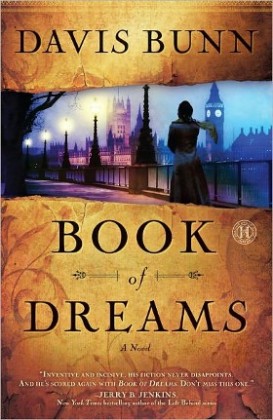
    Davis Bunn's latest release entitled Book of Dreams is published by Howard Books, a division of Simon&Schuster, and sent to me for review courtesy of Howard Books via Blogging Bistro, LLC. 

    Set primarily around Oxford University, where in real life Davis Bunn and his wife are affiliated, Book of Dreams tackles two different subjects from both the physical and spiritual planes. Conceivably labeled a supernatural suspense, Book of Dreams follows psychologist and best known authority on dreams, Dr. Elena Burroughs, through a personal revelation of her soul while she traipses through her clinical duties as a still-hurting widow of five years. When a client with bodyguards enters her office, she sees the damage wrought by numerous overwhelming nightmares. This begins the journey for not only Elena but her client Sandra Harwood, wife of American diplomat Lawrence, an Italian ex-banker working for the Vatican and also suffering from the loss of his wife, and several others tied to the banking industry and to ministry. Preceding the spiritual awakening in Elena's soul, her elderly friend and godmother Miriam, also a retired clinical psychologist, presents her with a treasured series of ancient books designed to inspire those who read The Lord's Prayer within its ornate pages.

    Exposing the poignant corruption in the worldwide banking business, Book of Dreams examines the ruthless methods of eliminating the scrupulous players in the banking industry. When the ethical appointees of former diplomat Lawrence Harwood and Italian Antonio d'Alba head the U.S and European commission to oversee the industry, their enemies make sure they're swiftly fired. While this is happening, Elena and various other individuals form a spiritual alliance to determine what God desires them to do. Dreams play a major role in leading them after the ancient book influences serious investment in listening to the Holy Spirit. Evil's presence is accompanied by the smells of smoke and sulfur and Elena learns to recognize it in individuals.

    Not to be easily branded and tied down by single genre writing, Davis Bunn has written historicals, romances, contemporary adventures, and in partnerships with other novelists. I've read and enjoyed several of his novels. Unfortunately, this novel tried to tackle very different topics working hard to incorporate the supernatural aspects of prophetic dreams, ministry to both those rejected in the industry and those who'd become victims of the cruel and corrupt banking practices, infusing minor romantic elements, while murderers targeted members of the group. The plot is so ambitious and vacillates between the physical and spiritual messaging that I think it fails to clearly define its objective and create a true mesh between the two planes.

    Book of Dreams is decidely English in flavor, although the heroine is an ex-pat American. Dr. Elena Burroughs makes for a somewhat interesting but dry protagonist, not strong enough to engage me emotionally. In fact the bulk of characters give only flashes of appeal and didn't sustain my attention. The supernatural elements of the story proved the most exciting, and I think they were handled very well, demonstrating the power of God and the ability of individuals to listen and respond to the Holy Spirit's leading. I found those parts of the story a much welcome addition to a cast of vanilla characters.

    For readers who'd enjoy a contemporary look at the corruption in the banking industry across the world mixed with the hope of anointed individuals taking on the challenges when their physical abilities give them nothing but devastation and hopelessness, Book of Dreams is a story of personal revivals that only the Spirit of God can produce.
     

                                      1954_153_1


    Father, I ask that you would continue to meet the supply for stories for Davis. Please inspire him to tell the diverse tales that honor you and bless him for his efforts to do so. In the Name of Jesus, Amen.  
  •  

    Hot sweat trickled down the side of his suntanned skin and two day dark growth before a wrinkled red bandana wiped his face and got shoved back in a rear pocket of his black Levis. So tall he looked upside down under the hood of his black ink-colored Ford pickup standing on the bumper. His wavy long hair fell over his face and obscured his appearance. Satisfied, he jumped back and landed on the gravel of the shoulder. Muscled arms reached up and closed the hood with a firm crunch which he checked for closure abstractedly as he surveyed the fenced pastures bordering this pastoral two-lane. He walked to the driver side and reached in the window to grab his baby blue button-down long-sleeved shirt, pulled it on and left it undone. He tugged out his watch, opened it and closed it, slipping it back where it belonged as he heard the rumble of the powerful engine before the rolling hill allowed him to see the red blur. The smile came slow and easy. He crossed his arms and leaned against his truck.

    Father, you love us all. I don't know how, but you do. Thank you, God. In the Name of Jesus, Amen.

  •  

    Some Christians think God only ministers to us, speaks to us, and answers us through His Word. I'm not of that persuasion. He speaks to me in various methods. Sometimes in complete sentences. Sometimes in flash frames. Sometimes in nuances.  Sometimes in dreams. Sometimes in overwhelming burdens for those I don't know. His voice along with his methodology resonates. Distinctive. Instructive. Firm. Powerful. Gentle. The gamut. Unmistakable. But not always.

    He doesn't choose to answer my every request with a specific gesture. Sometimes He's quiet. Sometimes the "no" couldn't be clearer if He stood in front of me. And don't misunderstand me here. He does speak through His Word, but usually with me He chooses other methods.

    So what about this writing gig? I say He told me in exact words what He wanted me to write when I offered any talent He might've given me back to Him. Did He also give me specific orders for novels two through seven and eight, nine, and ten? No. He did not. He gave me characters and storylines. I had zero, zippo, nada without Him. I can't speak for anyone else and how they come by their stories or their directions. I stand by mine. The Lord is close to me even when I'm distant. Even when He feels distant. The gospel is real to me. My relationship with Him is the ultimate – and yet I'm inept, insufficient, and often pathetic. His grace reaches into my humanity and salvages whatever He can use. I pray there's something there . . .

    I know this is for now in my life. No doubt. As unsuccessful as it must seem to some of my fellow writers, I know – even such as it is – I rest in God's will and purpose. He's that way with me: I know. I can brag about nothing. But I can answer the title question firmly about certain things: Yes, we can know. Not about everything. Not always. All ways. But, yes, when He determines it, we can know.

    Father, my gratitude is often corrupted by fretting and frustration, but I am so thankful for your graciousness to me. I've never deserved it and yet it's been there in abundance. Thank you is never enough. In the Name of Jesus, Amen.

  •  

    No provocative title today. No stirring the writers' pot. No sticking in someone's craw. No making a point that some find implausible and others find just right.

    Let me tell you something about writers: they can be hard-headed and/or over-senstive. They can be people pleasers or people disdain-ers. Stubborn and/or determined.

    They get defiant when challenged. They roll over when challenged. They justify being challenged and comply. They despise being challenged and rebel.

    They're independent. They're dependent.

    They're professional. And unprofessional. They know "it" all. They know very little.

    They're arrogant. They're humble. They're somewhere in between.

    They write well. They write poorly. And they write somewhere in between.

    They like labels. They hate labels.

    They're free spirits. They're legalists.

    They're organized and do outlines, storyboards, notebooks, files.

    They're haphazard, spontaneous, messy.

    They love their fans and make efforts to address them.

    They dread contact with their readers.

    They're condescending to those who read commercial fiction.

    They celebrate writing commercial fiction.

    They're of a certain faith and write accordingly.

    They shun faith and write to show humanity as the pinnacle of existence.

    They write light. They write dark. They write somehwere in between.

    Writers, who are you?


    Father, you make us all. Thank you for life. In the Name of Jesus, Amen.


  •  

    You might as well know it takes something huge to impress me. Respect doesn't come easy. Appreciation is a different thing. I appreciate many things people are able to do, but the reasons for that appreciation go straight to the source of their giftings, talents, and/or offerings. It's that whole apart from God, people can do nothing gig.

    I appreciate all kinds of people who use what God has given them -who work to develop their particular talents from writing words well to installing pipes under the foundation of a building to commuicating in multiple languages to organizing the best way to clean a room. The more visible creations of the arts warrant no more appreciation for the development of those particular talents. By grand design the true Creator gives opportunities to people along with the innate desires and abilities to pursue them. Some approach their talents early, some late, and some ignore them for their chosen objects of preference.

    Some recognize they were "born" to do what they pursue, the thing that captured their devotion was encoded in their DNA by an endless Creator whose ideas stretch beyond human imagination – and performance.

    And so it is . . . regretful, sorrowful, and tragic even, when those people who do amazing things give no credit to the One who provided the impetus, the drive and determination, the satisfaction in choosing the thing(s) they do so well. The eternal repercussions of living without recognizing the sacrifice that saves that soul . . . no one wants to factor that into the equation for achieving such success in a field where they excelled. The eternal value? Do we tend to think God should be impressed? He's . . . what? . . . maybe pleased? when we deny that rotten sinful nature its craving for accolades and recognition, when we do what He asks when He asks, and when we can abide by His decisions for the end results. No easy task for this carnal-driven existence. And these are the things which seem to matter to God. Their impacts on humankind are far less valuable to Him than their impact in heaven. Such noble things the martyrs accomplished by giving their lives to honor Jesus? Yes, the Lord's rewards for sacrifice and suffering will not be small. But for building the best technology or designing the finest bridge or writing the "best" literature or catching the most passes? Only if He asked you to do it and you acknowledged His leading in the process. It's impressive when you deny your flesh to follow the heavenly instruction to the best of your ability. Those rewards won't be from the fickle hands or mouths of men but from the Almighty who is the true Creator. 

    Father, thank you for the privilege of beng able to create anything. We're in awe of you, not each other. In the Name of Jesus, Amen. 

  •  

    He who was seated on the throne said, "I am making everything new!" Then he said, "Write this down, for these words are trustworthy and true."

    He said to me: "It is done. I am the Alpha and Omega, the Beginning and the End. To him who is thirsty I will give to drink without cost from the spring of the water of life. He who overcomes will inherit all this, and I will be his God and he will be my son. But the cowardly, the unbelieving, the vile, the murderers, the sexually immoral, those who practice magic arts, the idolaters and all liars – their place will be in the fiery lake of burning sulphur. This is the second death."

    Revelation 21:5-8 (NIV)

  •  

    We are at a critical juncture in the fight to save Pastor Youcef Nadarkhani’s life. We expect the Iranian court to release its written verdict regarding his execution sentence for converting from Islam to Christianity as early as Monday.

    It is absolutely critical that we continue to speak loudly and actively call on the Iranian regime to spare Pastor Youcef’s life and release him. We need your voice today.

    It is critical that our top diplomat take a stand for this innocent man, whose only “crime” is that he is a Christian.

    When asked to recant his faith in Christ – under the threat of death – Pastor Youcef Nadarkhani replied, “I cannot.”

    Together we can help save his life through our prayers, our  voices, and by pressing our diplomatic leaders to call on Iran to spare his life.

    Your immediate action is critical, as increased pressure from the international community could sway the judges to release him.

    That is why we have taken aggressive action, working with Pastor Youcef’s attorney in Iran, Members of Congress, and the international media. We have just sent a letter to the United Nations (U.N.) High Commissioner for Human Rights on Pastor Nadarkhani’s behalf, stating:

    “Before another innocent man loses his life, we urge you to take a stand against Iran’s violation of human rights. We urge you to call upon the Iranian government and demand the immediate and unconditional release of Pastor Youcef.”

    Will you join us in taking a stand for Pastor Youcef as he continues to stand for his faith in the face of death?

    http://aclj.org/iran/major-bipartisan-support-congress-pastor-youcef

     Thank you,

    Jay Sekulow
    ACLJ Chief Counsel


    God, your mercy, please. In the Name of Jesus, Amen.

  •  

    House Speaker John Boehner tells Newsmax that Congress will “get to the bottom” of the unfolding Fast and Furious scandal following new revelations about Attorney General Eric Holder’s involvement in the case.

    Documents obtained by CBS News show that Holder was briefed on the operation as early as July 2010.

    That contradicts what Holder told a Judiciary Committee hearing in May — that he had just learned about the scheme in which agents from the Bureau of Alcohol, Tobacco, Firearms and Explosives (ATF) allowed suspected gun smugglers to buy 1,400 assault weapons, even though they knew the weapons were likely to end up in the hands of violent Mexican drug cartels.

    In an exclusive interview with Newsmax.TV, Boehner was asked about the controversy.

    “Members of the House Judiciary Committee are going to get to the bottom of this,” he declared.

    “This program has raised an awful lot of eyebrows. There are a lot of questions that are unanswered and this latest revelation about when the attorney general knew what he knew, had been briefed on it, raises even more questions.

    “So I am hopeful that my colleagues that serve on this committee will stay on it, and frankly I have no doubt that they’ll get to the bottom of this program that has caused so much chaos.”

    Rep. Darrell Isa, a California Republican and chairman of the House Oversight and Reform Committee, has called for the appointment of a special prosecutor to delve into the Fast and Furious case.

    Asked whether he has spoken with Issa, Boehner responded: “I have spoken with my chairman, and I’m confident they’ll stay on it.”

    ATF officials believed they could trace the guns and that they would lead them to the drug lords. But most of the weapons were used in crimes, including the murders of American agents Brian Terry and Jaime Zapata, as well as in hundreds of incidents south of the border.

    Read more on Newsmax.com: Boehner: Congress Will 'Get to Bottom' of Fast and Furious


    Father, we're desperate for you. Your truth. Your ways. Your justice. In the Name of Jesus, Amen.


  •  

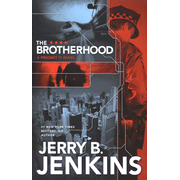
    Most people hear the name of Jerry B. Jenkins and immediately think of the Left Behind Series, but Jerry is the author of of more than 175 books. Jerry's latest, The Brotherhood: A Precinct 11 Novel, published by Tyndale, is the first in a police trilogy released earlier this year.
     
    Young cop Boone Drake is living the dream with his beautiful wife Nikki and toddler son Josh. Attending a large church where Nikki is fully engaged, Boone coasts through his Christianity with little regard for it. He was "saved" as a young boy, proved to be a delightful son, and made sure bullies never got the best of him or any of his friends. As a cop, he's interested in advancing to a detective role and taking gang-bangers off the streets of Chicago with his older partner and mentor Jack Keller. When tragedy strikes his family, his loss surpasses his faith, and the core of who he truly is exposes his lack of substance in his relationship with God. His pastor and family do all they can to comfort and come along side of him, but he will accept none of it. His partner offers him the only solace and place of residence he will accept as he grinds through the crippling grief.


    The Brotherhood, the title of which is twofold, is the story of a young man's shallow views of faith and his journey toward a decision which restores life to his soul. It addresses the dichotomy of living in a sinful world and being able to accept a true lack of understanding for the reasons ugly things occur. Wrestling with the clichés of loss, the young protagonist finds only rage and pain. It also tells the tale of Boone's association with the "baddest" and most feared of all the gang-bangers in Chicago when he's released from prison, after Boone makes it into the desired Organized Crime Division. When Boone's honest with himself, he can see the similarities in their lives.
     
     
    I must admit I didn't care for this novel, but there will be plenty of readers who will enjoy it. When I'm not fond of a protagonist, it's a rare fete for an author to cause me to like a story. Boone demonstrated such a mean streak during his loss that he alienated me. And lukewarm faith never draws me to a character even though there's a point to showing the journey. His eventual turnaround seemed to transform him suddenly as a logical result of a pastor's persistence, but really I didn't feel the character gave the inclination to push forward in his faith when, like a switch was turned on, he returned to what he previously never showed he possessed. His predictable association with the secretary of his unit felt forced, and her character came off strangely demanding and/or a bit quirky. Boone's stereotypical mother seemed inserted just to annoy, portraying an insensitive woman of faith.


    The Brotherhood: A Precinct 11 Novel by Jerry Jenkins is commercial fiction written with utility prose as the kind of two-part story of a young cop who suffers through horrendous loss and moves on to participate in his dream of bringing gang-bangers to justice. Calling it a "thriller" is a bit out of bounds. A police suspense would be more accurate.
     
    
    The Brotherhood, Precinct 11 Series #1   -              By: Jerry B. Jenkins
    Father, please continue to meet the supply of this prolific author. May Jerry continue to write for you and be blessed as a result for not only that but for all he does to honor you. In the Name of Jesus, Amen.
  •  

    "The interesting factor in the whole ordeal is that the average reader—with the exception of those who prefer the literary masterpieces—won’t even notice the presence or absence of passive verbs, speaker attributes, and the decorative adverbs. Not because they’re not intelligent or even that they’re uneducated, but because to them it’s all about the story. Had the author used more than his share of these foul tools, the reader would’ve taken them in stride if he was enthralled with the story. It seems we often overestimate as well as underestimate the readers of novels. Have you ever heard a complaint from a reader [who isn't also a writer] declaring she didn’t like the book because there were too many 'ly' adverbs? Usually the complaints range from 'I didn’t like any of the characters' to 'I couldn’t get into the plot'. And while it could be argued that the adverbs or SAs or passive verbs gave the story pacing problems, isn’t it really the guts of the story—its appeal and depth and captivating characters or its outrageous humor, irony, or drama that sustain a reader? I realize it’s kind of like making a fine piece of clothing. When the inside of the piece is examined, every seam is neat and finished, no loose threads to unravel and fray. Some are hand sewn with meticulous, exacting strokes. This is an expensive piece of clothing where the workmanship is obvious and admirable. A writing craftsman wants to equal that kind of attention to detail and produce valuable results." (March 6, 2008)

    "I have a great time finding out what readers want. I often ask them as I browse the fiction rows in bookstores. If they respond with any tangible inkling or order and it happens to coincide with what I like, I immediately recommend my choices according to their preferences. I’ve shared with you how I evaluate “the average reader”. It’s based on my experience with several readers of all ages and discussions with many more people with either a voracious appetite for fiction or a steady pursuit of reading novels or even those who dabble at selective fiction. Readers of all kinds maintain expected various opinions, but most of them have a general desire to simply enjoy the story. Most of them will not comprehend the particular styles of writing choices from the authors they choose to read unless it’s unique, distinctive. For the most part it’s just not important to them. The exceptions include those in the publishing industry and those readers who prefer what’s been termed “literary fiction” where names like Flannery O’Connor or Madeline L’Engle pop up repeatedly. If you choose CBA fiction, you’ll likely hear the names of Tom Morrisey, Tosca Lee, or Chris Fabry mentioned as artful writers. There can be a real gap between what publishers want and what readers want. . . . I’m all for publishers producing well-written fiction, but sometimes what they consider well-written and/or commercially viable simply aren’t. The average reader might recognize skillful writing, but what they will celebrate or recommend to their like-minded friends is the story. Those overrated rules which might be observed or broken will not even register on their reading radar. Some professionals insist it’s the observance of those very rules which contribute to making the reader experience pleasant and more meaningful, but when you consider a few of the bestsellers either in ABA or CBA fiction, you know it’s just not always true. Some writing purists and publishing professionals complain about the lack of quality in fiction and berate the absence of excellence in certain bestsellers and other novels. To what end? Books making money push the industry along and readers are the ones who spend the bucks to make the machine go. We can lament quality if we choose, but it’s all about the story for most readers." (Nov. 30, 2009)

    Reading fiction is a practice that millions of people enjoy. All over the world, people read novels. Why? The most obvious reason is they like stories. The ever-increasing genre classifications capture all kinds of interested readers. Those who read speculative might detest romance or vice versa. Right here in the comments on this blog, Brenda Jackson decries the saturation of romance in historical fiction and writes to purify and remedy the love of straight historical fiction. I used to read a lot of romance, but rarely do I read straight romance anymore because, for the most part, it's too formulaic for me and lacks honest passion. A lot of women enjoy women's fiction, a lot of men enjoy thrillers. I mostly read thrillers, suspense, mysteries, political thrillers and the like. I read stories because I've loved them for as long as I can remember, but even as a child I was selective. We all have our preferences, our favorite authors.

    So how can I suggest there is a group I term "the average reader"? Basically I give this very large category a name because of the same reasons described above from two and three years ago. The average reader – who is not a writer – pays the most attention to the story as opposed to how it's composed. They're forgiving, they make investments in the literature they read, and they usually qualify their recommendations with an emotional response instead of an analytical proffering. I will grant you that if you break this group down to those who specialize in individual genres, there are likely to be a few substantial variations. And it's important to note here I've alread stipulated that readers who favor the literary tomes are a separate group but often create some "average" tendencies peculiar to them within their niche.

    I see this term as a mere grouping, not an insult, not a finger-pointing accusation or some kind of degradation to anyone, singular or cumulative. While not scientific by any stretch, it carries some weight in recognizing the broader scope of those who select fiction over non-fiction. It's simple observation based on personal experience from an interested investigator. That's all it is.


    Father, we are who we are – except when we're not. I'm so glad you have a sense of humor, Lord. I need your grace, your encouragement, your Spirit always. In the Name of Jesus, Amen.