Into the Fire

Passionate thoughts about the world of writing and the Power of God

  •  

    Yesterday I had the pleasure of attending a book signing for The Forbidden Tour where I met Ted Dekker and Tosca Lee in person. Tosca and I have communicated for some time via email, and meeting her gracious soul face to face proved to be a sweet experience. Ted Dekker explained his writing quest involves exploration. He wants to go where there's darkness and find how the light can be let in – if it can. Some of his characters choose to shut it out.

    Few things give me more pleasure than promoting good writers, and if you haven't read Tosca's two previous novels (Demon . . . a memoir; Havah, The Story of Eve), you need to do so. Don't put it off. Download them, buy the books, but don't deprive yourself of some of the finest writing Christian fiction has to offer. Tosca takes the hard parts of the spiritual realm and disects them within story.

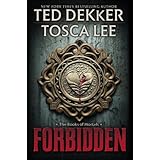
    Ted and Tosca described their collaboration on the The Books of Mortals, the first of which is Forbidden with two more in the works. What makes this collaboration unique for these two artists is that they're integrating their thoughts and writing as they create these stories. Both of them are writing these books. They described the process as hard work and time consuming to go over each other's words so that they mesh completely. Much harder than writing by oneself. In spite of their whirlwind tour to promote the release of Forbidden and the fatigue of racing through cities sharing talks, smiles, pictures, and signing umpteen books, their excitement over this series played strong.

    When I finish Forbidden, I'll review it here. It's a speculative story that takes place in the future on planet earth where genetic manipulation has eliminated most emotions with the primary exception of fear. Not my favorite genre as you know, but I wouldn't miss the first effort from these two talented authors.

    Product Details

    Father, please keep Tosca and Ted safe from all harm as they travel. Continue to bless their efforts to show evil honestly and reveal your good, your love, your truth in amazing and imaginative ways. Cover them with your love and kindness as they share pieces of their lives with others. In the Name of Jesus, Amen.

  •  

    Devote yourselves to prayer, being watchful and thankful. And pray for us, too, that God may open a door for our message, so that we may proclaim the mystery of Christ, for which I am in chains. Pray that I may proclaim it clearly, as I should. Be wise in the way you act toward outsiders; make the most of every opportunity. Let your conversation be always full of grace, seasoned with salt, so that you may know how to answer everyone.

    Colossians 4:2-6 (NIV)

  •  

    Christians face persecution from brutal theocracies all over the world. Christians like Youcef Nadarkhani, a pastor in Iran sentenced to death by the Islamic Republic for his faith, are on the front line of the global fight for religious freedom.

    It is conservative Christians who are standing up against radical Islamic theocracies and in defense of people like Pastor Nadarkhani. Yet the mainstream media continues to insinuate that Christians, especially those who have expressed God’s calling to be involved in the political process, are trying to establish a theocracy here in America.

    In my latest article for the Washington Post, “Christian right fighting theocracy”, I set the record straight, expose the media bias, and discuss the fight for religious freedom against radical Islamic theocracies.

    Please read this article and post your thoughts and ideas in the comments section of the Washington Post site. Help share the story of this Christian pastor’s fight for his life in Iran by using the Like buttons in this email to share it with your friends on Facebook.

    Thank you for your support, and please pray for Pastor Nadarkhani as an Iranian court will decide whether or not to uphold his death sentence on September 25th.


    Jordan Sekulow

    ACLJ Executive Director


    Father, you are Love and Truth. You will prevail. You are available. Always. In the Name of Jesus, Amen.

  •  

    I am not a pomp and circumstance kind of person. Graduating from high school was a relief for me, and the thing I remember most about the evening was how great my hair turned out so I could wear the ridiculous cap and look half decent underneath it. Silly, I know. And I'm not the kind of girl who spends hours getting ready for anything, but I am the kind of woman who won't leave home without makeup, hair, and perfume in place whether I'm wearing a hoodie and jeans or a skirt and high heels.

    People earn my respect – they don't come by it "naturally". I'm a product of growing up in the late 60s and early 70s after learning basic decency in the 50s. It was a shocking and rude awakening to learn that not everyone deserved respect simply because of their station in life. The guts of their belief systems and the ensuing conduct of their lives determined whether or not they were given my respect. Having said that, compassion, the desire to understand motivations, and forgiveness come fairly easily to me. How fast depends on the offense.

    Applying this to publishing, I originally thought it would be cool just to write "normal" informal inquiries to agents. You know: be friendly instead of rigid and formal and formatted. I know: silly again. And I quickly realized these literary people want a "form letter" with original content. My desires weren't going to change how "it's always been done". But still I wonder why after reading query after query, it wouldn't be nice to get a brief "letter" introducing an author and the prospective piece. Still include all the required data but in a real letter. But that's just me. I detest the process because it elevates and degrades all at the same time. Business is business so "Hi, y'all" is out, I suppose.

    There are so many agendas – since we've been batting this word around lately – at conferences or any event where publishing professionals assemble. Observing the seduction can be both amusing and pathetic. It reminds me of "rush" during the sorority and fraternity new-membership process. What an ugly thing that is.

    In the end the words and tune repeat themselves . . . Why can't we be friends? Because it takes up too much time.

    Jesus, you're the friend above all friends – the One we need the most. Thank you for your love. In the Name of Jesus, Amen.

  •  

    You hear untold criticisms of "self-published" books. Why? Because the truth is there have been a boatload of inferior products produced in that arena due to poor rendering and even poorer writing. Moreso in years past than now because of the technology available to those who aren't computer-challenged such as myself. Not only because of that reasoning in the formatting and cover art issues now available for skilled individuals and self-publishing outfits such as WinePress, but because some respected authors are now attempting to go the way of self-publishing for works they can't get published in the royalty-publishing arena due to gluts in the genre or because they've elected to write outside their "normal and expected" genre.

    So, while the stigma still weighs on those unknowns who elect to go the self-publishing route such as myself, it comes with the territory because in the origination of this leg of publishing, the stigma was deserved and truthful.

    The fictional part of the nagging stigma is that a self-published book is inferior in every way. Not hardly. Since I've worked with WinePress, and since they're a respected and frequent player at the best known Christian writing conferences around the states, it's easiest for me to use them as a good example of an outfit who produces a quality book as far as their covers, their formatting, and their final results. On a par with any royalty publisher. From the writing end of it, they use some of the same freelance editors and services that the major houses use, so it's a toss up whether or not a story will bear the fruit of some serious editing choices by those who pay for the packages that must now include professional editing. I've long held that even a good editor can do you wrong if they don't like your voice, your style, or your genre. So that's an issue that weighs heavily on the objectives of self-publishing from both the writer's and the publisher's standpoint.

    I'm not – and never have been – a proponent of the platitude professed by so many that insists "only the best" make it into royalty publishing. This is simply not true. Added to the falsehood of that claim are the multiple proofing errors often found in commercially, aka royalty, published books. In the first place most publishers have holes to fill, meaning they want so many of one genre and of course several Amish novels, etc. They have a zillion authors to choose from so this is where it's often said that the best rise to the top and get published. However, if you ask many published authors, they will tell you it's all about perseverance, connections, referrals, and that right place/right time thing we know translates to God's timing.

    If you read enough novels in either the ABA or the CBA, you're going to find some good and bad stuff. C'mon. It's a given. Some mediocre writing and some outstanding writing in both categories. Anyone can get frustrated with taking a chance on a novel because the back cover copy entices and the reviews seem good, but then the book fails to meet the anticipatory standards set for it.

    So to say all books that make it through the publishing hurdles are "the best" is bona fide fiction.

    However, that is not to say each and every author who endures the process and comes out on the royalty published end of it all should not be applauded for their efforts and success. It's a definite accomplishment that deserves recognition for the effort and the appeal that caused their work to be recognized by publishing professionals as worthy of passing through their intimidating gates.

    Just some Thursday thoughts . . . on the publishing biz.

    Lord, we all are desperate for you. Whether we know it or not. In the Name of Jesus, Amen.

  •  

    Mike Duran recently said this: "To put it bluntly, message-driven fiction potentially dumbs down readers." in his post here. In his article he gives his opinion about some CBA literature and quotes authors Athol Dickson from his post I made reference to on Monday and T. L. Hines. I find Mike's comment to be true because of his careful insertion of the word "potentially". The reason I find it to be true is because I believe all writers have an "agenda" whether or not they're conscious of their intentions.

    Did you feel the surge of hackles being raised at my last statement? Whoosh! Here's why I say that. Only people who have no belief system could write without a point, a message, a theme, a statement. Out of 100,000 words or more – or less – an author better have something to say regardless of it being in story form. Stories have a purpose. Entertainment is a purpose because if your story isn't able to conjure a reaction of some kind – a laugh, a tear, an anger, a smile, a frown, an admiration, an opinion – what have you got? Empty ineffective words, that's what – and lots of them.

    However, that doesn't mean the message – or agenda – must be in your face or obvious or that if it is that it must be poorly written.

    In the polarized place in which our society now resides I find that artists, writers, filmmakers, and actors are putting their "agendas" in the forefront of their art. Is this wise? Is it good? Is it effective? It could be argued in all cases that it is not particularly wise, good, or effective in making their work desirable. And here's where the "potential" for dumbing down occurs. If a reader who is a Christian doesn't want to have to "wonder" about the "message", then they buy CBA fiction in their preferred genres and for sure they have created a market perpetuated by most CBA publishers. But this is no less true for ABA and its readers.

    Someone remarked that the blame for this could be placed on the public school system, and though I'm no fan of recent public school curriculum which is almost entirely agenda driven and in many places "dumbed down", I don't think it's possible to teach some students the value of understanding symbolism. If they continue to resist or fail to see the importance of searching for and comprehending the symbolism, and if they decide to read for pleasure, believer or unbeliever, they'll seek out those message-driven novels which entertain them without challenging them.

    Some readers will tell us point blank that they don't want to be challenged. They just want to escape and spend those minutes allotted for reading away from the trials and tribulations of life on planet earth. However, if honest, they would probably concede that they don't want to read message-driven novels that don't agree with their worldview.

    The "Christian agenda", if we choose to indulge that labeling, does somewhat isolate its audience by proclaiming its intent to satisfy a certain number of readers compiled from the publishers' chosen demographic. It risks limiting the readership of those who seek out meaningful and well-written tomes by offering a large number of what can only be called ordinary literature where the depth of writing is not a requirement. The one positive you can extract from this is that it's honest – in that it makes no bones about its appeal to those Christians who want to experience that set "agenda" usually qualified by a possible conversion, solid Christian characters who attend church or those who are mad at God but return to full service to Him in the end, neat and tidy endings with either that Cinderella feel or unlimited hope, and chaste romances. Now, mind you, some of these stories are the Christian equivalent to or the "holy" renditions of the Harlequin Romances. Others outside the romance genre give you suspense, mysteries, or the unlimited supply of historical (often historical romance) novels where the villains are stereotypically evil and the heroes are strong and good or end up that way. This literature doesn't pretend to be anything other than what it is.

    However, what some of those who sampled that fare and came up wanting have yet to realize in their generalized criticisms of Christian Fiction is there are some superior CBA authors who have chosen not to follow this agenda and because of their attractive skills have been allowed publication and promotion in the CBA marketplace. These are the authors who could compete artistically in any market but because of tackling Christian spiritual issues, whether overtly or covertly, and originating from "Christian" publishers, they, too, are labeled and sometimes confined to the very same place as the more ordinary offerings in the industry.

    If you've read comparable genres in the ABA, then you must have noticed some of their agendas written into the stories. Such as New Age overtones, favoring uncomitted sex, homosexual freedom, abundant profanity, liberal politics, and the like . . . If none of these registered on your radar, then you haven't read much in the ABA because those issues are all there in some of their offerings just as Christianity is present in CBA publishing with no apology.

    I think it's fair to say whether or not you write speculative fiction to romance, your work has a point and even an agenda in or outside of CBA. Even if it's only to "entertain". And if you choose to appeal to those readers who want very little from a novel, you should have that place to write. If you want your novels to reach a broader audience and opt for more in-depth literature, you also should have a place. This is where the conflict often arises. For those who wish to write for CBA with a deeper objective and an amplifed perspective . . . will there be a place for them?

    Father, I wish to write as you determine. Not solely to please man. However it is, Lord, help me to be obedient to you. In the Name of Jesus, Amen.
  •  

    Go ahead. You can ask it. "Why, if you really think your novel (s) will be a hard sell, do you go to the expense and effort to self-publish it/them?"

    It's a good question and deserves an answer. So here it is. Most of you who visit here know my reading habits and/or genre choices. There are a few novels I've read that I elected not to review, but usually I give my opinion of the books I choose – or am obligated – to read. In all those novels I haven't yet read stories that dare to take an intimate look at sexual attraction, romance, and love the way that I do. Stare at it. Examine it from the world's point of view and contrast it to God's point of view. Look at characters in the world. Dive into their mindsets and physical conduct. Look at those who find or know Jesus and witness the struggle from the inside out to be up against sexual attraction where desire pulses through their pores. This might seem like a trivial issue to many. Perhaps to men in particular because they face this from their early youth and many of them in Christ must resolve to live with it or attempt to ignore it with some of them indulging it or persecuting themselves for it. This most powerful of urges that is splayed across television and movie screens, social media and magazine covers, billboards and the internet opportunities, this desire that God intended for optimum celebration of physical pleasure between two committed/married people: a man and a woman, has been corrupted and exploited by the sin that runs simultaneously through our bloodstream. How can we ignore its influence?

    Men often get the short straw of romance. For some reason romance has been relevated to a position of provision. If you want "this", guys, you're gonna have to work for it. Gimme what I want, and I might give you what you want. Which certainly must take all the "romance" out of a sensual encounter and turn it into a contractual agreement reminiscent of prostitution. I like to give men their chance to relate to my male characters even if they never read the novels. It's called being real and looking at the strengths and weaknesses of both sexes in the love department – that includes the physical, emotional, and spiritual elements.

    The Famous One looked at the life story of a kid with no idea of what he wanted out of life except for the love and beauty of a family that "got along" better than his own. Discovered while singing a blues song in a bar, he becomes a reluctant celebrity and an acclaimed actor. Along the journey to fame, he searches for love the only way he's ever known and keeps coming up empty. The romance is hot and heavy (not graphic), and the rewards grow slim until . . . Anyway it's his story. If I might brag just a bit here: Robert Liparulo endorsed this self-published book which he read and enjoyed. (Thank you, Robert.)

    Breath of Life features another man, divorced and disillusioned, cynical and wounded, who begins to see a hint of hope in a lovely woman that he spots occasionally outside the building where he takes a coffee break from his office in downtown Seattle. It's a love story of two lonely people who find not only each other but face spiritual struggles in the process of falling in love. Now I'm going to reveal who wrote the blurb for Breath of Life: J. Mark Bertrand. (Thank you, Mark.) I'm honored that both of these men chose to read and endorse two self-published novels outside their preferred genres.

    I won't give you the dollar figure to produce the three novels I've self-published. Suffice it to say I'm still amazed that the Lord provided the funds for my endeavors in spite of the mistakes made early. I believe these stories serve a purpose. If few people read them, what does it matter you ask? Stripped down, writing is an act of obedience. If you're given stories, you write them. You work on them to make them poignant, strong, real, or whatever your definition of a good story includes. Then you pursue the accepted course of publishing – as I did – and make your judgments and decisions based on your experiences.

    I love the characters in these stories and in all of my four other completed novels and my three in-progress. What can I say? I know what I like to read, and I haven't found much of it in the overall romance genre, so I decided to write them. My newest WIP is a mystery/police procedural stationed back at the racetrack. Don't know if I'm up to the task, but I've got a good start on it. We'll see what the Lord does with it – because my writing "philosophy" is summed up in this scriptural reference: Apart from Him, I can do nothing. He owns me. He owns my books and stories. The situation is in His hands. Call it cliché, if you like. Doesn't change the truth of the matter.

    Father, I surrender it all to you. Again and again. All of it. All the time. To you. In the Name of Jesus, Amen.

  •  

    The temptation is to write a similar post to that of Athol Dickson's recent article on Novel Rocket, but only in the sense of stealing his title. I'm in no way comparing my skills to the multiple Christy Award winning author. My reasoning for stealing the title would be "my" network is small and most of those within it don't read in my genre. One has to admit that factor makes it difficult to secure readers and get them to spread the word about one's work.


    Ready to go to print, Breath of Life will soon be available at the usual online stores. It's a love story. Heavy on the romance. Mostly from a 30-something male's point of view. Rule breaker that I am.


    So. In relation to Athol's post, my niche market, as most of you already know, is not the overall CBA romance market. Those who love the bonnet books, the sweet little romances, the category romances . . . chances are they could be offended by my look at the attraction of two lonely people who find each other.


    I tackle redemption. The journey of two people, one seeking Jesus, the other eventually inspired to investigate the unlikely prospect after indulging worldly ways and coming up empty.


    What would you do?


    Lord, you know. Everything. I know very little. I know I love you. In the Name of Jesus, Amen.

  •  

    Since you died with Christ to the basic priniciples of this world, why, as though you still belonged to it, do you submit to its rules: "Do not handle! Do not taste! Do not touch!"? These are all destined to perish with use, because they are based on human commands and teachings. Such regulations indeed have an appearance of wisdom, with their self-imposed worship, their false humility and their harsh treatment of the body, but they lack any value in restraining sensual indulgence.

    Colossians 2:20-23 (NIV)

  •  

    This week the ACLJ has filed two amicus briefs at the Supreme Court on critical issues facing our nation.


    Arizona has the second largest per capita population of illegal immigrants in the nation. It is a challenge they live with every day. Where the federal government failed, they took action and the Obama Justice Department sued them for it.


    Now the ACLJ is stepping in to help, and we have brought the support of nearly 60 Members of Congress and nearly 60,000 American citizens with us.


    We have just filed an amicus brief with the Supreme Court of the United States in support of Arizona’s illegal immigration law and the right of states to govern within their borders – including defending those borders.


    Congressman Trent Franks of Arizona has signed onto our brief along with Senator Jim DeMint, Rep. Michele Bachmann, Randy Forbes, Thaddeus McCotter and 55 more elected leaders from across the nation. Find the full list of elected officials and more about our argument to the Supreme Court here.


    The Supreme Court must take this case. The Obama Justice Department’s suit against the Arizona immigration law challenges not only this law but also similar laws being enacted by states across the country.


    Laws like the one enacted in Arizona are not anti-immigrant, they actually act in favor of legal immigration and the aspiring American citizens who choose to come here legally. As I discussed recently, and like so many Americans, I am the grandson of an immigrant. A legal framework that enables the legal immigration process is very important to me and America’s heritage.


    We have the privilege of raising our children in the greatest country this world has ever known, and we must protect and defend it … and them.

    The second amicus brief we filed at the Supreme Court of the United States in a constitutional case dealing with what is broadcast on television when children are likely to be watching.


    In a filing at the high court, we're defending a ban on television indecency. Our amicus brief defends existing law that bans public indecency, whether in person or on broadcast television.


    As we argue in our amicus brief, “An indecent television broadcast is essentially an indecent public display.” The high court should make sure that any decision it hands down should reaffirm the laws that already exist in all fifty states. You can learn more about this case and download a copy of our brief at ACLJ.org.


    While the ACLJ defends our fundamental rights in courts across the nation and around the world, we continue to focus on the Supreme Court of the United States.


    Jay Sekulow
    ACLJ Chief Counsel


    Father, we can't do anything without you. We're desperate for you and your righteousness. In the Name of Jesus, Amen.