Into the Fire

Passionate thoughts about the world of writing and the Power of God

  •  

    In less than a month, America will pause to commemorate the 10th anniversary of 9/11. For most, it is a solemn reflection of the fellow Americans we lost and the heroes who helped us persevere through the worst terrorist attack in our nation’s history.

    Yet the organizers behind the proposed Islamic mosque at Ground Zero have chosen this moment to roll out a multi-million dollar fundraising campaign. They are actually using September 10th — the eve of the 10th anniversary of 9/11 — as their deadline for raising funds.

    It’s not just insensitive to the families who lost loved ones that day; it is an outrage to all Americans.

    The ACLJ is fighting back. We are in court challenging the Ground Zero Mosque. It is critical, as we prepare to commemorate the 10th anniversary of the terrorist attacks of 9/11 and the thousands of Americans who lost their lives that day, that we take a stand against this Islamic mosque at Ground Zero and it’s organizers’ wholly insensitive fundraising campaign.

    How have the Ground Zero Mosque organizers reacted to their fundraising campaign being exposed for what it is? They have said its timing is merely a coincidence.

    A coincidence, just like when they originally named the project "Cordoba" – long a symbol of Islamic conquest.

    It has been made abundantly clear at every step of the Ground Zero Mosque project that the organizers, the financing, and the public relations campaign behind it are insensitive at best. We must never allow this Islamic victory mosque to be built, and we certainly should not allow them to use this important moment to do it.

    That is why the ACLJ is aggressively fighting back as this case is now on appeal, representing Tim Brown – a firefighter and first responder who lost nearly 100 of his friends at Ground Zero. As he recently told Fox News, “With the ACLJ . . . this will never happen; this mosque will never be built.”

    The reason he can say this with confidence is because of you.

    Thank you,

    Jay Sekulow
    ACLJ Chief Counsel


    Father, we look to you for justice. In the Name of Jesus, Amen.

  •  

    Out of the all the novels you can buy today—just today—what makes yours important? What will separate yours from the sea of selections and make it a choice for anyone to buy when it becomes available? Are there trustworthy answers to these questions plaguing novelists today?


    “Important” is a scary word for evaluating fiction. Some might view it as pretentious. I don’t. I think it’s a real consideration for anyone who writes stories. If you’re going to sit in front of a white screen or plant yourself with pens or pencils and some kind of writing paper for indeterminable hours, yeah, I think “important” is a definite word to examine. Writing takes dedicated time, and that time is mighty precious and hard to come by for some. Others have the time but those words can come at a steep price with commitment to the project in the forefront of every decision to use time in creation.


    It might be an easier question to ask, “How important is your novel to you?” This forces an honest evaluation because it requires a look at how much time is devoted to it along with other variables. Would you—or could you—pay to have the entire manuscript professionally edited? Would you—or do you—allow a critique group or a writers’ group that “gets” you and that you trust read your work? How do these options rate in your “importance” scale?


    Don’t we all hope our work is important? Aah, I just want to entertain people, you say. I just want to write a good story, you echo. I can’t really elevate my work to “important”, you think.


    Do you consider that your writing is important to God? If this is what He has for you to do, isn’t it important that you do it?


    How important is it anyway?


    Father, you’re the most important. Help me to do what you have for me to do. In the Name of Jesus, Amen.

  •  

    Soft. Sultry. Melancholy. A haze of cigarette smoke. Slinky black dresses with slits up the leg, long sleeves, and low backs. Stiletto heels. Pinstripe suits. Low lights. The massage of a trumpet’s notes. Piano keys that dance under gliding fingers with a dark face turned down toward those black and whites or upward with eyes closed.


    Memories of images never lived. Hidden places. Kisses in dark corners. A bare back against the wall. A drink. Tables with no more than four chairs. A hush but so much silent conversation. Waiters appearing from nowhere.


    A stool with a singer. The voice that sounds like an instrument and comes from a face that sings as if no one’s there.


    Patrons turned toward a stage, arms resting on the bar holding a beverage. Alone.


    And all that . . . jazz . . . playing.


    God, omniscient, omnipotent, omnipresent. Startling but true. Thank you. In the Name of Jesus, Amen.

  •  

    Melancholy: (n.) 1.Sadness or depression of the spirits; gloom 2.Pensive reflection or meditation 3.archaic a.Black bile, one of the four humors of ancient or medieval physiology b.An emotional state characterized by sullenness and outbreaks of violent anger believed to arise from the bile


    We probably could’ve done without the archaic definition, but it served its purpose to demonstrate how the mood was given physiological origin.


    Writers and artists in general can be a melancholy bunch. Whether it’s because we must capture the states of minds of many characters, good or bad, moody or virulent, joyful or petulant, or not: who knows? Are we wired for soaking in the emotions of all kinds of experiences and then capitulating them onto page or canvas or structured form?


    The beauty of creating with words is the privilege of portraying characters, places, and, yes, moods such as melancholy well enough to create that emotion in the reader. To touch the reader’s emotions and drive them to exactly where we want them to arrive, dropping them off at the corner of that experience, and either leaving them there to fend for themselves along with the characters or causing them to take a breather and regroup before pressing onward with the story: those experiences are the ultimate reward(s)for an author of a story. 


    Melancholy is especially important because it can be so prominent in stories without hope. Hope can be elusive in all different kinds of stories, but when it’s absent or faint, there will be melancholy as a constant companion to the reader.


    One of the “qualifying” objectives in the recent definitions of “Christian Fiction” was the hope factor. The reason for this inclusion is because the very basis of Christianity personifies the hope factor. Now if you’re a Christian living in Somalia your hope factor is most likely centered on heaven not earth. If you’re a Christian who has acquired multi-millions, your hope factor might lie in making sure you’ve been generous with what the Lord has given you. If you’re a 14 year old Christian girl experiencing your first flutter of romance, your hope factor might be attached to a favorable look from the object of your affection. The hope factor covers a lot of emotional real estate no matter who you are, but the real hope factor remains in Jesus Christ and the power of His resurrection and cleansing Blood. Without that provision by the God of the universe there really is no hope factor for the human race. 


    Capturing melancholy in its true emotional content sends a reader to the heart of a matter. It forces us as readers to realize we must live with this state of mind over the course of our lives and shed it before it makes its home with us and evicts us away from hope. While melancholy can also be a time of precious decomposition from our wayward states of mind, it is a guest which must only be allowed to dwell for an apportioned amount of time before being ushered out of its rental space. It’s not a permanent resident but provides a genuine contrast to what we need our reality to be.


    Often when we capture the melancholy we are forced to experience it, to remember it, or to accentuate it for a time. Those novels which open with it and close with it forget, or perhaps do not in truth recognize, that hope is as essential to humanity as the pensive contemplations and gloomy aspirations of melancholy. Hope is truthful. Melancholy reflects our fallen humanity.


    Father, without you melancholy resides in our souls. Thank you for your deliverance available to all. In the Name of Jesus, Amen.   

  •  

    Yes. And no. Of course as Christians we accept that God’s timing is perfect. It’s just as humans we seem to be in constant conflict with His appropriated and specific “time for everything” (Ecclesiastes 3:1).


    Let’s talk about book releases. One of the better novels of 2011 published by Bethany House and released in July gave us a story which took place in a very concentrated timeframe just before Christmas. Christmastime in Houston, Texas, might not resemble Christmastime in, let’s say, northern Idaho, but it’s still very much Christmas. Now I know the scheduling for book releases is something publishers and their marketing teams decide, but I can’t help but wonder why this novel couldn’t have waited a couple of months or so to accommodate the season. Story-wise, it really didn’t matter when J. Mark Bertrand’s Pattern of Wounds was released because there were plenty of readers just like me who were waiting for this book. It’s good enough not to have had to worry about impeccable timing for its release, but just the same it seems like a little bit closer to Christmas would’ve accentuated its timeliness. And planted it firmly in the minds of shoppers for the Christmas season. But you can’t argue with providing a great summer read either, so what do I know?


    Which brings me to the timing for my upcoming novel Breath of Life. The story begins at the end of summer and moves through the holiday season into the New Year. The protagonist is a financial services consultant in a private firm. I wrote this novel in 2007 when the stock market wasn’t quaking like a 9.8 on the Richter Scale.


    The plot doesn’t really center on the protagonist’s job, but it is a factor. I had five novels waiting in stasis when the opportunity to self-publish one more became available. You can bet I prayed about which one to do, and this is the one chosen.


    Timing. Perseverance. Patience. Tenacity. All familiar words to a writer.


    And . . . blessing follows obedience. Blessing doesn’t always come in expected ways but it arrives from the Lord’s generous hand . . . on time.


    Father, I can’t trust myself, but I can trust you. Help me to keep my focus on you and what you desire for me to do. In the Name of Jesus, Amen. 

  •  

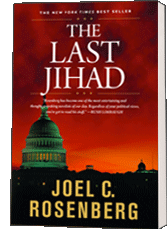
    I’ll be honest here. I wasn’t going to write an opinion on Joel Rosenberg’s The Last Jihad, published by Tyndale Fiction with a copyright date of 2002 even though the novel was written somewhat prophetically before the 9/11/2001 acts of terrorism. With such astounding endorsements from Rush Limbaugh, Vince Flynn, and Sean Hannity, how could I resist such a novel knowing my propensity for political thrillers such as those of Vince Flynn’s? Admittedly I bought this novel some time ago but hadn’t managed to get to it until recently. Since it’s been published, Joel Rosenberg has produced not only subsequent novels in this series but non-fiction books with prophetic tendencies. Check out his website to examine these in depth looks at the current and future explosive conditions in the Middle East with Israel in the center of it all. He’s sold millions of books and his latest The Tehran Initiative will release in October of this year.


    This story focuses on greed, corruption, Jihad, and Israel’s survival. With an airborne attack on the President’s Thanksgiving motorcade, Israeli Commandos foiling an attempt to launch a nuclear missile into their country by Iraqi forces, and the last minute discovery of an inside attempt to assassinate the President once again, the United States and Israel race the clock to prevent a potentially devastating nuclear assault. In other words there’s a lot going on in a very short period of time. The pressure is ratcheted up with the nuclear threat hanging over every decision resulting in the no-win “nuke or be nuked” clincher.


    Rosenberg’s sources had to be good ones, and the research he must have done shows up well. Christianity plays a minor role but is introduced organically, challenging one of the main character’s belief systems.


    But here’s my problem with this novel, and I take into consideration that it is a first novel. There was quite a cast of characters in this story, and out of the buffet of people, including the co-protagonists, I only cared for two of them, both peripheral characters and one of those not even appearing until the novel was near its end, the other one getting snuffed. Some of the dialogue between certain characters didn’t work for me—seeming awkward along with their interactions. The action came and went, but it was difficult for me to invest in the story itself in spite of its potent reality because I didn’t care about most of those who were primarily involved.  


    To top it off, the story concludes with a significant cliffhanger which always feels like a setup for the next book.


    So. Although I know The Last Jihad is a thriller and that this and his other novels are wrapped in potential reality with stunning assertions and prophetic possibilities, I appreciate the novel, but it’s not one I particularly liked.


                            Book_lastjihad


    Father, you watch over Joel and you lead him. Please continue to inform him and give him insights into this difficult and volatile world we live in during these last days. Please protect him and his family from all harm. In the Name of Jesus, Amen.

  •  

    I am astonished that you are so quickly deserting the one who called you by the grace of Christ and are turning to a different gospel – which is really no gospel at all. Evidently some people are throwing you into confusion and are trying to pervert the gospel of Christ. But even if we or an angel from heaven should preach a gospel other than the one we preached to you, let him be eternally condemned!

    Galatians 1:6-8 (NIV)


  •  

    Issa Demands Page One Retraction from NY Times


    Henry J. Reske (Newsmax)
     
    Rep. Darrell Issa, R-Calif., is demanding The New York Times issue a front-page retraction for an article “riddled with factual errors” that looked at the congressman’s personal business dealings and the alleged overlap between them and his work in Congress.
     
    The office of the Chairman of the House Oversight and Government Reform Committee requested the retraction for the article entitled, “Helping His District, and Himself.”
     
    “The request for a full front page retraction is based on numerous errors that invalidate the primary assertions made in the story that is a false and sensationalized account Rep. Issa’s efforts to conduct congressional oversight of the Obama Administration and other matters,” the congressman’s office said in demanding the retraction.
     
    The New York Times has so far issued one correction and is reviewing other errors cited by Rep. Issa’s office and the request for the retraction, according to Issa’s office.
     
    The 2,700 word piece by author and Pulitzer Prize winning reporter Eric Lichtblau is a detailed look at Issa’s business interests, how they have grown since he entered Congress in 2000, and how his work in Congress may have helped.
     
    However, the congressman’s office said shortly after the piece appeared that “beginning with the opening line, The New York Times piece is riddled with factual errors and careless assertions that has resulted in a story predicated on innuendo and not fact.
     
    “It's disappointing that the so-called 'paper-of-record' has decided to publish a story that is nothing more than a compilation of left-wing blog posts that are easily found by a simple Google search. It's the same old playbook, every time Darrell Issa starts gaining ground, the left-wing smear machine goes on the attack. If anything, this story validates the work that the Chairman of the Oversight and Government Reform Committee is pursuing.”
     
    The article alleged that as Issa’s “private wealth and public power have grown, so too has the overlap between his private and business lives, with at least some of the congressman’s government actions helping to make a rich man even richer and raising the potential for conflicts.”
     
    “He has secured millions of dollars in Congressional earmarks for road work and public works projects that promise improved traffic and other benefits to the many commercial properties he owns here north of San Diego. In one case, more than $800,000 in earmarks he arranged will help widen a busy thoroughfare in front of a medical plaza he bought for $10.3 million.”
     
    The article alleged that Issa “bought the complex in 2008, soon after securing the first of two earmarks for the two-mile project and unsuccessfully seeking millions more. The assessor’s office now values the complex at $16 million, a 60 percent appreciation.”
     
    “This, however, is false,” Issa’s office stated in a memo that included a copy of the sale agreement.
     
    “According to the final settlement statement of the medical plaza property, the purchase price paid by Rep. Issa’s company for the property was $16.6 million. This figure, $16.6 million, is essentially identical to its current tax assessment and wipes-out the 60 percent appreciation the New York Times story alleges Rep. Issa’s commercial property enjoyed.”

    The congressman’s demand for a retraction asserted that the “government sponsored road work noted in the article has not even begun and Rep. Issa’s requests for the project (which were publicly announced and made on behalf of and at the request of the City of Vista, and the San Diego Association of Governments which is the regional transportation planning authority) all came before the 2009 property purchase.”
     
    An attempt to reach Lichtblau for comment was unsuccessful. His article noted Issa “did not respond to repeated written requests in the last three weeks to discuss his outside interests.”
     
    “Eric Lichtblau’s story is filled with factual errors, half-truths, and exaggerations,” Issa spokesman Frederick Hill told Newsmax. “This poorly reported piece is consistent with past interactions we have had with Lichtblau. These past experiences with Lichtblau, and concern that any comment we gave him would be distorted, was why we declined to speak with him for his story. “

    The congressman’s office said the article contained “13 erroneous statements” including:
     
    • The assertion, "Here on the third floor of a gleaming office building overlooking a golf course in the rugged foothills north of San Diego, Darrell Issa, the entrepreneur, oversees the hub of a growing financial empire worth hundreds of millions of dollars." The office building located at 1800 Thibodo Rd. in Vista does not overlook a golf course.
    • That "Mr. Issa has . . .  split a holding company into separate multibillion-dollar businesses . . ." Issa does not own a single "multibillion-dollar business.
    • That "Mr. Issa brushed aside suggestions that his electronics company's role as a major supplier of alarms to Toyota made him go easy on the automaker as he led an investigation into the recalls." Issa's former company, Directed Electronics, is not a "major supplier" or even a supplier to Toyota and the congressman does not have a personal financial interest in Directed Electronics.
    Hill said that so far the Times has “only acknowledged the multibillion claim was incorrect.”
     
    “Since publication, our efforts have been focused on raising awareness of the unambiguous factual mistakes in the New York Times’ story and the recycled innuendo from partisan blogs that the Times story attempts to portray as original non-partisan reporting,” Hill said. “To be sure, there story contains a number of half-truths but some facts have also been taken from sources like the congressman’s annual financial disclosure.  So far, the Times has been unwilling or unable to offer us serious explanations for its many dubious claims."
     
     
    Father, in the end may your truth prevail. In the Name of Jesus, Amen.
  •  

    As opposed to calling all romantics. It’s true. I’m currently searching for the right audience for my novels. My love stories are heavy on the romance, deeply character driven, and they absolutely don’t cater to the “light” or “fluff” romance reading crowd.


    A male author friend of mine who shall remain nameless for now termed me a “minute chronicler of the human heart”. What an honor.


    So . . . if you know anyone who enjoys contemporary love stories with an honest look at that thing called romance . . . have I got a book for you. Coming soon . . . Breath of Life.  


    Lord, without you there are no stories. Thank you for the ones you’ve given me. In the Name of Jesus, Amen.  

  •  

    . . . isn’t necessarily what or who you really are or ever will be. That’s hard to hear, isn’t it? It is for me—or I should say it was for me. When my mind threw the desired images into the flash frames of my imagination and the years edged upward and the dreams drifted into partially realized fragments, I accepted that my designs for myself created disappointments and disillusionments.


    Those inclinations I carried around with me for most of my youthful years didn’t prove to be realistic in the sense of who I “needed” to be. When I met Jesus Christ, I learned that me-focused stuff didn’t bode well for any kind of genuine happiness. It only fostered more of the same dissatisfaction with what was present and an intense hunger for more of the same in ever escalating possessions and accomplishments. Humanity in its fullness is often what we indulge in our dreams and desires without considering who we are meant to be.


    Man-made dreams might have their origin in God-made dreams, but the moment we take control of them for our fulfillment we lose the significance of the journey toward their purpose. When we fail to abide by “The Plan” and exercise our own versions of getting to where we think we’re supposed to go, we sacrifice the beauty of supernatural provision and the value of lessons learned along the way.


    I’m grateful for my life. I’ve learned how gracious God has been to me. Beyond what I deserve, he has given me. I pray that I will continue to be the right shade of paint on God’s magnificent canvas. Nothing else matters anymore.  


    Thank you, Lord.   

    .