Into the Fire

Passionate thoughts about the world of writing and the Power of God

  •  

    . . . for the sake of story? If you’re writing thrillers, mysteries, or suspense novels, you can get away with murder. Literally. But murder doesn’t often fit into the romance genre. Or women’s fiction. Doesn’t mean it can’t—especially in chick lit—just means it’s unlikely. It would have to be done very well to ring true and not morph the story into romantic suspense.


    I think for an ordinary blue collar type girl—now a mature, in the sense of age anyway, woman—I’ve lived an exciting life. I chased a British movie star to Great Britain and also toured most of Europe shortly after my 20th birthday. For someone who’d never been more than two states away in either direction and always accompanied by my parents, a trip with a friend to the distant shores was indeed quite an adventure. When I returned, I realized just how much a university education was not in my repertoire, and I joined the vagabond life of horse racing. Finally a life with horses—a dream come true.


    But in between gala events in my lifetime, there is much ordinary living. And isn’t that the case for most of us?


    So. If we follow the instructions of writing a breakout novel, we must create tension on every page—or conflict, conflict, conflict. Huh. Is that how you want to live your life? In a perpetual state of angst?


    Now high school romances present lots of conflicts, but how about the process of discovering each other as adults? Just how much tension is reality? UST (unresolved sexual tension) will no doubt be apparent if there’s any testosterone/estrogen anxiety. But what about mayhem? Isn’t that just a bit much for a romance novel?


    How many times have you read the back cover copy of a novel and immediately figured out the process of the characters? Admittedly, there are tried and true formulas for certain genres, but when the conflicts and resolutions are predictable before the cover is opened, what’s the point? Well, evidently, the point for many readers is traipsing through the angst of that conflict just because . . .


    Life is often ordinary. It doesn’t need to be falsified to make it interesting or meaningful. It would seem the true writer could take great pleasure in bringing “real” to life on the pages of story . . .


    Lord, you are the only “extraordinary” I know. That you would dwell in me is beyond my comprehension, but I’m so grateful. So very thankful. In the Name of Jesus, Amen.
  •  

    Ever feel like your judgment is skewed? Like you're missing "it"?

    For a writer it's a weird place to be. It infringes on your sensibilities, pressing against your confidence, and pushes you into self-loathing.

    You read the books whose rave reports entice you, and you fail to catch the fever. Is my judgment skewed? Am I so far removed from what is supposed to equal "good" that I can't make a sound judgment?

    Is there any validity in my opinion?

    Sometimes I guess I just don't know . . .


    Father, you know. All things. And you do all things well. Help me to honor you in what you've given me to do. In the Name of Jesus, Amen.

  •  

    How many times have you heard the phrase in the title at church board meetings, committee meetings, the publishing industry? Change: “You know it don’t come easy.”


    The publishing industry is notorious for moving slowly. However, the challenges of e-publishing have engineered some movement urging the powers-that-be in the biz to get rid of their 4-cylinder approach with the “tried and true” methodology and upgrade to a dyno-chipped 8-cylinder if they don’t want to get left in the dust by authors deciding to do it themselves.


    Can you imagine if Karen Kingsbury, Ted Dekker, and a few other big name authors bagged the traditional publishing companies and elected to self-publish their future novels? Both of these authors are marketing machines so there’s very little chance their reading clientele would drop off even slightly. Granted, their publishers pay the big dollars for marketing their books—in keeping with the generally accepted practice of the big names getting the majority of the marketing dollars—but it’s a well known fact that Karen Kingsbury has also invested thousands of dollars in marketing her books which of course makes her a perennial favorite with her publisher(s).


    Stop and think about the mechanics (don’t worry: I understand this part) of creating a book. The services of outfits like WinePress provide cover design, typesetting, and even e-reader adaptation. Their new packages include the requirement for edited work—they employ professional freelancers just like the royalty presses. Usually, depending on how much editing is necessary, their product is produced and shipped faster than traditional publishers, and the author is consulted and informed of every wonderful element of their book all along the way. A project manager is assigned, and off they go! An author can elect to do straight e-publishing, POD, or collect the bound printed books which equal or surpass, as far as appearance, the quality of those produced by royalty publishers.


    And then we come to the bane of all publishing: the marketing of these novels. We’ve discussed here many times how difficult it is to pinpoint what sells fiction. Word of mouth is the one “given” according to nearly everyone who’s professionally tried to market literature. However, an author could die before the word of mouth penetrates the masses with sterling recommendations to read his/her book!


    I know being traditionally published appears to be the stamp of approval assigned to one’s writing. It’s an affirmation that professionals approve and have given value to one’s work. I don’t disagree. But previously contracted authors are now without contracts and considering what that means to their author status. The dabbling in thoughts of the smeared and degraded self-publishing has begun to raise its forbidden head to peak over the high razor-wired walls and assert its availability. Some fire their Uzis at first glance with scathing remarks about the “lack of quality” and other insults. However, production-wise, the books that come from places like WinePress are more tightly managed than those from most royalty publishers. Writing-wise? Who knows? They go through an editing process just like traditionally published books. I’ve read some poor royalty-published novels in the last year . . .   


    Anyway, at least there are choices for those who are tired of “the way we’ve always done it”.


    God, you’re so generous to your people. You take us down roads of your design and what a journey it is! What a joy when we comply. In the Name of Jesus, Amen.     

  •  

    Okay. I think I’ve admitted to you here how I scored a politically-incorrect “moron” rating on my SAT scores, many years ago when they still used that classification for identifying students who didn’t have a shot at experiencing any kind of success in a particular category, in the “Mechanical Reasoning” and “Spatial Relationships” designations of the testing. I remember randomly blackening the answer brackets of the “folded” drawings, my brain absolutely unable to connect the illustrations to any order whatsoever. In my defense I scored in the upper 90 percentiles in anything to do with language skills and reading comprehension—in other words: all things English and literature related. Distinct markers there for the testing succinctly establishing what I could and couldn’t do.


    Whatever my English and literature classes held for me in school—including my brief year at the U—I “got”. Could do. Excelled. With As and an occasional B. From sentence diagramming which I thought was fun to writing essays, short stories, and book reports, I was a good student. And I loved it all. Or most of it. It’s especially fun to address your strengths and feel the sense of accomplishment.


    Although I learned the structures of sentences, paragraphs, essays, short stories, and novels, those things were better “absorbed” by participating in actually reading and writing them than focusing on their mechanics.


    I’m one of those writers who could care less about the “mechanics” of writing novels. Scholarly diagnosis and/or teaching of the craft don’t cut it with me. Not anymore. I’m flexible in my judgment of novels, appreciating diverse styles and voices. I don’t have to—nor do I want to—extrapolate what specific technique worked to accomplish a particular reaction.


    This is not a criticism of those who pursue a scholarly approach to novel reading and writing. Whatever works for an individual is the crux of how they were designed. I’m simply sharing what I can and cannot—or do and do not—do in my reading and writing.


    A story and the way it’s told either work for me or they don’t. Simple, complex, or a mix of both: if I like it, I do, and of course if I don’t . . . I can tell you why I don’t like a story and even why I don’t like the writing. But when it comes to a book I love, it’s quite simply because I loved the voice, and I got into the story—usually by falling in love with a character or several of them.


    If you want mechanical analysis and dissection of writing techniques? You know not to come to me: I’m a moron when it comes to mechanical reasoning—but by choice with literature.


    Lord, only you can make something valuable out of these raw materials. Thank you for infusing worth. Apart from you, I can do nothing. In the Name of Jesus, Amen.   

  •  

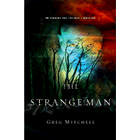
    Greg Mitchell is the author of The Coming Evil Trilogy beginning with Book One entitled The Strange Man and published by Realms, a division of Strang Company. A contemporary supernatural suspense, grazing the cusp of horror, this speculative tale situates itself in the spiritually and physically dead-end town of Greensboro.


    Beginning with a too long prologue to set the stage for the historical impact of the North Woods bordering the edge of Greensboro, the townsfolk all seem to be aware of the scary stories which depict a “bogeyman” who kidnaps rebellious kids and takes them into those woods never to be seen again.


    The story presents the Weldon family composed of a retired father/pastor who is ill, his wife, and their two sons, Jeff and Dras. The older Jeff, married to Isabella, has taken over the mantle of pastor to his father’s church and Dras, at 22, drinks, visits the local club scene with his lifelong friend Rosalyn, and indulges his love for comic books and horror flicks, occasionally showing up at church to broker a peace that doesn’t exist with his brother because of Dras’s loose lifestyle.


    Others in the community dot the landscape of the story but they appear more as neighbors we don’t really know but greet in our everyday lives. As a storm makes itself visible on the horizon of the town, Jeff Weldon fears it’s bringing more with it than weather hysterics. Once it arrives, an ominous presence infiltrates the town, but only a handful of people recognize what’s happening until the onslaught of evil is well underway.  


    The club scene introduces us to “the strange man” and allows us to learn of his intentions. He sets his sights on Rosalyn but must first eliminate people who stand in his way. The process of accomplishing his goals begins here.


    There’s no question Greg Mitchell can write. However, there are “first novel” weaknesses in Book One of this trilogy, and his vision for the movie screen might’ve slightly hindered the practicalities of creating the visuals in this story. As writers, we all instinctively know how difficult it is to be unique. “Nothing new under the sun” applied in Solomon’s time so how absolute is that fact now in trying to create a “new” twist on old stories? The visuals of demons have all been tried so in this story—for me—they didn’t provide any impact and felt cartoonish. The damage done by hordes of demons seems inconsequential to those who search for a single killer after the murder of a young man when it’s obvious something supernatural is underway, providing inconsistencies in plot points. The primary weaknesses in this story for me were the unlikable, underdeveloped and a bit stereotypical characters plus dialogue which “sounded” over-simplistic at times.


    It seemed the “fun” of portraying the demonic personas and their attacks took precedence over the meaningful relationships needed with the characters to establish the desire to root for their safety, deliverance, or even salvation. The symbolism chosen at the climactic end of this first book felt forced. Used to demonstrate the descending spiritual climate of the town (I assume) and the element of sacrificial love, for me it was overdone and didn’t fit.   


    When you write speculative fiction, you, well, speculate. At times the strange man couldn’t penetrate locked areas and other times he could, giving the story a bit of an uneven feel. On rare occasion that “preachy” mode ventured into the story unexpectedly instead of organically.


    However, there will be plenty of readers who will like The Strange Man and eagerly await the next two books in the trilogy.


    At the end of Greg Mitchell’s The Strange Man, there’s a bonus short story called Among the Dead which takes place ten years before the advent of Book One in The Coming Evil Trilogy.


    381943 


    Father, please continue to provide those stories you have for Greg to tell. Watch over him and his family and help him to realize his dreams according to your design. In the Name of Jesus, Amen.  

  •  

    Then he opened their minds so they could understand the Scriptures. He told them, "This is what is written: The Christ will suffer and rise from the dead on the third day, and repentance and forgiveness of sins will be preached in his name to all nations, beginning at Jerusalem. You are witnesses of these things. I am going to send you what my Father has promised; but stay in the city until you have been clothed with power from on high."

    Luke 24:45-49 (NIV)

  •  

    Excerpts from the ACLJ:

    Last week, Mayor Bloomberg signed a new law that will effectively shut down pro-life pregnancy centers in New York City. This law – that Planned Parenthood hopes will be a model for shutting down pro-life pregnancy centers around the country – creates legal restrictions that only apply to pregnancy centers that don't provide abortions, and ignores abortion clinics.

    Even pro-abortion Bloomberg all but admitted it was unconstitutional when he signed it, saying: ''If it's constitutional or not, I just don't know.''

    This law is nothing but a ploy for Planned Parenthood and other abortion advocates to force pro-life centers out of existence – virtually eliminating their competition and growing their abortion businesses.

    The ACLJ will be filing a lawsuit on behalf of pregnancy centers in New York City to protect them from illegally being forced to:

    • Post signage declaring that they do not offer abortion services
    • Be exposed to excessive and endless frivolous lawsuits

    Can you imagine any other business or service being forced to post signs declaring what they do not provide – or referring people to competitors that offer life-threatening treatments?

    The ACLJ believes this law is clearly unconstitutional – in fact, it was rushed through the city council in defiance of New York City statutes and without the formal hearing required by public ordinance.

    We have strong grounds to fight this outrageous law's implementation, especially considering that a district court judge in Maryland recently found a similar law unenforceable.

    The last thing NYC needs is for crisis pregnancy centers to be shut down by attacks like this law – a recent report showed that 41% of pregnancies in NYC end in abortion, and that 90% of the abortions are performed on ethnic minorities.

    We cannot let organizations like Planned Parenthood and NARAL force pro-life pregnancy centers out of business.


    God, forgive us. Please forgive us. Lead us in your ways and help all who fight for the unborn. In the Name of Jesus, Amen.


  •  

    Those astute readers who look for elements of theme and/or design might note there is no question mark after the title of this post. There is a period. A definitive statement made in one word: supernatural.


    Some intellectuals and many kinds of scientists often study ways to discredit the supernatural elements in existence on planet earth. Anything that can’t be explained by natural causes and effects gets relegated to theoretical discovery or assumption. I find it fascinating when the age of something is attributed to several hundred million years ago when it’s impossible to prove. Those same pseudo-scientists mock the account of a God-given creation noted by other scientists who’ve discovered how reliable biblical documentation has proven to be.


    For the Christian there can be no argument against the supernatural. Both God and the enemies of our souls operate in the spiritual kingdom which by all biblical accounts is more expansive and real than our own little earthly dwelling. The universe and beyond all belong to our Creator, the one and only Triune God. So if we accept that He is who He says He is, then we most certainly experience the supernatural in our lives.


    It’s ironic that some Christians will accept some of the supernatural aspects of God’s word but kibosh other supernatural elements. As if any of it can be relegated to what’s comfortable for us to accept, we pick and choose what we will stand for and brush aside what bothers us with non-contextual references to explain them away.


    Wednesday night I experienced a very specific dream. A major player in the dream was an author I only somewhat know from cyberspace. There was no recent communication with this person, no particular Facebook comment, nothing to bring her to mind. Yet she was there amidst several others who had no recognizable faces. Hers was clear and detailed before and after a troubling event in the dream. Since the particulars were so specific, I sent her a guarded account of the dream, suggesting it might have spiritual implications to her and to do whatever with the information. Her reply gave real meaning to the dream, and she received a specific scripture to go with it. This is not “natural”. It’s supernatural.


    Most of us who believe in the supernatural can give many accounts of divine and devilish interference in our lives. In hindsight those of us who didn’t walk with the Lord since childhood can recall instances where God or the devil intervened in unusual ways to either rescue or harm us.


    Part of the supernatural elements many Christians choose to disregard is that of spiritual warfare. Often it’s equated with secular horror films or Stephen King novels. It’s often reduced to simple good versus evil. Some of the CBA supernatural suspense authors portray demons and demonic occurrences in much the same way as the world depicts them and similar to each other as writers. Takeoffs (or knockoffs) from Frank Peretti’s work who originated this arm of Christian fiction and gave it substance have gained momentum of late, but in my opinion not all of them seem to be writing from an area of core and/or personal experience. Having some background in spiritual warfare, the supernatural elements of confronting the enemies of our souls begin with the power of the Holy Spirit (the Sword of the Spirit) and the Name of Jesus (who is the Word of God). The scriptural references to the various events where Jesus engaged the enemy give specifics for each of the encounters which were individually unique.


    Regardless of the level of your experience in Christianity, you simply cannot be a Christian without experiencing the supernatural. And if you’re willing to invest in the God of all creation and believe He is who He claims to be then it’s to your benefit to explore His whole Word and gain His chosen perspective for your walk with Him. Ill-equipped saints do little to further the revelation of salvation and the reality of Jesus. His intent for us is to be “led by the Spirit” and to “walk in the Spirit”. We have been given supernatural assistance to do this. And we can live in that fullness to the extent we are willing to do so. The power of God lives in us, and His desire is for His people to be obedient to His will for them. Without employing His supernatural strength we settle for a mediocre and often sedentary spiritual lifestyle that doesn’t afford much credit to or action in the supernatural aspects of kingdom living. To our shame. To our loss.  


    The walls we erect to shield ourselves from false doctrines or indulging the flesh in emotional “displays” or even from being unable to discern the devil’s version of mimicking godly occurrences are mere fear tactics raised by the enemy himself to keep Christians from seeking fuller growth in the spiritual realm. There is no viable and reasonable excuse for being unable to do what the disciples did because the same power is within us. And all the recognition, all the glory, all the praise, and all the gratitude for the resource and provision are given to God. He uses these flawed and weakened vessels of flesh, these prone-to-prideful human beings to be His instruments to cement relationships with others just like us. His love surpasses our weaknesses, and His power to accomplish His will is limitless. What He asks of us is to be willing. Willing to trust His directions. Willing to stretch our experiences with Him. Willing to be all that He designed us to be.


    Is it too much for Him to ask us to be the supernatural purveyors of His will and His ways when He provides all the ammo? I think not.


    Father, you know me. Fill me. Guide me. Keep me in check when I want to run ahead. Push me when I want to hang back. In the time I have left help me to be all you designed me to be. In the Name of Jesus, Amen. 

  •  

    This post begins with a heartfelt disclaimer and a request for not being misunderstood. Trying to articulate my feelings on this subject of excellence in writing poses questions which can lead to discussions which can lead to actual arguments. So to avoid those, I will concede these particular thoughts belong to me. They’re not a definitive commentary on the business or art of writing. Whether I’m right or wrong in my feelings and opinion is irrelevant because it has no merit to those who will disagree, and in fact if I’m “wrong” in feeling this way, I’m the only one who will “suffer” the consequences.


    Excellence to me means something is near perfect. I confess I apply the term to some blog posts, some comments, and miscellaneous other written words. I use it in these instances because the person who wrote the post, or noted a sterling quotation, or captured the essence of meaning in a response to a post, tapped into the element of excellence. Are any of these examples indicative of perfection? Not to me.


    I’m of the opinion that the only perfection exists in God. This earth is cursed and fallen. Our bodies function with a sin nature. Our only redemption comes from Jesus Christ and we are transformed by the indwelling Holy Spirit. Without Him we are driven by sin.


    That the Lord allows His people a portion of His creativity is a gift of such magnitude, there is no taking credit for it. Being gifted to write implies so many things to different ones and manages to challenge all kinds of writers to debate whether it’s a gift, a talent, a calling, or a compulsion—or all of the aforementioned.


    The discussion of excellence soon follows with all kinds of declarations about giving our best for the King of Kings. And here’s where it can get dicey to those who pursue the craft with an academic drive to excel, to always improve, to write the best words on the page no matter how long it takes, because, after all, this is done in service to the King of the Universe. Rightly so. It truly is. And nothing less than excellence will do. Nothing less will be worthy. And this is where I stumble.


    In writing it can be clear when it is done poorly due to the lack of skills in using our language. There are certain rules which indicate an individual has learned to use the proper grammar and there are ways to recognize when they’ve chosen to carefully and cleverly circumvent those rules to produce something creative. When writing veers off to story, the creativity is unleashed and variety surfaces in endless forms. What is hailed as brilliant can be trashed as inept. It happens repeatedly. Opinions given by learned craftsmen and readers of pulp fiction. Some authors gave their best and others simply wrote a story. Publishers determined what constituted “worthy” of publication, and the critics reacted to their choices.


    Perhaps it’s a matter of semantics for me. I think excellence is as impossible as perfection. I can only give my best, work hard to create something that will please the Lord and serve His purpose. As long as I don’t settle for mediocrity in my effort, then I’m doing what I can do. Is it enough? It won’t be for some. They’ll hate what I wrote, pan it, suggest I should take up knitting since writing couldn’t possibly be what I was designed to do. Others will like it, write that it moved them, and say nice things about how they felt like they knew my characters personally. Or I hope they will.


    I’ve read some mighty fine novels written by authors who pursue “excellence”. If you pinned me to the ground and required me to name three or four novels deserving of the term “excellent” or else—I could probably do it. But I know for a fact that others would disagree. I can give you reasons why I don’t think some of the novels you might pick don’t merit the term, but to what end?


    Excellence is a whim. It’s unattainable on this earth. It’s noble to try as long as that effort is done under the Lord’s supervision. Apart from Him, none of us can write a darn word. So any “excellence” achieved all belongs to Him shining forth through His creation with His creation. Sometimes, I think we think it all depends on us—that if we work hard enough, we’ll produce that excellent thing. He appreciates the pure in heart who work to bestow the most excellent gifts at His feet, but it doesn’t come from human hearts—it comes from holy hands: His.


    My opinion, friends. My opinion.


    Father, I would love to give you an excellent gift, but you own the gifts. I give you my best but, honestly, probably not all the time in everything I do. But you know that. You know my human heart and the battle that rages for its allegiance. I love you, Lord. I want to honor you with whatever you’ve given to me. Help me to do that. In the Name of Jesus, Amen.

  •  

    Can you state your favorite movie, your favorite book, your favorite song? Definitively. One of each. I can’t. I don’t even want to make lists of each because they’d be too long and lose their impact by the sheer number of selections.


    Top Five? Top Ten? Not enough for me.


    How ‘bout you? Do you have a singular favorite in each category? Can you narrow your favorites down to five or ten?


    Lord, you put such beauty in our midst. Help us to always appreciate the talents and gifts displayed by your people trying to capture it on film, with words, and in song. In the Name of Jesus, Amen.