Into the Fire

Passionate thoughts about the world of writing and the Power of God

  • If you could change five things (or less) in CBA publishing, what would they (it) be? (Unabridged and unedited)


    From a Senior Editor, Major CBA Publishing House (Anonymous):


    1. I’d change the minds of CBA readers about what they want to read. They tend to read shallow, in my opinion.

    2. I’d want to see memoir make a comeback in CBA.

    3. More risks taken by authors and publishers.

    4. A halt to the evolution of the e-book. It’s inevitable, I know, but I’m a book person. I like the actual physical book and I will mourn its demotion to second (or third) class citizen in publishing.  

    5. I’d wish for less necessity for good authors to have the “platform” from which to promote their books.


    From Author Harry Kraus, MD:


    1) I wish it could be about the content of the pages and not whose name is on the spine of the book that would entice booksellers to try a new author and readers to pick up someone new. Judge new potential authors on basis of quality of writing, not on sales numbers.


    2) I wish it weren't (so much of the time) about money.


    3) I would make CBA houses independent of large secular publishers.


    4) I would make all CBA publishing houses not-for-profit, with profit money funneled into ministry projects–with a few runaway bestsellers, we could change so much!


    5) I would like to see more openness to stories of redemption that contain some of the raw, real pain of life without Christ. Too often, writers are forced to write what would not offend the most conservative readers, but we need to be appealing to mainstream, non-Christian readers without compromising our message or presenting sin as an attractive alternative.


    From Author Kathi Macias:


    I'd love to see a concerted, concentrated effort at magnifying the already existing ministry aspect of CBA and a little minimizing of the visible and glitzy marketing end of it. (I know marketing is necessary and I do it accordingly, but I don't want to forget why I do ANY of this!)


    Second, I'd love to see a strong mentorship program arising out of the experienced ranks of CBA. Some of us (authors, editors, agents, publicists, publishers, etc.) have been in this industry for decades and have a lot to offer, but it gets a bit scattered when we try to do it on our own.


    From Author (Anonymous):


    Ultimately, I'm happy with the direction Christian fiction is going and I'd like to say that publicly. I think we are addressing the tough issues, coming out with stellar books more and more often. With that said, there are a few things I think we could improve upon.


    1. Nothing that isn't stellar would be published under the genre of Christian fiction (even if it means I'm excluded.)


    2. An "ass" or "shit" wouldn't be such a big deal when used in context. I mean what is and isn't considered a curse word is cultural, not biblical. For example … poop isn't a curse but shit is. Why is that? When I stub my toe, I tend to say "shit" not "oh doody!" Sometimes I think we have to write things that sound silly because of some of the restrictions. This isn't the biggest deal in the world and I'd certainly hate it if we went too far in the other direction, but a little more leniency there would be nice.


    3. Sexuality between married people… Sometimes, certainly not all the time, we are restricted in showing sexual flirtations between married people. Sex is a normal, healthy, beautiful thing when in the context of marriage. I'm not saying we should be crossing into soft porn, or try to titillate the reader, but I see very few references to lovemaking in the Christian market. It would be nice to see a reference here or there that Christian couples have great sex too and sometimes the wife even enjoys herself.

    4. Can we please admit that we drink? I know very few Christians who don't enjoy a beer, glass of wine or margarita now and then. Why is everyone in Christian novels always ordering a diet Coke? Give me a Guiness once in awhile. No, we should not be getting drunk but yes, Jesus turned water into wine–really good wine.


      5. Catholics are Christians too. I see very few Catholics in Christian fiction and even fewer actually living their faith with the same surrendered heart as evangelical characters.


    From Author (Anonymous):


    I’d cut back on the bonnets. I’d like more variety to pick from. Something other than just the Amish books and prairie romances. It’d be great if publishers could put something out there that’s new, different. I’m not talking Twilight or Harry Potter, but something “new” that will capture general readers. They did that with the Left Behind series. It’d be great if publishers opened themselves up to take more risks. I know, I know. It’s a financial risk they’re taking, but you won’t know if it will work if you don’t try. Why publish the same boring books, when you can publish something new, different?


    Deeper issues. Issues that people face everyday shouldn’t be taboo. In other words, stories that are more biblically based. I’m not talking about writing details about sex, language, whatever. I’m just saying that if we got honest on the page, we might actually touch lives, reach hearts and souls. But having stories that give the impression that if readers simply obey God, their lives will be perfect, isn’t realistic. I realize we have different genres to meet, but I feel like we’re not meeting this need in very many books already out there. The books are all the same. I’m tired of the Christian characters being so perfect. I mean, how many can relate to that? Not even the most pious Christians can, and if they can, then they’re not honest with themselves.


    I’d really like to see more books with unpredictable plots. I pick up so many books in the store, and after reading the book cover, I know what’s going to happen, and when I read them, I learn I was right. I’m also not crazy about books that use miracles to solve a conflict. That’s something else too few people today can relate to, and it’s an easy way out for the author, if you ask me.


    From Author (Anonymous):


    You know–I don't have any major thing to share. I'd change a lot about publishing in general . . .


    The longer time goes by, I see doors open and close. I'm fortunate the doors in CBA continue to open for me to tell the stories I want to tell. So what if I can't put curse words on paper? So what if my books are shelved somewhere specific in the store? I can't do anything about that. :) 


    I keep thinking of Stieg Larsson. The guy sold 40 million copies and his books are now being made into movies by David Fincher. That's my dream. Yet the guy passed away. Life's not fair. It really isn't. 


    All I keep thinking is that I'm fortunate to get paid to do something I love.


    Dialogue is good. But those CBA publishers aren't nameless–they have people that read those comments . . .


    To be continued . . .

  • Many of the professionals I solicited to address this question were eager to do so. Others had schedules which wouldn’t permit their thoughtful participation. Still others didn’t feel like addressing the issues and others claimed they didn’t have any answers. You will find conflicting opinions and many in agreement. The majority of participants and some who weren’t able thanked me for asking this question. All comments from industry professionals are welcome. There is no way I could reach all of you with my inquiry. The posts will continue until everyone who responded is quoted.  


    Without further fanfare, let’s get started. These participants in the industry of Christian publishing decided their names could be attached to their responses. All answers to this question are unabridged and unedited.


    The question: If you could change five things (or less) in CBA publishing, what would they (it) be?


    From Author Mike Dellosso:


    I'd like to change the attitude of readers toward Christian "horror". There's a misconception out there that really needs to be debunked and tossed.


    I wish more men would pull themselves away from the TV and read.


    I'd like to see more dollars invested in marketing "faith-based fiction" to the general market.


    I'd like to see more mass market paperbacks hitting the shelves.


    I'd like to see Christian bookstores stock a wider, more balanced selection of fiction.


    From Editor Mick Silva:


    1. More God. Pub boards would seek God in prayer, know they were only publishing books that mattered, and throw out any consideration that took precedence over what God wanted them to publish.


    2. Editors would edit. Too often, there's not enough time, attention, or sacrifice made for authors in Christian publishing houses.


    3. Complainers would stop shopping. If you don't like the books, get your money back and accept that not everyone is like you and that's okay. You don't have to complain to the bookstore owner about carrying the book, the publisher about publishing the book, and the people who get something out of the book. It wasn't for you. Deal with it.


    4. People who aren't yet published would realize there's a reason. Fix what's not working, get edited, be humble, change to meet audience expectations in your genre, and follow the rules before you try to break them. Humility would tell them they still have a lot to learn before they assume they're just too edgy or too brilliant to be published.


    5. We'd all stop assuming that CBA is anything more than a collection of fallible people trying their best to follow God and exercise their talents for him.


    From Author Sibella Giorello:


    I would change our "safe" view of things. Jesus's parables were radical in their time. My hope is that stories told by Christians would project a similar loving shock to the human system.


    From Senior Acquisitions Editor Barbara Scott, Abingdon Press:


    Listen to the Spirit of the Lord and follow His lead rather than continuing to do business the same old way.


    Support new authors so that CBA will have a voice in publishing 25 years   from now.


    Set up bookstores so that they are destinations (like Starbucks or Barnes & Noble) so that people of all ages want to spend time there with friends discussing ideas over a good book and a cup of coffee. Offer free wireless service and tables where people want to sit and work during the day. It's amazing how many will buy books, magazines, or gifts before they leave the store.


    Offer a course in customer service to every employee, even those who only work part-time. I've gotten some of the worst service in Christian bookstores.


    Hand-sell fiction. You have to read the book to recommend it.


    From Author Chris Fabry:


      I would forge a stronger bond between local bookstores and Christian radio stations. Great ministry happens in both venues.


      I would put my books next to the front door. J


     From Author Susan Hill:


    I've heard the panel discussions at Christian Writers Conferences where publishers want to assure their audiences that they buy a Christian Book and it will be safe–no language, no sex, no stuff…but they err on the side of being White Picket Fence land. We will not reach the world that way. Characters need to be relevant, have issues and still find redemption in their journeys. I think there needs to be more freedom but this doesn't have to look like the secular version of anything goes. It's a line we can walk with the help of the Spirit.


    To be continued . . .

  • Christian publishing. CBA. Christian authors. Authors who are Christians. Christian fiction. Fiction written by Christians. Christians. Followers of Christ. These simple word choices hint at the contention in the body of Christ, the body of His writers.


    It’s not uncommon to find conflicts, questions, confusion, and many, many opinions running rampant on the web in regard to Christian publishing often simply identified by three letters CBA that stand for Christian Booksellers Association. Technically this group has expanded since its 1950 formation and naming, but its new name hasn’t really taken hold in references to Christian publishing.


    We’re all entitled to our opinions, and some of us get a little more passionate than others. When the pitch rises to produce the equivalent of shrieks, someone usually steps in to remind everyone that we’re Christians after all. Witnesses for Christ, either positively or negatively, but when we claim His name, we are no less responsible for being a representative of Him regardless of how ill-fitting our conduct declares us to be.


    My opinion of the Christian publishing industry is somewhat irrelevant. As of today, I have no agent. I have no book contract. I have supposedly done irreparable harm to myself by self-publishing two of my seven finished novels. Nevertheless, I, too, have formed an opinion based on my observations, experiences, and personal associations within the industry so I’m going to be bold and list a few of my peeves before handing the next several days over to the professionals to allow them to express themselves with or without the inclusion of their names attached to their comments.


    1.Lay off the platitudes. Not only (and not always) do “great writing” and “the best stories” get published. This is simply untrue.


    2.Figure out a way to incorporate POD practices or get printers to reduce printing costs to insure that more genres by more authors get produced. The glut of the same genre(s) while substantially ignoring a vast alternative readership is just poor business and alienates other customers who won’t wade through the limited selections.


    3.Do NOT allow books that are sold to be returned. Give a few “free samples” with a return policy if not sold by a certain date.


    4.Produce all sizes of novels. From epics/sagas to these little 300 page jobs in multiple genres. Readers like long novels just as much as one market likes the quick reads.


    5.Man (or woman) up. Most authors have no idea how to generate sales. If you have a marketing team, then have them figure out how to market a book, not based on if they think they can but because the publisher says we’re going to produce this book. When they have a plan, incorporate the author and bring him/her alongside. If something specific is needed from authors, tell them what to do. If the author is good at marketing, use his/her ideas. This isn’t to take the responsibility completely away from the author, but most of them have no marketing experience. If you want books to sell, that’s why you hire a marketing team, isn’t it?


    6.Don’t sell these set-up series books. If you’re going to start a series, make that first book worthwhile. Don’t use it as a set up for book two and charge full price for both of them. Most series books are too short and should be incorporated into one or two novels instead of three or four or more.


    7.Some readers are far too legalistic, unrelenting, and look for reasons to complain. Be courteous in addressing complaints but disregard those who are damning works by authors who’ve put their heart and soul into creating stories to honor the Lord. Life is raw, people are wounded, and someone has to write their stories in novel form. If a publishing board agrees to produce a book, stand up for it.


    Now to switch gears. I’m a proponent of Christian fiction. I don’t have a problem with it being called “Christian Fiction”. I don’t have a problem with it having its own stores, its own placement in non-Christian bookstores if they could just get it out of the “Religion” section and place those novels with little or no evangelical/inspirational tendencies in with the other novels of the same genres (i.e. Tim Downs’ Bug Man books, Steven James’ Patrick Bowers Thrillers, Robert Liparulo’s Thrillers, and several other authors/books). Even “Inspirational Fiction” is a better label than “Religion” or “Religious Fiction”.


    Christian fiction has advanced in recent years, steadily and impressively, in some arenas. There are some primo authors writing truly exciting, meaningful, interesting, and well-written stories in CBA. It’s easy to tell who either doesn’t have a lot of time to read them or chooses to read from ABA because their comments illustrate they haven’t touched on some of the great efforts of CBA authors. That said, there are some genres and niche market books which give us formulaic fiction, saccharine stories, with mediocre writing at best. My personal surprise lies in the number of copy-editing errors found in nearly every book I’ve read from all different publishers. What also surprises me is the copycat efforts of some cover designs from different houses which mirror or resemble other covers from different publishers. Still other covers don’t come close to depicting or hinting at the story inside. These kinds of things point to a lack of professionalism and of attention to detail. Since I’ve participated in self-publishing which gets so much criticism for being inferior, I’m keenly aware of these mistakes in royalty publishing.


    And finally—I know: at long last—I believe God can use anything He pleases and chooses to save a soul. I know God uses creation itself to point to Himself as he explains in the first chapter of Romans. What I’m saying is this: He doesn’t need my story or yours to draw a soul to Himself. But He sometimes chooses to use us regardless of our talents because it’s His pleasure and His sovereign right, not because in and of ourselves we’re so special. We do not save souls. We do not write just the right stories to point an unbeliever to Jesus. But the Holy Spirit in God’s infinite wisdom can use our stories to do just that. It’s entirely His call.


    God has a plan for each and every writer. If He wants us to write, He has a plan for the writing. Most of us hope it ends up in book form and is distributed to many readers. Many of us hope the writing will bless God and touch lives somehow, some way. Our conundrum lies in being satisfied with what God wants us to do, doing it, and resting in the outcome He chooses for it.


    Some of us are implementers of change. We know there are needs in the community of publishing which should be met, should be validated, should be mediated. Some speak, some pray, some do. And some resist.


    So. I think I’m finally done. Perhaps.


    Tomorrow’s question for the pros in CBA: If you could change five things (or less) in CBA publishing, what would they (it) be?


    Lord, we’re desperate for you. In the Name of Jesus, Amen.

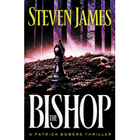
  • I didn’t have the patience for chess and never learned the game. Perhaps I’m not smart enough to play it. I suspect if I knew more about the game, the added significance of the titles of Steven James’ Patrick Bower Thrillers would contribute to the masterful and complex series of stories. Through the thoughts of Special Agent Patrick Bower’s step-daughter Tessa, I learned the interesting positioning and movement of the bishop in the game and the impact of that awareness to her troubled thinking.


    Once again in The Bishop Special Agent Patrick Bowers gets called in on a case while he’s teaching at Quantico for the summer. He and his 17 year old step-daughter Tessa are staying in a traveling colleague’s home in D.C. At the conclusion of The Knight, Tessa met her birth father hidden away in a remote location in Wyoming, and Patrick has allowed her to communicate with him via email but with some restrictions she’s chosen to ignore until Patrick can figure out why her dad is totally off the grid.


    A cannibalistic serial killer from a previous novel, released on a technicality, pledges he’s “redeemed”, but Patrick isn’t buying it, and when a professional woman who helped the killer gain his freedom comes up missing, both Patrick and his fellow agent and friend Ralph Hawkins suspect the murderer is at work again.


    Added to this, a Congressman’s daughter is supposedly murdered, but at first the corpse is unrecognizable due to the way the victim is killed. Meanwhile the reader is clued into the sick perpetrators of the grisly slayings, some of those killings remaining undiscovered as the story progresses.


    Most of The Bishop published by Revell is told by Patrick Bowers with occasional sidesteps into third person narratives by Tessa, Patrick’s boss and nemesis Margaret, and the killers’ various voices. The dilemma Patrick faces when a female detective he previously worked with is admitted into the special program he’s teaching at the Academy mixes with the lingering emotional attachment he still feels for Lien hua, his Agency coworker he almost allowed into his heart. With Tessa orchestrating impossible challenges in combined visits by the two women, Patrick is pressed to decide how he really feels about one or the other of them while being fully engaged in solving the case with so many ill-fitting but perfectly planned puzzle pieces. There seems to be no end to the connections of victims, locations, and killers from Patrick’s past, but finding the right links to decipher the message in the clues keeps Patrick’s mind swirling, trying to find what he’s missing. And as usual Steven nabs Patrick’s voice perfectly—the genius geospatial, problem solving FBI wizard who’s afraid of and clumsy at romance since Tessa’s mom died two years prior from cancer and who is constantly distracted from personal issues by the overwhelming pressures of figuring out the killers in this case.


    If you want a simple thriller, don’t tackle a Steven James’ novel. His stories are exceedingly complex with leftover killers from previous novels who either disappeared or were assumed to be dead. They’re lurking out there on the fringes of your mind—and of Patrick’s—all while you’re doing your best to discover who these horrific criminals are. There are some freakish murders in this story, so if you like tame mysteries, Steven’s books aren’t for you. The perverted killers in his stories demonstrate the severity of a criminal mind, and in this book in particular the author addresses the sin nature of mankind by clothing it in the question of the origin of morality.


    The discourse between Patrick and Tessa attempts to distinguish man’s makeup from animals, but they struggle in the process. The moral questions attached to separating the heart of man from the instincts of animals drive the conflicts in this story, and it concludes with an unsettling picture of the traumatized Tessa, the plotting of an imprisoned female, and the whereabouts of a not-so-redeemed killer along with one we might have forgotten about, which will lead us into the next installment titled The Queen coming out in summer of 2011.


    I recommend you start with The Pawn and read all the previous titles before engaging the fascinating 520 page The Bishop in order to understand the life and conflicts of the scientific and unspiritual Special Agent Patrick Bowers, a widower whose wife was a believer and whose daughter leans toward believing but struggles with faith issues and looks to be headed for another dangerous turn in The Queen.


    I’m grateful to Revell, a division of Baker Publishing Group, for my copy of the long novel for review. You can imagine how happy I was when I opened the package to find this good-sized book ready for my consumption. Right on, Revell. And write on, Steven James.


    Not for the seekers of “safe”, Steven James creates intelligent, creepy psycho killers within intricate plots which confound the best of mystery solvers.


    733020 Image001 


    God, you contrast good and evil throughout your word. Please continue to bless Steven’s writing as he shows evil at its utter limits while presenting a subtle search for good which can only be found in you. In the Name of Jesus, Amen.  

  • Finally, brothers, pray for us that the message of the Lord may spread rapidly and be honored, just as it was with you. And pray that we may be delivered from wicked and evil men, for not everyone has faith. But the Lord is faithful, and he will strengthen and protect you from the evil one. We have confidence in the Lord that you are doing and will continue to do the things we command. May the Lord direct your hearts into God’s love and Christ’s perseverance.


    2 Thessalonians 3:1-5 (NIV)

  • Yes: change. To borrow a line from an old song: “You know it don’t come easy.” Indeed. Some people thrive on change. Others detest it. Change can cause emotional reactions from panic to joy. “Change” is the caption I used when I presented several authors, editors, and agents in the Christian publishing industry one question with a possible 5-point answer. Guts spilled, veins opened for some. Others ambled in a middle of the road short answer. The majority chose to remain anonymous. Does anyone really blame them? These aren’t the uninformed responses from perpetual wannabes or the measured opinions of conscientious pre-published authors.


    In fairness I will give my desires for change in the industry but will preface it with certain interesting tendencies I’ve observed. In the last few years thrillers have become just what their genre title suggests. Some of them present hardcore serial killer stories for readers who watch shows such as the various CSIs, Criminal Minds, and Bones. The horror and gore as well as the twisted psyches of such events and people are not absent from these novels. The utter depravity of mankind is evident throughout the pages and the determination of thwarting that evil pushes protagonists of both genders onward toward remanding the villains. Some authors choose to implicate all of us as capable of derailing our better selves—that a certain portion of us lives in the perverted minds of killers. However, this is usually shown through the eyes and thoughts of the protagonist who’s an unbeliever, who can’t conceive of a God who would allow such horrendous behavior on this earth—the same old question every person asks before learning who God is, and even afterwards. Other authors use peripheral characters to insinuate the gospel or a faith condition—the contrast to the evil in the story. Some others cause their protagonist to throw up that “foxhole religion” when things get truly dicey—a quick prayer in desperation, forgotten when the situation is resolved. Handy, convenient. Like a lot of folks. Thrillers today in CBA can’t be considered “safe” reading. And of course they’re not for everyone.


    And that’s the key, isn’t it? “Not for everyone”. Few novels are. So the tendency has been to provide a clearly identified market with every form of the same genre and keep feeding that gluttonous market until it dies of satiation. To the ignoring of another less predictable readership, smaller perhaps but really immeasurable in its potential and largely untapped.


    Evangelism. The word strikes both purpose and panic into the hearts of many. Acts 1:8 comprises Jesus’ final words to His followers. Not being a witness? Not an option. Everyone is a witness for someone, something. Good or bad. The “church” is given power through the Holy Spirit to be Christ’s witnesses at home and abroad wherever that may be. Period. However, how that personal evangelism takes place is subject to all kinds of interpretations. I prefer the simplest: show Jesus, tell of Jesus, be led by the Holy Spirit when doing so. Still, when man gets involved and tries to “improve” upon God’s methods for reaching the lost, literally all hell breaks loose. Evangelism in writing stories is still open to interpretation but more important is this is a communication which must take place between the Author of Life and the author. God loves creativity. If he didn’t, wouldn’t things be bland? The flowers all the same, vocabularies small, succinct. He colors people in all kinds of skin tones, gives them all colors of hair, shapes of noses, heights, shrill and deep voices. And multiple talents. So if one author writes the gospel message into a story and another hints at the way to find God, who are we to question the purpose? Right now, both kinds of stories are available in various forms in CBA literature. Some with not even a mention of Jesus and barely a random reference to prayer and others with the whole salvation message incorporated into a story. Some preachy. Some definitely not. There is a menu.


    “Edgy” Factor vs. “Safe” Factor. Oh, please. One person’s edge is another’s safety zone. If you’ve read any of the discussion in the last several days, you’ve learned the edgy and safe factors vary radically according to who you ask about them—or who is doing the pontificating on their meanings. Both words pop up in plentiful amounts. In my mind the easiest to define of the two is the safe factor because it’s really a predominant opinion that this literature “protects” the reader from emotional and spiritual corruption by not allowing bad language, sexual conduct either with strong descriptions or through illicit relationship references, and, it would seem, putting stories on the prairie or in Amish (and the like) communities where apparently people are more holy than in other church communities somehow make a story more innocent, more meaningful, more spiritual, and more desirable. For safety reasons of course. To be totally fair, there are some excellent writers and stories in these genres. But “safety” for readers? Probably not the primary concern for those authors, or is it?


    I’ve about had it with the word “edgy” as I’m sure many of you have. It’s too difficult to define and conjures up extremes for some and simply a less rigid or limited capacity for story plotting, language, references, etcetera, for others. I can’t define these words to satisfy everyone. In an interview some time ago in regard to my second novel The Famous One, this word came up. Here’s how the brief conversation went:


    I think readers would consider this [The Famous One] an “edgy” Christian story, would you agree?

    "Edgy" is a term which conjures up all kinds of debates and controversy. If by "edgy" you mean it's not "fluff", it addresses sinful issues plainly without judgment, and it shows the lifestyle of a young person growing up without God in his life, then, yes, without a doubt it is an "edgy" Christian story.


    Again, there is a menu, but the “safe” stories clearly outnumber and often overwhelm those considered to be edgy. Others insist that “edgy” has yet to be tapped in Christian publishing.


    Business. Businesses survive because they grow with the times. They morph into what it takes to remain current and viable and necessary. If this growth requires compromise, that compromise is weighed against potential danger(s) to the product offered and the core values of the company. This is where it gets dicey for the perceived foundations of Christian publishing. What are the dangers of “growth” to the core values?


    Christianity, or following Christ, has never been “safe”, but throughout the centuries to the current days so-called Christians have been re-defining what the Bible says. Denominations decided music is not allowed in their services. Denominations decided there must be a kneeling down and a standing up directed by the leader. Denominations decided the Gifts of the Spirit died with John. Denominations decided only hymns may be sung in their services, only formulaic prayers spoken, only one way to conduct the services. And on and on. Jesus, on the other hand, is all about worshipping in Spirit and in Truth. Freedom.


    A business has the right to conduct itself by its own definition. And we’re speaking of lawful businesses here. To set their standards, to establish their goals and core values, to hire employees to match those desired aims. And rightfully so. If those values can be sustained through time and progress without much change, they will survive and often flourish. If they can’t sustain growth because they feel they’ll be compromised, they close rather than adapt.


    Leaving out all the safe vs. edgy controversy, the business of publishing is bogged down by a ridiculous requirement that allows books to be bought and then returned. (This has been covered here.) It’s a practice which must be stopped or at least reduced to a few samples provided which may be returned by a certain date after receiving them if not sold. But to sell crates of books only to have them returned months later winds up being “fake” sales and is hurtful to all players, most notably the authors but certainly the publishers too. The idea is to sell the product. Unreasonable sales inflate the numbers only to have them deflated when the books come back unsold. Buy what you can sell. If you can’t sell what you bought, “blow them out” at cost plus 10% or below cost to make room for new books which will sell. Period. Common sense.


    Business requires hands-on selling. Some CBA bookstores have clerks with no fiction experience or perhaps they read the “safe” stories but have “edgy” book-seeking customers. Don’t know how this can be remedied. I’ve long “preached” that I think to some extent publishers and their sales reps are out of touch with Christian readers. They intimately know this group who buys the “safe” fiction but have no real knowledge of the Ted Dekker groups, the Steven James fans, the Chris Fabry readers, the Lisa Samson devotees. They know Ted Dekker sells, they’re watching Steven James gain a following, they don’t know how to get Chris Fabry out there for literary people to enjoy, and they count on the appreciation of Lisa Samson fans to spread the word about her work without really promoting her. The speculative fiction fans drive CBA publishers nuts because . . . ? Possibly because they’re “afraid” some of their mainstream readers will complain about those books like they do about Ted Dekker’s without having read them, insisting they’re too whatever to be considered “Christian” novels. Also publishers insist speculative fiction has no readership in CBA, don’t sell, and here we go again with a lack of making the product known and available to those who desire it. But Ted Dekker makes publishers too much money and has too big a following to ignore in order to satisfy complaints. Plus he’s a prolific writer. Cha-ching.


    Ministry. Ministry can be done without intention. Ministry can be found in entertainment. Ministry should not be the focus of fiction. Christian ministry is too diverse to set up parameters for storytelling. If a novel ministers because of its handling of issues: hurray and Hallelujah! To the Glory of God let this happen, Lord, but the objective of “Christian fiction” is truly the same as general fiction: to tell a story, hopefully in a meaningful way, hopefully that touches lives in the unending ways that stories can do that. Humorously, frighteningly, spiritually, joyfully, realistically, casually, for pure entertainment with each of these characteristics individually met or offered in a combined effort. Yes, I believe faith issues enhance storytelling, but that can be done in a variety of ways, and it’s quite obvious that exactly how this can be done is virtually unsolvable as far as a solid and undisputed definition.


    Ministry implies “non-profit”. Christian publishing is not a non-profit business. Jesus Christ commended good business practices. Ministry and non-profits require good business practices. So do any other companies, corporations, or singular, lawful people conducting a practice for money and profit. Good business practices honor God’s provision and provide necessary services and products and recreational enjoyment. None of these offend God when done to honor His principles.


    Marketing. Oh brother. The black hole of marketing. A needed service. A coveted talent. So not done well in Christian publishing. Why? Money? Ideas? I sincerely believe there can’t be a lack of talent in this arena, but how that talent is used? Who knows since in recent times authors have been told they are responsible—and the most logical choice—to provide marketing for their novels. “Who knows your book better than you?” True, but when discussing my novels, for example, all I want to talk about are the characters, their situations, and ask what were your favorite parts, did you like when . . . , etc. How ‘bout you? Did you take courses in marketing? Do you occupy that position within a company? Do you have any idea how to sell your book? If authors are responsible for marketing their books, then by all reasonable conclusions, there should be no marketing division/positions held within a publishing house, should there? Especially on the pub boards evaluating whether or not “they” can sell your story.


    B&H has some of the most impressive means of marketing designed for their big name authors. Exciting, innovative. Will their methods sell books? I have no idea.


    Word of mouth is touted as the one sure way to sell books. However, it sometimes takes months or even years for readers to realize how their love for a book is vital to the industry. Not all readers visit writers on the web. Not all readers know how essential it is to the success of a novel to tell their friends/family/coworkers about the great book they just finished. One thing the industry as a whole doesn’t have: time to wait for a book to make a splash. Time for sales to escalate. That time is now.


    It’s fairly accepted that marketing fiction for men in CBA doesn’t fly. Most people in the biz emphatically claim men don’t read fiction. Excuse me? Then why are all these male authors bothering to write novels and getting published by the CBA? Of course women will read their books, but most men don’t even know who to look for in CBA fiction. You will always find men in Christian bookstores standing in front of the “Christian Living” or “Men’s Ministry” or the heady “Theology” sections. Surely there’s a way to market fiction for men. The ABA doesn’t seem to have a problem with marketing fiction to men.  


    Can anyone state with any authority and statistics to prove effective strategies on how to market CBA fiction for any and/or all readers? Yet authors are required to include their specific plans for marketing their novels in proposals.


    Imprints. Many Christian publishing houses have been bought by secular publishing conglomerates. Within their houses they have many divisions and imprints. It has been suggested that a Christian publishing house designate an imprint to accommodate those Christian authors who might fit better in the ABA venue, but this presents the problem that is at the heart of this discussion: the designing of standards suitable to attach your “good name” to the final product. It could be done, but I’m fairly sure not to please everyone involved in this discussion.


    I commend your patience and perseverance if you’re still with me. The question for the pros on Tuesday with hopefully a few concluding remarks.


    Lord, help us all to be the ones you designed us to be. In the Name of Jesus, Amen.
  • So many opinions about the CBA. So much rhetoric. I understand the fatigue factor generated by the posts I’ve asked you to read. The practical advice of just write what the Lord has given you and pursue the path He ordained for you sounds obvious and doable. However, when the obstacles to The Plan seem insurmountable and man-made, some tend to fight back to tear down the ill-placed and meaningless roadblocks and expose them for what they are. Personalities vary, and some writers can’t understand the choices made by others. Christian writers understand the sovereignty of God, but some in the writing community question the roles of others in their approaches and responses to “the problems” in the Christian publishing industry.


    And therein we might find one significant problematic issue: the cookie-cutter, acceptable, staid, Christian-ese response to difficulties in the industry. When trouble surfaces, some go right to prayer, others stand back and observe, some react with questions, others ignore and/or accept, some persevere in silence, others challenge the “norm”. When someone responds outside our comfort zone, some of us tend to overreact and criticize the approach instead of taking a genuine look at the issue.


    On Tuesday, not Monday as I previously said, I will answer the question I posed to many people in the industry of Christian publishing. On Wednesday I will begin posting the various answers I received from authors, editors, and I’m hoping to hear from some agents. Many of those responding asked to remain anonymous. These are not pre-published writers or people on the fringe of the industry. These are insiders. Some of the responses are so detailed and fervent they will receive their own posts. I’m not sure yet how many days it will take for all their comments to be posted because I’m still receiving more of them.


    All this to say, most problems do produce a wearying affect especially when the problem is not new and has been rehashed or batted about for virtually years with slow adaptations if any made to what’s being addressed. Some grow numb to the problems and meld into acceptance mode. Invariably new people take up the mantle and demand—or more likely suggest—change. And so around and around the talk goes again. The fact that a problem won’t “die” intimates perhaps change is necessary. The concrete, resolute kind. Maybe just in one area, maybe a full-fledged revamping needs to take place. Fresh vision? A new outlook?  


    Monday we’ll take a brief break from this topic for my review of The Bishop, fourth in the Patrick Bowers Series by Steven James. Interesting and timely novel to precede this discussion.


    Lord, give us grace to persevere, to follow you, to do as you ask. In the Name of Jesus, Amen.  


    (I apologize if the various links to other sites aren’t working. I’ve done everything I can do and have notified Typepad for help.)

  •  

    This has the potential to be a long post . . .


    Before I get into this topic, let me give you a snapshot of who Nicole Petrino-Salter is with and without her flaws. Without my flaws I am a child of the King, a passionate Jesus-loving Christian. Apart from Him, I can do nothing. Period.


    With my flaws I am a passionate Christian who spent 30 years in the world believing in God but not having a relationship with His Son. I didn’t get it. I don’t know if I ever truly heard the gospel until just before my conversion. Perhaps I did, but it fell on deaf ears. The fickle heart pursued an independence which led me astray from the values impressed upon me by God-fearing parents. I’m convinced my mother was a Christian when I was growing up, and my Dad was an excommunicated Catholic because he eloped with my mom who didn’t belong to the Catholic church. However, for many in the Catholic faith, once a Catholic, always a Catholic. Later, for sure, I know Mom solidified her salvation, and Dad became a Christian.


    I’m a mature woman who grew up in tumultuous times for our nation. Drugs, sex, and rock ‘n’ roll came on the scene hard and fast and wore down even the “best” of us, and by best I simply mean those of us who clung to our understanding of morality. I planned to be a virgin on my wedding day. I didn’t plan to do drugs. I planned to be published, become an actress, and to get out of college after my first year. Out of all those “plans”, the only one that became a reality was getting out of college after my first year. In a way you now know me intimately.


    So. What does that have to do with Christian publishing and sex? The decisions people make in their lives regarding something so personal, so intimate and invasive, as sexual conduct reveals an immense amount about who they are, who they perceive themselves to be, and who they will ultimately become.


    You know of the articles which inspired the coming posts, and I hope you’ve taken the time to read them. I will add four more to them: 


    http://http://rebeccaluellamiller.wordpress.com/2010/07/26/so-tired-of-the-same-arguments/


    http://http://rebeccaluellamiller.wordpress.com/2010/07/28/the-post-i-wish-id-written/


    http://http://mikedellosso.wordpress.com/2010/07/28/okay-my-turn/


    http://www.tegeorge.com/Fiction/?p=78


    Within the many responses to this discussion there is an occasional outrage and accusation concerning the inclusion of sexual content. If you’re reading secular/general market literature: get real. It’s all over it and should be expected. However, if you’re reading CBA literature, sexual content is minimal in spite of a dominant line of romance novels.


    Let me stop right here and commend Francine Rivers and Lisa Samson for their insightful, daring, and profound novels Redeeming Love and The Passion of Mary-Margaret, respectively. Sexual issues horrifically and tenderly addressed in both books. These two novels are love stories, not romance novels. No one will ever convince me otherwise. Love stories often include romance but their plotlines reach farther and provide epic revelation which exceeds the tight framework of romance novels.


    I can say to you with humility but without shame, I am called to contrast the world’s views of sexual issues to God’s view of the same. I write love stories, heavy on the romance. Real romance. I have been on both sides of these issues. I know what it’s like to succumb to the worldview and live with regret. I know what it’s like to be a girl, then a woman who is not gorgeous with a beguiling build in a world where these things seem to be the measure of a female.


    I know what it’s like to hear the comments of boys and men who revel in the body parts of females. I know what it’s like to watch girls and women use their bodies to entice, to tease, to woo, to control the reactions of boys and men. I know what it’s like to wish I could.


    I know what lust feels like, how it can dominate, how it can overrun good sense and innocence. I know what it’s like to hold onto something so private and important only to release it and give it away because remembering why it’s valuable has lost its grip, its reality, its poignancy to the moment and time of life.


    I wonder at Christian women who are appalled at novels that contain what they consider too much “sex” in CBA fiction. Um. Where? Please understand I mean no harm here. Graphic and/or explicit sex doesn’t exist to my knowledge in CBA fiction. I don’t write graphic sex, but my work does contain the physical connections, reactions between men and women. The lost are portrayed without judgment. The saved are portrayed with exuberance.


    What is it about sex, that most intimate of actions designed by a loving God for the expression of love between husband and wife, that raises the rancor of some Christian women? Because the world perverts the act, makes it unseemly, makes it casual and meaningless much of the time, turns it into a weapon, a four-letter word, makes it a measure of a man’s prowess, a woman’s attraction . . . is it because sometimes some of us can’t quite get to the place where this sexual union is sacred? Have we sucked in the world’s aphrodisiac and are afraid we’re just as ugly, just as jaded as “they” are? If we enjoy sex too much as a female, are we no “better” than a promiscuous woman? If we don’t enjoy sex at all, are we more “righteous”?


    The accusations fly about not writing to cause a reader to stumble. And sex is the hot-button issue we use to entice our readers to sin? Does that mean to portray it without graphics is sinful? Heck, is sex sinful?!


    Women have many obstacles to overcome with sexual issues. Some of us have to fight through the regret, the pain of feeling insufficient, the hormonal conditions which leave us vacant and hollow in the sexual drive department. There are so many valid reasons to be uptight about sex. The problem is they’re mostly unhealthy. Mentally and emotionally, physically and spiritually. God didn’t design sex just for men. No, he really didn’t.


    I’m going to stop here—I’ve gone plenty long. Please, please, don’t let this post offend you. Please.  


    Lord, we get all tied up in falsehoods and misconceptions. Help us to live truly free in you. In the Name of Jesus, Amen.

  • Just to make sure everyone knows one of the sources for this discussion next week beginning on August 4th (Wednesday), please read this article in full by Eric Wilson: http://wilsonwriter.com/html/the_latest.html. When asking Eric the upcoming question I posed to other professionals, he concluded that the article said everything he wanted to say on the subject. This article garnered him some hostility, both spoken and unspoken, which is so unnecessary. I think his emotional involvement in this subject is vested by his experience, his desires to pry into the world of the lost, and his respectful attitude in expressing his concerns and aims. No need for harsh responses even if you disagree with his approach, his opinion, or his goals.  

  • Coming next week on this blog, I will feature the answers to a simple question about a complex topic which raises its head repeatedly on writing sites all over the net. When the subject of Christian publishing comes up, opinions surge to the shore of commentary and controversy like the 30 foot waves off Kauai’s North Shore. Sometimes the words and attitudes get snarky, other times the opinions are ill-informed, but most of the writing crowd tend to get worked up about the condition of publishing in the CBA and express their thoughts, hopes, confusion, and/or delusions with the industry in an intelligent and respectful manner.


    You will here from people who’ve experienced CBA up close and personal. Some of them have requested anonymity. Their concerns might seem like a repeat of others you’ve either felt or observed, but these comments are coming from those who’ve been inside the production of Christian books.


    If you want to prepare for the subject matter, you might want to go here and read what commentary sparked the latest wildfire.


    I think it’s only fair to give my perspective before I give the floor to the professionals, but I’ll save that for Monday. I’m expecting to start their posts on Wednesday, and they will require more than one day.


    Father, you know the hearts and minds of your writers. You know their desires, their causes, their inspirations, hopes, and dreams. Better than they do. Better than I know my own. Help us all, Lord, to represent you in all we do and to be obedient and content in the journey and with the results. Take us where you want us to go. In the Name of Jesus, Amen.