I can’t take a steady diet of it, but when reading Vince Flynn [and his successors], I do understand how the Christian reading world resorts to reading secular literature. Most general market fare contains cussing, but if it’s used sparingly, I confess it works to establish a reality that can fit the scenes and plots of stories centered on life in this world.
I’m very selective of my reading material. Since most of what I read falls into the Christian Fiction category, when I branch out into the worldly literature, there are only a very few genres I’ll explore. Graphic “romance” doesn’t interest me and actually takes the real romance right out of the story and inserts explicit lust/pornography in its place.
However, those of us who’ve been in multiple discussions about general Christian literature have participated in the conflicts raised over the use of certain words and situations. Extremes sit on both sides of the invisible fence that exists to allow restrictive requirements in order to qualify for what the CBA is willing to support and promote.
What suffers from sitting on this fictitious fence or residing on the favored side of restrictions is the simple reality of life. The heart of Christianity reaches out to a lost world where bad behavior and language rule. While in our lives, we turn away from those things that serve to drive a wedge between us and our Lord, the world has little knowledge of what constitutes sin. If we can’t illustrate a desirable contrast to a life of sin, we serve no real purpose. And for a writer, we have a wonderful opportunity to portray little bits of real life within our stories.
Here’s where the crux of the dilemma is exposed. If, as an author of Christian Fiction, a writer decides to write stories to entertain the saints, which is a noble goal in itself, the restrictive nature of the requirements can be less of a problem for both writers and readers. If an author desires to branch out in his/her appeal, it’s much trickier to adhere to the requirements. It’s not a matter of joining the world’s behaviors, it becomes a matter of contrast. An accurate contrast to expose the ways of the world as opposed to the ways of a loving God necessitates giving a dose of reality to the words and actions in the story. The characters must come alive on the pages and be relatable to those who read about them.
I love Vince Flynn’s novels. They’re thrilling, realistic, sometimes contain more cussing than I’d prefer, but the characters are alive on the pages. Real. It’s refreshing to read his stories for that one word: real.
(This post was originally published some time ago. Since that time, it’s been nearly impossible to find any solid thrillers in Christian literature. Thrillers constitute the majority of my reading along with mystery and suspense. Even though I’m an author of love stories/romance, I don’t read secular novels in that genre.)
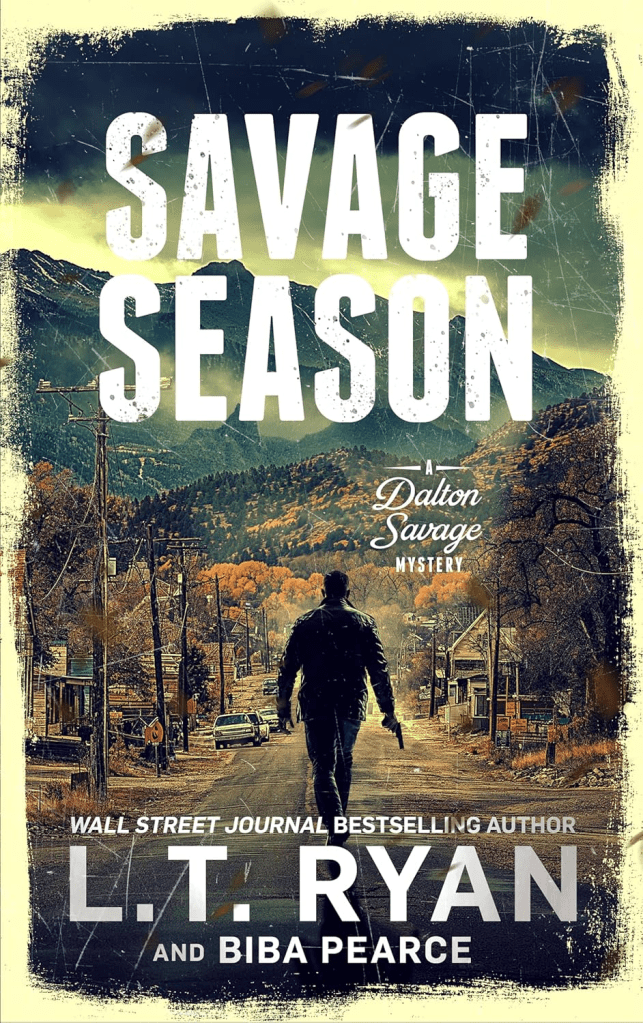
Okay. This is more of a commentary than a review. But first, it’s a good story and an interesting case for the Savage crew. An older couple is assassinated in their home with a specific double tap execution. No one can establish a reason for this well-respected, simple living, and much-loved couple’s deaths. Absolutely nothing shows up shady in the investigation.
Following their deaths, another man is found dead with the identical kill-method and totally unrelated to the couple in any discoverable way.
Underlying the whole situation is a City Councilwoman putting pressure on Savage to get information on an underlying problem with a new project designed for a piece of land previously owned by a family who were burned to death in their home on the property several years ago which was ruled an accident related to their gas furnace.
As I said, it’s an intriguing story with a solid twist.
So. Here’s my commentary. Originally, in the Rachel Hatch Series by L.T. Ryan and Brian Shea, Dalton Savage and Rachel Hatch met, worked through difficulties in their mutual solutions to problems in their community, eventually “Hatch” worked with Savage, they pretty much fell in an awkward kind of love, and when Hatch had to leave on specific jobs that required her extra-military skills, Dalton basically told her he’d be there whenever she returned.
After some heart-breaking convoluted experiences, Hatch returned “home” and had decided she wanted to see where their relationship could take them, wanted to commit to him. When she excitedly gets back in town and rushes to his home, a pregnant woman answers the door. Hatch realizes the circumstances and excuses herself, rushing out to her car. Dalton manages to get to her before she gets in her rig, and, as Hatch is unsuccessfully fighting back tears, he explains how the woman and he just “fell in love.” Well, it was sickening. Bad plot twist. Didn’t work. I was done with Savage. He was a character I really liked. Now I hated him.
It took me two years to read the first Dalton Savage mystery. I hated him even more – he was this whiny man who was the opposite of the strong character in the Hatch books. Dependent on this woman, who of course I also “hated,” it was simply a total character reversal.
BUT, I picked up Savage Season because the blurb said he and this woman were now separated – and she has his son (which makes me consider maybe the child isn’t really his?) – and she’s living in Arizona. He’s still determined to get her and his son back, but the final scene in this story actually gave me hope that maybe there could be some hope for he and Hatch to make a go of it?
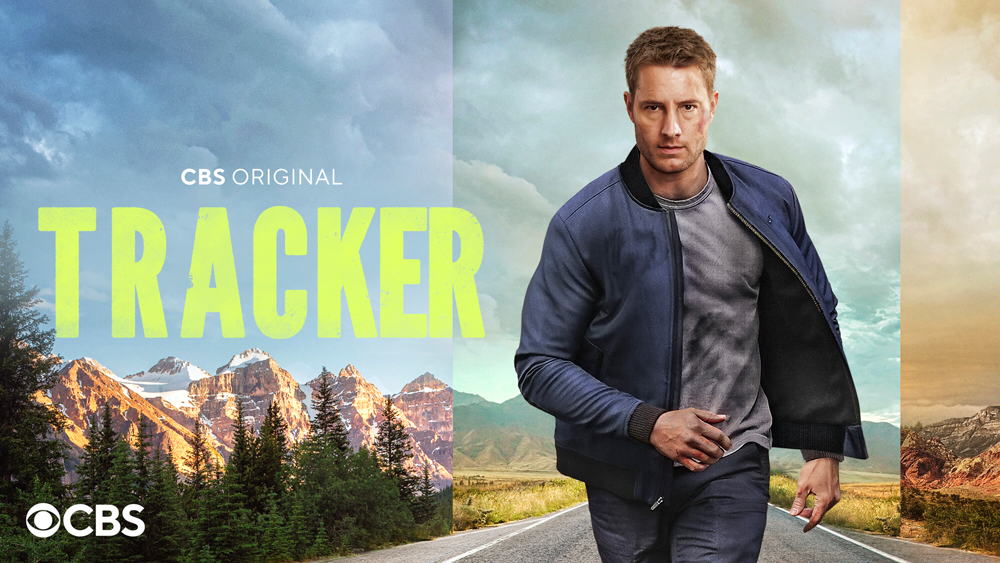
Justin Hartley has created a character (Colter Shaw) who tracks missing people for a fee. He’s not bound by certain restrictive parameters, but when it’s optimal for his search and/or avoiding potential legal interference, he includes sharing information with law enforcement, hoping they’ll reciprocate. Most of his cases would be considered “cold cases” if the police were directly involved.
Those who help him in various ways and will sometimes find him a new client are a sharp attorney (“Reenie”) and “Randy” who also assists Reenie. Randy is a computer genius who can find information of every kind fast. Their characters have been expanded in year three and Season Four is expected to maximize them further.
Hartley plays Colter as the understated but sympathetic, tough and not to be fooled with investigator who’s earned his exceptional reputation. Unafraid to take on difficult or dangerous searches but quick to discern his clientele’s expectations, he’ll do whatever’s necessary to attain the information he needs to find someone.
There’s a hidden tension in Colter’s family history, the death of his father, a silent conflict with his mother, some estrangement with his sister, a past feud with his brother. Most of this is resolved in this year’s season finale.
Hartley has clearly and completely carried Tracker making it entertaining, intriguing, and causing the interactions between the other characters to be meaningful and memorable. Filling it with good actors and unique stories is a sure way to make a series continue.