Into the Fire

Passionate thoughts about the world of writing and the Power of God


Draft_lens10921311module99744681photo_1273442677poetic-license

From Wikipedia:

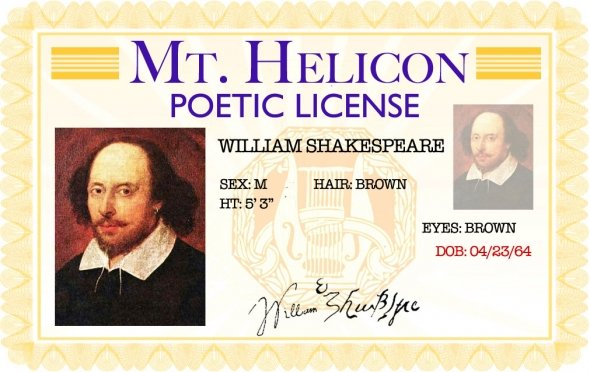
Artistic license (also known as dramatic license, historical license, poetic license, narrative license, licentia poetica, or simply license) is a colloquial term, sometimes euphemism, used to denote the distortion of fact, alteration of the conventions of grammar or language, or rewording of pre-existing text made by an artist to improve a piece of art.

Most of us fiction writers make use of this free license. We take liberties with factual matters and we alter terms, scenery, locations, and certainly grammar to tell our stories. The license we use gives us the freedom to up the ante for the readers' investments in our stories. Experienced readers who are in the know often forgive us for our gaffes in certain areas because they know why we've done it. Other readers have no knowledge of these areas and if they like the story or enjoy our writing, they zip right through the errors giving our artistic license more credence than it sometimes deserves.

We've all heard how television crime shows such as the CSIs take tremendous liberty with forensic information as far as how quickly tests are finished. As a viewer, it makes sense to us because we're only alloted 45 minutes snatched between commercials to solve a hideous crime! And most of us don't have personal knowledge of how the police or FBI or anyone else investigate homicides and other wanton crimes, so we assume we're getting a slightly modified version of reality when we watch our favorite series.

The only downer for us writers is when we make glaring errors which aren't a secret, and we don't get away with them. It's embarrassing. If, as a reader, we have intimate knowledge of a place, occupation, or circumstance which gives us special insights to it/them, we wonder why the author didn't do the necessary research until we realize the author thought he did. He asked questions, maybe visited the featured place, met a few people related to the expertise, but the problem is when we're outside our boundaries we rarely know what the right questions are to ask. So we settle for generalities and think we understand. Only, apparently, we don't. And we get called on it. And we regret it. And sometimes all we can do is offer an apology to those who noticed our mistakes. It's way too late for a do-over. Chalk it up to experience.

"Poetic/Artistic License" is a privilege. Extended to the writers of fiction. Not something we should abuse intentionally or unintentionally.


God, we need you always. Help us to write truth in fiction. In the Name of Jesus, Amen.

Posted in

10 responses to “Your license, please.”

  1. Brenda Anderson Avatar

    Very good point about not knowing the right questions to ask. The ideal situation is to have an expert read your novel for inconsistencies, but the difficulty comes in finding the person willing to read your work.
    Admittedly, I’ve used this “license” periodically. I created a street in one city, but made certain it was complimentary for that town, plus it fits the feel of the area. I also have a scene in a book set at a pier near Brooklyn, NY. I Google-earthed the area and am able to describe the sights, but without visiting how do you get the general vibe of the setting? The scents, sounds? I hope readers familiar with that pier will be forgiving.

    Like

  2. Nicole Avatar

    I think your examples are assumed to be included in your “license”. We all do that. It’s often the intricacies of an occupation, etc., that we need more information on to get it right, more than can be acquired from a couple of interviews or a few visits if we venture into the personally unknown.

    Like

  3. BK Jackson Avatar

    It’s very difficult to write setting without taking license. Sure, would it be nice for me to meticulously cover the route from east Texas to Tubac in southern Arizona for the next novel in the works? I’d love to! But I’ll have to win the lottery first so I can afford the expense of the trip.
    All I can do is research the best I’m able and make it as real as I can for the reader without having been there. As Brenda A said–you can google earth and other things, but it’s no substitute for experiencing yourself.
    I’ll just have to hope that license and skill is enough.

    Like

  4. Nicole Avatar

    I think readers are far more forgiving with things like this. It’s when you get into their personal business and mess it up that they tend to take offense. How many times have we heard of law enforcement dismissing series TV or some novels with “It would never happen like that.” I think that’s when a novelist should be “ticketed”. 😉

    Like

  5. Brenda Anderson Avatar

    Nicole – You’ve touched on the very reasons I don’t write crime fiction or legal fiction. Without having an insider’s expertise, I know it would ring false.

    Like

  6. Nicole Avatar

    Exactly. Which is why I’m struggling with my police procedural WIP. I have an insider, but it’s asking the right questions that sometimes hamstrings me.

    Like

  7. Jessica Thomas Avatar

    This is why I’ve decided to write women’s fiction set in Indiana (my home state) or science fiction (world’s I make up). 🙂 Maybe some day I will have time to do proper research, but I don’t see that day coming any time soon!

    Like

  8. Nicole Avatar

    I know exactly what you mean, Jess. Wise girl.

    Like

  9. BK Jackson Avatar

    I don’t understand why I’ve never been interested in writing science fiction. I love Star Trek (TOS), loved to watch Stargate (at least the five good years when there was a lot of Jack). But I’ve never once been tempted to write it.
    Weird.

    Like

  10. Nicole Avatar

    Kinda is, Brenda, since you tend to go backwards in time in your writing. 😉

    Like

Leave a reply to Brenda Anderson Cancel reply