In horse racing the finish line is referred to as "the wire", an invisible line at the finish of the race marked with a pole and a camera to document who has won. The line shows up in the recorded lens. The starting points in horse races vary by distance, but the location of the wire is always the same. Veteran race horses get to know that place well because right after crossing it, the jockey relaxes the furious pursuit to the wire.
The camera is able to capture and photograph the finish of the race and the video tape can be slowed to show who the winner is during those races where it's too close to call due to the tight finish and the speed of the animals crossing the wire. On rare occasions there occurs what is called a "dead heat" which means the horses' noses hit that invisible line at the same moment with no distinguishable difference between them. On even rarer occasions there will be more than two involved in the dead heat.
Only in private unsanctioned match races does the "winner take all". At recognized racetracks, purses are usually divided between the top five finishers with the largest percentage going to the winner of the race and a downward graduation to the fifth place horse. Although horsemen often remember the top three finishers in a big race like The Kentucky Derby, people watching the race might only remember the winner. (For those of you who fail to realize the scope of the Triple Crown races, the first of those, The Kentucky Derby, ran on Saturday at Keeneland on a sloppy track. "Orb" won the 1 and 1/4 classic.)
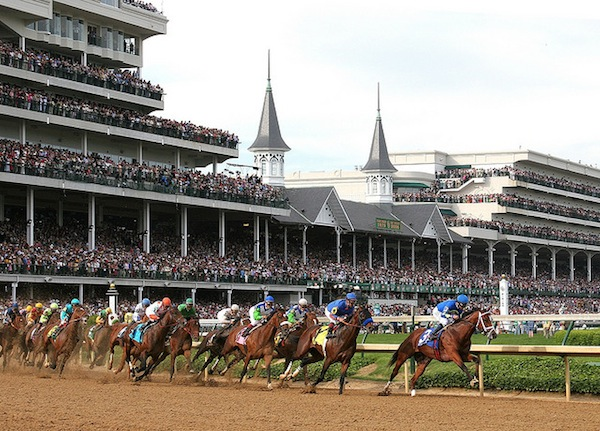
So let's talk writing contests. Does anyone really remember who finishes second or third other than the authors of those entries? Rarely. Perhaps a judge in the contest might remember because the first place finisher wasn't her absolute favorite. Other than that, only the winner is remembered. Not that winning translates to a publishing contract – it depends on the individual contest prize and notoriety. Equally rare is a dead heat among contest winners. It seems one individual is always able to eke out first place.
Competitions for writers can be a good way to gain exposure and some critiques, but from my experience and from those I know who've entered them, the results have ranged from rewarding to disastrous, encouraging to deflating. I know this: if you write "edgy" and enter the "wrong" contest where the judges prefer "sweet", look out. Be careful in your contest selections.

It's the same in horse racing. When you put a horse in The Kentucky Derby just because you earned enough money to enter (and nominations for the privilege of running in that race begin at the horse's birth), but your odds of winning the race show upwards of 30 to 1, chances are you're in well over your head. It would be good if some of those trainers decided against giving those horses a shot at The Derby to make the field less crowded and, because of that, potentially less dangerous.
Writing to publish novels can be a solitary endeavor. Not always of course but most of the time. The objective or at least the hope is to cover costs of producing the book but more than that to gain exposure and with that a profit. Christians vary in their approaches to the making money part of the plan, but publishers don't. The one objective is to "win" the hearts of readers in order to get them to spend money on their authors' stories. This is the way it works. Not easy to do in light of the thousands and thousands of novels published every year, but the logical goal is to make money.
Not everyone wins. Not owners of race horses. Not authors of books.
Father, thank you for allowing us the privilege of writing stories. With you it's always a win-win situation. Without you it's a lose-lose. Whether we know it or not . . . In the Name of Jesus, Amen.


Leave a Reply