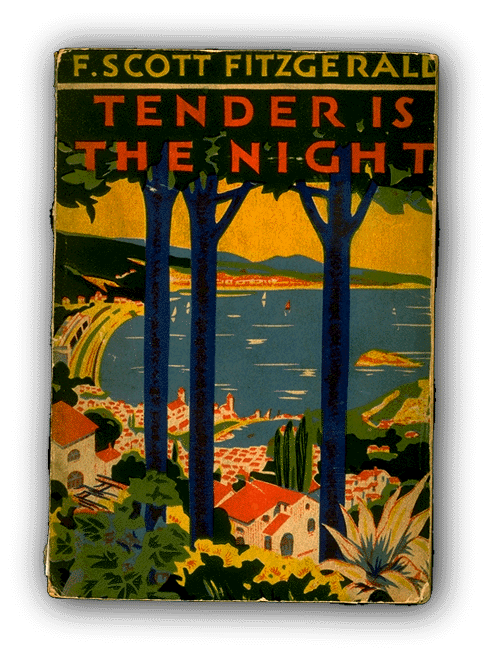
I had a glorious remembrance of the book Tender Is the Night by F. Scott Fitzgerald. He gained a favored spot in my heart when I was in the 17 to 20 age bracket, so planted in me that I remember his writing with a certain feeling I can't describe. I loved his writing.
I just finished rereading Tender Is the Night because I couldn't remember much of it and wanted to revisit why it held such a memorial in my heart. Published in 1934 and filled with what researchers lament was a lot of autobiographical experiences for Fitzgerald, it apparently debuted with less than scintillating sales and supposedly broke the author's heart. He never completed another novel after Tender Is the Night and didn't live to realize it's impact or fame in the literary world.
After finishing the story this time, the melancholy creeped over me, and I realized that hopeless overtone which permeated the book was probably what captured my existential outlook at that time of my life. I was lost spiritually even though I knew there was a God. The symbolism of stories which accentuated the pretending of vitality, while really owning none of it, resonated with my young and foolish soul. There's a particular "cool" wrapped up in masquerading that all of life is caught and celebrated in your worldly ways, and the couple in TItN lived in the pleasures money could buy them, running out of pleasure while money still prevailed.
From the writing standpoint it was brave and bold in style, unflinching and different. Dick Diver was both a tender man and a cold cad. Nicole was delicate, unstable, stubborn, aloof, and selfish. Neither were good parents to the two children they had together, the son and daughter more like expected fixtures in a marriage. Their lives were filled with amazing and disgusting people, parties, entertainment, and sometimes Dick managed to make his psychology degree work for him. They lived the deluxe ex-pat European lifestyle.
He fell in love with the wealthy and beautiful girl-woman Nicole, traumatized by a terrible event in her childhood, determined to make her well, but when she got there, neither of them had much left for each other.
The story's end is abrupt and ugly. It's a quick stab that leaves an endless scar. I can't decide if it was brilliant or he'd had enough of writing his story which took him several years to complete. Suffice it to say, in a sad way that speaks volumes about lost lives of any stature, I still cared about this novel but only because it captured the nuances of those who refuse to look at life through any lens but their own and those directly in their circles. The feigned meaning of life evaporates for some while others carry on the charade.
Father, you're here, there, and everywhere for all of us. Waiting. Asking. Saving. Thank you for rescuing me from meaninglessness. You are all that truly matters. In the Name of Jesus, Amen.


 Into the Fire
Leave a reply to Nicole Cancel reply