
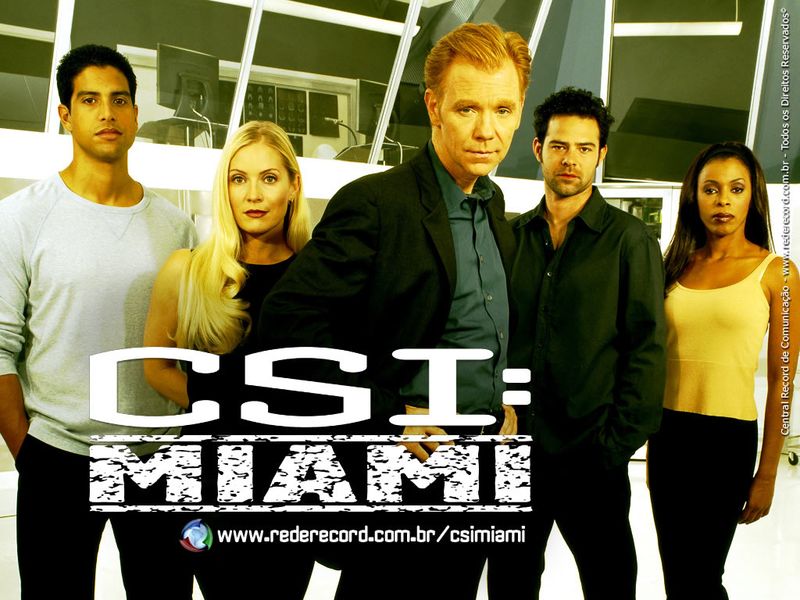
Above are just a few of the projects where you can find Corey Miller's writing contributions. I "found" Corey Miller's work on Reckless, but after interviewing him, I realized I'd previously seen his work on several prominent long-running series hits. An amazing script/screenwriter, Corey is a generous, kind, affable man who took the time to answer several questions I posed to him with thoughtful, meaningful, and helpful answers. During the course of the interview you'll find out he's a multi-talented guy who loves his family and participates in a good dose of nostalgia now and then.
So here we go. Meet Corey Miller.
Tell me who Corey Miller is at his soul level and then who Corey Miller is at his professional level.
At my soul, I am a dedicated husband and father to two amazing boys. And my sons being born changed who I was going to become at a professional level — I always seek balance in my life and work so I can enjoy what is truly important, and that’s my family. But on a professional level, I am someone who likes to tell stories, and I love using the television medium to do that.
In your life what determined your talent and how you intended to use it?
When I was a child, I was a voracious reader and loved storytelling. I began primarily writing short stories and poems. I also loved movies and television shows, and wanted to be in the entertainment business. But the idea of combining my two loves wasn’t an idea that just came to me, for some reason. Being an actual screenwriter seemed very intangible. After I graduated college with a film degree, I began to work in the entertainment business, in the production office of the television show “Lois & Clark: The New Adventures of Superman.” And after reading the scripts that came out, the idea seemed more possible and real to me. I ended up writing a sample script of the show with a friend who was my writing partner for a spell, and one of the producers read it. He liked it and wanted us to pitch some more ideas. He ended up buying one of the stories from us, and I got my first story credit. This fueled my desire in a huge way, and I never looked back.
Corey, I only became aware of your work recently in episodes of the very well done CBS summer replacement series Reckless. Amazing work there by you. Give us a little history on your writing career and tell us what makes working on certain projects the most fun or the least fun for you.
First of all, thank you. Reckless was a wonderful project to be involved with. Well, after that “Lois & Clark” credit, I became a very prolific writer – though for years, I wasn’t paid a dime. While I worked in production offices, I wrote scripts on my off time and tried to get them into any door that I could using personal contacts. I didn’t have an agent, and things were very difficult. Then, back in the year 2000, I took a job working for the Showrunner of “CSI," Carol Mendelsohn. The show had just began shooting and had not yet aired. I eventually got the opportunity to write two freelance episodes of the show, which were well-received. By that time, “CSI: Miami” had been on the air, and I was asked to write an episode of that show in its first season. I became a full time writer on the second season of “CSI: Miami” after I was hired by Ann Donahue, and I stayed there for six seasons. Since then, I’ve also worked on the shows “The Forgotten,” “NCIS: Los Angeles,” and “Body of Proof.” Then “Reckless” came along.
What I loved most about writing when I started is the same thing I love today: creating something that can be watched by millions of people all around the world. I so enjoy entertaining people and letting them escape from their own stresses even for that small bit of time. And nothing beats thinking of an idea and watching it come to life on the set. It’s such a pleasure working with so many talented people that bring the words to life in such amazing ways.
Your ultimate goal in screen/scriptwriting if you have one?
I do not have an ultimate goal per se – all I hope for is to keep having opportunities to be able to write varied and interesting stories and characters, and to be in the position to work with talented and unique people.
How did your involvement in Reckless come about?
I had just finished up three seasons working on the show “Body of Proof,” and had a meeting with my agents to try and spitball some possibilities for my next job. One of my agents had heard that CBS was looking to find a showrunning partner for Dana Stevens, the creator of the show. I had a very good relationship with CBS, and was ready to jump to that level. I said I would read the script that night and let them know if I was interested. And once I read it, I instantly knew it could be a fun show to work on. I expressed my interest, and then met with Dana. We shared our philosophies on the type of environment we would like to create on a show, and talked about our writing styles, and discussed possible directions that “Reckless” could take. I felt an immediate rapport with her, which is actually pretty rare in this business. I got the job, and a few days later was on a plane to Charleston to shoot the pilot.
Do you have a specific purpose when writing a script, i.e. something especially important to you to be able to communicate through your story or episode?
I can approach this question in a couple of different ways, using different examples that I have experienced. First, when you are a television writer on staff when it’s someone else’s show, you have to be extremely flexible and versatile. Sometimes you will be able to pitch a storyline that you are interested in telling, but many times you simply get assigned a story has been approved for that episode you are going to write. So many times you have to “disappear” and write what the show itself dictates – and so you may at first lack some deep or meaningful attachment to the story you’ve been assigned. So, when that has happened to me, I do try as much as possible to insert something with some personal meaning to me, or even give a character a world view that may be similar to mine. If that doesn’t seem possible, I at least have tried to infuse stories with a sense of humor.
This changes when you are a showrunner, because you have ultimate control over which stories are being told. This alone makes everything more personal, because you are telling stories that you are most interested in. They may not have even originally come from your brain – one of the writers on your staff may have pitched it – but just from the fact that you find it interesting and entertaining enough to become an actual episode, I do think that whether you realize it or not, the show reflects your personality and experiences more than it would otherwise.
Please explain how the process of being hired and/or submitting your work is done or accomplished. Do you attain work through an agent?
There is no one simple or correct answer to this question, unfortunately. When I first started trying to be a screenwriter, no one would read my script unless I had an agent, yet I couldn’t get an agent without already getting some traction. So you definitely have to do a lot of pavement pounding on your own, because there is so much competition out there, and agents are busy enough handling the clients they already have. So, usually, you end up getting your first job or two on your own. Once you get representation, however, agents are trying to open new doors for you and keep you working, but you have to continue to foster relationships and network on your own. Most of my jobs have come around because of my own contacts, but you need to be backed up by an agent who understands what you are trying to accomplish so they can continue to advise your career moves and hopefully help create new ones.
What's your favorite part of what you do?
The part I most enjoy is being on set, watching actors work with my words and turn them into something that breathes and evokes emotion. But what gives me the most satisfaction is hearing from people who have watched my work and have either been moved, educated, surprised, or just plain entertained.
When working on a series, with whom do you primarily work?
As a writer on staff, first you usually work in a communal atmosphere with a group of other writers to get the story “broken” and outlined. After you’ve written the script, if you are producing your own episode, you then work with the department heads (wardrobe, art, camera, special effects, locations, etc.) in tandem with the episode’s director to communicate every detail of what you are trying to get across in your script to best duplicate your words and thoughts on screen. You also work with the actors on set. As a showrunner, you have that same experience, but with added layers. You are also working with the studio and network to ensure you are giving them what they are looking for. You are working with the casting department to hire actors. You are also working with the post production team (editors, sound designers, composers, visual effects, etc.) to complete the episode. You are the final say on every little matter, and it is an extremely difficult position.
Are you consulted or given the opportunity to change your script if there is a problem of some kind? Is it always a work "in progress”?
Television scripts have the fingerprints of many people all over them. From the moment a script leaves the printer, it is basically offered up for criticism. First you get internal notes. Then you get notes from the studio. Then the network. Then all of the department heads who have something to say about their part. Then you find out from the Line Producer that things need to be shifted or trimmed or altered to get the episode in on budget. Then the director has thoughts, and so do the actors. Luckily, television is a writer’s medium, so you are able to control most of the changes. But it is all an exercise in compromise. I mean, sure – there are writers out there who draw a hard line in the sand, and won’t listen to anyone and insist on full creative control. And a few will get it. But sometimes those people are just being stubborn. I welcome thoughtful input, because I always strive to make the episode I’m working on the best that it can be under the extreme time pressures we are put in doing episodic television. And if words don’t sound right coming out of an actor’s mouth, your scene will suffer. And then, let’s not forget, things change again once the script is shot and the footage is in the editing room. So I am collaborative and communicative, but if I feel that a discussed alteration is doing an injustice to a scene or to the overall story, I will not change it. Everything is to be judged on a case-by-case basis. Everything is indeed a work in progress until that final sound mix.
. . . to be continued . . .
Father, please keep Corey safe from all harm and continue to bless his life. In the name of Jesus, Amen.


 Into the Fire
Leave a reply to Nicole Cancel reply