From April 22nd, 2009
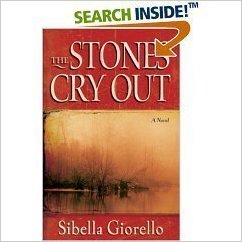
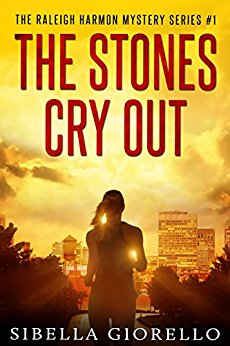
(The original cover is on the left, the contemporary cover on the right in keeping with the newer cover themes.)
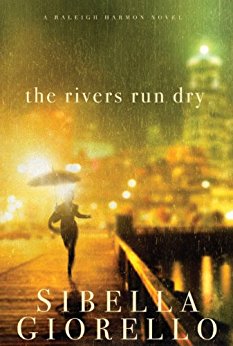
Interview with author Sibella Giorello, Part One
Pacific Northwest author of The Stones Cry Out and The Rivers Run Dry and former award winning journalist Sibella Giorello was gracious enough to submit to my probing questions about her life, her thoughts on Christian fiction, and her writing. Thanks, Sibella, for your time and honesty.
1.Sibella, many writers seek a certain audience even though most of us want to believe we have written a universally desirable masterpiece. Since your current protagonist, FBI Special Agent Raleigh Harmon, is female, do you think your two novels The Stones Cry Out and The Rivers Run Dry appeal more to women, and was that your intent?
The only universal masterpiece is the Bible, a book that speaks to all kinds, at all times, provided they can listen (which is another topic for discussion).
Fiction, on the other hand, is much more narrow. It’s a deeply personal decision — what to read — and has as much to do with style as substance. I don’t take it personally when people don’t care for my books, in the same way I don’t expect everybody to like the way I decorate my house. I also don’t worry about whether one gender prefers my books. I don’t write for women or men. I just try to write a good book. When it’s done well, crime fiction will always cross gender lines.
2.You’ve lived in a variety of places. Do you have a favorite among them? What brought you out to the Pacific Northwest and how long have you lived in the area?
Alaska will always be my favorite place on the planet, period. Nothing can ever compete with my love for The Last Frontier. Growing up there was pure blessing.
But the Pacific Northwest is a close second. It resembles Alaska in significant ways, particularly in terms of landscape and people. The persistent misting rain often reminds me of Juneau, as do the people who refuse umbrellas, devour books, and fill every minute in the summer because it’s so glorious and winter’s so dismal.
And yet, the South also stole my heart. It offers something that’s missing elsewhere in America: lyrical language; hospitality as it should be; a singular history that can’t be replicated; a close-knit atmosphere that makes friends into family. Plus, the South serves food at every occasion, large or small, and that’s a GREAT thing!
We moved to the Pacific Northwest about five years ago after 14 years in Richmond, Virginia. It was a difficult decision and it meant leaving friends who we consider family. But my husband believed it was right for our family. And he’s always right . . .
3.How do you describe your writing and categorize your novels?
Well, they’re mysteries above all else. People talk about suspense and thrillers, and maybe they’re that, too, but I leave those conversations to others. I don’t read in categories; I read what works.
4.I’ve grown very fond of Special Agent Raleigh Harmon. How much longer will she be with us or can you tell us?
I’m glad you like Raleigh. She’s a wonderful companion at the keyboard, too. Unlike some other characters, I haven’t grown tired of her company. She reminds me of the amazing women I met while living in the South. They’re polite, they often love Jesus, but if necessary they will not hesitate to kick rear ends.
I hope Raleigh will be with us for quite awhile. I’ve outlined five books with her, and have ideas for more.
5.Since publishing a novel can take up to a year or over, you probably have a novel or two in the works which we won’t see for awhile. Care to give your readers any snapshots of future stories?
I don’t want to give away too much, but young FBI agents move fairly often. So new locations might come with each book. And sometimes bad things happen on vacation . . .
6.It seems there’s always a debate going on in the Christian community about the label “Christian fiction”. Some authors resent the term, others welcome it. Do you have an opinion on this sometimes prickly subject?
I can’t figure out if we, as believers, gave ourselves the term “Christian fiction,” or whether the label was slapped on our work to marginalize it. I suspect the term came about from both sides, but the overall affect was to push our stories off the secular reader’s radar.
I often wonder whether Flannery O’Connor would be considered a Christian writer these days? What about Dickens? In that sense, it just seems like a fairly useless label.
“Christian fiction” brims with great writers whose books could delight non-believers simply for their sheer story-telling abilities. To name a few — and to leave many more unnamed — Charles Martin, James Scott Bell, Ted Dekker, Brandilyn Collins, Robert Liparulo.
Christian readers will always seek out and find books that meet their standards. That’s why I think the “Christian fiction” label only serves to keep non-believers away.
Obviously, this is just my opinion but I’m generally not enthusiastic about Christians setting themselves apart from the world; I don’t think that’s what Jesus did, or what He wants from us.
7.If you were asked to give a blurb about yourself, what would you want your readers to know or remember about Sibella Giorello?
The truth is, I don’t want them to think of me at all. I’d rather write anonymously and let the characters and story live in the readers mind.
8.A rare winter evening alone: read a book, write, watch a movie, catch up on sleep?
Few things are more delicious than curling up under a blanket with a good book and some nice food and drink. So hands down: I’d read a book.
9.Does your husband read your novels? If so, before or after they’re in book form—or both?
My husband used to read my early drafts but he got fired. He was way too enthusiastic. Now he reads the galleys and is wonderfully critical and supportive. And since he’s a musician, he can really sense what’s right or wrong with esoteric aspects such as pacing and atmosphere.
10.If you don’t mind, mention a few of your favorite Christian authors.
So many people name C.S. Lewis that it’s beginning to sound pretentious or dishonest — like claiming you know more scripture than you do — but I seriously adore his books. He’s my favorite.
And mostly I read non-fiction, partly because I’m concerned about inadvertently picking up pieces from my peers’ books and partly because I’m always researching. I allow myself to read Christian fiction only during the two weeks I take off from writing each year, and even then I rarely read contemporary work. For some reason, I gravitate to books written from mid-1800s to mid-1900s. Don’t ask me why, but I also prefer the journalism from that era.
11.Do you plan to write more stories that involve this geographic area?
YES! I love writing about the Pacific Northwest.
12.You were a professional award winning journalist before writing your novels. Did it feel like a stretch to pen your first novel? Do you prefer one over the other?
There are certain things about journalism that made me never want to step outside its boundaries. Journalism provides so many opportunities to be clever and quick — it was made for that. But novels are contemplative affairs. As you say, it requires stretching and that’s not always a pleasant sensation. But now I prefer writing novels because the gratification is more profound, and longer lasting.
To be continued . . .
Lord, you hold Sibella's heart and direct her steps. Keep her close to you and give her many stories to tell. In the Name of Jesus, Amen.


 Into the Fire
Leave a reply to Debra Cancel reply