Into the Fire

Passionate thoughts about the world of writing and the Power of God

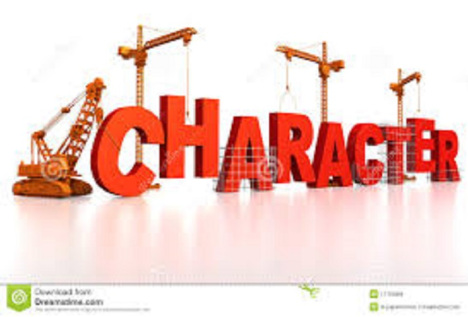
O                           Character


Dictionary.com defines "character study" as follows:

noun
a work of fiction in which the delineation of the central character's personality is more important than the plot

I like this definition because it makes sense to me. When I read, like many readers, I have to care about the protagonist(s). If I don't, the novel is a bust instantly. Although the plot might be good, sound, worth composing a story around, it fails if I can't find a way to engage with the hero or heroine. And usually, I'll give it a gallant effort because my number one priority when I select a book to read is to enjoy it. Characters are the first criteria for making a good story take hold.

I'm a little off the wall (maybe a lot) when it comes to my genre writing. You've no doubt noticed how I repeat I write "love stories" as opposed to "romances". My novels tend to operate around the characters from the inside out giving the reader a chance to view life from their perspective, to either relate to them or to estrange themselves from them, to embrace them or to be repelled by them.

My latest novel recently finished (Race), although different from anything I've attempted prior to it, is still similar to who I am as a writer. The characters are there to take up the pages, laid bare in their "personalities", the changes they experience emotionally and spiritually available for the reader to give a thumbs up or thumbs down in their assessments. 

"Character study" is not a genre unfortunately or I could easily typecast my novels. Until it is, I will continue to fumble around with identifying or determining just what genre this particular novel can comfortably slide into – because I don't know how to effectively categorize it.

Other than calling it another "character study" . . . 


Father, help me to be the one you want me to be, in life, in writing, in worshiping you in spirit and in truth. In the Name of Jesus, Amen.


Posted in

5 responses to “Writing characters . . .”

  1. BK Jackson Avatar
    BK Jackson

    I just started reading Don Maass’ “The Emotional Craft of Fiction” last night. I’m not that far into it so I don’t know how good a reference it’ll be as a whole (I’m always willing to give him a shake because I loved “Writing the Breakout Novel” so much), but so far it has been good in that he gives you deeper ways to think about involving the reader in the process of emotions as they read an author’s pages. Long story short, the food for thought I took away in last night’s reading was using the unexpected emotion to surprise a reader, since we are all complex people and will not necessarily react to something the same way (i.e. we may generally all have a fear reaction to seeing a snake, but different people might have other simultaneous feelings at the sight).
    I recently took up drawing again after decades of lay-off (you know, our childhood scribbles when you were just mindlessly drawing whatever). And I’m learning with drawing, painting AND writing, it’s all about layering. I really don’t think that was clear to me before.
    So it’s a good and amazing revelation. Now I have to master that art of layering—just like with writing characters.

    Like

  2. Nicole Petrino-Salter Avatar

    Great points, Brenda.

    Like

  3. Brenda S. Anderson Avatar

    I’m the odd one in that I don’t have to immediately like a character to keep me interested in the story, but I do need to see movement. If the hero/heroine’s character is static, then I’ll become bored.
    Oh, I like BK’s point about layering. That makes complete sense. Typically characters that come out flat, aren’t multi-layered, multi-dimensional.
    Just as “character study” sounds like a perfectly fine descriptor to me. Just as I use “family drama” to describe my books. It’s not an official genre, but it describes my stories far better than “contemporary women’s fiction.”

    Like

  4. Nicole Petrino-Salter Avatar

    Bren, I agree “family drama” suits your work far better than “contemporary women’s fiction” – and makes perfect sense. In the completely broader scope we both write “contemporary fiction”, but that doesn’t tell the prospective readers enough.
    Layering was indeed a good point because the “layers” of one’s life add so much to who each becomes.
    I can tolerate a character (hero/heroine) I don’t particularly feel drawn to if what I don’t like about them isn’t something I have a hard time tolerating. Ha! Does that make sense to anyone but me?

    Like

  5. Brenda S. Anderson Avatar

    Yes, actually, it makes perfect sense. 🙂

    Like

Leave a reply to Nicole Petrino-Salter Cancel reply