Through Jesus, therefore, let us continually offer to God a sacrifice of praise – the fruit of lips that confess his name. And do not forget to do good and to share with others, for with such sacrifices God is pleased.
Hebrews 13:15-16 (NIV)
Through Jesus, therefore, let us continually offer to God a sacrifice of praise – the fruit of lips that confess his name. And do not forget to do good and to share with others, for with such sacrifices God is pleased.
Hebrews 13:15-16 (NIV)

I think in the publishing business we sometimes don't give readers enough credit, but the opposite of that can also be true. A lot of this is due to the preferred genres and the resulting editorial methodology.
In recent years, editors fretted about changing points of view from one character to another in the middle of an ongoing scene. In other words, when the author chose to give more than one character an immediate reaction or comment to something in a scene, hairs stood on end and frantic editors donned their red pens with a vengeance. Italics became another faux pas and the victim of the red pen. However, most readers took those things in stride and were not disrupted from or disgruntled with the stories they were reading by these or other "wrong" labeling by editors.
Obedient authors tend to do as the editors tell them or risk the consequences. I made it my mission to ask many different readers about certain editorial complaints and corrections. The only readers who voiced any concerns about these supposedly critical necessities in writing were authors, not "just" readers. Authors hear about all the no-nos, all the negative writing mistakes (which can often be trends which tend to disappear after awhile), and condition themselves to recognize and avoid these nasty measures so of course they notice them when they occur in a story. Readers just keep reading. If they like the story and enjoy the characters, it takes a major move to ruin the book for them – more like a lousy ending than any writing technique.
Just some Friday musings . . .
Father, thank you for the variety of writers you inspire. Please help each one of us be who you designed us to be. We're desperate for you. In the Name of Jesus, Amen.
(Originally published on January 9th, 2014, over at Novel Rocket and republished here on 11/17/17)
No one wants to listen to advice from an author who hasn’t sold much of his or her work. Writers want to hear from those elite authors who’ve ended up on The NY Times Bestseller List or have actually repeatedly and impressively sold their novels in large numbers, causing the average reader to remember their names, not just the title of their books. Who can blame them?
Perhaps these special authors have discovered the secret key or code to producing, marketing, and selling fiction. Notice I didn’t say “good” fiction. Because, honestly, sometimes what sells well isn’t written well, uses a clichéd plot, stereotypical melodrama, and/or cardboard, smarmy, or super-hero characters. What does this mean?
It means many things. A specific audience was ripe for picking up that drama, comedy, thriller, or period piece and the writing techniques were inconsequential to the subject of the book. There was just enough emotion, laughter, blood, or lace and swords to capture a significant part of the reading population at any given time. The simplicity of the story gave a good many readers just what they wanted for entertainment, escape, and excitement. Somehow it worked.
Could other writers follow their successful leads and reap the same benefits? We see those attempts frequently from publishers wanting to cash in on what appears to be working, i.e. Amish/Mennonite novels; Vampire novels. Trends that work for a season flood the market until signs of saturation reduce the inventory.
I’m not one of those authors who qualifies for giving advice of any kind concerning writing endeavors. In spite of that disclaimer, I will say I’ve learned that different types of writers exist, and some of them will do whatever it takes to be published. Others not so much. E-publishing has given the second group opportunities to fulfill their writing pleasures be they good, bad, ugly, or indifferent. Everyone has an opinion about who should or shouldn’t be published, but it’s almost become a moot point. Those willing to compromise and meet the needs of editors/publishers to secure a contract find a certain satisfaction in obtaining their goal(s).
Having said all that, I’ve found, for myself, authenticity matters most to me. The heart or the head, and very often it’s a combination of both leaning heavily toward one or the other, dictates how authors write their stories. Big surprise I lean toward the heart – which isn’t always a good thing. However, writing a novel must immerse me in its deep waters, only allowing the gasping eruption surfacing back into my current reality in order to function in the day-to-day. The story absorbs me into each personality and produces the voices and circumstances of those individuals. It has to.
So how’s that workin’ for ya, you ask? Well, it works for me. However, it hasn’t produced bestsellers or an author who will give you advice or pretend what she has to say will in any way affect how you choose to write your novels.
Father, thank you for every mini-moment of success in touching someone's heart. No words for that feeling. No words big enough to thank you enough. In the Name of Jesus, Amen.
Lively, lovely, and luscious.
Lord, you gave your artists of all kinds so much to work with. Thank you is never enough. In the Name of Jesus, Amen.
Is this beautiful or what? Amazing sound. Love this.
Father, please continue to supply this amazing kind of beauty in music and lead the musicians to you, their Source. In the Name of Jesus, Amen.
O 
Dictionary.com defines "character study" as follows:
noun
a work of fiction in which the delineation of the central character's personality is more important than the plot
I like this definition because it makes sense to me. When I read, like many readers, I have to care about the protagonist(s). If I don't, the novel is a bust instantly. Although the plot might be good, sound, worth composing a story around, it fails if I can't find a way to engage with the hero or heroine. And usually, I'll give it a gallant effort because my number one priority when I select a book to read is to enjoy it. Characters are the first criteria for making a good story take hold.
I'm a little off the wall (maybe a lot) when it comes to my genre writing. You've no doubt noticed how I repeat I write "love stories" as opposed to "romances". My novels tend to operate around the characters from the inside out giving the reader a chance to view life from their perspective, to either relate to them or to estrange themselves from them, to embrace them or to be repelled by them.
My latest novel recently finished (Race), although different from anything I've attempted prior to it, is still similar to who I am as a writer. The characters are there to take up the pages, laid bare in their "personalities", the changes they experience emotionally and spiritually available for the reader to give a thumbs up or thumbs down in their assessments.
"Character study" is not a genre unfortunately or I could easily typecast my novels. Until it is, I will continue to fumble around with identifying or determining just what genre this particular novel can comfortably slide into – because I don't know how to effectively categorize it.
Other than calling it another "character study" . . .
Father, help me to be the one you want me to be, in life, in writing, in worshiping you in spirit and in truth. In the Name of Jesus, Amen.
Therefore, since we are receiving a kingdom that cannot be shaken, let us be thankful, and so worship God acceptably with reverence and awe, for our God is a consuming fire.
Hebrews 12:28-29 (NIV)

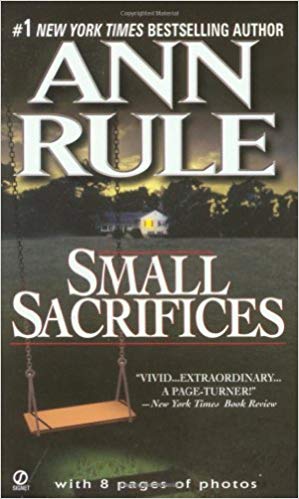
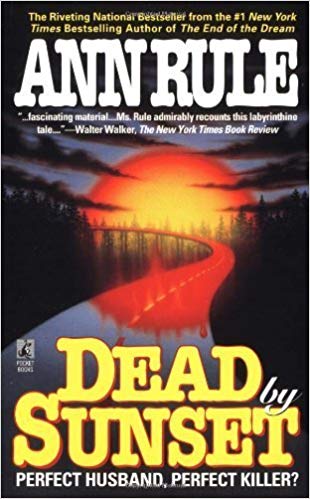
I'm convinced no one has written true crime books better than the late Ann Rule. Besides completely covering the topics and lives of real killers with intricate detail, she was an amazing writer. Having just completed two of her works (Small Sacrifices [Diane Downs]; Dead by Sunset [Bradley Cunningham]), I can tell you she has made the stories of these murderers, their lives, their trials, riveting.
I don't recommend them to readers who get squeamish at TV series like Criminal Minds because these real life criminals are as chilling emotionally as many of those portrayed there. Having said that, if the lifestyles of those who commit murder and either think they'll get away with it or have deluded themselves into thinking they're somehow innocent holds any curiosity for you, I don't see how anyone could expose them for who they are in totality any better than Ann Rule has done in her specialty true crime books.
If you can endure the depravity, the decadence, and the dread of visualizing these killers as they really appear in their lives, Ann Rule is the master of true crime. This genre lost a true professional when she passed away.
God, demonic lives are so hard to view. You give each of us a chance to know you, to save us from ourselves and from the enemy of our souls until our final breaths. I'm so grateful you rescued me. I'll always be desperate for you. In the Name of Jesus, Amen.

(Originally posted on 03/08/15 as "Conflict is overrated.")
Over and over again in the writing world writers are reminded that conflict is the key element to sustaining story, to keep it moving, to make it desirable to the reader. And although I agree conflict is a key element, the degree of conflict varies tremendously with the genre.
Over and over again in the writing world writers are told to put their protagonists through the proverbial "hell" on earth, to continue to force him into one horrible situation after another. However, if you're talking love stories without the "star-crossed" or "unrequited love" circumstances, the type of conflict makes a major difference in the reality of the story.
The simplicity of the formula in the romance genre (which differs from love stories) keeps the nature of the conflict element fairly simple. Man/woman fall for each other. Man/woman face obstacles. Man/woman are deterred or separated by these obstacles. Man/woman fail to overcome obstacles until . . . they overcome the obstacles and love prevails – simplified for sure but the fairly dependable plan and outcome for most romance novels. The eras might be different, the personality types of the characters, their locations, their social strata, their occupations, etc., all might be different, but the formula remains the same. And conflict is always present, but if the author chooses to be unrelenting with it in a romance novel, it can seem unrealistic and overbearing.
The conflict in well written thrillers is always intense and multi-layered. It continues throughout the story, amping up toward the end and only sometimes being perfectly resolved. In thrillers the protagonist is indeed put through the wringer. It's expected from page one. And acceptable within the genre.
Conflict is necessary to make a story interesting, but it can be overdone. And even wearisome if it seems like a device rather than an authentic storyline. Think about it. How much is necessary before the conflict seems overwritten? And overrated.
Jesus, you are the Prince of Peace, the mender of relationship between God and man, the absolver of conflict between humanity and the Father. You alone bring peace to our souls through your saving grace. Again, thank you is never enough. In the Name of Jesus, Amen.
Adding a little waterworks to the garden scene.
Lord, thank you for the imaginations of your people in creating beauty for all tastes. Amazing is too small a word for you. In the Name of Jesus, Amen.

