Into the Fire

Passionate thoughts about the world of writing and the Power of God

  •  

                                    Ruby-Tuesday-FREE-Burger-300x259


    Hamburgers can be made in abundant ways. Creative additions, seasonings, broiling, frying, or grilling, along with condiments and accessories galore to flavor their delivery to multitudes of eaters with all kinds of diverse desires for meat on a bun. 

    Do you like pickles on your hamburgers? Dill? Bread and Butter? Or do you pick them off if they come served with pickles?

    Most people who enjoy hamburgers own up to having a favorite place or two to purchase them. From McDonald's to Red Robin to that unique burger place stopped at during a vacation while traveling through some obscure location, lots of people love hamburgers even when they're cooked at home – or even especially when they're fixed at home. Gourmet or plain without cheese, hamburgers can be a family favorite food.

    My probable favorite contains mushrooms on provolone melted on top of the patty with a bleu cheese dressing on a toasted bun, but I've only had one of those in my many years of eating hamburgers. But I remember it.

    You know where I'm headed. Hamburgers are as common as novels. And they come in all flavors/genres. Many prefer plain/generic, and others prefer fancy/literary. Special servings stand out in the memory but aren't all that common.

    You might think you create "steak" when writing, but the reality is fiction is not uncommon. Therefore, writing a novel is much like cooking a hamburger. You might think your additions will make it unique, but what happens when a reader who prefers "plain without cheese" picks it up and decides to blaspheme your preparation with a one-star Amazon review?

    Realize the venue. It's difficult to present something different since so many creations already exist.

    So the best I can suggest is this: write what moves you, what inspires you, what "tastes" good to you. Because you're the one who must take the first bite. If you don't savor it, who will? Almost anybody can make a hamburger. Doesn't mean you'll like it. But if you make it just right for you, and it kinda melts in your mouth, someone else is bound to like it. At least someone who can share your preferences. Pickles or not.


    Father, we need you to direct our steps, our creative desires, our lives as a whole. May we never forget it. In the Name of Jesus, Amen.


  •  

                      176144223

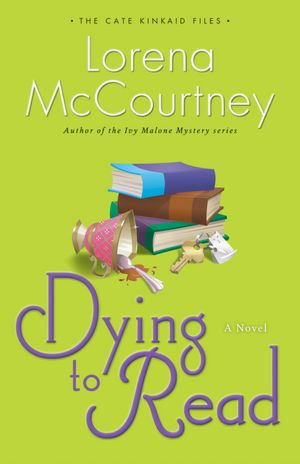
    *Available August 2012 at your favorite bookseller from Revell, a division of Baker Publishing Group. Dying to Read was sent to me free in exchange for an honest review.*

    Lorena McCourtney has written "dozens" of novels, many of them mysteries. With her new cozy mystery, Dying to Read published by Revell, a division of Baker Publishing Group, Lorena has created a story filled with pages of quirky characters accompanied by their questionable deeds and a red-headed heroine whose doppelganger speaks half-truths and fairytale accounts as her first language. A perfect beach read, Dying to Read will provide readers with a few laughs and some vigorous eye-rolling at Cate Kincaid's first efforts at assisting her Uncle Joe in his PI business since she can't seem to land anything substantial to put on a résumé.

    Cate Kincaid is on a routine assignment from her Uncle Joe to locate "Willow" to inform her of an inheritance. Heading to Willow's last known whereabouts outside a huge gothic residence, Cate meets a group of ladies who belong to their self-named "Whodunnit Club". Readers of mystery novels, they're gathered outside a fellow member's (Amelia Robinson) house wondering why she hasn't yet opened the door for them. As it turns out, each of them has a key to the house, unbeknownst to the others in their group, but it isn't until Cate grabs one of the keys from a lady and opens the door that they all proceed to go inside. It's evident the young woman (Willow) who works for the owner is gone – in a hurry it looks like – and Cate's curiosity along with another lady's (Doris) compel them through the house and upstairs to search for Amelia while the other women discover lunch ready for them in the refrigerator after all having contributed snarky comments about Amelia to Cate.

    Seeing the lavish furnishings of Amelia's bedroom including an identical bed for Octavia, her pure white, blue-eyed, deaf cat, they wander to the entrance of a balcony with a rickety outside staircase and discover Amelia at the bottom of it obviously dead from the fall. Amelia is said to never use this stairway because of its ill-repair.

    The assignment was to find Willow, and after a bit of history as to Willow's tree-hugging tendencies, Cate knows right where to look. However, little pinpricks of information along with meeting Amelia's only relatives (who are only too glad to push Octavia off on Cate), and remembering the ugly comments about Amelia by the ladies of the Whodunnit Club, Cate can't help but wonder if the woman was pushed down those stairs or if she fell which is what the corroner's report suggests.

    With four great looking men, only one of which is a good guy, and Cate's ex-fiancé trying to re-enter her life, Cate pursues avenues of Amelia's possible murder – against her uncle's instructions and in defiance of the one good guy who's afraid she'll get hurt. With some hilarious episodes and some hair-raising adventures, Cate's pursuit of truth will provide those readers of light-hearted mysteries an enjoyable read. Faith elements are strung throughout the story and clearly provide the needed assistance at dire moments.

    Lorena knows the audience she wants to reach with this story and gives them a romp through eyebrow-raising Whodunnit ladies with motives for murder, a young woman who could be her heroine's twin and never fails to get Cate in and out of trouble, and sweet-talkin' villains with looks to kill.

    I really can't fault the story or how Lorena told it. She sticks to the cozy mystery format and does it well. But I can fault Revell for giving it a less than satisfactory title with an unattractive cover.


    Father, you've clearly blessed Lorena with the ability to tell all kinds of stories. I pray your inspiration will continue in her life and that she will be offering many more stories for her readers to enjoy. Watch over her, Lord. In the Name of Jesus, Amen. 


  •  

    Then I saw a great white throne and him who was seated on it. Earth and sky fled from his presence, and there was no place for them. And I saw the dead, great and small, standing before the throne, and books were opened. Another book was opened, which is the book of life. The dead were judged according to what they had done as recorded in the books. The sea gave up the dead that were in it, and death and Hades gave up the dead that were in them, and each person was judged according to what he had done. Then death and Hades were thrown into the lake of fire. The lake of fire is the second death. If anyone's name was not found written in the book of life, he was thrown into the lake of fire.

    Revelation 20:11-15 (NIV)

  •  

    Please, if you don't read anything else today, take the time to go here to read and listen. Please.


    http://www.ijreview.com/2012/08/13111-obama-takes-heat-for-white-house-intelligence-leaks-military-vets-on-the-attack/


    God, your mercy. Please. Please remember your remnant. Please, Lord. In the Name of Jesus, Amen.

  •  

    Today's "five" are questions for you.

    Can you name your five favorite novels?

    Do you know of five things that really irritate you?

    Do you have five favorite beverages?

    Can you think of five recent blessings?

    Do you have five favorite sports' figures?


    God, you've given us so much. Help us to be grateful. Truly and unabashedly grateful. In the Name of Jesus, Amen.

  •  

    http://www.youtube.com/watch?v=numFJXf2SiY


    Without passion fueling the emotion, you get dry, cold, clinical, formulaic, and underwritten. Stories need flair. They need propulsion. They need something to compel a reader to continue onward through those pages. Right?

    How do you build emotion into your characters? How do you deliver it into your plotline?

    What emotion do you need pulled from you when you read a novel?


    Father, you made me emotional, gave me the ability to feel deeply. I'm so thankful to you for that gift even though sometimes I wish I could pull back. In the Name of Jesus, Amen.

  •  

    Story-conference


    Story is the composite of reality, a revelation of the soul.


    Father, help me to tell it the way you want me to. In the Name of Jesus, Amen.


  •  

    A broad term and surprisingly – but maybe not – with multiple meanings depending on who you're talking to.

    When I hear the term, this is what I think of:

    "I"s dotted. "T"s crossed. Grammar and punctuation in the correct place.

    Genre-precise.

    Formulaic.

    Ordinary. Sticking with the "norm".

    Expected generic appeal with an established audience.


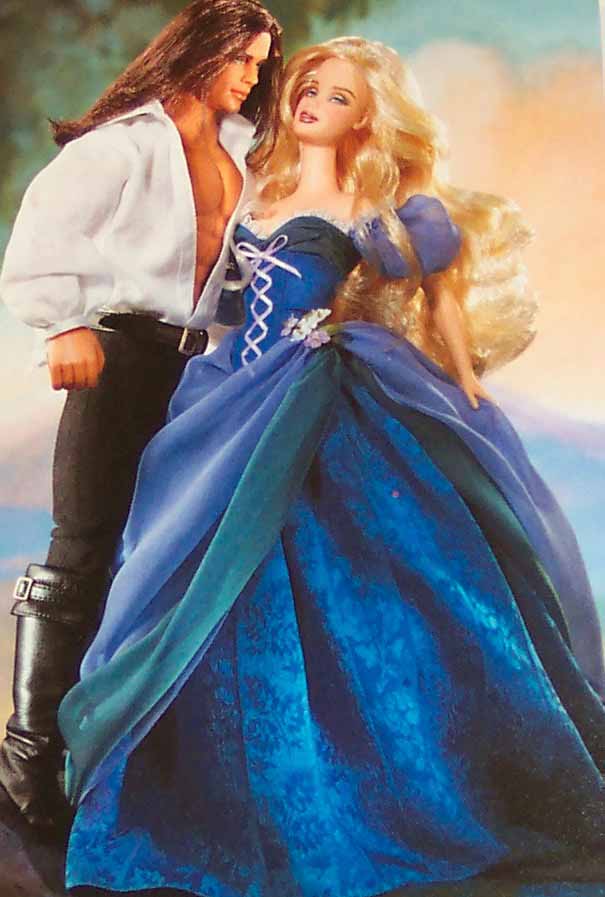
    BarbieRomanceNovelLow

    How 'bout you? What do you think when you hear someone in the biz describe fiction as "publishable"?


    Father, keep me focused on you and your desires for what I need to do. In the Name of Jesus, Amen.

  •  

    Skin_textures_preview1


    If you've followed this blog recently, you've noticed I've done a fair amount of posts on the restrictions placed on some CBA fiction. Largely these restrictions seem to be a result of promoting "clean and chaste" literature catering to a specific market of readers. Stretching some genres beyond this restrictive labeling has worked for thrillers, some murder mysteries, and a few contemporary literary novels. Not so in romance. And this is a direct result of the audience CBA fiction has cultivated. This rigid mindset and restrictive standard will not permit stories that dare to capture deeper looks at romance, love, and sex in Christian fiction.

    We've talked here about the content of non-graphic sexual issues and the use of some words being outlawed in Christian fiction. We've discussed the very loud and demonstratively critical outrage from some CBA faithful readers who are "offended" at even a hint of impropriety by a Christian author and/or publisher if certain words they deem ungodly appear in a story they're reading.

    Lost in all of this hoopla, cacaphony, and some holier-than-thou pronouncements is the core of the author's heart in writing the story with the characters involved. In order to present a viable novel, a story where the individuals on the page register as real, almost touchable, an author has to get inside their skin and portray them from the inside out. It can be chilling, thrilling, disgusting, tender, obscene, boisterous, giddy, hopeless, or hopeful. And myriad other characteristics. If done well, the reader will invest their time and energy to travel along the road of life with this group of make-believe people, making them friends, enemies, or acquaintances.

    It's no secret that an author's investment is radically different – but eventually the same – as the reader's. We must create the personas, get to know them as much as they can be known, and share them with the reader. In the end we read the story from the reader's perspective – with our own acquired preferences of course. And our preferences and our directives in constructing these characters and situations come from a reader's heart that evolved into a writer's call to create stories using the best of what we've been given and have learned along the way.

    When the argument digresses into what's "wholesome" and what "should" be included in Christian stories, the heart of the author is ignored. It's assumed by critics that an author shouldn't go beyond skin deep in their creation and manifestation of making characters and plots set in diverse circumstances since only "some" things line up with their (the critic's) theology.

    This conflict repeats itself frequently and no doubt will not be concluded or resolved anytime soon. The truly important factor is for authors to tell their stories looking at and constructing meaningful characters from the inside out. To see and portray them as God sees each one of us.


    Father, you look at me from the inside out. You know the dark areas and urge me to look to you for help in fixing them. Please help me to show the real facets of the human character and condition in the stories you give me to tell. In the Name of Jesus, Amen.  


  •  

    Dear children, this is the last hour; and as you have heard that the antichrist is coming, even now many antichrists have come.

    1 John 2:18 (NIV)