Into the Fire

Passionate thoughts about the world of writing and the Power of God

  •  

                               178528975

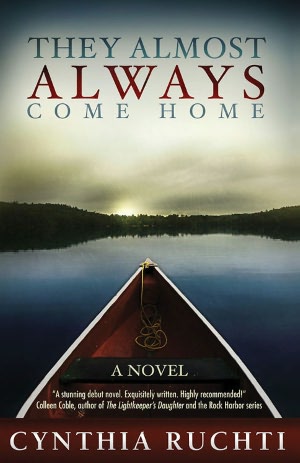
    Libby Holden has lost touch with most everything meaningful in her life since her young daughter Lacey's death several years before the story begins. She blames her husband Greg and estranges herself from him until her marriage is one in name only. Her two college-age sons are traveling out of country on a project, and Greg is about to take one of his wilderness jaunts to do what men do when they need time to just be themselves. The truth is she could care less about what he does or where he goes.

    But come time for his return, he doesn't arrive home. Days pass and Libby begins to contemplate a funeral. After doing the paperwork involved in reporting him actually missing, Greg's dad Frank decides he's going after his son, knowing the general route he likes to trek. Jenika, Libby's neighbor and best friend, helps Libby search Greg's office for any clues that might make his absence somehow understandable, discovering a small journal Libby didn't know he had. Libby fears Greg has beaten her to the punch of deserting their marriage, something she's been seriously contemplating. She's more angry – and even vaguely relieved – than fearful when he fails to come home.

    This is the scenario that takes us through Libby's first person journey of insisting on accompanying her father-in-law to search for her husband. That her best friend also insists on joining her and Frank with the blessing of her husband gives Libby the comfort she needs to undertake something neither of the ladies are even remotely qualified to attempt.

    Cynthia Ruchti's debut novel They Almost Always Come Home manages to deliver a distinctive voice in a heroine who's difficult to root for because of her cynical bitterness. She hasn't quite abandoned God, but she's set Him aside to wallow in her pain. Without creating the goody-two-shoes cheery caricature of a Christian, Cynthia manages to endow Jen with inimitable compassion and a heart after God that exudes His strength when both of them realize the intense demands of this somewhat hopeless journey.

    I can't imagine the intensity of pain involved in losing a child (though I know what it feels like just to consider it), and I know the statistics are generally poor for couples who've lost a child staying together. Between guilt and blame many don't survive the tragedy. That doesn't make it any easier to embrace a character who's chosen to indulge the pain and condemn her husband in a passive aggressive way while failing to reason that a man and a father might have to grieve differently and suffer through blaming himself. However, Cynthia somehow manages to inject just enough low-level charisma in Libby as she battles through surviving the physical wilderness of their trip and the utter wilderness of her soul.

    About two-thirds of the way through the novel, Cynthia switches to capture Greg's venture in third person, his reasoning and personal pain, his desire for change of all significant kinds. It's clear he's a good man who's suffered every bit as deeply as his wife, and we can't help but wonder how this is all gonna end for this couple.

    And that's for you to find out because if you want to read a novel that takes a good hard look at two people who've suffered loss and can't cope, They Almost Always Come Home is a well-written and unique approach to what seems to be a common storyline of late. These characters live on the page, drawing the reader into their psyches, exposing their hard and soft spots, their weaknesses and faith, their sheer pain and loss of hope. Secondary characters are well-developed and draw us to them. The undercurrent of Christianity is solid and organic and is contrasted to religion in subtle ways that deliver gut-level reality checks as the four characters surge deeper into the their own wilderness experiences. Very good first novel.


    Father, I know you will continue to inspire Cynthia to use the gift you've given her. I pray there are many more meaningful stories to follow this one. Please bless her in all she does to honor you. In the Name of Jesus, Amen.    

  •  

                                
    Blindspot_mirrors_1

                                         Blind spots.

    We all have them. We look at something and don't see it at all or don't see it as it is. I'm convinced the reason for not seeing it all or not seeing it as it is, is because if we do, we're forced to admit there are serious flaws there, and we don't really want to address those flaws. Because if we do, we'll realize we're wrong about it or them, and that means we'll have to change our opinion, our outlook, or our actions regarding this thing or things. And we don't want to do it.

    I know some moms who have blind spots with their children.

    I know some women who have blind spots with their husbands.

    I know some men who have blind spots with the uses of their time.

    I know some readers who have blind spots with their book choices.

    I know some writers who have blind spots with how novels can be written.

    You want to know some of mine, don't you? Well. I'll give you one which you can all tsk-tsk at and shake your heads. I have a blind spot where editors are concerned. I think some of them totally intend to enhance how you've written your story. I think others (dare I say "most" others) want to make sure your story measures up to what they think it really should be. Okay. There I said it.

    Do you have any blind spots?


    Father, I owe everything to you. Anything I do which merits any kind of "good" attention is because of you. Apart from you I can do nothing. In the Name of Jesus, Amen.

  •  

    Is anyone else flabbergasted at the hate speech/mongering going on by the supposedly tolerant liberal left?

    Actress Ellen Barkin, best known for her role opposite Al Pacino in the film Sea of Love apparently hates the following people: 

    Ellen Barkin Hopes Hurricane Kills "Every Pro-Life, Xenophobic, Gay-Bashing SOB"At The RNC.

    How about actor Samuel L. Jackson's hateful mantra (for which he later "apologized"?):

    "Unfair Sh*t! GOP spared by Isaac! NOLA prolly Fu%*ed again! Not understanding God's plan!

    (Asterisks, etc., mine.)

    Yeah. Let's put their candidate in charge for 4 more years. Ugly, isn't it?


    God, you have mercy on us all. Some of us are grateful for it and desperate for it. Others not so much. I pray your mercy over our country one more time, Lord. Please. We're truly desperate for you. We repent for the sinful and vile ways of our nation. We ask you to forgive us as we've slid into debauchery and godlessness. Please convict our hearts, heal our minds, and bring us back to you. In the Name of Jesus, Amen.
  •  

    Just a sweet taste to whet your appetite . . .


    http://www.youtube.com/watch?v=rHW90UCQtos&feature=rellist&playnext=1&list=PL027541FA84E3A281


    http://www.youtube.com/watch?v=LKOgPs3LJe4&feature=related


    Thank you, Lord, for such beauty in sound. For the gifts you give. For the talent you create. Thank you. In the Name of Jesus, Amen.
  •  

                 
    Graphics-agenda-603334


    When unbelievers in Christianity "happen" upon a Christian novel, some of them accuse the author of having an agenda. They proceed to criticize, mock, or generally degrade the story, plot, and message because to them it smacks of propagandizing fiction. Writers know authors are capable of this in both novels and films, but somehow the agenda is ignored by unbelievers if it's a secular message – especially if it agrees with the reader's own agenda.

    Funny how believers can overlook the humanistic and/or politically correct message/agenda in a novel or film if the book or movie is well done, interesting, or captivating story-wise. Not so with many unbelievers reading or viewing Christian fiction or film. Believers are far more likely to be unforgiving to their own (i.e. My Stubborn Heart by Becky Wade).

    I would agree that some Christian fiction forces an agenda within their storylines. The over-explaining of Christian reasoning and sermonettes within a story dictate just how an author wants his audience to understand doctrinal goings-on in what constitutes the author's version of a Christian lifestyle. However, the mere mention of Jesus or the establishing of a Christian character can cause some unbelievers to rant about the "religious" inclusions in the story as if this shouldn't be allowed as a part of literature. Novels are given one-star reviews on Amazon because there is a Christian element in the story, obviously foiling the enjoyment for the specific reader. [As a side note, I find it baffling how these particular readers stumble upon reading a Christian novel in the first place since most every one of them alludes to the "religious" content in the back cover copy.]

    We know from the words of Jesus that if "they" hated Him, they will certainly hate us as well. We know we tend to be the "underdog" in fiction, that we have our "own" fan base, that proportionately we produce "bad" literature just like the general market does, and that Christianity can be an offense to the world. Well-written or ill-written, if a reader holds a grudge against his perception of Christianity, one mention of Jesus might put him over the edge if he is somehow "tricked" into reading a Christian novel. The mindset of Christian novelists who wish to reach the world with their fiction must pray the Holy Spirit is actively pursuing the hearts of their projected and targeted audience.

    I contend that many Christian authors present an option in their fiction. Both worldly and Christian characters make up the body of most books. Contrasts, differences, and similarities of struggles are written into the story. Empathy is coaxed for characters, emotional investment elicited, and outcomes vary according to life choices and those unseen elements which sometimes can't be easily explained. Hope, fear, failure, and all kinds of imaginative circumstances contribute to a character's resolve and the way the story ends. With no specific agenda other than presenting an option of how to approach life on planet earth. With or without the Lord. The ultimate choice for us all.


    10596272-your-choice-road-sign


    Father, our desire is you. Help us to honor you in our writing. You're all we're livin' for. In the Name of Jesus, Amen.

  •  

    Woe to you, teachers of the law and Pharisees, you hypocrites! You shut the kingdom of heaven in men's faces. You yourselves do not enter, nor will you let those enter who are trying to.

    Woe to you, teachers of the law and Pharisees, you hypocrites! You travel over land and sea to win a single convert, and when he becomes one, you make him twice as much a son of hell as you are.

    Matthew 23:13-15 (NIV)

  •  

    Is this what you want to see in 2013 and beyond?


    Obama's 18 New Tax Hikes

    Alyene Senger  and John Fleming

    August 20, 2012 at 1:03 pm

    (10)

    Not only did the President and his partners in Congress take $716 billion out of Medicare to pay for Obamacare, but they also raise taxes by $836.3 billion to pay for it, with $36.3 billion hitting Americans in 2013 alone. Here’s the Congressional Budget Office (CBO) and Joint Committee on Taxation‘s (JCT) updated cost of the Obamacare tax hikes and penalties.

    To read about more of Obamacare’s negative effects, click here.

    Alyene Senger

    John Fleming

    Morning Bell: Media “Fact Checkers” Promote Obama’s Gutting of Welfare Reform

    Amy Payne

    August 24, 2012 at 9:18 am

    (1)

    Since Heritage’s Robert Rector and Kiki Bradley broke the story on July 12 that the Obama Administration had gutted the work requirements from the 1996 welfare reform law, the Administration has denied it. In recent weeks, media “fact checks” have popped up all over declaring The Heritage Foundation’s scoop “False.”

    Major media—most recently, CNN—have carried water for President Obama’s defense of rewriting the welfare reform law. Since these supposed government watchdogs are playing the lapdog, Heritage will continue to provide the facts and do the investigative reporting.

    Rector has already debunked the Administration’s claims that it did not gut welfare reform and that Republican governors tried to do the same thing in 2005. Now, he is taking apart the Administration’s defense of its new waiver policy piece-by-piece in a new series of papers.

    The Claim: New Rules Will Still Increase Work

    CNN’s “fact checkers” claim that “In some small way, the waivers might change precisely how work is calculated but the essential goal of pushing welfare recipients to work—something both Democrats and Republicans agreed to in the 1990s—remains the same.”

    This is exactly Health and Human Services (HHS) Secretary Kathleen Sebelius’s defense: that waiving welfare’s work requirements for states under the Temporary Assistance for Needy Families (TANF) program will still require states to get welfare recipients into jobs. She maintains that the states will have to “commit that their proposals will move at least 20 percent more people from welfare to work compared to the state’s past performance.”

    The Facts: Bogus Measures of Success

    Rector meets this claim head-on in his new paper, “Ending Work for Welfare: Bogus Measures of Success.”

    This standard is vague, first of all, since states do not actually need to fulfill it but merely “demonstrate clear progress toward that goal no later than one year” after they are exempted from the old TANF work standards. Nonetheless, at first glance, this goal looks fairly impressive.

    President Obama’s HHS will exempt states from the federal work requirements if they increase by 20 percent the number of TANF cases that lose eligibility due to increases in earnings, a measure called “employment exits.” There are four reasons why a 20 percent increase in the number of employment exits, although it sounds impressive, is a very weak or counterproductive measure of success in welfare reform.

    The four reasons this measure is weak, Rector says:

    1. Employment exits will increase automatically when the economy recovers. Virtually every state in the U.S. will experience an increase in its employment exits by 20 percent “compared to the state’s past performance” as the economy moves from recession toward higher employment.

    2. States could meet the target simply with better record keeping. A large number of TANF recipients leave the program each month for unknown or unspecified reasons. It seems likely that many states could meet the 20 percent increase target simply by collecting or reporting more accurate data on their current exits.

    3. A 20 percent increase in exits is insignificant. An increase in employment exits of 20 percent is actually a very small change. The average state has a monthly TANF caseload of around 40,000 families and an annual caseload of perhaps 80,000. Each state has around 600 employment exits from TANF each month, or 1.5 percent of monthly caseload. According to Obama’s new welfare system, the state can be fully exempt from the work standards written in the TANF law if it raises its employment exits from 600 per month to 720. Why is it reasonable, fair, or wise to exempt the remaining 39,000 welfare households from workfare participation just because an extra 120 have left the rolls?

    4. More employment exits indicate a larger caseload. The number of employment exits generally rises when the size of the welfare caseload rises, and it falls when the caseload falls. This is due to routine caseload turnover.

    Rector concludes that “The number of employment exits is thus meaningless as a method for assessing the TANF program. Employment exits is a sham measure of success that creates the impression that welfare dependence is being reduced when, in reality, the number of persons on welfare is constant or rising.”

    Under the Administration’s new measurement, the old welfare program would have been deemed a success, while the extremely successful 1996 reforms would have looked like a failure.

    With an Administration that routinely creates new laws by executive order—disregarding the people’s elected representatives—accountability is in short supply. Heritage legal experts Todd Gaziano, Robert Alt, and Andrew Grossman have detailed why the Administration’s actions are illegal. The Department of Health and Human Services (HHS) has no authority to grant the type of waivers it is creating. Yet the media haven’t done a “legality check” on the Obama Administration.


    Father, help us. Remember your remnant. We love you, Lord. We're desperate for you. For your mercy. Please. In the Name of your Son Jesus Christ, Amen.

  •  

      
    War

    Discernment. A basic instruction for the Christian. Constant and demanding in the past, present, and future as sin wraps its ugly arms around this country playing the scorned lover of our flesh. Both taunting and seductive, our enemy dances with us to the tunes of meshing lust and romance, lies and truths, fiction and facts, wickedness and goodness. Can you see it clearly? Not always. Lines are blurred, feelings soar and dive, scriptures test, and trials bring both success and failure in judgment.

    I've observed, listened, read, studied, commented, and even apologized for the expression of my opinions at times. I've seen the gamut of vitriolic emotions and the demonstration of male and female hysteria in this current political arena. I've heard lies, absurdities, cruelty, and mistakes. I've recognized bias and stubbornness and ridiculous stances which ultimately will count for nothing.

    So. In the midst of all the rhetoric, all the citing of agendas, the confusion, the hatred, the commands and demands, where is "Our Father who art in heaven, hallowed be thy name"?

    Right here where He's always been. Right now in the present as always. Right there tomorrow too. And back then when things seemed equally crazy but somehow were not quite as.

    So do we have "eyes to see" and "ears to hear"? Do we discern the good from the evil? Do we have a choice between "evils"? Are our positions in line with our Lord's? Are we hearing His voice above all others? Are we heeding His instructions before all others stake their claims on our decisions? Do we realize how much prayer is needed to salvage not only a nation but the souls at risk within it? Are we willing to sacrifice our time and energy to pray through the chaos and rubble of destruction? Are we prepared to stand for God and country in the spiritual realm where the evil and holy forces war to interfere with our "ears to hear"? Where are we in the battle?


    God, we're a desperate nation, hanging by the thinnest of ties to the country built around you. We're truly desperate for you. Remember your remnant, Father. We plead in the Name of Jesus, Amen. 


  •  

    4983790-the-words-the-end-at-the-ocean--3d-illustration

    Let's see. Most people have spoken a few of them. Some people use them as part of their normal vocabulary. A few people could probably testify as to never having said a "bad" word.

    No, I'm not going to suggest what words are "bad" or present a list for debate. The general consensus would no doubt agree on a few of them, but some people might be surprised at what others do not consider "bad". Strong maybe. Or harsh even. Possibly unnecessary. But really bad?

    In the general fiction market bad words can be found in abundance. Really bad words. Most Christian novels make a point of excluding those kinds of words. And most Christian writers are good with that. However, where the conflict flares is in the determination of what constitutes "bad". And why certain words which some don't consider bad must be eliminated from a work of fiction where worldly characters exist and speak and act like people in the world.

    It's not imperative to include these so-called bad words in stories, but it's not imperative to exclude them either. Mature writers should be trusted to use suitable language if writing for the Christian market, and offending someone with words not considered bad by the author shouldn't be the primary concern. There's an audience for novels which don't cater to those readers who prefer indisputable language barriers. And there is an unlimited supply of novels for Christians who view some words as "bad".

    You see it's not about a few words used purposefully. It's about the story, the reason for the story, the point of the story, and what the story says to the reader. But some readers miss this entirely because they can't get past their definitions of "bad" words.


    Father, lead us in your ways everlasting. Help us to honor you in all we write and do. In the Name of Jesus, Amen.

  •  

                           
    128274846

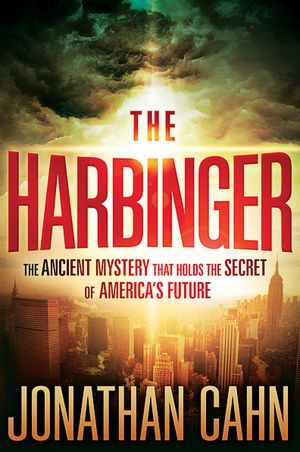
    If you're an intense sudent of the bible, love history past and present, and wonder what in the world is going on these days, I'm actually going to urge you to read this unique tome written by Jonathan Cahn. Masquerading as a novel, The Harbinger is honestly a prophetic revelation of present-day events fulfilling the scripture verse Isaiah 9:10 in an eerie, frightening, and documented series of quotations from leaders of this nation, our beloved country, the United States of America.

    The author, Jonathan Cahn, teaches and ministers in the prophetic and has been seen on television and heard on the radio. Producing this book is just what the title indicates: he's sounding the warning, calling forth the faithful, declaring the alarm for those who haven't heard of the coming judgment and for those who've ignored the message. This is serious material emphasizing the need for all peoples to apply "eyes to see" and "ears to hear". The premise isn't based on conjecture and opinion. The documentation is unarguable, and the scripture references are indisputable.

    It wasn't quick reading for me. I dragged myself through the pages of many chapters before the final chapters compelled and hastened my desire to seek the conclusion to the fascinating factors presented here.

    Although it's loosely a story, it's really not. It's a prophecy. Much of which has been fulfilled. Many of us are somewhat informed on the ideologies, the severe conflicts and differences we possess in this country, and those of us who are Christians see the work of the devil all over much of what's happening in the world today. If you need a fresh spiritual perspective and a reason to amp up your prayers for this country and the people of this nation, The Harbinger is sounding the trumpet, establishing the urgency, and reminding us all that God's purpose and judgment are not arbitrary occurrences. This book is the warning, the alarm, the forerunner resounding in its title. I urge you to take it seriously.


    Father, you give generously. You warn your people and those of the world. You beckon, call, and prompt all to listen and heed your desire to rescue them from sin and its eternal clutches. You gave the answer. You still give the answer. Your Son Jesus Christ, yesterday, today, and forever the same answer. Lord, please remember your remnant as we pray and ask for your mercy and the gathering of those who are still lost. You're the only One who can find them. You're the only One who can see inside their spiritual hearts. You're the only One who can turn those hearts of stone to flesh. You're the only One who can save their souls. The only One. Please forgive us as a nation and hear our pleas. In the Name of Jesus, Amen.