Into the Fire

Passionate thoughts about the world of writing and the Power of God

  •  

    How do you pursue the quest for bettering your writing? What inspires you to search for the words, the expressions, the scenery, the action, the depth in your characters that rivals real life? How? What methodology? Why?


    Of course if you recognize your work as drivel, you desire to improve. If you assess your work as passable, you want to get it better. But what if you truly like your work? And don’t authors have to like their work in the end? I mean, come on. Why work for days, weeks, months, sometimes years to submit a novel you think is worthless?


    This isn’t to say we writers don’t doubt we can type a single worthwhile word when we stumble over them, not “feeling” them, not knowing where the heck this story intends to go as it stops dead. We shudder. We ache. We cry. We pray. We wonder. We fear. We worry. We threaten to quit. We give up momentarily. We sigh. We wait. We start again.


    When do we conclude this is the best we can do? Never? Do we go on and on with our own “red pen” attacks and fuss and pick at the words as if they’re old grapes? What tells us it’s time to stop? Just stop already. Let someone else pick it apart. Or stuff it in a drawer, hide it in a file, stick it in a box and shove it under the guest bed or up in the attic.


    What makes you better?


    Father, I repeat this over and over again because of its incredible truth: apart from you I can do nothing. Only you can inspire more, better. Thank you. In the Name of Jesus, Amen.

  •  

    (Although my questions were primarily directed toward fiction, Chila widened the field for her responses. She graciously gave her time to answer each question thoughtfully and without hesitation. Please note she has her own book coming out later this year.) 


    Port Yonder Press

    excellent, evocative, eclectic – we love the niche in you


    So who is Chila Woychik?


    GetAttachment 


    I'm a very simple gal with a passion for life and a passion to do it right.


    The attractive, well done, and quite specific website sets the tone for Port Yonder Press, but if you could communicate what matters most to you in operating PYP, what would that be?


    We pass our days doing something. I want to expand my reach beyond my little world, and I feel I can best do that by doing what I love:  reading, writing, and assisting others in both of those venues.


    And if there is anything you wish to improve in your publishing endeavors, what would it/they be?


    I want, every single day, to learn one more way to do what I do BETTER.  I really do strive for that, not just in publishing but in life itself.  "Can't do" isn't an option for me.


    A common “problem” for writers is the professionals’ approach to publishing which stipulates they only desire writing that “sings”, “is polished”, “is great/excellent”, “is fresh”, and I could go on. Not all certainly but most writers attempt to send their best. And many writers believe—whether or not they’ll admit it publicly—that their writing outshines much of what is published or fills a vacancy in publishing. Are there any specific clarifications you can make for your requirements to submit to PYP?


    Submitted manuscripts or chapters must be beyond what we commonly call "mass paperback" quality. That's what I'm striving for in my own writing, and that's what I want to see. The only advice I can give about how to get there is to read the top dogs of yesterday and today in the GENERAL MARKET, which in my estimation, almost always stand head and shoulders above most Christian writing. Even if you don't agree with the content, you can learn from the rest: what did they /do/ right among all you think they /said/ wrong? Join a secular critique group. I mean that. Or at least a group friendly to everyone. If that's what it takes to get honest-to-goodness great advice, do it. Fear not, they won't eat you alive, and the experience may actually teach you to write with an empathy and reality second-to-none. Combine that with great writing skills and your underlying faith, and I guarantee you'll have publishers knocking at your door.

    Look at it this way:  Insular, isolationist thinking, reading, and writing among Christians is watering down the writing-quality gene pool. I see web-toed, 6-fingered books filling the shelves of most Christian bookstores. Now, how appealing is that to unChristians? Heck, that even makes me sick.


    Would you agree or disagree that subjectivity plays a considerable role in what makes it into books for individual publishing houses? By “subjectivity” I’m not implying that quality is totally subjective, although I do believe it can be.


    I used to think it played a HUGE role, but I've recently revised that down. For me, subjectivity may come into play about 25% of the time, especially when I have 2 books to choose from and only time for 1. The balance of my decision is based on story (largest part), writing style, the author him/herself. But who knows? The pie slices may change size again as I become more accustomed to this business and continue to carve out my own niche with PYP.

    Perhaps I should ask you what defines “quality” writing for you?


    You've asked the operative question with that one, for my litmus test for quality surely differs from yours or someone else's. For me, "quality writing" is that which is a notch above commercial, and it's a story or a book of poetry or creative nonfiction that I can't put down–one which I'll gladly grab and reread again and again in the lull of a day. Isn't that what a good book should be?

    If a writer hasn't yet discovered that good writing is a result of butt-busting hard work and a lifetime of commitment to such, he's not writing "quality." You don't learn to write well by praying about it.

    Do you read novels from the generally accepted CBA menu/publishers? Do you have favorite authors from that market?


    I really have very little time these days for reading beyond what I have to read. But I read voraciously since a child, so I do have a lot of fiction under my belt–very little of it "CBA" fiction. Frankly, and without belittling anyone, I've been sadly disappointed by the few books I've picked up from those publishers. It may be an over-generalization, but they all appear to have the same "flavor." I'm one who firmly believes there's no better way to turn someone off to true faith than by seeming to imply that when one becomes a Christian, they all of a sudden are pressed into a grave-sized box of Christianity's making. Well, I can guarantee it isn't God who's doing the pressing in that case. He's the God of infinite variety, freedom, and beauty. Let's make our books that way too. I can't think of a better way to reflect him than that.


    Describe your faith. How does your faith affect the selection of manuscripts you wish to publish? 


    Everything I do, I do with a no-holds-barred mentality; my faith is the same way. As an older teen I experimented with almost every faith and substance and experience known to man, and Christianity floated to the top as the most viable and reliable among everything. My parents weren't Christians and I had no one there preaching at me. But once I embraced it, I never looked back. Life has beat me around to some degree, and through bouts of skepticism and doubt, Christ has still been the central figure through all that. He's the man for me.


    Faith guides everything I do. At the same time, I don't believe God expects us to "rubber stamp" everything with Scripture verses and Jesus-speak to be effective representatives of his. In fact, from experience I believe we often do that, overdo the Jesus-Facebook-status thing, to insulate ourselves from the real world around us. I'm continually challenging believers to befriend unChristians, invite them to their Facebook page, to their barbeques or to a restaurant, and then live out a real life before them. Share failures, sorrows, hurts and pain. Be hardcore real. It's easy to turn others off when we insist on keeping a Jesus-bubble around us all the time, ostensibly to protect us from their "dirt." That's the biggest rip-off and cop-out Christians can engage in. Jesus weeps at that, I think. I want books that go beyond that, books that meet people where they are with truth so real that unChristians can't help but be impressed, if by nothing else, by the quality of stories or poetry or creative nonfiction presented. I don't believe I have the right to preach at unChristians until I'm asked. I don't want my books to do it either. As for Christians writing books for Christians? Fine, just don't pat yourself on the back for penning an "evangelical tool" if you're really only preaching to the robed figures behind you.


    Your biggest complaint(s) about publishing in general?


    Book mediocrity, for whatever reason. And how damn hard small presses have to work to get a toe-hold in the door of bookstores, even though what we offer may be as good or better than what's there. (And yes, I have the usual complaint here – that some Christians are more concerned that I said "damn" than that their neighbor's drowning next to them …)


    Chila, most professionals are making projections about the publishing industry since e-books are establishing a solid contribution to the world of books and reading. Your thoughts?


    Technology will never slow down now, and there's nothing wrong with that.  Like everyone else, publishers must flex with the times. I find it quite thrilling, though yes, a challenge to keep up. I'd love to stay ahead of the game, but if I can maintain equilibrium at this point, I'll be happy.


    In an interview with Mike Duran you mentioned your father’s influence. He sounds like a wonderful man. Besides him, who has influenced your desire to produce books?


    Well, when I come across a small press that's making inroads or doing something new and exciting, even if it isn't working, I find courage to continue innovating. There hasn't been one person who I can point to who has necessarily "influenced my desire to produce books," though a number of people have encouraged me, and I'm very thankful for that.  I'm especially fond of my small press cohorts.


    You know many pre-published authors will be anxiously reading what you have to say. Since this blog primarily addresses those who write Christian fiction, pinpoint how you view the overall “Christian Fiction” genre and what specifically you’d change or choose to incorporate within it.


    Christian Fiction has a following and will always have a following, but as for effectiveness, I think it's dead in the water. Please forgive me for my bluntness, and feel free to disagree. But we'll never break out of self-satisfaction mode if we don't at least bring the question to the table.


    What I'd change: I'd pull the blinders off the belief that not being "of the world" somehow equates with not being "in the world." I'd reacquaint believers with reality by asking them to live in a rescue mission or in an emerging country for a good while, among the people, immersed in the culture, eating the foods and enduring the hardships.  It would force believers to either sink or swim. It would require them to love, really love, if they had any conscience at all about the importance of their Christianity, and it would force them to reassess what that should look like as Jesus-mirrors. It would prepare them to write reality from a worldview which truly exemplifies Jesus Christ, not just an organization's standards.


    Who is the “ideal” client for Port Yonder Press?


    A teachable writer who already writes well, isn't afraid to continue learning, is easy to get along with, and is committed to doing about 95% of all their own marketing.


    Name a few novels of recent and “classic” times that captured the “excellent” moniker for you.


    I've always read more nonfiction and poetry than novels, but let me think. I would say classics like Little Women, the Anne of Green Gables series, The Essential Dracula, Dorian Gray, Great Expectations, etc. 


    More recently, I've enjoyed the works of Patrick Rothfuss (The Name of the Wind – a MUST READ), Sylvia Plath (The Bell Jar), China Mieville (Kraken, Perdido Street Station), Margaret Atwood, Virginia Woolf, others.


    For creative nonfiction, pick up Annie Dillard. For poetry, hit Emily Dickinson … hard.


    Sometimes there are factors in your line of work that go unstated, underestimated, maybe even fall under the “intangibles” label. Is there anything you rarely get asked that you want to answer or anything you truly want prospective clients to know about you specifically or PYP?


    Umm, probably just that I'm a "normal" person first and foremost. As such, I value kindness and friendship and love beyond what I might do for a person as a publisher. Also, that although I have strong opinions about life and faith, I go out of my way to be agreeable, and strive to maintain a tender conscience, so much so that a gentle word often brings me to tears. I love a well-worded challenge of just about any kind, but chuff at the unloving attitudes believers are so quick to throw around under one guise or another. PYP? It's an extension of me, so I suppose if you know me, you know PYP. Same rules apply.
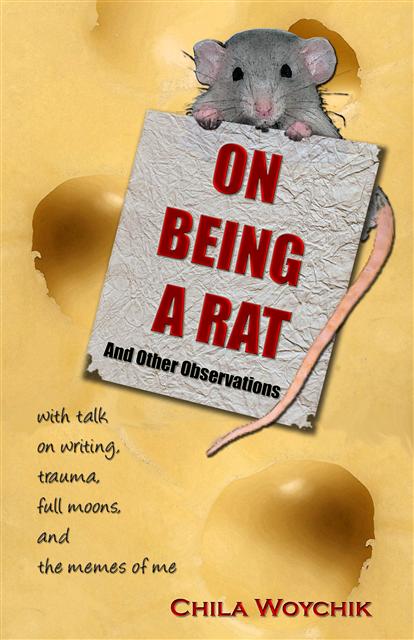
     

    Rats2%20(2) 


    See what initial readers have said about this book
    $8.99 includes shipping to continental US
    Release date, Early Fall, 2011
    Pre-order now.

    http://portyonderpress.com/default.aspx


    Father, you know Chila's heart. You know her passions. You know her from the inside out. You've given her the talent, the calling, the desire and determination to do something very difficult. I ask your blessing upon her life, her work, her heart. Please continue to supply what she needs to do the work you've asked of her. In the Name of Jesus, Amen. 

  •  

                   Thumbnail


    I pledge allegiance to
    the Flag of the United States of America,
    and to the Republic for which it stands:
    one Nation under God, indivisible,
    With Liberty and Justice for all.


    God Bless America.

  •  

    For those of you who are considering all the venues presented in publishing today, Chila Woychik, Publisher/Managing Editor of Port Yonder Press and Founding Member of IndieGalaxy Publishers Association, a newly established group of small press owners intent on helping one another succeed, will be with us on Wednesday. Stop by to read her straightforward views on topics of interest to writers.


    If Chila is nothing else, she’s honest about personal views of the industry as a whole and that of Christian fiction. You might agree or disagree with some or all of her opinions, but you will respect and appreciate her candor and passion.


    Join us tomorrow for an interview with Chila Woychik.


                           PORT YONDER PRESS


                      Excellent. Evocative. Eclectic.


                        www.PortYonderPress.com


  •  

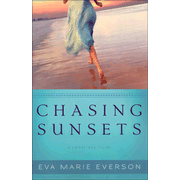
    The Revell Book Tour features Eva Marie Everson’s latest release Chasing Sunsets, the first in a new series from Eva and another example of good Southern fiction from a current Floridian resident.


    Although this novel picks up in the aftermath of another messy divorce with a nasty ex-husband gaining favor in the disputed settlement of the time he’s allowed to spend with his boys in the summer, Chasing Sunsets manages to salvage what has become a bit clichéd in CBA fiction regarding the portrayal of mean ol’ ex-husbands and their wives as victims. If this plot point happened occasionally it would be palatable because such cases exist, but it’s almost a constant in CBA literature and it gets old seeing the guys get beat up in stories when in reality ex-wives can be just as lethal. To balance this out in Chasing Sunsets, Eva exposes a not-so-great wife who divorces her worthwhile husband.


    During the course of Chasing Sunsets, the heroine in this novel, Kimberly “Boo” Clayborne Tucker, is forced to realize her control issues while resolving a self-worth she’s been unable to find or master.


    Kimberly “Boo” is one of the four lovely daughters of Dr. Clayborne and his beautiful wife who own a beachfront vacation home in Cedar Key, the little island town that never changes as Kimberly finds out during her excursion to that familiar place at her father’s request many years after her mother’s death. Cedar Key held the keys to her heart as a kid and teen when she fell in love for the first time with a commercial boater’s son Steven Granger. During their final summer together before Steven leaves for college, Kim believes they’ll be together forever.


    The haunting memories of her mother, their mutual interest in photography, particularly on Cedar Key where the sunsets invite both residents and tourists to gather just to watch them, resurrect feelings she doesn’t want to face. When Kim is forced to confront issues about her mother, her dad’s present wife Anise reluctantly explains information Kim had never known. When Kim’s closest sister, Heather, demonstrates similar behaviors to their mother’s, Anise warns Kim not to accuse her dad for his unwillingness to deal with the matter.


    During the revelations being unveiled to Kim by a now hostile childhood friend as well as her wise elderly neighbor, Kim reunites with Steven, stunned to learn they still hold feelings for each other.


    Chasing Sunsets is a story of loves, losses, sacrifices, and secrets we keep from ourselves while we press on in our lives that don’t often turn out the way we have them planned. It’s told well, clichés included which somehow fit in with this kind of Southern fiction. The vivid scenery and scents play a role in capturing mood and memories. Back and forth in time told from different perspectives, the story leaves the reader with a sense of hope even though life continues with all its bumps and bruises. 


    Personally speaking, I don’t care for the cover—or maybe I don’t “get” the cover. I don’t mind the divided images or the colors used, but it really doesn’t work for me as far as speaking to the story. Chances are without having read Eva’s work before this book I wouldn’t have picked it up, and I would’ve missed an interesting story.


    734367 


    Available June 2011 at your favorite bookseller from Revell, a division of Baker Publishing Group.


    http://www.christianbook.com/chasing-sunsets-cedar-key/eva-everson/9780800734367/pd/734367?item_code=WW&netp_id=872021&event=ESRCN&view=details


    Father, please continue to bless Eva's writing, lending her skills to tell regional stories of the human heart. Encourage her as only you can do. In the Name of Jesus, Amen.

  •  

    I said to the Lord, "You are my Lord:

    apart from you I have no good thing."

    Psalm 16:2 (NIV)

  •  

    Excerpts from the ACLJ:


    It's a pro-life law that is getting a lot of attention – and a law under attack by Planned Parenthood and the ACLU. The State of Indiana passed a law that says it will no longer distribute millions of its federal Medicaid dollars to abortion providers like Planned Parenthood.


    Now, Planned Parenthood, the nation's largest abortion provider – with the help of the ACLU – has filed a federal lawsuit against the State of Indiana.


    The ACLJ is already at work preparing an amicus brief that backs Indiana's courageous pro-life law a law that will save the lives of innocent unborn children.


    Our tax dollars should not be going to fund the abortion industry. The people of Indiana have taken a stand and said "No" to Planned Parenthood.


    In addition to the attack from the ACLU and Planned Parenthood, the Obama Administration has stepped in, threatening to cut off federal dollars to Indiana if the state doesn't scrap its new law.


    You already know that Planned Parenthood receives more than $363 million a year in federal taxpayer funding – money that frees up other funds for abortions. Planned Parenthood clearly doesn't need these taxpayer dollars – Medicaid funds that could be freed up to go to organizations whose goal is to help those in need, not perform abortions.


    What we are witnessing is an attack on life – we cannot ignore it. Planned Parenthood, the ACLU, and the Obama Administration are united against the people of Indiana who have boldly done the right thing, by refusing to use their federal taxpayer dollars to fund abortion providers.  


    Stand with us and make your voice heard! It's time to stand up for life and say NO to taxpayer funds for Planned Parenthood.


    Please join our Committee to Defund Planned Parenthood's Abortions at the State Level, and join in the fight to defund the abortion industry.


    By successfully defending Indiana's right to defund the abortion industry, other states will be free to enact similar laws. It is critical that we take a stand to defend life every opportunity we have.


    Thank you for taking action in defense of the lives of the unborn.

    Jay Sekulow
    ACLJ Chief Counsel


    Father, how did we ever think that we could justify killing the unborn? How can it be defended? Woe to those who call evil good. Please help us, Lord. We're desperate for you. In the Name of Jesus, Amen.

  •  

    Christian Fiction evokes all kinds of emotional outbursts both positive and negative. Perpetual discussions concerning it fill cyberspace. Harsh criticism and gushing praise are uttered in either attacking or defending it. The importance of these debates (sans the vitriol from either side) can be found in the hope of establishing an expanding market, more far-reaching literature, and ultimately an understanding from either extreme that all of it serves a purpose and can even reach a need.


    The intellectuals want the prose that digs deep into the human psyche with language that plows the rich soil of fertile words.


    The realists want “edgy” stories, “gritty” topics, using language that speaks to the culture in a recognizable tone.


    The escapists want everything from fluff to adventure to the pursuit of serial killers and the “just tell me a good story” attitude prevails over everything else.


    The purists want simplistic stories with sweet little endings or innocent characters trying to stay that way along the bumpy trails of life.


    Of course this is a simplification of groups and there’s often a meshing that takes place between them.


    There’s a word that’s applied to those who stand out as leaders of particular industries and businesses. That word is “vision”. The term implies the individuals who possess it see ahead of the times, see beyond the “norm” or the “current”, and pursue the temporarily reckless to reach presently unattainable heights of achievement. Who is the visionary in Christian Fiction? And what does that even entail?


    I’m willing to bet there are a few of those individuals out there in Christian publishing, but I don’t know who they are or how they plan on advancing the reach of faith/inspirational fiction. No doubt there is an ample supply of visionary writers, some who get published and some who see the doors repeatedly closed to them.


    The approaches of authors in extending the reach of Christian Fiction are decidedly opposites. Some desire vagaries that only allude to spirituality. Others suggest a mere mention of God or offering up a hurried prayer can insure the reader will begin the journey to finding Jesus. Others prefer the gospel worked into the storyline to make sure the reader knows a difference exists between the world and Christians. Some writers want the cap taken off the language barrier. Other writers want a crackdown on violence. It seems very few of them want any specifics to emerge in the sexual arena (and by that I don’t mean graphics).


    Stories give us life, fantasy, commentary, and entertainment. They depict culture in the here and now, the past and future and dream worlds. They display all kinds of styles, voices, and creativity. Their purpose can be unlimited. Christian Fiction needs a visionary to offer an array of both the beauty and the vile aspects of living on planet earth and beyond. The needs to read novels range from simple entertainment to soulful investment. The market is large but must be cultivated. Too many times, too many people have picked up the wrong books and gotten sour tastes from what so-called Christian Fiction offered them. Although you can’t please everyone—especially militant unbelievers who shriek at even the suggestion of a Christian form of spirituality—the avenue for faith fiction is a huge road with small traffic compared to the rush hour jam it could have with a little more vision.


    This isn’t to condemn any of the published books because there’s a reason they were put forth into the market. They provide pleasure, they service needs, and they give something to each audience they reach. This post is to once again remind those at the publishing end of the industry that you’re neglecting a larger portion of the reading public than perhaps you’re actually catering to. Now that’s a thought for consideration. Isn’t it?


    Father, those of us who write for your pleasure desire to accomplish your will for our work. Help us to clarify that to ourselves in order to go and do what you want us to do. In the Name of Jesus, Amen.

  •  

                                              Thumbnail


                                                 HAPPY 48TH, JOHNNY!


    May the Lord continue to bless your life and may you find Him to learn He is who He says He is. In the name of Jesus, Amen.


  •  

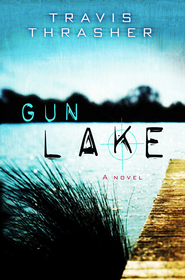
    Published in 2004 by Moody Publishers, Gun Lake by Travis Thrasher collects a group of misfit characters at a Michigan resort lake and entwines their lives.


    The Stagworth Five escape the Georgia prison under the leadership of one Sean Norton— the man with the plan and a guy who fancies himself a clone of Jim Morrison (of The Doors). Accompanying him are four other men who’ve committed various crimes. The most offensive of these five is a loosely reined in rapist named Lonnie who only adheres to Sean’s instructions. Hand-picked by Sean for various reasons, Lonnie eventually becomes a liability. Wes, the tattooed muscle, Kurt, the mostly steady thinker, and Craig, the nice guy who loves movies and making lists of his favorites, make up the rest of the five, most of their activities and associations being told through Kurt’s and/or Sean’s viewpoint, and Kurt has no use for Lonnie. Sean takes them through Texas and up to Michigan where he rents a cabin at Gun Lake posing them as youth pastors on a retreat.  


    An alcoholic deputy forfeits his wife and two sons because of his refusal to quit drinking in spite of all the promises to do just that. His illusions of finding respect generate a bonehead move to take down the criminals.


    The pretty young Norah fleeing her abusive fiancé who never plans to marry her winds up at Gun Lake near where she grew up.


    Michelle and her husband Ted have run out of ideas on how to reel in their rebellious teenage son. Church, grounding, and every other method of parenting they’ve tried have all failed miserably, and Jared has become a thoughtless punk. Michelle takes him up to Gun Lake in one last effort to right his flagging ship.


    Paul leaves his casino bartending job to go settle down at Gun Lake, grieving private mistakes and the death of a woman he wanted to be his girlfriend.


    Ossie made a promise to one Sean Norton a long time ago while spending 27 years at Stagworth, and now he figures he’s obligated to keep that promise when Sean comes knocking at his apartment door. He’s a solid working ex-con who loves the Lord Jesus, but he’s stuck making good as a man of his word.


    I don’t know how exactly Travis was able to keep me interested in this novel since the only character I found remotely sympathetic was Ossie. His dilemma fit him well, and because he kept earnestly trying to do the right thing but faced one conundrum after another, he managed to generate empathy.


    Quite frankly, all the rest of the guys and gals came off as losers. Sean’s attraction could be understood because his looks and charm were played up. Kurt showed both sorrow and remorse until Ossie gave him chances to warm up to the gospel. His ire increased as his conviction worsened. Lonnie was a plain sociopath. Wes was short on smarts and impulsive but willing to place his loyalty and trust in Sean. Craig seemed simple, perhaps that’s what got him into the pen in the first place—a lack of reasoning.


    Michelle came off as inept and without faith or much compassion, legalistic. Her son Jared was just an uncommunicative punk until he got the you-know-what scared out of him. The instant transformation seemed a bit forced.


    Norah’s beauty was her beacon and she didn’t seem to know how to rise above her looks or her desire to be with a man.


    Don the deputy was a typical drunk who refused see beyond the next bottle or glass.


    Paul’s the misguided loner escaping life’s responsibilities and a private fear.


    It’s one thing to demonstrate unlikable people and show the reader that they could be us if just a few things had happened differently in our lives. But in order to do that we really do need to care about them. I couldn’t muster up the ability. That’s where fiction remains separated from real life. I don’t have to care about them in a novel. They have to touch that tenderness in me before I can invest in them. And, sorry, only Ossie managed to do that. Maybe it’s because when you paint these ugly pictures of humanity, we’re forced to look at our worst selves. Since we must do that sometimes daily, who wants to spend an entire novel repeating it? The truth is we are all without excuse, but all these people did was make excuses for their behaviors or blame a God they claimed not to believe in for their lots in life. 


    This novel is really a multi-character study of a bunch of lost people—not just spiritually. Their reasoning skills center on themselves and their needs (which I know is typical of us all when we don’t know the Lord, and even many times when we do). They’re weak, simple, and most of them fail to see themselves as they truly are and argue with themselves and a solicitous voice that tries to help them see how it really is in their lives.


    The climactic scene works in bringing this brood together and finalizing the depravity of some and the almost heroics of others.


    Song titles were used as "parts" divisions which is a favorite tool of Travis Thrasher—and an often very fitting commentary on what’s to follow.


    10318eb_w185 


     http://www.amazon.com/Gun-Lake-Travis-Thrasher/dp/B003UHU7PI/ref=sr_1_1?s=books&ie=UTF8&qid=1307579439&sr=1-1


    Father, you’ve given Travis a widespread imagination. Keep filling him with stories to honor you, and he’ll write them. Bless him for staying firm in his writing. In the Name of Jesus, Amen.