Into the Fire

Passionate thoughts about the world of writing and the Power of God

  •  

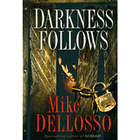
    This week the CFBA Tour features Darkness Follows, Mike Dellosso’s fourth novel, published by Charisma House (Realms).


    Mike Dellosso, the true gentleman writer of Christian horror, continues to illustrate and employ the supernatural in his stories. Contrasting the darkness to the light, in Darkness Follows Mike ventures into the occupation of the depraved soul as it either battles for rescue or succumbs to the evil desiring to possess it.


    Each one of Mike’s novels travels to a different place, visiting flawed protagonists and wicked antagonists. Darkness Follows presents Sam Travis, husband to Molly and father to Eva. Sam survived a serious fall from a roof but came away with physical and spiritual damage that resurrects the memories and feelings of his traumatic youth with his demonic older brother Tommy. His past produces both fear and dread so he’s never shared what he endured with Molly. Molly came from a family with an abusive father and an inattentive mother and packs around her own scars. Little Eva is a child full of faith and carries on a friendship with Jacob who no one else can see, someone she describes as covered with glitter.


    Sam’s head injury has interfered with his ability to continue his carpentry business, and he’s forced to rely on disability payments as he slowly recovers. His mood begins to swing to the dour and depressed after a mysterious blast through his front window shatters the glass and panics his family. Although Sam hasn’t shot a rifle in years, he’s well acquainted with the sound of a gunshot, and he insists that’s exactly what it was even when the police and his wife search everywhere for a bullet and can’t find one. During this strange episode, Sam discovers some Civil War writings reminiscent of a soldier’s journal which are penned in Sam’s handwriting. He has no memory of writing the words. The downhill slide of his self-worth, his attitude, and his overall conduct proceeds in a frightening spiral as he allows himself to be absorbed into the darkness of soul that threatens to overtake him.


    Plunked into Sam’s story are the writings of another Samuel who’s watched his soldier friends fall in battle, horrific scenes of suffering and chaos and loss written in Sam Travis’s handwriting unbeknownst to him how he’s recorded the words. Along with this distant recollection of war are the hauntings of Sam’s deceased older brother Tommy’s demonic antics which escalate to terrifying proportions. All these episodes push Sam to a place he no longer seems able to resist. The only one who understands his decline is his little daughter Eva who receives her information from Jacob.


    When Eva’s life is threatened, Sam determines his final plan.


    Ultimately this is a story about generational sin, a speculative tale about how darkness can follow families and lead to their destruction, but how unconditional love can overcome the darkness and bring both repentance and forgiveness.


    This is not an easy-going speculative thriller. Sam’s descent into darkness is an ugly thing to watch and in the process we lose our initial compassion for the man because it seems to happen with little resistance. Molly fails to inspire that same compassion in me, but that’s probably me. While I understand her efforts to assist and watch over her husband, she comes across as unsympathetic at times, lacking empathy for his position as a man. Her intentions are good, but she doesn’t satisfy as a character, in spite of her personal history, until the end.


    The introduction of the sociopath antagonist is interesting but the explanation of who he is never quite fills in the blanks with the timing and direction of his life.


    Little Eva is by far the most desirable character along with Jacob who never speaks to the reader.


    The strange history and inspiration for the idea of this novel came from a real life journal penned by Mike’s uncle through the eyes of a young Civil War soldier, but Mike’s uncle claimed he couldn’t remember writing any of it.


    The story is at its best from Chapter 53 to the unique and well done choice for ending the book. Mike Dellosso fans will appreciate Darkness Follows as another different kind of entry into supernatural horror. I do caution animal lovers and those who react to strong violence: some harsh scenes demonstrate the utter depravity of spiritual darkness manifested in the physical realm.
     

    382742 


    http://www.amazon.com/s/ref=nb_sb_ss_i_0_33?url=search-alias%3Dstripbooks&field-keywords=darkness+follows+by+mike+dellosso&sprefix=darkness+follows+by+mike+dellosso


    Father, you’ve watched over Mike through illness and health. You’ve given him many stories to write, and you’re not finished yet. He’s a man of integrity and honesty, and I ask your continued blessing upon his life along with meeting his need for creative supply. In the Name of Jesus, Amen.

  •  

    American soldiers of all ages and kinds: this one’s for you.


    I honor you and ask the Lord’s blessing upon your lives in the Name of Jesus. I’m grateful that you serve the United States of America and strive to keep us safe. But you also fight to keep others safe from terrorists and enemies of all kinds. You fight to preserve freedom, to promote freedom, and to persevere for freedom wherever you are. Not everyone can do what you do. Not everyone sacrifices like you do. Not everyone bears the burden of keeping an entire nation safe along with their fellows in arms.


    Many soldiers gave their lives to preserve the safety and freedom for the citizens of the United States of America. Some of those lives were lost in combat, some in training exercises, some in the wastelands of addictions and disorders brought on by the horrors of war. I honor your service and remember your sacrifice. Thank you is never enough.


    God bless you in His mercy and provide you with His grace. In the Name of Jesus, Amen.

  •  

    When men tell you to consult mediums and spiritists, who whisper and mutter, should not a people inquire of their God? Why consult the dead on behalf of the living?

    Isaiah 8:19 (NIV)

  •  

    Disputing lies:

    http://www.youtube.com/watch?v=DJIC7kEq6kw&feature=youtu.be

    http://www.youtube.com/watch?v=MHWM-wFrCPM


    Father, the truth will free us. Let the one and only truth prevail, I pray. In the Name of Jesus, Amen.

  •  

    . . . that people learn their writing skills differently. As unique as writing is, those authors whose names appear on covers as diverse as they are have all participated in the beginning steps and stages of becoming writers—different ones with styles, voices, plots, and genres all specifically crafted according to their desires. Some venturing into new or foreign territory with each novel while others stick with what works for them. Some change mid-stream in their careers or early on by using pseudonyms for different genres.


    I can’t tell you how I learned to write, although a great deal of credit goes to my school teachers who enhanced any ability I had by successfully teaching me the ground level rules of grammar and expression. I remember the rules well. I don’t choose to use them all because in stylistic fiction those rules create a formality that doesn’t complement or compliment story, particularly contemporary writing which is what I do. I use a variety of methods such as sentence fragments, less commas, etc., all of them unacceptable in proper grammar yet working well for certain prose.


    Some authors study craft books, and others write their own. They list and mark and organize structural integrity for the different kinds of novels (i.e. category romance, suspense) to create stories which stick to form. They often teach at conferences and use references to their favorite instructional books. These books suggest every kind of prop for writing effectively, successfully, and/or dynamically. (And probably without so many adverbs.) They divide, dissect, and demand certain methodologies and steps to attain “good” or “exceptional” writing. And some writers flourish with this kind of instruction. There’s no denying good instructional books are an asset to a writer.


    Others of us are absorbers. The school-ish instructional books only work so well for this group. Absorbers must read the stories to ascertain how to tell them. They tend to like a variety of styles and voices. They’ll read a few of the how-to or when-to and why-to books, but soon tire of the lessons and revert to radical reading of fiction in order to better tell the stories that occupy their inspirations.


    Either way, writers are “produced”. Sometimes “good” ones are overlooked and sometimes “bad” ones are celebrated. Welcome to the world of publishing.


    Regardless of the type of learner you are, the resulting effort will display what you learned and what you abandoned. Your work will either get you published, keep you unpublished, get you noticed or keep you in the shadows. Only God knows what’s in store for you, but it’s up to you to give your best if the heavenly writing call is upon your heart. As a Christian, you’ve given your life over to the Savior. You are not your own. He owns you with His love. So. Think about that. It’s His call what becomes of your writing. Follow Him and find out where the learning journey leads you.


    Father, I’m yours. No real prize but, Jesus, you died for me anyway. Unbelievable. Thank you. My writing belongs to you. Again: no real prize. Except for the fact that the inspiration comes from you. Apart from you I can do nothing. I give my all to you. In the Name of Jesus, Amen.   

  •  

    . . . the story. I love good literary novels. Is that an ambiguous statement or what coming from me? Me who refuses to label “good” or define “quality” writing. Me who insists that subjectivity plays a huge role in determining those two facets of fiction. Nevertheless, I will restate I love a novel that exercises literary effort. Where words illustrate profound pictures, scenes, characters, truths. Where you smell the scents and hear the voices, the sounds of birds, traffic, ocean tides. Where great care is taken to paint the story and immerse the reader in both the language of description and the emotion of the characters. Where it doesn’t matter if there’s catastrophic occurrences or neighborhood chats.


    However, if there’s one weakness that can surface in these carefully scripted stories, it’s when the beauty of the words overtakes the story. When the author is so absorbed in the art of words that he forgets about the value of the elements of the story. Words are the only weapon authors wield. Those words have so many unique and sometimes mundane duties that they can’t reign like a despot king decked out in grandeur. They must cover all of the story and make it meaningful. Sometimes they must concede their beauty and become ordinary to transmit the everyday event. Sometimes they must disallow that beauty to portray the ugly and grotesque without fanfare and endorsement. Sometimes words have to take the back seat to story.


    One consistent complaint I’ve noticed from others and in a very few “literary” novels I’ve read is the dislike or lack of engagement with the primary and peripheral characters in the story. For me, when I fail to like a character, especially the protagonist, the chances of me enjoying the novel are slim or none. Characters carry the story on their backs. Without characters to arouse certain emotions, identifications, and/or passion in us, we readers might admire the prose which takes us to places with intimate detail, but if we go without the accompaniment of engaging characters, it’s like being on a magnificent tropical island alone.


    Words construct the writing, but along with their quest for beauty they must also depict the ordinary. They must inspire involvement not only in their usage but in what they create in the spirit of the reader. The words should not be the focus and objective of the writing but the vehicle with which they create the story to take the reader to a place he is thankful for having visited with characters he’s sad to leave.


    Father, please give me the words to paint the pictures you inspire. In the Name of Jesus, Amen.    

    .

  •  

    I don’t often agree with all the literary chatter about excellence in art. While I agree there is a (and I entertain a personal) standard which separates good from bad writing, I acknowledge that my standard establishes its criteria based on personal preferences and dislikes. While superb writing can be admired for what it is, I can also admit that “cruder” writing (in terms of style) can be just as or more effective than that of high literary “quality”. Story and characterization do matter and can trump the writing itself if well established. This statement never fails to raise the hackles of those writers who seek the illusive perfection in theirs and others’ efforts.


    However, what I do agree with is that Christian writers should excel at what they write. According to their styles and genres, Christians should produce quality, albeit that label (of quality) is ill-defined and in my opinion always will be. It’s far easier to describe and somewhat define poor writing than it is to illuminate quality. For every writer who attempts to do this, someone else will deny their definitions and defy their selections to illustrate their opinions. It remains an ongoing battle and perpetual focus of discussions among writers.


    Whatever a Christian writes, again according to their styles and genres, the basis for judging that writing should be based on personal preference, not ultimately on how poorly the story was written. And by that I mean there is no good reason for me to pass judgment on fantasy pieces when they hold zero appeal for me. Once it’s established that a favorite genre is being judged, the standard shifts to evaluating how the writing successfully or unsuccessfully fulfills the objective of the story. It’s unfair to judge the merit of writing if you don’t like certain POVs or types/styles of writing. However, if the POVs fail to accomplish their goals by confusing the reader or if the sterile Hemingway style of prose doesn’t appeal, then it’s safe to say why you don’t like the writing. Someone will like it. Probably rave about it—as they do with Hemingway. If for no other reason, this is why it’s important to qualify criticism by acknowledging it’s your opinion regardless of your credentials.  


    The “poor writing” misnomer has been attached as a whole to the world of Christian Fiction because there has been a glut of it at different times in its history. It shouldn’t matter, although it’s certainly factual, that the general market is also glutted with poor writing, predictable and formulaic stories. Those of us who write fiction within or for the Christian market know that some of the criticism aimed at the overall Christian Fiction genre is unjustified and biased. Some is not and can be easily proven even though there will be staunch defenders of those pieces brought up as examples of not-so-great writing.


    Oddly enough, I think the blame for poor fiction should be placed at the publishers’ doors rather than on the authors. With all the insistence upon the necessity for and effectiveness of editing, when do these professionals step up and admit they might’ve gutted, ruined, overlooked, or overly-enhanced a novel to make it saleable amidst criticisms of its poor quality? Yet even poorly written novels sometimes sell well.


    But here’s the thing: Christians must write their best. Simply put. However we write, whatever we write, we profess to write for our Lord first, to please Him, to honor Him. Be it thrillers to romance, it’s important to work at it. To serve the Lord with it. To spend the necessary time it takes for each of us to get to where we need to be with the craft in order to present our best to Him first. Some of us won’t rise to the heights of others’ expectations. Some of us will please “the average readers”. All of us should conclude with “The End” after laboring for the Savior’s approval, knowing we’ve given our all, and resting in the comfort of His smile. Regardless of His plans for what we’ve done.


    Father, I am at your mercy. No better place for me to be. In the Name of Jesus, Amen.

  •      Johnny-depp-in-pirates-of-the-caribbean-4-spoilers


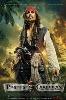
    Okay, some of you are bored with the Pirates’ films. Fine. Go elsewhere for your entertainment. None of the sequels will ever top the first one. Almost everyone can agree on that. And, yes, “Dead Man’s Chest” was my least favorite, but I enjoyed “At World’s End”. And since Captain Jack Sparrow maintains a special place in the annals of unique movie characters, it’s fascinating to see how Johnny Depp manages to still keep him interesting.


    “On Stranger Tides” takes a different turn on the tropical seas in search of man’s desire to never die. The wicked and feared pirate Blackbeard must find The Fountain of Youth to insure he doesn’t succumb to his imminent death at the hands of the one-legged man. That one-legged man is a familiar character to fans of this series. It’s just that we’re introduced to him in a totally unfamiliar position as the film begins with Jack in disguise to save his pal Gibbs from a hanging and then in his usual trouble clapped in irons before one of the British royalty who wants to use him to also find The Fountain of Youth.


    When Jack manages to escape his dilemma which leaves Gibbs at the mercy of the one-legged man, he teams up with his former lover Angelica (Penelope Cruz) who has managed to convince Blackbeard she is his daughter. We’re never quite sure if she is or isn’t. In fact we’re never quite sure if she is or isn’t anything other than a beautiful conniving wench. Off they go in search of The Fountain. As is the case with these pirate films, odd characters participate in the plots for unknown reasons, and this one features a young missionary man who insists—for a brief time—that even Blackbeard can be saved. The interesting inclusion of this character gives the typical secular film ample opportunity to mock God. It doesn’t happen. In fact, this character is played well and sympathetically for the most part. His final scene keeps the fantasy of the film in place, but scores some major points to Rossio and Elliot for giving this character a positive voice overall.


    The morbid mermaid feeding frenzy will keep fantasy lovers laughing or grimacing, and the special effects fans will enjoy one of the results of drinking from The Fountain without properly completing the ritual required.


    Captain Jack Sparrow exhibits moments of his original gallantry always infused with personal motivations, but this time around he manages to do the right things more often than the wrong and reminds us why we continue to root for him in spite of him.


    The film is available in 3D, apparently retrofitted post-production and not too effectively, but we viewed it without the glasses this time.


    If you go to the Pirates’ films looking for cinematic masterpieces, you’re not going to be impressed with POTC 4. If you’re going to watch the antics of Captain Jack Sparrow at the continued mercy of adventurous and imaginative scriptwriters Rossio and Elliot along with two additional writers since this film was adapted from the Tim Powers’ novel On Stranger Tides, then you can sit back, munch your popcorn, sip on your pop or eat your candy, and laugh occasionally while enjoying the magnificent waters and gorgeous fauna of Kauai where much of this entertaining movie was filmed.


    Some critics have called it “old and tired”, but it’s still got life as far as this viewer is concerned. A fun film with no requirements from the people in the seats.


    Getimage 


    Lord, you know how  and for whom I pray. Please lead them to yourself. They are lost without you. I know because I was there, too. Please, Lord, salvation is available to us all. In the Name of Jesus, Amen.

  •  

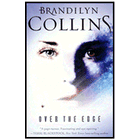
    In the classic suspenseful and easily recognizable style and voice of Brandilyn Collins, her latest novel Over the Edge, published by Broadman and Holman’s Pure Enjoyment line, has been dubbed the story she was “born to write”. Capturing the horrific symptoms of Lyme Disease administered to humans by tiny ticks with various types of infectious spirochetes, readers will learn more than they ever hoped to know about the nasty insects and will feel the intensity of the heroine Janessa McNeil’s pain. Having suffered through Lyme herself, Brandilyn Collins used hers and others’ experiences to provide an accurate portrayal of this debilitating and frequently misdiagnosed disease.


    As I anticipated reading this novel, I wondered how Brandilyn would tackle the Lyme Wars, a battle which rages between those infected with Lyme and a portion of the medical community who know how to successfully treat the disease and those in the medical community who refuse to acknowledge the depth of the disease, how it can become chronic, and who have influenced the insurance companies not to fund excessive treatment for it—such as the respected entities which include the Center for Disease Control (CDC). I couldn’t help but ponder how it could make a good story. Silly me.


    The familiar creepy scene which opens the novel tells us right away that Janessa McNeil (Jannie) is in for it. And “it” isn’t long before she finds out just how bad her life is going to get. With writing that makes you cringe every time Jannie must attempt to move or get up, the reader can almost feel the joint aches and the excruciating effort it takes just to navigate the basics of life while enduring unreasonable and crippling pain. The mental vacancy displayed in Jannie’s thought processes as she labors to understand what’s being said to her and how to retrieve lost thoughts or intended actions is masterfully done.


    Jannie’s aloof husband, Stanford doctor and research specialist Brock McNeil, observes her flu-like symptoms before she receives a terrifying phone call that implicates she’s been infected with Lyme Disease. He insists on her visit to the emergency room where she is admitted and begins a battery of testing which includes the CDC’s version of the test for Lyme. Dr. McNeil is a hated opponent of the Lyme community because of his outspoken criticism of its potential chronic effects and because he refuses to believe the CDC criteria for testing can be incomplete. When that test registers negative for Lyme, Jannie’s husband becomes an equal enemy she has neither the ability nor energy to battle.


    Brandilyn skillfully inserts so much information into this fast-moving, suspenseful story, of which the primary focus takes place in a matter of days, it’s absorbed rather than noticed. It’s a rare story that can educate without detracting from the storyline.


    Told primarily from Jannie’s POV, we’re given occasional glimpses into the antagonist’s viewpoint (which is the norm for Brandilyn’s suspense novels) and allowed a few looks at Detective Jud Maxwell who is summoned after the first threatening telephone call. Even though a few readers might figure out who the culprit is, the resulting climax to the story provides a solid thrill.


    I didn’t give you many of the additional details to the storyline because each one adds a different dimension to the heroine’s plight—as if the Lyme Disease symptoms aren’t enough of a challenge for this woman. Over the Edge is not just an entertaining suspense. From the clever cover with a tiny tick protruding from the attractive image to the boatload of information about Lyme and its sufferers to the book’s release during May, the month that features Lyme Disease Awareness, Brandilyn Collins gives you one of her best novels. Truly it is a story she was “born to write”.


    671623 


    http://www.amazon.com/s/ref=nb_sb_ss_i_2_31?url=search-alias%3Dstripbooks&field-keywords=brandilyn+collins+over+the+edge&sprefix=brandilyn+collins+over+the+edge


    Father, you know Brandilyn’s heart after you. She worships you in spirit and in truth. Please continue to bless her heart, body, mind, and soul as she applies all that you’ve given her to her work. In the Name of Jesus, Amen.   


  •  

    Blessed is the nation whose God is the Lord,

    the people he chose for his inheritance.

    Psalm 33:12 (NIV)