Into the Fire

Passionate thoughts about the world of writing and the Power of God

  •  

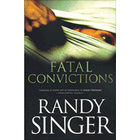
    Well . . . I finished it. Of the eight Randy Singer novels I’ve read to date, my favorite is The Cross Examination of Oliver Finney. Unfortunately, Fatal Convictions published by Tyndale Fiction is my least favorite of the group and was a chore to finish as I mentioned in a previous post. In fact, I didn’t like the novel. As you know, there will be plenty of readers who will like or have already enjoyed the book, but not this reader.


    Fatal Convictions presents Alexander Madison, a personal injury attorney and the pastor of a small church in Virginia. Alex took over his grandfather’s law practice when he died. Law partner and friend Shannon decide to take on a Muslim woman’s case against a trucking company driver who allegedly forced her off the road and left her with a head injury. While preparing for her case, a gruesome beheading known as an honor killing in the Muslim faith happens to a Muslim wife who converts to Christianity. The husband of the injured woman, an imam at a local mosque and friend to the husband of the victim, is arrested for issuing the order to murder the convert. All kinds of damning electronic evidence points to the imam, but Shannon is convinced he’s innocent and will take the case alone if Alex won’t join her.


    The story takes us back and forth from the history of the imam’s family, the loss of his two sons in Hezbollah/Israeli conflicts, and the tension between his daughter Nara and her mother which still exists. When the daughter arrives from Lebanon, she provides a significant distraction for Alex with her beauty and intelligence while irritating Shannon with her constant interference and demands.


    As you might imagine, the story dives into the belief systems/practices of the radical and reformist types of Muslims, throws out a lot of mixed signals, a few exceptional twists, and a dramatic conclusion with a somewhat palatable epilogue.


    But here’s the deal breaker for me: I finished the book graduating from not liking any of the characters through over half the story to barely tolerating Alex and Shannon. Khalid, the imam, was handled with kid gloves, assigning him an almost “noble” persona. The only character I really liked was Ramona, Alex’s wise and witty grandmother.


    I’ve said before if you’re going to address spirituality in a character, then just do it. The imam’s spirituality got plenty of attention. Alex seemed displaced as a pastor, unsure of his calling and his own belief system, not as dedicated and scrupulous as his grandfather in his law practice. Vacillating between pastor and attorney, he seemed dispassionate about both. Shannon was wooden, all-business. Nara never came off as trustworthy, and so Alex’s attention seemed immature and testosterone driven rather than real with little genuine regard for his faith when stacked up against hers. The Muslim religion got far more exposure than Christian ideals—those ideals not demonstrated in Alex.


    Randy Singer is a good writer, and I’ve enjoyed the majority of his novels. Just not this one.
     

    333205 


    Father, please continue to provide stories for Randy to tell. You’ve given him many talents, and he uses them well. Watch over him and bless all of his efforts done to glorify you. In the Name of Jesus, Amen.

  •  

    Writers sometimes forget it isn’t all about the writing. Of course it is to us when we’re working on a piece, but for many readers the writing is a sideshow to the main event of a novel.


    For writers, it takes a rare and sterling story to cast aside what some view as inferior, mediocre, or merely passable writing. It’s the nature of the beast to cast aspersions on others’ writing, making mental notes of no-nos according to the favorite trends.


    Nearly all the current “rules of writing” would erase “the classics” from publication. Yet patriots of these rules apply the mantra to just about everything they read while readers fail to notice the egregious “errors” and look dumbfounded if someone tries to explain to them why a book doesn’t work—because, hey, the readers liked the story so what else matters?


    It’s much harder for writers and their editors to break outside the jail of whatever has been decided to be “poor” uses of technique, style, and the almost reverent use and application of the word “craft”. The big time, feverish defense of “good” writing inevitably produces major discussions involving snobbish arguments and/or reasonable breakdowns of what defines “good”. And, yes, there is a standard for both good and bad writing, but don’t ask readers what that standard might be because the qualifiers which apply to writers who are readers and for those who are just plain readers can differ as definitively as summer and winter.


    Many writers cannot give up their day jobs. Even published writers realize how difficult it can be to reach readers with their stories. Finding a big enough and faithful audience for their work keeps them ever-pursuing, never relaxing. Juggling the trials of job, family, and writing/marketing create immense challenges especially when sales rise and dip. Yet a writer perseveres because it’s more than a hobby, it’s a compulsion or a calling.


    I find it fascinating how many writers use the royalty method of publication to personally validate “good” writing and then proceed to tear down other authors who’ve jumped through all the grueling hoops to achieve it.


    Writers are well aware that the popularity of a novel does not guarantee a high standard of writing. However, two things it does indicate are the publisher deemed it worthy of producing because they figured it would sell, and readers dug the story. The term “hack” has been applied to many best-selling novelists who probably chuckle about it all the way to their respective banks.


    Authors presumably write for readers, not necessarily for other writers. Writers (and editors) are by far the harshest critics of themselves and others in their field. We tend to operate in tribes—or packs—supporting those who write similar prose to ours or who we grudgingly view as exceeding us. And then some of us attack those who don’t fit what we think writing should be. Some lord their standards over others, insisting that excellence is the key and goal—or should be—of every writer. They can identify precisely what they consider the optimum defining gold standard, the virtues of the craft, citing examples of their favorite wordsmiths or listing the perfect methods for achieving literary prowess. And it all has merit, although its value might be lost on readers.


    Readers want a good story and many of them could care less how it’s told. No matter how much or how little the author has invested in the book, if the story resonates with the reader, the words used to tell it hardly matter.


    Craftsmen (and women) argue that readers don’t like certain ill-written books because of the poor techniques used, but, really, most readers—or the average readers—will tell you why they didn’t like a story, and it will have nothing to do with how it’s written.


    Don’t get me wrong here. If you’re a writer, give it your best. However you learn—whether it’s by reading and absorbing or studying and applying—keep on doing it. Don’t allow your writing to become stale and unimaginative—fight those inclinations to land in a rut. Don’t coast. Let others be their own judges.


    As writers and readers, we certainly have the right, maybe even the obligation in certain instances, to share our observations and opinions of others’ works. It’s important to remember that many parts of writing, stripped down from all the high-falutin’ critiques, opinions, praises, and assaults, are merely a matter of taste. Some highbrow and some lowbrow. Some with intelligent assessment and some with gut-feeling. Some with a teacher’s mentality and some with a student’s appreciation. As writers or readers, we do not walk the same literary paths, but we all have the option to travel our favorites.


    Assessing the writing of a story can be a rigorous exercise often lost on readers. There’s a certain beauty in just being a reader: story always trumps writing. It is what it is. And there’s freedom in that . . . for some of us.


    Father, you’re the designer. You display your love of differences in creation, your flair for the unique and the sameness. You’re mysterious yet open. You appreciate beyond our capabilities. Help me to be the one you designed me to be. In the Name of Jesus, Amen. 

  •  

    It’s easy to ignore that big picture when you’re young. It’s the here and now that matters. It’s the current drama, crisis, trauma that occupies space and time. When you’re young.


    Youth slips away like a warm breeze you barely notice until the air turns crisp, and you reach for a sweater and wish you could still feel the toasty wrap of that summer breeze.


    What is the BIG picture anyway? It’s “life and death”. It’s what the Lord has for you to do. Now and later. It’s perspective gained by noticing you’re not the center of the universe after all. It’s discovering obedience to the God (who loves you more than you could ever know) has more value than your personal insights and desires to do things outside His designs for you.


    That big picture isn’t just about the small things which you thought were huge. It’s not about career. It’s not even about family. It transcends the confines of our minds and unites with a purpose so large we can’t really envision it. We get glimpses when seemingly unconnected things in our lives suddenly weave their way into each other, startling us in their relationship. We observe in awe and mumble, “Small world.” Because it is to the One who created it . . . and us.


    It’s not that writing isn’t important because if that’s what the Lord has given you to do, it has value and purpose. It’s that the writing done for personal acclaim is small in so many ways. Stripped down, our efforts to further ourselves only demonstrate how insignificant we really are. That we have to work at proving our worth is ludicrous, for without Him we have none. He engineers our talents and consequent successes. And then we have the dialogue about “successes” and what constitutes them. How can we truly know the real value of our work in this realm?


    The BIG picture includes the trials and how we navigate them. The tests of our character reveal how much we rely on our Savior. The hope we place in Him alone tells of where our loyalties lie and how we view our eternity. The BIG picture includes heaven and earth and all that can be done to insure not only our ascent but that of others.


    Our mindful struggles over value-less points show us how captivated we are by the things of this world, serving only to divide and conquer our rigorous but meaningless battlefields.


    God owns The BIG Picture. We invent our own to no avail. The real BIG picture is of His definition and in the end it will be the only one that matters.


    Thank God.

  •  

    I kinda hate to suggest this, but I’m thinkin’ it’s true. If you’re a male blogger, you’ve got more potential to reach both genders than if you’re a female blogger. There. I said it.


    I’m not suggesting men don’t read blogs written by women, but just to browse? Huh-uh. I think men read professional women’s blogs if the topic(s) relates to their interests and an occasional non-professional who covers their same interests or shares their opinions. I don’t think men hang out at blogs written by women.


    Women, on the other hand, seem to have less difficulty hanging out at men’s blogs if the topics interest them.


    Don’t get me wrong here. Generally speaking, some men have less time to spend on the internet. Before the female hackles get stimulated, the time factor also applies to women who work outside and/or inside the home. Budgeted time leads to setting priorities and favorites.


    Then of course one must factor in the female-ness of some blogs—those which only cover topics related to their gender, lifestyle, parenting, etc., and if they’re writing females, sometimes their genre choices hold no real interest for the male gender. Both men and women decide who they want their primary audience to be in blogger-land.


    This blog attempts to reach both genders with its attention to writing, publishing, and spiritual matters. Usually about twice a year I’ll do my posts on romance. The women who leave comments here outnumber the men, but that’s also common to male blogs in the writing venue.


    So, what do you think?


    Father, you know how grateful I am for every individual who visits this place. They’re valuable, and I get a little piece of their time. Thank you for that—it’s so meaningful. In the Name of Jesus, Amen.     

  •  

    "Therefore since we are God's offspring, we should not think that the divine being is like gold or silver or stone – an image made by man's design and skill."

    Acts 17:29 (NIV)

  •  

    (Excerpts from the ACLJ)


    For years we have been fighting for an up-or-down vote on defunding Planned Parenthood. Thanks to Friday's federal budget compromise, we will finally find out who in Congress really is pro-life.

    As a part of the budget agreement that prevented a government shut-down, Senator Harry Reid will allow a Senate vote on defunding Planned Parenthood and ObamaCare: something he vowed to never do.

    With a pro-abortion majority still in place in the United States Senate, this vote is going to be close and is a rare opportunity to find out which Senators truly are pro-life and which ones claim to be on the side of life only for political expediency.

    Planned Parenthood receives a million dollars a day in taxpayer funds – about one-third of its billion-dollar budget from the taxes we pay. We expect the Senate to hold this important up-or-down vote to defund Planned Parenthood and another vote to defund ObamaCare this week.

    Jay Sekulow
    ACLJ Chief Counsel

    P.S. Senator Harry Reid vowed to never allow a Senate vote to defund Planned Parenthood or to defund ObamaCare. Despite his protests, we expect these votes to happen this week.


    Lord, we're desperate for you. In the Name of Jesus, Amen.

  •  

    What you want and what you will accept entail a lot of decision making. Naturally if you want something and you receive it, you accept it. A pleasurable experience or a defining experience, getting what you want can demonstrate whether or not you truly wanted it.


    Let’s use our usual subject matter: novel reading. Currently I’m reading a novel by an author I usually enjoy and consider a good writer. I’m a few pages short of being halfway through the book and have yet to like the protagonist. Friends, that’s way too many pages into the story to remain disgusted with the guy. I might be experiencing my first attempt at not finishing a novel I started. You know how I am. I trudge through the grinders, but, you know what? I’m not sure it’s worth it anymore.


    This author is worth reading, and I’ve really enjoyed several of his books. I wanted to enjoy this one. Not happening. Not only do I not like the protagonist, I don’t like his partner. And although I’m confident the author will right this ship, it just might be too late for me. I’m drowning in dislike, and that’s not a good thing at almost halfway through the story. So, if I finish it, I will have accepted the experience, and possibly will have found some pleasure toward the second half of the book. Right now, I’m not sure I can accept the effort it will take for me to get there.


    I want my reading experiences to be valuable. I’m narrowing my selections to zero in on those books which can fulfill that desire. I accept those less than stellar experiences from the mistakes I make in selecting copies for review that don’t appeal to me. They’re not what I want, but I’ve an obligation to fulfill my “job”.


    Here’s to finding what we want in the reading experience as opposed to merely accepting a book: Clink!


    Lord, I thank you for each one who dares to put words on a page for others’ consumption. Please particularly bless those who desire to honor you with their words. In the Name of Jesus, Amen.   

  •  

    I’m a Christian who is a writer. I’m a Christian writer. I write fiction. Christian Fiction. It’s a label which incites near cyber-riots but doesn’t bother me at all. If you are a fiction writer who is a Christian, you’ve discerned who your audience most likely is—or will be. Perhaps your fiction is geared to the general market. Or maybe it’s considered “cross-over” because the spiritual aspects of the story are minimal, vague, or imprecise.


    You’ve been given a desire, a call, a talent, an intention to write stories. And while it may not be heart surgery, writing fiction has value because God doles out the tendencies and enables you to put words together. Anything that the Lord assigns to you is important, purposeful. If you follow His lead, He goes before you to make your path straight. That path might seem rocky, sometimes hidden, and anything but straight, but it’s clear to Him.


    So why all the fuss? Why the competitive rhetoric about who writes what?


    The Christian Fiction labeling presents a genuine problem when those authors who write it can only be found in the “Religious” or “Inspirational” areas of secular bookstores. Many of the thriller writers’ books written by Christians could easily be placed in with the general market books, but most of the time they’re not. Publishers have worked hard to correct this but with little success.


    I don’t blame authors for their frustrations when it comes to proper book placement. Every published author has a lot riding on reaching their audience. If a novel that doesn’t directly deal with faith issues is stuck in the “inspirational” section, an entire possible audience is un-reached and it can be problematic for sales.


    Here’s the thing for me. I’m firmly convinced no matter how much marketing is done—or not—our dependence (as Christian writers) is on the Lord. Does that imply we sit back and claim our faith will sell our books? Not in this post. It means that authors knock themselves out in all kinds of efforts to market their work and achieve both major sales and major flops. Good writers who’ve been given contracts for multiple books get dropped because of sales and find themselves back at square one—those that excel at marketing and those that don’t. Hired and fired.


    There are no guarantees. Period. It’s a tough business. How does a particular novel stand out from shelves and shelves of all kinds of books? What difference does it really make what we call ourselves? Or the labels ultimately attached to our work?


    Some unbelievers might be moved forward spiritually by a “crossover” novel, but that’s not dependent on the writing. It’s dependent upon the Holy Spirit. Apart from Him, we can do nothing. He’s the One who gives the callings, the talents, the gifts, the opportunities. We follow His lead. He defines us. He designs the paths and urges us to stay with Him. In Him we live and have our being.


    Do you know who you are in the world of writing? Does it really bother you to be defined as a Christian writer?


    Father, may I honor you in all I do. I fall so short, but, Jesus, you’re all I’m livin’ for. In the Name of Jesus, Amen. 

  •  

    Yesterday we discussed tripping points—those things that trip you up while you’re reading. Those things that result in you reluctantly forcing your way on through the pages or cause you to shut the book forever or incite you to slam the book into the nearest wall.


    I’m curious. Do we have any book-throwers out there? You might be interested to know a favorite author of mine recently told me of such an episode. Finished a (CBA) book and threw it against a wall. Names and titles weren’t given. The comment was “I don’t read anything that isn’t good [writing].” Hmm. Kind of difficult to qualify. In the professional opinion of this author, apparently this means something very specific. I’m not sure what that is exactly, but obviously the book in question didn’t meet the standard.


    I’m not a book-thrower. I’m an eye-roller, heavy sigh-er, and a “Geez!” person.


    I can’t give you specific qualities to satisfy a definition of what I think “good” writing is. It’s far easier to suggest what it isn’t. I lean toward literary expression but am satisfied with multiple kinds of writing when it meets my vague standard. That standard includes a voice I enjoy, characters I love, and a story which exceeds the norm. I can do formulaic stories when the characters shine and offer a lasting relationship with this reader. Pretty words just for the sake of showing off literary skills bore me.


    Tight, neat, rule-following, formulaic writing drives me to a place I don’t want to visit. It’s like I imagine being in a square white room with one chair. Clean, precise, unimaginative. Hate might not be a strong enough word. And there’s a lot of it out there.


    I’ve yet to toss a book across a room, but I know people who have. You?


    God, just please make me better: better at losing myself and gaining more of you in every area of my life. In the Name of Jesus, Amen.

  •  

    Watching a chase scene. The scared runner keeps looking back, unsure if the object of fear is still in pursuit. Awkward steps, head back and forth, trying to gain ground. Failing. Looks back. Trips. Fade to black.


    What is the tripping point? What is that object jutting up out of the sidewalk? Uneven concrete? A patch of weeds pushed through the cement? What caused the trip and fall?


    I know a lot of readers. And I am one. I’ve slowed down my voracious habit in order to get back into the novels I’m writing. Some of my reader friends share my interest in thrillers and suspense, and some don’t. Some are what Brandilyn Collins labeled members of the Big Honkin’ Chicken’s Club because they scare easily and couldn’t read her Seatbelt Suspense novels.


    Let’s consider tripping points for readers. If you’ve read enough writer blogs over the years, you’ve undoubtedly seen innumerable controversies regurgitated endlessly. One of them involves responses to the choice by Christians to limit themselves to Christian Fiction. Brenda Anderson, author and blogger at Spire Reviews, decided to familiarize those Christians she knew who had no idea Christian Fiction existed with some of the better examples of the genre. For various reasons many Christians read exhaustively in the general market. Others find their “tripping points” in secular literature and welcome the spiritual/faith themes in Christian Fiction.


    Tripping points inevitably center on sexuality, violence, and language. Some readers get downright fanatical on these topics, questioning the author’s Christianity because of their inclusion in stories. Because of graphic use of these items in some general market literature, Christian readers often appreciate their elimination or subdued use in some Christian Fiction.


    There’s an interesting dynamic going on in Christian Fiction involving violence. While realistic approaches and situations involving sexual incidents (non-graphic) are scarce in CBA fiction, graphic violence is not. The language issue has stretched to include the following words in some CBA novels: crap, damn, hell, and pissed. Believe it or not, that’s coming a long way, baby. And not without resentment and I’m sure disapproving letters to authors and publishers. Violence accompanied by evil serial killers is allowed. Much to the dismay of some readers who shouldn’t be reading those novels if the realistic description and CSI-like storylines offend them.


    And isn’t that what’s at the root of offense? Reading novels that weren’t designed or intended to be read by the audience who’s offended? The back cover copy and most reviews pinpoint the subject line of novels and state clearly what to expect. Why someone who objects to violent matters picks up a thriller is beyond my ability to reason out.


    So, do you have a “tripping point”? One that crashes your experience and halts your selection of a novel? Doesn’t have to be one of the “big three” either.   


    Father, I just want to write what you give me to do. That’s it. Please help me to do that no matter what. In the Name of Jesus, Amen.