Into the Fire

Passionate thoughts about the world of writing and the Power of God

  •  

    Then I saw a great white throne and him who was seated on it. Earth and sky fled from his presence, and there was no place for them. And I saw the dead, great and small, standing before the throne, and books were opened. Another book was opened, which is the book of life. The dead were judged according to what they had done as recorded in the books. The sea gave up the dead that were in it, and death and Hades gave up the dead that were in them, and each person was judged according to what he had done. Then death and Hades were thrown into the lake of fire. The lake of fire is the second death. If anyone's name was not found written in the book of life, he was thrown into the lake of fire.

    Revelation 20:11-15 (NIV)

  •  

    Excerpts from the ACLJ:


    It is strange to even imagine, but extremists are attacking the Pledge of Allegiance. They have taken their attack all the way to the Supreme Court of the United States and, incredibly, with the support of the Majority Leader of the U.S. Senate.

    Recently, Senate Majority Leader Harry Reid — standing in the U.S. Capitol Building — referenced the Pledge saying: "One nation . . . indivisible, with liberty …" omitting "under God" from the U.S. Pledge of Allegiance.

    It is extreme to remove God from our Capitol and from America's Pledge, and the ACLJ is fighting back.

    We are filing an amicus brief at the Supreme Court to keep the words "under God" in America's Pledge of Allegiance, and our deadline is almost here.

    The Freedom From Religion Foundation (FFRF) is trying to strip "under God" from the Pledge of Allegiance arguing that it somehow violates the First Amendment by establishing a religion.

    In upholding the constitutionality of the Pledge, the First Circuit Court of Appeals correctly found that the "primary effect" of a law promoting the recitation of the Pledge of Allegiance in public schools is "not the advancement of religion, but the advancement of patriotism through a pledge to the flag as a symbol of the nation."

    Now the FFRF is making an astonishing claim that asking public school children to recite the Pledge is, in effect, "child neglect" or "child abuse"! Unbelievably, that is part of their legal argument. Encouraging the recitation of the Pledge of Allegiance in schools is far from abuse; it is teaching our children about patriotism and their nation's heritage. It is ridiculous that we have to respond to such a claim, but extremists are willing to say and do anything to remove our nation's religious heritage from our lives.

    With liberal leaders in Congress like Harry Reid neglecting to recognize the phrase "under God" in the Pledge, it is never more important than now to take a stand in defense of the Pledge and the ACLJ is doing just that with our amicus brief to the Supreme Court.

    The same Obama White House that neglected to recognize Easter and neglected to perform their constitutional duty to defend the Defense of Marriage Act is tasked with defending the Pledge. That is why our amicus brief is so critical toward protecting the Pledge.

    We know that the Supreme Court considers our briefs very carefully, and we have a team of attorneys putting the finishing touches on our brief in support of the Pledge of Allegiance.

    Jay Sekulow
    ACLJ Chief Counsel


    Father, your Word will convict those who choose to live without you. Woe to those who call good evil and evil good. In the Name of Jesus, Amen.

  •  

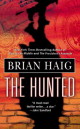
    When I learned that Vince Flynn was planning to partner with Brian Haig to write another thriller, I decided (partially due to Mark H.’s positive remarks) to read a Brian Haig novel. I picked up The Hunted because it was identified as Brian’s first stand-alone thriller. Published by Grand Central Publishing, a division of Hachette Book Group, New York, The Hunted takes place over several years beginning in 1991 at the collapse of the Soviet Union.


    I was shocked to learn this novel was based on a real couple and their horrific experiences with both the crooked and greedy beyond belief Russian politicians and Mafiya and the pompous and illegal activities of a few power hungry politicians in powerful positions in the United States.


    Not sure which side of the political spectrum Brian Haig occupies, this particular novel showed unfavorable personalities in the FBI, the INS, the Judicial Branch, and the Federal Penitentiaries. In Russia there were literally no trustworthy individuals in the government. The class envy, the lying and scheming, the lust for power, and the insatiable greed of every politician and former KGB person set the mood for the plan to frame the wealthiest young entrepreneur in Russia, Alex Konevitch.


    After a series of grisly murders to all of Alex’s closest staff members, against his better judgment, Alex hires an old former KGB general to handle security for his multi-million dollar enterprises. It doesn’t take long before Alex and his wife Elena are kidnapped and Alex is brutally tortured to make him sign over his businesses. With uncanny presence of mind for a very young man in his 20s and while severely injured from the torturous assault and branding, Alex is able to convince the man and woman who’ve secured his signature to allow him to complete his scheduled business meeting which will potentially net the criminals extra millions.


    This begins the incredulous journey of Alex and Elena Konevitch as they escape their captors and head for the safety and asylum of the United States of America. However, the danger they hoped to elude follows them to this country, and the mountain of material the politicians who have stolen his money, possessions, and businesses, use to frame him is also used to negotiate with and entice a narcissistic FBI leader to gain extra positions for his people in the new Russia.


    The brilliance of the young Russian and his gifting for making money turn out to be the primary way he is able to save his and his wife’s lives. He is incarcerated without conviction in our nation’s worst federal prisons in direct conflict with the INS Judge’s instructions.


    I must confess some of the plot points had me shaking my head until I learned this story was based on the real couple’s 15 years of plight. Apparently the real Alex Konanykhin penned a memoir entitled Defiance which gives readers the whole ugly story.


    Writing-wise, Brian has his own style. Those head-hopping headhunters will not appreciate his pension for many POVs within scenes and even paragraphs, but somehow it works splendidly. He even moves from first to third to omniscient. It’s unique, and that’s probably what I like about it.


    The one inconsistency which felt off-kilter for me was with no evidence of faith—after all we’re talking about a couple from an atheistic country—the author described more than once how they “prayed” something good would happen. In one of the prisons Alex remarked how they must make their own “miracle”. Without any evidence of believing in God, I think it’s a stretch to portray them as praying about anything. No matter how much I might hope they did, it seemed odd to include it with no basis for it.


    If you’re particularly interested in the time period of the fall of the Soviet Union, this thriller gives a despicable account of what Russia became and, unfortunately, is still experiencing without a clue about or the desire for the value of real freedom. Haig also doesn’t pull any punches in citing the corruption of politics and the simultaneous lust for power in our country. It’s an incredible story which would be quite unbelievable if it wasn’t fashioned from the real life horror of this couple.


    61447266_a 


    Father, you know Brian and his intentions. You’ve given him his talents. Help him to continue to create meaningful stories. In the Name of Jesus, Amen.

  •  

    If you get a chance, drop on over to Brenda Anderson’s blog, Spire Reviews, and contribute your pet peeves about plot manipulations and well-worn techniques that come off as boring or lame.


    While you’re here, tell me what bugs you the most about the publishing industry. It doesn’t have to be one thing. Come clean. What is it/are they? You’ve heard my peeves enough times. What are yours? Or don’t you have any?


    Father, the comfort and joy comes from you alone. Thank you for being the source and giver of everything good and perfect. In the Name of Jesus, Amen.

  •  

    . . . I have no idea how to reach my target audience. I don’t. I know writer friends who do women’s fiction with the smattering of romance, but they’re writers and readers. What about the romance readers who are dissatisfied with the category/formulaic romance? How do I find them?


    I’ve spoken with them at writers’ conferences. Some are like me: once upon a time I read CBA romances. Don’t anymore. A well-written good little romance can be refreshing, but there’s got to be something that sets it apart, and usually that comes in a different kind of story with a voice I appreciate. I don’t take many chances with them anymore. And, quite frankly, if a reader loves the current menu of romances, they aren’t my target audience. And please don’t take that as an insult to their tastes. It isn’t. Mine are simply different.  


    So where are they and how do I find them?


    God, thank you. Period. For so many things. For so much grace in my life. Thank you. In the Name of Jesus, Amen.

  •  

    You may recall a comment which accused me of lumping readers into black and white stereotypical categories and not giving them much credit in my post here: http://hopeofglory.typepad.com/into_the_fire/2011/04/when-story-trumps-writing-.html.


    I make an effort to speak with all kinds of readers to ascertain what they want, expect, and look for in their choice of novels. Some expect very little besides entertainment. Others want a specific experience and dismiss novels which don’t meet their requirement. Some readers will finish a book no matter how much they detest it, and others will chuck a book if it fails them in any way after a chapter or two or twenty. Some readers place no limitations on genres. Others read within a tight framework of specific genres.


    I thought I covered the variety of readers in these sentences:


    “It’s important to remember that many parts of writing, stripped down from all the high-falutin’ critiques, opinions, praises, and assaults, are merely a matter of taste. Some highbrow and some lowbrow. Some with intelligent assessment and some with gut-feeling. Some with a teacher’s mentality and some with a student’s appreciation. As writers or readers, we do not walk the same literary paths, but we all have the option to travel our favorites.”


    So let’s look at giving readers “credit”. I don’t know a single reader who’s ever had trouble with POV shifts, no matter how frequent or complex. Maybe minor annoyance, but nothing that warrants major concern. Many of the classics, written by the supposed best and brightest, include multiple “head-hopping” as the current literary talking heads choose to call this experience. It seems the powers that be and many of the writerly crowd of today’s literary consumption have decided that POV shifts within scenes are too complex for today’s readers to understand, follow, and/or keep up with, and therefore make for inferior writing and marked confusion among readers. Who’s not giving readers much credit now?


    Ditto for passive verb usage, too many adverbs, adjectives, and metaphors spoiling the reading experience. For writers who’ve studied the current trends for “good” writing, they might agree. Many readers might also agree, but many readers will also not agree. It has nothing to do with knowledge or intelligence, but it has everything to do with taste or preference or indifference to technique.


    This isn’t so much about my previous post—either defending it or emphasizing it. It’s about assuming things about readers which simply don’t matter to some of them. Devoted readers can surf through any literary waves, some precisely identifying why they like or dislike a novel and others simply content to enjoy a story or toss the book across the room when they don’t.


    If publishing at large—for all of its great successes—could boast that more than 75% of their selected fare earn back the author advances instead of the widely accepted number that upwards of 60% do not, I might agree that the current trends in publishing and writing give unmistakable proof that they know what readers want, giving credit where credit is due.


    Father, your “credit” is all that matters. Storing up treasure in heaven . . . help it to be my goal. In the Name of Jesus, Amen.

  •  

    Okay. Enough rattling around in the head, and things start to work loose. So I had to let it happen, you know? Novel number ten is on its way. No matter that eight and nine aren’t done. I had to get the first few words down.


    You can only subdue it for so long. And this one’s been there for awhile. Problem is I’m out of my league with it. I’ll have to secure some tough interviews with people who no doubt don’t have time to deal with a supposed author. So you can pray for me if you will, that when the time is right and/or if the time is right, the Lord will go before me and open the right doors.


    Stories gain a life of their own. They carry on in my head for varying times before they demand a space on the hard drive. Does this happen to you? Do you write snippets of stories? Beginnings or ends? Middles? Scenes? Lines?


    I’ve got the beginning. We’ll see how far I can get before I have to stop for research.


    Thank you, Lord, for filling voids with characters and storylines, the sounds of voices telling tales. Thank you for the words you give me when I “pick up the pen”. In the Name of Jesus, Amen.

  •  

    "I am the resurrection and the life."


    John 11:25 (NIV)


    Happy Resurrection Day.

  •  

    Cowering and hiding behind the hysterical yelling crowd of men and fewer women, some sobbing with tear-streaked cheeks and hands held over their chests, I watched in fear and horror as I caught only glimpses of the bloodstained man with swollen features who kept crashing heavily to the ground unable to sustain the weight of that bound tree upon which he was destined to die. The rabid guards grabbed a member of the crowd and shoved him into position to carry the load, dragging the scourged and beaten man to Golgotha where the crucifixion would be done.

    I held back my own tears. A male, young or old, cannot cry under these circumstances. Especially in this murderous group. But I remembered him. He was the one who took my lunch and somehow blessed it to serve the biggest crowd of people I’d ever seen assembled out in the open air. It was some time ago, but he was unmistakable. I knew it was him.

    I was grieved beyond measure, watching the ravings of these people, some who’d been there that very day he’d served us lunch while he continued to speak of God as if he knew Him and then demonstrated the love of this God by healing those who weren’t expected to ever see good health—such as cripples and the very infirm who would never get well—that is, until he put his hands on them and asked who he called his Father to touch them. Then they would straighten up and become whole! And I can testify they stayed that way. The other amazing things he did were unexplainable. My great aunt had brought her young son, a distant cousin of mine, for this man’s touch. We all knew he had a demon. Sometimes he would fly into a rage and inflict pain on himself, crying and screaming foul words. 

    Before she could approach the man, Jesus called out to her and my cousin, addressing a spirit by name and silencing it just as it began to howl. He touched my cousin and the transformation was instant. I’d never known the boy to be any other way but afflicted, insane, I thought. I marveled at his new countenance, no longer contorted and raging. He was a fine looking boy after all. He bowed down with his face to the ground and touched the feet of the man who’d freed him somehow, weeping in gratitude. I remember I sneaked away amidst some tall brush and convulsed with tears.

    That was only one experience. I heard of many more. I saw many more. And once, briefly, he saw me in the crowd of listeners. His eyes connected with mine. I don’t know how I knew he was looking at me, but there was no mistaking it. A hint of a smile crossed his lips as he held my gaze. It was indescribable, a penetrating, warming notice which sent my skin into prickly bumps and my heart pulsed frantic with joy. He knew me. I mattered to him.

    Then here he was about to die at the hands of a crazed mob of both religious and heathen men anxious for this cruel death. It made no sense to me! There was nothing I could do to stop this execution. The helplessness was overwhelming. I’d seen the miracles, I’d heard the words he spoke, felt them ignite me with an understanding of truth I’d never known. Maybe this was part of what he spoke about. It was impossible to imagine it, but surely with the power he’d shown, he could’ve stopped this, right? I tried to recall some of those words, to put them together in my mind—see if I could make sense of this. But I could not. I couldn’t think straight. Seeing him so brutalized and knowing the worst was yet to come. What could I do?! 

    Then I realized if he had asked his Father to help others, perhaps I could ask this Father to help the son. And, surely, he would. Maybe this was the plan, but I couldn’t fathom it. It was then I caught the brief look before he closed his battered eyes. Recognition! He knew me! The barest hint of a smile—how could it be? I was imagining it, I’m sure. But it felt the same as before and produced the same results. Somehow it gave me hope that this wasn’t the end! No, somehow it had to be a beginning. Foolish as it was, stupid as I felt for thinking it, I couldn’t let go of it. I couldn’t. 

    When they raised him up, I had to leave. My stomach ached from holding back my grief. I ran away then and found solitude. I wept as I’d never wept before. And I asked the Father to spare the son. To do some miracle I couldn’t imagine or describe. And then I wept some more.
                                          .   .   .

    Lord God Almighty, thank you for the sacrifice. Thank you for my rescue, Jesus. Holy Spirit, thank you for drawing me near to the Savior so many years ago. Thank you, in the Name of Jesus, Amen.
  •  

    You’ve heard writers speak about cadence, rhythm, syntax, and the sound of the words as they’re read in stories. I want to discuss “sound”.


    Many of us crazy writers hear the voices of our characters in our heads. How they speak, the words they use, repeat, and emphasize when they talk, how their words sound to them as they’re thinking in their heads or to us as they’re speaking out loud. I know. I know. We’re all a bunch of weirdos. But, hey, these are the crazy things we do in order to write the things that are supposed to make you want to read our particular novels. It’s the voice splashed across the pages that keeps you turning them. Right? Hopefully.


    The problem with “sound” is making it real. I mean, real in the sense that when it’s read, it’s believable and helps establish a piece of the character. Pulling it off is yet another potential obstacle to what we intend to accomplish. When I wrote The Famous One, which is best described as a fictional biography, I wanted the protagonist to have his own method of speaking: understated, sometimes halting, and casual—being aware that although others might think what he had to say was somehow important, he didn’t necessarily think it was most of the time. I knew the voice I wanted. I knew the sound, the tone. Did I pull it off to others’ satisfaction? Perhaps. I could read it and hear his voice, but I doubt my readers heard it as plainly as I did. As long as they heard it sufficiently to illustrate the character, that’s all I can really ask.


    Some authors read their written words aloud—not just the dialogue, entire scenes. They’re testing for that certain sound. Much like a favorite melody. Or notes gone horribly wrong when the actions cause turmoil. We all have our preferences and practices when we write, the sound we want others to hear in the silence of the turning pages . . .


    Father, your voice is the one I want to hear above all others. Help me to hear you always, all ways. In the Name of Jesus, Amen.