Into the Fire

Passionate thoughts about the world of writing and the Power of God

  •  

    Part One


    I’ve long thought the publishing establishment tours the industry in a limousine while purporting to publish for those in Ford SUVs and Honda Civics. This has nothing to do with the sums of money professionals at any level in the industry earn. Instead it refers to the sense of aristocracy or sophistication that can exist at the upper tiers of publishing fiction, and, yes, I’m including Christian fiction in the mix. The idea that publishers are one with their reading public stopped making sense when it became common knowledge that their bestsellers fund the way for all the rest of their authors, and when it was admitted that over 60% of their authors don’t earn back their advances. Two obvious reasons for that? One: the advances might be too high. Two: the public either didn’t like the books or were unaware of their existence.  


    The conundrum of finding a focus or “mission” for an individual publisher is perhaps as difficult and illusive as the efforts of writers trying to define their “brand”. And then, once having arrived at an audience, do the visionaries plan how to reach those outside their faithful consumers?


    Readers are a funny lot. They can be particular and narrow in their choices for fiction. They might be eclectic and read in multi-genres with great fondness for all. Some prefer those literary rarities which sparkle with insightful premise and prose while others strictly adhere to fast-moving action and thrills. Other readers crave fairy-tale romance while others just desire fairy-tales.


    Setting aside genre preferences, here’s the real conundrum for publishers: elevating or degrading readers. No one in a correct mindset would assume all readers to be alike. Equal in importance only, the factors which contribute to how readers read and what they choose for their favorites—what they’re willing to purchase either in book form or now in e-readers—are as diverse as the earthly pockets of residence of each reader. From Singapore to Seattle the contributions of who a person is, who they choose to be, how they live and why, all figure into book selection. Yet it’s no surprise when any two readers from different stations in life and separated by country and culture might agree on a book they like—or dislike.


    So. Should publishers publish for those who might have simpler tastes and for those who lean toward the literary projects? We’re talking about readers here, not writers. I think it’s wise to publish for both if you’re big enough. I think it’s admirable if a small press narrows its focus to those it wishes to serve. I think it’s poppycock for any publisher to insist that only the best get published under its watch because we all know the favorite colloquialism for that tripe.


    Any thoughts on Part One?


    Lord, you are worthy of praise. It’s you we serve. Help us to remember that. In the Name of Jesus, Amen.

     

  •  

    In my former book, Theophilus, I wrote about all that Jesus began to do and to teach until the day he was taken up to heaven, after giving instructions through the Holy Spirit to the apostles he had chosen.

    Acts 1:1-2 (NIV)

  •  

    If anyone else had written it, it would be considered extremely racial, but since Star Parker is black and admittedly a product of the "welfare state," it is acknowledged as a person speaking from experience.

    Back on Uncle Sam's plantation
    Star Parker – Syndicated Columnist
     
    Columnistsstarparker 


    Six years ago I wrote a book called Uncle Sam's Plantation.  I wrote the book to tell my own story of what I saw living inside the welfare state and my own transformation out of it.  I said in that book that indeed there are two Americas — a poor America on socialism and a wealthy America on capitalism.  I talked about government programs like Temporary Assistance for Needy Families (TANF), Job Opportunities and Basic Skills Training (JOBS), Emergency Assistance to Needy Families with Children (EANF), Section 8 Housing, and Food Stamps.
     

    A vast sea of perhaps well-intentioned government programs, all initially set into motion in the 1960s by Democrats, that were going to lift the nation's poor out of poverty.


    A benevolent Uncle Sam welcomed mostly poor black Americans onto the government plantation.  Those who accepted the invitation switched mindsets from "How do I take care of myself?" to "What do I have to do to stay on the plantation?"
     
    Instead of solving economic problems, government welfare socialism created monstrous moral and spiritual problems — the kind of problems that are inevitable when individuals turn responsibility for their lives over to others.

    The legacy of American socialism is our blighted inner cities, dysfunctional inner city schools, and broken black families.  Through God's grace, I found my way out.  It was then that I understood what freedom meant and how great this country is.

    I had the privilege of working on welfare reform in 1996 which was passed by a Republican controlled Congress.  I thought we were on the road to moving socialism out of our poor black communities and replacing it with wealth-producing American capitalism.

    But, incredibly, we are now going in the opposite direction.  Instead of poor America on socialism becoming more like rich America on capitalism, rich America on capitalism is becoming like poor America on socialism.

    Uncle Sam has welcomed our banks onto the plantation and they have said, "Thank you, Suh."  Now, instead of thinking about what creative things need to be done to serve customers, they are thinking about what they have to tell Massah in order to get their cash.

    There is some kind of irony that this is all happening under our first black president on the 200th anniversary of the birthday of Abraham Lincoln.  Worse, socialism seems to be the element of our new young president.  And maybe even more troubling, our corporate executives seem happy to move onto the plantation.

    In an op-Ed on the opinion page of the Washington Post, Mr. Obama is clear that the goal of his trillion dollar spending plan is much more than short term economic stimulus.  "This plan is more than a prescription for short-term spending — it's a strategy for America 's long-term growth and opportunity in areas such as renewable energy, healthcare, and education."

    Perhaps more incredibly, Obama seems to think that government taking over an economy is a new idea.  Or that massive growth in government can take place "with unprecedented transparency and accountability."

    Yes, sir, we heard it from Jimmy Carter when he created the Department of Energy, the Synfuels Corporation, and the Department of Education.

    Or how about the Economic Opportunity Act of 1964 — The War on Poverty — which President Johnson said "…does not merely expand old programs or improve what is already being done.  It charts a new course.  It strikes at the causes, not just the consequences of poverty."

    Trillions of dollars later, black poverty is the same.  But black families are not, with triple the incidence of single-parent homes and out-of-wedlock births.

    It's not complicated.  Americans can accept Barack Obama's invitation to move onto the plantation.  Or they can choose personal responsibility and freedom.

    Does anyone really need to think about what the choice should be?

    "The trouble with socialism is that you eventually run out of other people's money."
     
  •  

    Jesus gave us a specific instruction reminding us that we are “in” the world but not to be “of” the world. In other words: this is your temporary home. Live in it, engage the people, show and tell them about me, be wary of its sinful attraction and don’t let it capture you with all the pretty trappings and the fun side of sin. Because we all know there’s a fun side to sin. If there wasn’t, why would anyone participate and why would it be so difficult to resist? 


    So, why do some Christians read secular fiction? I know exactly why I read it, but that can wait.


    The primary reasons in Christian writing circles for reading secular fiction are to keep abreast of the general market and its trends, to be well read, to enjoy the writing skills of favorite secular authors, and to read those genres where there are little to be found in the CBA books, i.e. fantasy and sci-fi.


    The most stated reasons for Christians who are readers (and writers) for their secular market tastes are the following:


    Christian fiction is inferior.


    Christian fiction is too preachy.


    Christian fiction is too predictable.


    Christian fiction is too “positive”, unrealistic—there’s always a happy ending and everything works out when you get saved.


    Christian fiction never portrays the Christians as struggling with or being in sinful situations. They’re always the “good” characters.


    The truth of the matter is this: All of the above can be true in Christian fiction, but those reasons have a mirror image or evil-twin reasons in general market fiction in that some of it is inferior, preachy as to whatever their agenda is, predictable to their cause and formula, too negative: nothing works out yet nothing changes to make things better, i.e. hopelessness reigns, and sin can be exalted either in the portrayals of the character lifestyles or in the no remorse/punishment for sinful behavior.


    Now as one of the Brendas who visits here has stated, she reads secular fiction because she can’t find the specific genre (historical non-romance) much if at all in CBA books. She’s diligent in her searches and mostly comes up empty. As a believer, she would prefer to read Christian novels, but her tastes leave her few choices. So she writes in the genre she’d prefer to read.


    I think it’s safe to say that some Christian readers who’ve abandoned Christian fiction for the secular market probably haven’t read much of what’s offered in present day Christian fiction. They’ve read a couple of authors and got turned off by them and don’t want to waste their reading time with any more of the same. Their assumptions that the rest of Christian literature is most likely the same as the limited examples they’ve experienced are enough to keep them from venturing into the market again.


    As our other Brenda who visits here has pointed out, she’s known members of her church who didn’t realize there were Christian novels available even though they’re avid readers.


    Just for speculation . . . Do you suppose there are some Christian readers (and writers) who’ve chosen secular fiction because it’s a “safe” way to dabble in what the world offers? They’ve become a little bored with the portrayal(s) of the spiritual life in stories, perhaps resenting a character who’s strong in his/her faith and able to withstand temptation in climactic situations. Perhaps the risqué factor allows them to experience a sinful lifestyle without doing them any harm—at least physically. Just a thought.


    There’s talent in either market. Some Christian readers prefer “clean” fiction, some would say sanitized, and others prefer their novels more “real” or “raw” (not graphic) of which there are few in the romance and women’s fiction categories in CBA offerings.


    God, your message comes in so many wonderful ways—even through your gifted storytellers. Help those of us who write give you ample words with which to work. May we honor you in all we write. In the Name of Jesus, Amen.


  •  


    When I was young, I loved Neil Young’s and Bob Dylan’s music. If we’re honest, neither one of them has a particularly great voice. Of all their extensive musical talent, their unusual voices aren’t at the top of the list. But somehow they worked for the music they played. Mixed with their imaginative, often poetic and haunting songwriting, and their abilities as musicians, their voices became a unique complement to their overall work.


    As with music, so it is with writing in a kind of opposite way. The voices of writers aren’t often unusual, but sometimes their stories overcome that lack of uniqueness. Their strengths are in their storytelling rather than how they present the stories. It could also be said that sometimes the outrageously unusual voices clang out a story that lacks a certain vitality and substance no matter how imaginative or poetic the language. When we as readers find an author with both the ability to tell a great story added to his/her sterling voice, we tend to gravitate to everything they produce. 


    Needless to say, the appeal is subjective. A literary expert (whatever that is) could critique both story and voice according to whatever set or era of rules they choose. Whether or not anyone agrees or disagrees with their measures or their decisions ends up rather irrelevant if the buying public decides the novel is the best thing since white bread—or perhaps nowadays it’s whole wheat bread. Trends and fashionable authors emerge out of every generation. So far, the well known classics are as diverse as the opinions of those who’ve determined the novels to be categorized as such. Let it also be said that oftentimes the judges are as fickle, persnickety, and hypocritical as they accuse the reading public of being.


    Vince Flynn created his CIA/Political thrillers and gave them an incredible hero in Mitch Rapp. What Vince might lack in pure literary skills he more than makes up for in poignant storytelling skills. I don’t read a Vince Flynn novel to worship the prose, I read it because I’m going to get a dynamite, realistic, and highly researched story that’s unafraid of political incorrectness.


    “Voice” is often explained—or attempted to be explained—by numerous professionals. Those uninitiated writers who need a black and white or cut and dried formula for voice miss the whole point of identifying it. When it’s not unusual, it doesn’t stand out and must be reinforced by a scintillating story. When it’s somewhat unique and recognizable, a good story should always accompany it. When it’s highly unique, once again an excellent story must complement it. Both as readers and writers we appreciate certain styles, particular voices, types of stories. What’s unusual and appealing to some of us might make others tsk, carp, and utter disapproval, but who cares? Truly there’s something to love and appreciate at every level of the writing and reading game. Or rather there’s something somewhere in the publishing industry for people to read and enjoy. It might be hard to find, but it’s probably there. And since we are the ones writing what we want to read or shelling out our dollars to read what we want, ultimately it’s our opinion that counts. Unusual or not.


    Father, you are unusual. You are love. I can’t fathom you, Lord. Too big, too magnificent, too . . . beyond the usual. I love you, Lord. In the Name of Jesus, Amen. 

  •  

    Number 8: Tim Moore!

    Tim Moore, I will be forwarding your information to Mike Duran when you return my email, and he will be mailing you a signed copy of his first release The Resurrection.

    *Disclaimer: I folded up numbers and put them into a baseball cap. An impartial (and half asleep) person reached into the hat and pulled out the number eight. I wish you could all receive a copy. Thanks so much for participating. For another chance to win a copy, check out Tim George's Unveiled blog. (See left side panel for his blog reference.)

  •  

    Many people desire to write a book. Some think their lives worthy of memoirs, others want to charge into make believe to write that novel no one can put down. Others love to escape into a film—noir, comedy, romance, adventure, science fiction. Most people enjoy fiction and/or film.


    Few experience fame. With the Academy Awards approaching, we often observe the various demonstrations of fame and fortune displayed in sometimes radical showmanship, dress, conduct, and flair, but rarely do we see a lot of humility. Oh we listen to the lists of thank-yous, the abusive political statements, or the dramatic exclamations and tears of a few, but we rarely hear acknowledgment given to the One who designed their talent and planted it in their hearts.


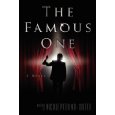
    In The Famous One an ordinary, lonely boy grows up in a home where his parents struggle with financial problems and each other and offer virtually no guidance to their four children. Their youngest son, Joey Parr, captivates female attention at an early age and yearns for love, stability, and a solid family. Slipping effortlessly into smoking, sex, alcohol and drugs, he feels the emptiness of his lifestyle and relationships as a constant reminder to his disconnect from real happiness. With no idea how to find what he truly wants he lives his life reading his favorite detective novels, watching movies, and holding down a job in a grocery store. Until a Hollywood director approaches him with an opportunity to read for a small role in his film . . .


    This story is written in three parts. The first part of Joey’s life is chronicled in the omniscient point of view—which simply means the reader is observing his life almost through a narrator’s eyes. Think fictional biography. This point of view shifts as he ages and becomes the “normal” third person story most people are used to reading.


    I always caution readers that this is not generally a novel for those who like sweet romances or Amish tales or books which don’t include the lifestyles of the lost in any detail. While this story is by no means graphic, it is frank, probably considered “edgy” or “raw” to some readers, but it is ultimately redemptive. If readers need to know what others have experienced from this novel, I would refer you to this post on my blog:

    http://hopeofglory.typepad.com/into_the_fire/2009/02/the-academy-awards-.html or this review by Josh Olds: http://christian-critic.blogspot.com/2010/02/famous-one-nicole-petrino-salter.html.


    A small portion of this novel is semi-autobiographical. Having spent a good portion of my life “in the world”, I know firsthand what it’s like to be “lost”, empty, and searching for meaning in a meaningless maze of secular philosophies. This story was spawned from an actual intense burden of prayer for a specific actor which lasted for approximately two years. Running parallel with that experience I wrote this novel.


    For those of you who are intrigued by fiction, fame, and film, check out Joey’s story in The Famous One.


    The Famous One 


    God, thank you for giving me the words to write this story, the burden to pray for the actor I came to love through your eyes and heart in real life and in this story. In the Name of Jesus, Amen.

  •  

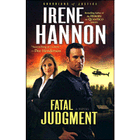
    I’ve reviewed Irene Hannon’s Heroes of Quantico Series (Against All Odds; An Eye for an Eye; In Harm’s Way) on this blog. Incorporating some of those heroes into her new Guardians of Justice Series, Fatal Judgment brings a fresh set of heroes for the readers of romantic suspense.


    U.S. Marshal Jake Taylor is assigned to guard his dead best friend’s (Doug) wife, Elizabeth (Liz) Michaels, a federal judge who’s just returned home to find her sister murdered in her living room. Jake has no fond memories of the woman he’s only met a couple of times due to the sketches of her made to him over the last few years by her husband over the telephone, painting her as a cold and driven woman who cared more about her career than she did about Doug.


    It doesn’t take too long before the police detective (Jake’s brother Cole), the US Marshals, and the FBI discover the real target was Liz. Leaving only one golden feline hair as evidence, the investigators discover the killer is precise, intentional, but mistaken in his kill from behind the victim.


    The judge is shaken, grieving, but strong and cooperative as Jake and her protection relocate her and put her to work on her past cases which might lead them to the perpetrator before he makes another attempt on her life. As she works to be helpful, Jake learns the woman is nothing like the portrait painted by his troubled friend, and his attraction to her grows uncontrollably as he fights to remain professional in their contacts.


    Jake’s a widower who lost his shallow faith at the death of his wife. In spite of her tremendous pain, Liz clings to God, knowing He’s her only way back to a “normal” life.


    Veering off midway to connect us to the killer’s life and motivation, we see his meticulous efforts to carry out his personal “patriotic” plan to eliminate his idea of a corrupt judge. Perverting the mission of the right to “bear arms” and support the Constitution, the self-absorbed perp blames Liz and the government for his woes. I felt there were a few plot points that came a little too conveniently—albeit cleverly done—to lead to the discovery of this killer.


    Irene’s writing is clean with little amplification, and she follows a narrow formula for romantic suspense giving her protagonist and heroine likable qualities and appeal while keeping the UST going strong until they both succumb to their mutual attraction and dump the formalities. Fatal Judgment typifies the genre and rates as solid commercial Christian Fiction.


    734565 


    Father, there’s no question Irene writes to bring you glory. I pray you would continue to bless her with stories that give credit where credit is due. Watch over her and direct her steps. In the Name of Jesus, Amen.

  •  

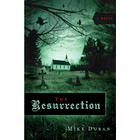
    Cyber friend and “new” author Mike Duran celebrates the release of his first novel, The Resurrection. Published by Strang Communications, the Realms division, and set for its in-store release on February 1st, this “haunting” story is sure to satisfy a variety of readers from the spiritually speculative fans to the suspense lovers. The cover and title are perfect for this story, making for an enticing come-on.  


    Intelligently written, Mike’s research reminds me of that done by Robin Parrish for his novel Nightmare, and the “Afterword” included for readers takes a slightly similar tone and evaluation to that of Robin’s. Readers of supernaturally speculative fiction will love The Resurrection.


    Call me a sap but Mike’s Dedication brought tears to my eyes, and his Acknowledgements page did the same.


    Mike takes a calculated risk when he introduces us to the Reverend Ian Clark, making him a prominent character in this story. A spineless, faithless agnostic “pastor”, he does little to gain our acceptance, and we’re seriously hoping he gets out of the ministry when we learn that’s his intention. When one of his faithful parishioners, Ruby Case, a handicapped housewife and mother, innocently touches a dead young man in his coffin resulting in his resurrection, all hell literally breaks loose. However, the power unleashed at that funeral sets the stage for Reverend Clark and the rest of the small town to take their stands and choose who it is they believe and ultimately who they will serve. The reactions to this startling miracle run the gamut from absolute denial to idolatrous worship of Ruby and most everything in between.


    Spectral manifestations, visions, curses, resurrections, altars of adoration, unrealistic demands on Ruby from herself and the community, the bold adventures of her best friend and prayer partner Vinyette, an autistic child prophet, and a pantheistic professor, all make for a rollicking and escalating story which reveals a concise contrast of what the Christian church in their town (and perhaps universally) pretends to be to what it can and should be. Within this contrast we watch the antics of desperate people seeking healing from Ruby, Ruby’s husband Jack, disgruntled with the church and pastor, trying to protect her, and the Reverend Ian Clark resurrecting some courage and even a hint of inspiration while opening himself up to and facing devilish opposition.


    The scene at one of the local occult shops visited by Ruby, Vinyette, and their third prayer partner Marje is so well done and hilarious, adding a brief oasis of humor to the accelerating suspense.


    If you’ve visited Mike’s blog, you know he’s like a street-wise intellectual and a stickler for details. We—or I should say I—expected a good first effort from him and got one. The man who says he wants to write about “mer-people” (mermaids, etc.) gives us an interesting and entertaining story. You might think it starts a bit slowly, but it’s needed to establish the town history and work in the character backgrounds. The pace picks up steadily and intensifies toward the end. If you like speculative suspense with characters who come alive on the pages with their flaws and quirks, their strengths, their motivations, and their faith demonstrated no matter which side they’re on, you’ll enjoy The Resurrection by Mike Duran. 


    382049 


    Father, I pray your peace and order for Mike. I pray your direction and encouragement for his steps. I pray your divine assistance in all he does for your glory. In the Name of Jesus, Amen.    


    CONTEST RULES: To win a signed copy of Mike Duran's The Resurrection, please leave a comment to this post. You may leave your comments here for today (Monday) and tomorrow. Winner will be drawn on Wednesday and posted Wednesday evening.   


  •  

    Jesus did many other miraculous signs in the presence of his disciples, which are not recorded in this book. But these are written that you may believe that Jesus is the Christ, the Son of God, and that by believing you may have life in his name.


    John 20:30-31 (NIV)