Into the Fire

Passionate thoughts about the world of writing and the Power of God

  •  

    The review and giveaway of a signed copy of Mike Duran’s first novel The Resurrection is coming Monday, January 24th, 2011. The Resurrection is set for release in stores on February 1st.


    All you’ll have to do to enter is leave a comment. You’ll be assigned a number, and I’ll draw the winner on Wednesday, January 26th. One number per contestant. You have two days (Monday and Tuesday) to comment for an entry. Winner will be posted Wednesday evening.


    Good story, and it’s always fun to get a signed copy.


    Thank you, Lord, for Mike’s generosity to provide someone with the gift of a signed copy of his new novel. Blessings to him, Lord. 

  •  

    Ambiguous: 1.Susceptible to multiple interpretation 2.Doubtful or uncertain


    Synonyms: equivocal, obscure, obtuse, vague, cryptic, enigmatic


    Average: (Discarding the mathematical definitions) Typical, usual


    Synonyms: medium, mediocre, fair, middling, indifferent, run-of-the-mill, so-so, tolerable


    Most of us remember how to establish an “average” when presented with several numbers. We recognize it’s the general middle of those numbers after conceding the high and low ends of examples. That average could be accused of being ambiguous, especially when the high is very high and the low is very low.


    We’ve talked here numerous times about “the average reader”. I don’t think we’ve ever talked about “the average writer”. Far more difficult to quantify unless we take inventory of a specific group of average readers and tally up their favorite authors. Might that work to establish an ambiguous average?


    I have talked to many, many readers of all kinds of genres. Likewise, I’ve talked to my share of writers, also of many kinds of genres. There is a significant gap—more like a chasm—between what a reader expects or desires and what a writer expects to deliver as well as what a writer expects or desires. I think it’s safe to say there might even be another even bigger chasm between what a lot of readers and writers expect and desire and what a publisher is set to deliver. In fact, occasionally it’s like selling the late 60’s cause and effects to those of the late 80’s crowd. Not an easy sell. Why? Because they can’t really relate.


    I’ve been fairly outspoken concerning what I feel is a disconnect between publishers/booksellers and the bigger needs of an untapped audience. With the discourse on this blog about desired change in the Christian publishing industry made not only by readers, writers, and a number of professionals in the biz, it’s fairly obvious there are a lot of people who aren’t getting what they desire from CBA. Now how many “a lot” actually is must not be considered worthy of speculation by some of the powers that be evidenced by the reluctance to grow and expand their product to reach these consumers—at least not in a timely manner.


    Visionaries assess the climate of business and dare to be bold in their ventures. So we all know it’s a rough economic time which will probably persist until 2013 when some of the government spending can be eliminated and reduced. Hopefully. Now many businesses stick with what they’ve offered, reducing some prices, and hold steady in hopes of better times in the future. But visionary businesses look to gain new appeal and carefully amplify their reach, hoping to attract those who’ve never tapped into what they have to offer by expanding their product line. In doing so they gain an additional clientele by offering more to many while still keeping what they’ve got for those who’re used to their basics.


    We see some evidence of “visionary” in CBA publishing with Broadman & Holman, Thomas Nelson, Hachette Book Group in their FaithWords imprint, and occasional bumps from other CBA publishers but the slight evidence doesn’t calculate to real vision nor to profit nor to any change in public rhetoric from Christian publishing. And most of these publishers have chosen to do their versions of trendy Amish fiction to cash in on that market share. Not blaming them for that. In fact, I’m not blaming them for anything really. It’s just disappointing that they can’t see beyond the appeal to this ambiguous average audience to reach the rest of potential readers.   


    God, you are sovereign. Nothing is news to you. You know past, present, future. You lead. When we’re in the right place, we follow you. In the Name of Jesus, Amen.

  •  

    When a racehorse with talent begins to decline in performance, sometimes the term used to describe their behavior is “sour”. Horses without talent get that way too, but it’s far more noticeable with those who’ve been consistent performers than with those whose ability is hard to track.


    “Sour” means the horse is no longer enjoying his work, the scene, and racing overall. This can be due to multiple causes, but really it’s mostly due to fatigue brought on by those multiple causes. His personality changes slightly, noticeable to those who truly observe and care about the animal, and those who do will give that horse a break. Take him/her to the farm for awhile. Stop training the horse. Give him a different regimen to freshen him up.


    I’m approaching that description (sans the talent self-application). Recently I disagreed somewhat strongly with a professional on a blog where everyone else gushed about the “valuable” information being handed down to them even though it’s old news and has been stated innumerable times on nearly every other professional’s blog at one time or another for years! The reply was polite but reiterated the truth of the conclusion citing another current example of plying just such a novel to publishers without success.


    So. I’m sick of it. All of the platitudes, the locked-in, vision-less approach to Christian fiction which keeps it barely able to climb over the sides of the big box like some free kittens inside cardboard the size of a washing machine. We get limited exceptions of wonderful writing and innovative stories, styles, and voices, but, it seems, only in certain genres.


    This champion of Christian fiction, this fan of Christian fiction, this encourager of published and pre-published Christian fiction authors is borderline mad. Sour. Not frustrated as my words were interpreted. Maybe nauseated. Maybe irritated. Maybe dissatisfied and disgusted. But really not frustrated.


    Frustration is not the answer. Call me stupid, but I believe in variety and good business practices. I believe in the various publishers’ rights to choose their criteria for producing books. It’s their money, time, energy, and resources. However, just because it’s been said that the publishing industry moves like a big s l o w ship of old not a jet ski doesn’t mean that sometimes those old ships don’t need to be dry-docked.


    I’m weary of the warnings of what it’s alright to say because the publishing world is small, and it can all come back to bite you. Well . . . bite me then. With some reasonable new outlook(s), explanations, something. Please.


    I suppose this falls into the complaint department, but it has little to do with me. It has to do with the overall approach to this industry. How many years have I been reading the exact same responses to readers and writers seeking more from the CBA? And the answers haven’t changed! Haven’t changed in all these years!


    And just to make sure I’m understood here: This is not a rant about any of the CBA authors who’ve been blessed in the industry, worked hard on their craft and persevered to get published. No. You’ve earned your places in the publishing world. No argument. No criticism. This is about the expansion and imagination for a bigger, less restrictive, less vision-less, more vision-ary, less tried-and-true, more bold-and-brave world of Christian publishing. Less platitudes. More truth. 


    Sour. Yeah.


    I don’t expect comments to this post. I don’t want anyone who aspires to gain publishing status “to get in trouble”. Not that many professionals check in on this site. Not much worry there. Anyway, it’s one of those “Comment at your own risk” situations. And you certainly don’t have to agree. Unless you’re “sour” too.


    Lord, you know me. You restore my soul. You make sense out of nonsense. You're all I'm livin' for . . . In the Name of Jesus, Amen.
  •  

    Formulaic fiction is exactly what it claims to be. It follows a specific formula. That formula is expected and appreciated by its fans and complained about by its detractors. Some fans can be unaware of exactly why they enjoy it—that being it’s fairly easy to figure out without too much speculation, and they know what to expect from the story such as it wraps up tidily at the end while providing predictable moments of conflict and tension along the way. Generally speaking, there’s very little surprise involved.


    If a reader picks up a novel to be entertained, formulaic fiction is geared to meeting that demand. The formula speaks to the style of novel, not necessarily to the voice. However, when there’s a specific pattern in storytelling, things like word count play a major role, and language tends to be fairly lean and less “literary” than those novels which go off the beaten path.


    Nothing wrong with formulaic fiction if it’s what you choose to read.


    I’ve learned in the past year that formulaic fiction is not my favorite. Too much of it feels like cheap burgers ingested for days at a time due to budget constraints. I know that sounds insulting, but after reading so much of it, I’m tired of the easily figured out plots with predictable characters in situations which seem formed by brainstorming sessions asking “What if . . .?”


    So, yes or no as to formulaic fiction?


    Father, let us write for you. Direct our words, lead us in your ways. Always. In the Name of Jesus, Amen.

  •  

    I’m a firm believer in “paying your dues”, working your way “up”, investing your time, energy, and money in whatever legitimate endeavor you wish to excel. Don’t give up and all that jazz. And I think the wisdom of experience gained over the years is invaluable as far as teaching and contributing to the up and comers in a field in reference to both the hard work and skills, the history, and the changes implemented over time. Lead by example, etcetera.


    Any person, business, occupation, even church or sport can run the risk of stagnation if they continue to conduct practices that no longer show a healthy sense of progress or growth. Clinging to what’s always worked can often cause a decline in credibility, performance, or interest in what’s being offered over and over again without innovation or inspiration. That’s not to say that any of these examples must be revamped to be productive, but it never hurts to take inventory to decide if what’s being done is all that needs to be done to keep one’s energy and viability at its best.


    Oftentimes these segments of inventory or self-examination or critique can result in epiphanies, disappointments, rejuvenation, and/or genuine change. Change is rarely easy. Some people welcome it, others fear it. All of us need to anticipate it.


    Success is a funny thing to define. It produces such a variety of responses from people, businesses, churches. Some think if the status quo is maintained, it’s successful. Others think things must always move and change, often to their detriment. And still others recognize when change is inevitable and catch a vision for what’s necessary to hold steady before their vision catches flame.


    I’ve been stumbling around in the Christian publishing industry for several years, paying attention, gathering opinions, watching the results of professionals’ recitations (and some platitudes) about their industry. Some of you will recall my series on change in the industry several months ago. The number of anonymous professionals who listed their complaints demonstrated two things: 1. Change was needed and desired, and 2. We didn’t hear it from them.


    The word that comes to mind when I consider the industry is “crossroads”. Without some change, this business stagnates. Print on Demand and e-readers have changed the playing field and offer some monetary changes and opportunities for prospective writers. The naïve praises for gaining validation from royalty publishing is sounding a bit shrill and a tad desperate of late with the new opportunities for yet-to-be-published authors—some of them wondering if royalty publishing really matters after reading some of what is offered at that “level”.  


    Is the “same old . . .” good, good enough, or not so good?


    God, you know all things. You guide our steps as we submit them to you. Nothing is better than following your lead. Nothing. In the Name of Jesus, Amen.

  •  

    "My prayer is not for them alone. I pray also for those who will believe in me through their message, that all of them may be one, Father, just as you are in me and I am in you. . ."

    John 17:20-21


    "Father, I want those you have given me to be with me where I am, and to see my glory, the glory you have given me because you loved me before the creation of the world.

    John 17:24


    "Righteous Father, though the world does not know you, I know you, and they know that you have sent me. I have made you known to them, and will continue to make you known in order that the love you have for me may be in them and that I myself may be in them."

    John17:25-26 (All NIV)


  •  

    (This post’s title quotes the final “credit” at the end of each episode of the TV series Bones. Dr. Temperance Brennan is frequently heard saying, “I don’t know what that means” in response to various colloquial expressions or pop culture references. She’s a brilliant forensic anthropologist who lives in a literal, isolated, and elevated IQ world with little use for spiritual insights or what she refers to as “mythological superstitions” when her partner FBI Agent Seeley Booth makes faith statements. Just a bit of background trivia for those who don’t recognize the title of this post.)


    I’m asking the above question to anyone and everyone who might be game enough to answer or explain why it’s said—or why it is—that CBA women readers won’t and don’t read romance or women’s fiction with a male protagonist—at least according to all the powers that be in umpteen blog posts by professionals in the CBA publishing industry.


    Chances are you don’t want to know my answer, but seeing as I’ve committed career suicide multiple times on this blog, I’m as dead as I can get.


    Let’s paint with the broad stroke first. Who are these Christian Fiction buying women who will not tolerate a male protagonist in their romance and/or women’s fiction genres?


    1. They’re Christians; probably from the mainline denominations such as Lutheran, Episcopalian, Baptist, Methodist, Presbyterian.


    2. They probably “dress up” for church and sing more hymns than choruses in their services. Their church has a choir and an organ, and they might sing in the choir. They’re pastor’s wives, Women’s Ministry leaders and/or participants. They’re congregants over 50 or in their 30s who’ve grown up in the church and are well acquainted with the phrase submitting to their husbands. Some do it willingly, others resent it but do it anyway.


    3. They dress without flair and probably don’t wear much makeup if any at all. They might work outside the home, but if they do, they still do the majority of homemaking chores. They very possibly homeschool if they don’t work outside the home.


    4. They’re basically content with their lives but don’t want their version of Christianity challenged or disturbed. They give time, energy, and money to the church. They probably have prayer lists.


    Granted this could be many women in the Christian faith. So what makes them intolerant of men in the protagonist role in their romances or their women’s fiction? They want something just for them. They don’t really care how a man feels about love or romance or his own little set of intangible problems. They have their own issues to deal with, and they’re tired of hearing about how they need to respect their husbands when their husbands don’t love them “like Christ loved the church”. They want order in their lives from the inside out and they can get it in formulaic fiction. They can see the rules in operation concluding in an acceptable, sometimes even happy, ending and wish it could be so in their lives. The bonnet book readers often long for a legalism that works, the simplicity of following rules and having those rules actually produce something that makes sense or brings contentment. They wish for less indulgence in their lives and strive to keep their desires for material wealth or anything that “spoils” their sacrificial mentality under control.  


    So. There’s my profile of those women who won’t read or buy novels with a male protagonist. My impression of them anyway. I’ve known a lot of them in the churches I’ve attended, and this is the consensus from my own experiences. There are always exceptions such as eclectic readers who’ll choose any genre if something about the book attracts them. Others love different “cultures” and find the bonnet crowd fascinating.


    Hey, I have to reason this out because it makes no sense to me to make the blanket statement that male protagonists in romance/women’s fiction won’t get read and/or won’t sell in CBA. So this is my version of who occupies that audience and who gets the bulk of attention from CBA publishers. And just so you know, I’m not putting these readers down. However, this profile constitutes a lot of ladies with hidden hang-ups. Not that we all don’t have them . . .


    Your thoughts?


    Lord, you know me. You know how I puzzle over things that make no sense to me. Shine on me, Lord, and show me my faults and weaknesses. This “prophet-mentality” daughter of yours longs to understand. In the Name of Jesus, Amen   

  •  

    Geez. Inhale. Exhale. Once again. Okay.


    I realize it’s neither fashionable nor profitable to take jabs at Christian publishing. However, since I’m a writer of Christian fiction with no apologies for the label and a champion of Christian fiction, and an encourager to Christian writers, I can at least assert an opinion which all of you who visit here know I am prone to do.


    The expression “if it ain’t broke, don’t fix it” doesn’t quite fit. Let me admit that the CBA industry feeds a portion of its hungry, a microcosm of readers who’ve been formed by paying their dollars for prairie romances, now bonnet books, historicals, and other chaste romances. Infiltrating those ranks with bestselling books by Frank Peretti and Ted Dekker, the male thriller authors such as Robert Liparulo and Steven James have been steadily advancing in popularity. When the old and worn statement that “Christian men don’t read fiction” surfaces, if we accept it at face value, then we must assume that the growing readership and buyers of thrillers are, yes, women. Therefore, using that logic, women buyers of fiction do in fact enjoy male protagonists in certain roles so it isn’t too wild to guess they might also accept them in some romance or women’s fiction. Is it?


    Sometime, at some point, somehow, someone(s) decided it’s no good to put a male protagonist in any romance or women’s fiction book. Oh, please. Since it really doesn’t matter what I have to say on this subject, I’m going to say this: I think the opinions that have been formed at certain levels of the publishing industry have been based on a very small representation of the Christian reading public. And I think many of them are outdated and now incorrect. There. I’ve said it. And, yes, we writers have all been warned that what we post on our blogs is there for all to see. And if we’re too controversial, we’re applying topical—or verbal—poison to our potential writing “careers”.


    How can some of these statements go unchallenged? Sales prove . . . Sales don’t prove the quality of writing. Sales don’t prove how well or how poorly a book is marketed. Sales can prove a book is well-received or the acceptance (or rejection) of a trend (i.e. bonnet books). If it isn't offered, no one can buy it! If the story stinks in a particular genre, it doesn't sell well. If no one knows it's there, no one will buy it. Sales don’t tell the whole story.


    I’m sorry, but this one really gets to me. Rant over.


    Father, touch my heart with your understanding. In the Name of Jesus, Amen.

  •  

    I’m continually vexed by the convenient “moment of silence” to show “respect” for those suffering from a huge tragedy. A moment of silence? Exactly how does “nothing” show respect for the magnitude of life losses? Because we can’t pray for fear of offending someone, we’ve adopted this non-committal acknowledgement parenthesized by silence. Void. Zero. Noiseless.

    And then on to the next item of business.

     Granted, certain rhetoric will only insult circumstance depending on who elects to do the speaking and what they choose to say. So if silence is the next best thing to shutting someone up who is insensitive to such horrendous demonstrations of loss, I suppose it’s the better choice. I find it meaningless. I find it insulting. And I find it foolishly inadequate. It speaks to pacifying those who aren’t even involved in the tragic events. It smacks of the fear of riling an opponent instead of honoring those who’ve experienced extreme loss. Nothing meets the unequivocal need presented during tragedy, but only something beyond human silence can even begin to provide comfort.

    While getting people to shut up for a moment of silence might be an accomplishment in itself, it proves nothing, offers less, and can’t in any way begin a process toward justice or healing. Few human things can. I guess that’s why it incites me so much. It seems so arrogant to think that quieting people for a few moments can prove their concern, their respect, or their compassion. It’s just a mark of convenience, whittled down to a brief shushing to somehow mark an event which epitomizes evil and mocks all that is good.


    Lord God Almighty, how far we fall. Jesus, you are the source of healing and, Holy Spirit, you are the Comforter and Counselor. We’re desperate for you. In the Name of Jesus, Amen.

  •  

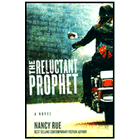
    Nancy Rue’s The Reluctant Prophet, published by David C. Cook, captures the essence of the ill-defined office of a modern day prophet and inserts the perfect individual into that roll—the one who would never picture herself as one or even agree to it if she seriously felt she had a real choice.


    And that’s exactly how God often chooses to work. He asks people for their service who perceive themselves as stumbling along in their Christianity, unworthy to do much of anything other than absorb the knowledge of all the things they’re doing wrong. Since God sees the heart and what He’s planted there even before we do or before we’ll admit to noticing our leanings, sometimes those “nudges” can feel more like shoves.


    Allison Chamberlain was born to wealthy parents who lacked integrity and other good qualities which Allison realized rather soon in her young life. Her best friend in the world was her nanny Sylvia, regarded as nothing more than a servant by Allison’s parents. When Allison’s antics left her cut out of her family’s considerable wealth, after a time of wandering, she lived with and cared for Sylvia until her death and inherited the house her parents left to the nanny.


    Sylvia’s faith contributed to Allison’s eventual conversion seven years prior to when this story begins. When Allison’s small group of believers warn her away from what she’s sure she’s heard from God to do, Allison opts to take God seriously in His outlandish instructions to buy a Harley Davidson motorcycle, a vehicle she’s never once had a desire to own or operate. In fact she’s not even remotely sure she can learn to ride the thing, but there’s no denying who’s in charge of her odd antics once she agrees to do the unthinkable.


    As the unmistakable nudges increase in volume and strangeness, Allison watches her church family become as estranged as her real family became. A new cache of friends dressed in leathers replace her old friends and prove their spiritual mettle when the Lord directs Allison to rescue a young addict/prostitute and her too-hip son Desmond after the death of the young woman’s father. Dubbed “Big Al” by the boy and “Miss Angel” by his mom, Allison must once again rescue his mom Geneveve when she disappears not too long after she begins the hard road to recovery, illustrating to Allison just how deep and dangerous the pull can be from the previous life.


    With characters the reader can both picture and hear, Nancy portrays all kinds of people with stark realism, amusing humor, relentless compassion, putting them in true-to-life situations. We can’t help but root for the strength and determination of the plucky and courageous Allison as she fumbles along in the Lord’s care, risking everything for those who’ve become precious to her just as Jesus intended them to be.


    The Reluctant Prophet falls into that rare category of well-written with a unique telling of a faith-based story where people appear flawed, confused, off the mark, but finally get it in the end. The subtle romance which rises to the top but is pushed aside with doubt and discomfort plays well with these characters and this story. The tone is perfect for each character, different as they all are, and this is just a very good book with a great cover. I’ve left out a lot of the story here along with the tear-provoking scenes because I don’t want to spoil the experience for potential readers. Well done on so many levels, Nancy Rue.


    764966 


    Father, I pray down your blessings upon Nancy Rue, so obviously a daughter who knows her Father’s heart. I ask that you would continue to provide the stream of inspiration for the books that will inevitably touch many hearts and walk them into your kingdom of Love. In the Name of Jesus, Amen.