Into the Fire

Passionate thoughts about the world of writing and the Power of God

  • Sifting the wheat from the chaff . . . In daily life this is not such an easy plan, but its value is critical.


    Nick Harrison , Senior Editor at Harvest House and truly one of the good guys, blogged about the call to write and other such things that provide the impetus to write regardless of what that writing produces. Kind of a litmus test for surviving the trials, the disappointments, the overall difficulties of writing itself and writing in hopes of being published. Good stuff.


    The thing I’ve noticed lately is how eager we are to chase after the chaff in this business. How we hold people up in awe of their commitments, their brilliance, their longsuffering in order to produce these superlative novels, their labor over choosing words to make their tomes near perfect. As if their efforts make them special and worthy of reverence.


    Have we forgotten the role we play in God’s kingdom? Have we simply ignored the gift-giving comes from Him, and the labor is done to honor Him? If He touches something with His holy hand to direct it into the spotlight, it’s not because of who we are. But we have a hard time sharing the glory. I worked so hard for so many years to write this “excellent” story—oh yeah, that the Lord put on my heart. Now I can tell everyone who reads this interview or this post on my blog or this Tweet or on Facebook that all you really have to do to get published is write this “really great story”, and, oh yeah, I’ll be teaching a class on characterization at such-and-such a conference.


    The chaff blows away. Even in a light wind. The wheat of obedience lasts forever. Consider what in your life you want to matter most . . .


    Father, I’m sorry for every time I’ve chased after meaningless nonsense. Jesus, you’re all I’m livin’ for. I’m desperate for you. Please help me to be more obedient. Less of me. More of you. Please. In the Name of Jesus, Amen.   

  • Preferences. We all have them. Dislikes. Yeah, we definitely have those too. Have you ever liked a novel and couldn’t explain why? Or at least your explanation felt inadequate to you? What exactly is it that makes a story stand out to you?


    For me it varies according to the book and author. I love novels for all kinds of reasons, but I’ve found I dislike them for two reasons in particular. One: I don’t jive with the characters. They annoy me, they repulse me, they seem shallow, ridiculous, or whiny. And/or I don’t like the writing either in voice or style. Usually I try to avoid plots that don’t appeal to me, but if I make a mistake by choosing a book with a storyline I don’t like, the other two reasons seem to be amplified.


    In contrast I love characters who demand I get involved in their lives. Whether in their weakness and humanity or their strong and courageous hero-complexes, get me invested in their plights. All kinds of personalities draw me. It’s not about quirkiness, macho-ism, femininity, boldness, or a fearful demeanor. It’s about who they are in the pages of the story. That indefinable something that makes me care about them.


    I’m intrigued by writing: voice, style, format. I loved Chris Fabry’s Dogwood because his writing shone in its unique brilliance. There was one stereotypical villain, and I didn’t particularly care for the ending, but I loved this book. The devotion and strength of one character touched my heart while the writing felt somehow exquisite.


    Lisa Samson chose the format of a memoir to illustrate The Passion of Mary-Margaret. The voice for Mary-Margaret kept perfectly attuned to the woman telling her life story. The story moved me in its originality and depth: brazen, tender, a love story of supernatural and oh so human proportions. A truly profound and brilliant novel.


    You all know how much I respect Robert Liparulo as a person, as a writer, as a friend. His voice is unique, natural, always believable. His pacing is superb. His imagination is amazing and his delivery solid, heart pounding.


    Tosca Lee expresses this intellectual overtone which somehow manages to not insult those of us who are less inclined to do such detailed research and delve so deeply into reasons. Her voice captures both wit and wisdom and challenges readers.


    Brandilyn Collins uses a style which courses through the pages. Drives the story like a Corvette. Always solves the tiniest plot points with unique stories and some unusual or strange, careful, and bold characters.  


    Harry M. Kraus, MD, manages to capture the nuances of human nature and the honesty and subtlety of romance when he includes it in his stories.


    Kristen Heitzmann gets romance. She writes compelling stories, often with suspenseful plots, but when male and female desires collide, she gets it.


    Travis Thrasher scores big on portraying the fallen spirit of mankind. He understands depravity and is willing to look hard at it and sometimes draw conclusions. He takes unlimited chances in his work, and I love that he does. He’s a bold writer, and I respect his work.


    . . . to name a few reasons for likin’ it when it comes to writing. And you?


    Father, you have gifted so many. It’s honorable when people use their gifts to reflect you. It’s a privilege to be used for your glory. In the Name of Jesus, Amen.

  •  

                              102601693

    The Christian Fiction Blog Alliance Tour features J. Mark Bertrand’s debut novel Back on Murder published by Bethany House, a story that will satisfy a variety of readers. At its heart it’s a murder mystery with an antihero by the name of Roland March who used to be a first rate detective in the Houston Police Department until a tragedy the reader’s not immediately privy to interrupted March’s life and career. He once investigated murders, but prior to when the story begins, Detective March has been assigned to other areas including the “suicide cops” detail. He’s managed to alienate most of his colleagues, and they all figure he’s on the way out of police work, and sometimes so does March.


    However, there’s a drug squat filled with gang corpses, and somehow Detective Roland March is back on murder. Discovering something at the scene everyone else misses while establishing the way things went down in this multiple killing, March alerts his Captain to the evidence and is commended for his observation. This single piece of evidence and a certain CSI tech drive March into a renewed determination to solve the murders and to figure out exactly what this new element means to another developing scenario.


    Simultaneously a pretty church-going teen girl turns up missing and is getting 24/7 news coverage causing the Missing Persons division of HPD excessive media pressure. When March suggests there could be a connection between these two situations and refuses to get along with the younger detective heading up the gang murders, he is taken off that case and added to the missing teen case. While working with the attractive young Detective Theresa Cavallo, a reluctant bond forms as they work together and independently to gain information about both cases.


    Add to these cases the personal pain and cynical persona of Detective Roland March and you have the makings of an interesting story which weaves a few eccentric characters into the landscape, an almost confession from a cop who wants immunity, and a youth pastor who’s devastated and blames himself for the disappearance of the teen girl. All of these intersecting plot points give the reader a layered story that follows the leads right along with March.


    Written in the first person, Mark establishes the unique character and voice of Detective Roland March with honest admissions, both shameful and honorable, and just enough humanity and humility to keep the reader from judging the man when his bitterness and rage get the best of him.


    Anyone who’s followed the blogs of J. Mark Bertrand knows the man’s first novel would be nothing short of well-structured storytelling. They’d know he’d paint pictures with his words to show us people of all types who contribute to the tale and that he’d provide amazing metaphors with clever witticisms and language that conjures up succinct images, both emotional and physical. We would expect nothing less of him because he’s dedicated to his craft. His expressions and interesting sentence formations give the reader the wonderful experience of style and variety, something so refreshing and different from formulaic writing. He also gives us an unlikely hero to cheer on for multiple reasons, and we somehow expect as Detective Roland March gains his old momentum he will triumph in the end.


    If there’s a “weakness” in this story—and I certainly wouldn’t call it that—it might be confusing to keep all of the characters straight, but I personally think every single one of them adds both flavor and the element of reality to the discovery and elimination of potential suspects as well as to the life and character of Roland March. One inconsequential point for me is that lately I’ve read a slew of novels which decide to take a long time before they reveal the tragedy behind their protagonist’s persona—usually the excuse for his (or others’) possibly undesirable behavior. This feels like a gimmick to me, and I’d prefer it in the clear sooner rather than later.


    Mark chooses to use his peripheral characters to interject a Christian perspective while leaving the tainted March to ponder the reality of God. Concluding the story with both a satisfactory ending and an expected cliffhanger, I for one will welcome the next installment in the Detective Roland March series. Meanwhile, it’s good to know March is Back on Murder.  


     http://www.amazon.com/exec/obidos/ASIN/0764206370


    Father, please continue to bless Mark with lots of stories and the time to create them. May he honor you in all he does. In the Name of Jesus, Amen.


    ***Give me one good reason for wanting a copy of this book, and it’s yours. Make it a good one. Leave it in the comments. Convince me. You won’t be sorry. Winner will be announced Friday.***

  • This is what the Lord says—

    your Redeemer, the Holy One of Israel:

    “I am the Lord your God,

    who teaches you what is best for you,

    who directs you in the ways you should go.

    If only you had paid attention to my commands,

    your peace would have been like a river,

    your righteousness like the waves of the sea.

    Your descendants would have been like the sand,

    your children like its numberless grains;

    their name would never be cut off

    nor destroyed before me.”


    . . .


    “There is no peace,” says the Lord, “for the wicked.”


    Isaiah 48:17-19; 22

  • Those of you who visit here regularly know I have many opinions. About a lot of things. Most of the time I’m civil. I try to specify when I’m posting a rant. I do my best to ask for clarification on things I’m unsure of, and I welcome more information and other opinions—also hoping those giving them aim to be civil too.


    The majority of this blog pertains to novels and novel writing. I’m limited in what I can offer on publishing, but some of the things I’ve shared here are a direct result of either face to face or online discussions with professionals in the Christian publishing industry. Sometimes the consensus turns out not to offer any answers or at least not any surefire or easy ones to the industry’s flaws or problems.


    Things in the industry haven’t gotten any easier with valuable people being let go in cost-cutting measures, and some agents suggesting the usual risk-averse publishers have become even moreso which is a clear indication that those of us who read a lot will be sampling a great deal of the same things by a lot of the same authors—which isn’t entirely a bad thing for readers. Not particularly a good thing for wannabe writers.


    However, some agents insist the door is still cracked open for new authors, just barely.


    But what I really want to say here is this: an opinion is just that. Lately I’ve written some reviews which point out my problems with the books. I’m not doing this to be controversial, negative, or a malcontent. My novel reviews give my opinion of the books I’ve read. When I state my opinions, criticisms, and/or my preferences, I realize they won’t necessarily jive with anyone else who’s read the story. I think it’s important to add that to a person, each publishing representative assures me they want a truthful review. So I give mine.


    Recently, I read some comments which threw out the opinion that a bestselling author wasn’t a good writer. I staunchly disagree with that opinion, and I think it’s ridiculous to express your dislike for a writer’s voice and/or style in this manner especially when millions of his/her books have been purchased. Really it’s not a valid opinion when it’s given matter-of-factly. Why not say I’m not a fan of their voice or their stories? Obviously there are literally millions of people who disagree, so it kind of makes the person saying it sound foolish. Who made this person judge and jury?


    I just want you to know I take no pleasure in giving a halting review or criticizing the story or its characters. It’s just my opinion after having invested my time in reading the book. I’m entitled to my opinion, but I thoroughly realize that’s all it is. Fair enough?


    Lord God, your mercy extends to us all. Thank you for that. I’m desperate for you. In the Name of Jesus, Amen.

  • Spellings I love: blonde, theatre, grey


    I remember a lot of details. This can be so good . . . but so bad, too. Words cling to my memory like static electricity and sometimes produce that continuous sting from the past.


    I’ve done a lot of things I knew were wrong, but at the time I wasn’t exactly sure why they were. Except for some of them.


    We do reap what we sow. We most definitely do. Sometimes it just takes awhile. I think it’s God’s mercy waiting for our repentance when it’s something bad. And His patience in rewarding good in order to teach us faith, trust, and, yes, more patience.


    It was 58 degrees here last week and on into Monday. It’s almost 90 today. Guess what? Summer! All of a sudden with no lead-in. Whoa!


    God, I am so thankful you rescued me. You’re all I’m livin’ for. In the Name of Jesus, Amen.

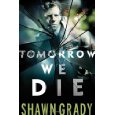
  • The sophomore novel, as the second books from authors are called, can be a killer “they” say, especially if the debut novel was a smashing success or even remotely successful. Shawn Grady’s first novel Through the Fire drew much favor and established his notable voice. Since Shawn is a firefighter and an EMT, the authenticity in both novels rings true and with amped up tension and enough technical-speak to include readers in the process of each emergency without talking down to them. Let me say this before I get to my review of Tomorrow We Die (published by Bethany House) for the CFBA Tour: I love Shawn’s voice.


    Embittered by tragedy and resentful of his alcoholic dad, Jonathan Trestle wants to be a doctor more than anything else in life. Employed as an EMT by Aprisa Ambulance in Reno, Nevada, he strives to save each individual he and his partner “Bones” encounter in their life and death travels. When Jonathan is handed a piece of paper from a man in cardiac arrest with instructions to give it to Martin, his curiosity is piqued. When Jonathan discovers the man has checked himself out of the hospital, he tries to locate him to get a read on whether or not the man is a lunatic and to understand the confusing transcribed message on the piece of paper. Jonathan finds the man dead in front of his seedy motel apartment and his frustration at his feelings of obligation to the dead man concerning the mysterious Martin and the note compel him to carry on the dead man’s assignment to him.


    This venture sets off an investigation which pulls in Jonathan’s old love interest—his only love interest—his good friend and colleague Dr. Eli Petrov who is the coroner, and of course his comrade Bones who helps him find information about the strange writings on the note.


    The demands of estimated arrival times for the ambulances are a constant source of stress for Bones and Jonathan because of their impossible distances to cover from dispatch. Knowing they’re almost behind before they start from their posts, the breakneck speed required to meet the set times to get on scene is hindered by the governors on their ambulances and the unpredictable traffic. The tension keeps their minds scrambling on the number of seconds it takes before bodies shut down and refuse to live.


    Okay. There’s a lot of techno-speak early in this novel which is fine with me, interesting even. Some might not think so. Lately, I’ve read too many novels that wait to clue the reader in to the reasons for disgruntled, embittered, faithless protagonists of both sexes. We guess, much of the time correctly, what the tragic event was through the course of usually over half the book until it’s spelled out for us. In my opinion this only serves as an irritation and a ploy for sympathy for the protagonist—usually as justification for his lousy behavior. I’m tired of the well-worn “attitude” or the bitterness or the resentment by the time the unveiling of the reason for it surfaces. It’s not that I don’t care about the hurt or the pain, it’s that I’m sick of having it interjected or hinted at without full disclosure. Perhaps you don’t mind this approach, but I’m not much on gimmicks in writing, and this feels like that to me.


    Plot-wise this story ambled until Jonathan’s old “friend” Naomi comes on scene and Jonathan and Bones discover the message Martin was supposed to receive. Combined with a troubling discovery by Eli the coroner, the story is off and running with an amateur investigation underway which proves to be bigger and more complicated than the group can handle.


    Agents, editors, and publishers give multiple reasons for “the sophomore slump”. The most consistent excuse I’ve heard is now that the author is under a deadline, he/she must manufacture the time to write, no longer having the luxury of fine tuning their story and/or their craft over however long it takes. I found Tomorrow We Die had a bit of trouble establishing its course. Was it a mystery, a romantic suspense, or a thriller that started casually? It’s not a bad story—please don’t get me wrong. I just don’t think it’s as good as Shawn’s first book, and I’m sure his future novels will be better. The ending should have been an Epilogue, felt too rushed, and the last line didn’t work for me as a conclusion to the final scene.


    The story entertains, and I’m quite sure others will pass right over what I considered minor flaws. Shawn’s voice is good—I love it as I said. And this little novel won’t keep me from reading future efforts from him.


    51P7C18T3YL__SL160_AA115_ 


    http://http://www.amazon.com/exec/obidos/ASIN/076420596X


    Father, you know the challenges Shawn faces in his work and therefore in his writing. I pray your blessing upon his life and writing—that you’d continue to keep him safe from all harm and fill him up with stories to tell. In the Name of Jesus, Amen. 

  • The multiple categories for genre descriptions keep expanding into sub-genre classifications. And even with all the choices and new endeavors to keep defining types of literature, there remain some that just don’t fit the mold and are difficult to classify.


    Let’s take the recent Christy Awards. You witnessed my consternation over Athol Dickson’s novel Lost Mission appearing in the Suspense category along with Terri Blackstock’s Intervention and Mark Mynheir’s Night Watchman. This is one of the rare times when I’d read all three novels in the category. Both Terri and Mark wrote definite, and outstanding, suspense novels belonging in the division. But Lost Mission? No. Limited to the categories in the Awards, it seemed far more likely to put Athol’s book in the Standalone category over Suspense. And “Standalone” isn’t a genre. It’s a category.


    Recently over at Novel Matters (http://https://www.blogger.com/comment.g?blogID=6360410252358941163&postID=5945729340546222079), Bonnie Grove called Lisa Samson’s Christy Award winning novel The Passion of Mary-Margaret a romance novel. While it is a love story, I wouldn’t call it a romance novel. Written as a memoir, it recalls the life of an aging Sister, a touching story with the perfect voice and style of the woman writing it. Very seldom do I use the “profound” word when referring to works of fiction, but this novel warrants it.  


    And it brings up another point: when is a love story not a romance? I think my second novel The Famous One qualifies as a love story written like a fictional biography, not a romance. But because it’s heavy on the romance during certain segments of the novel, it probably gets classified as a romance novel. I think a love story addresses the bigger picture(s) in the lives of the characters. Enhanced by the relationships of characters to the spiritual connections in their lives, the stories become a picture of God’s love for people and that element makes it more of a love story than a romance. Redeeming Love is a classic love story, not a romance. It seems a love story could conceivably be written without any romance if it’s a story about God’s pursuit of an individual.


    Anyway, my point here is sometimes individual novels don’t adhere to the box-y categories and classifications where people choose to put them. And novels often don’t need to be defined by tried and true definitions of their formats and structures. If we can’t concede this, we get stuck in the logistics, definitions, and formulaic reasoning of writing fiction. Break out, people! Creativity awaits.


    Lord, in spite of your order, you confound man’s structures, schedules, formats, and logic. And I love that about you, God. In the Name of Jesus, Amen.


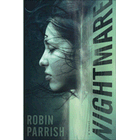
  • Robin Parrish writes speculative fiction. And in Nightmare he writes Paranormal Speculative Fiction. I read Robin’s first book in the Dominion Trilogy titled Relentless. Through no fault of Robin’s, I misunderstood the back cover copy of the storyline or I wouldn’t have bought the book. It’s no secret I’m not a fan of most varieties of speculative fiction.


    Nightmare begins with the first person telling of a trip to a popular amusement park by the name of Ghost Town from Maia Peters who isn’t sure why she agreed to accompany the two girls, one of them last year’s roommate at college. Maia’s parents are world-renowned paranormal specialists so Maia isn’t easily impressed by cheesy attempts at duplicating ghostly events with Hollywood-like special effects in an amusement park’s haunted house. So as the wait in a long line finally gives their group of three entrance to the old house, Maia quickly spots all the gimmicks. But just as their tour is about to conclude, a familiar face appears to Maia and says in the voice to match, “The nightmare is coming” before the girlfriend’s face vanishes into a mist. Soon after this experience Maia learns her friend is missing.


    When sought out by the missing girl’s fiancé, Maia engages in an unlikely liaison to find Jordin, the now missing girl who hired Maia to take her to every well-known haunted establishment across the country. Since the wealthy Jordin had the money to foot the bills and buy all the necessary equipment to record and photograph any manifestations, Maia finally agreed to take her. Having grown up visiting these places, Maia’s expertise and usually unflappable demeanor keep Jordin grounded when things get weird.


    Jordin’s fiancé Derek maintains his different take on the paranormal activity, and Maia, a Catholic, doesn’t take his Christian perspective seriously, having grown up with precise definitions for specific paranormal experiences and sightings. When a weird mark appears on the back of Jordin’s and another girl’s necks just before they disappear, Maia, Derek, and a curious journalist set out to discover the connection between a corporation out of Copenhagen, a concealed location in upstate New York, and the fleeting appearances of a ghostlike Jordin. 


    First of all, Robin has done his homework on the paranormal. Each place pictured and described in Nightmare is authentic and documented as a haven for paranormal activity. The descriptions of sightings and the definition of terms used by enthusiasts relay the way these specialists view such things. Since Maia is telling this story, we receive the information as matters of fact. Derek brings in the accepted Christian viewpoint which Maia, although considering herself a believer, disputes. Her condescending attitude toward Derek gradually dissipates as she views his courage and determination to find and rescue the girl he loves.


    The speculative concept of this novel demonstrates the workings and possibly the wrestlings of Robin’s mind. He’s a good writer—I thought so with Relentless, but I didn’t share nor do I share his enthusiasm for speculation: contemporary, futuristic, or otherwise. I think he stretches his thinking to interesting proportions, but these expanded concepts stray too far from biblical explanations to even make me wonder “What if?” 


    Nightmare qualifies as Speculative Paranormal Suspense and will suit young adult/college age readers in particular as I think Robin portrayed the age and overall character of young people accurately. The weakness for me (besides its speculative concept): both Maia and Jordin aren’t particularly attractive characters. Maia is almost cold, too pragmatic, and Jordin is senseless in her obsession, willing to subject herself to the very opposite of what she supposedly believes. Derek is the only admirable character, displaying passion, determination, and an unexplainable devotion to Jordin while maintaining a strong faith in the Lord and His power.


    206078


    http://http://www.amazon.com/exec/obidos/ASIN/0764206079 


    Father, please continue to lead Robin in his writing and in all of his efforts to honor you. Encourage him with your direction and guidance in all that he does. In the Name of Jesus, Amen.

  • . . . if my people who are called by my name, will humble themselves and pray and seek my face and turn from their wicked ways, then will I hear from heaven and will forgive their sin and will heal their land.


    2 Chronicles 7:14 (NIV)


    Celebrate Independence Day and remember the tyranny which drove us to fight for it. Praise the Lord for His mercy and seek it again for this country.