Into the Fire

Passionate thoughts about the world of writing and the Power of God

  • Book giveaways!


    If you love Mystery/Suspense, have I got a couple of novels for you! Beginning July 12th, you will have three days to convince me why I should mail you a copy of the featured book. Only one entry per person so no using your pseudonyms, you crafty writers!


    Shortly following the first giveaway there will be a second one. I’ve read both novels. You can read the reviews here, and if you love suspenseful stories, you will enjoy both of these books. The contest for the second giveaway will vary from the first. So, if you’re ready for a good read and you enjoy contests, two very good books await.

  • Sometimes I wonder if Christians remember that apart from God, we can do nothing. Nothing is a very defining word. All encompassing in its non-content. We can’t expect unbelievers to realize their breaths are a gift from God. Their talents, their abilities—all from a loving Father, Creator of the heavenly lights.


    But what about us? Are we consciously dependent upon our Lord for every provision of life? Do we maintain a grateful attitude? Do we acknowledge to ourselves and others how we are able to live? Do we know it in our core?


    Do we work independent of Him? Do we attempt everything our way first? Do we precede decisions with prayer and supplication? Do we acknowledge that we are powerless without Him? Do we seek His wisdom instead of our own? Do we wait for Him to lead before we follow our own desires?


    Have we grown apart from Him because we’ve guided our own lives?


    I know more than ever . . . apart from Him, I can do nothing.


    Thank you, Jesus. I’m desperate for you.

  • Well, after a couple days at the ocean and taking the lonnnggg way home, all I’ve got for you are these musings . . . Yes, I had a marvelous time. Thank you.  


    Why can’t we label genres what they really are? "Christian Horror" means it’s scary fiction. Not just suspenseful, not even just thrilling. It means there’s some horrific stuff in it, but the Christian label usually means there’s a redemptive theme in the story.


    How ‘bout my personal favorite: “Non-traditional Romance”? It simply means it’s not the tried and true sweet little romance. It means the story takes a few chances and tackles romance the way it can often be both in the world and in the Lord. Polar opposites.


    And is it “Fantasy”, “Science-Fiction”, “Paranormal”, or “Supernatural”? “Speculative” fiction really doesn’t say much.


    Not much today, is it?


    Lord Jesus, you're all I'm livin' for.

  • Christian fiction gets a lot of negative attention sometimes. Some of it comes from those who assume it’s “religious” and want nothing to do with it. Other criticisms come from those who’ve repeatedly been disappointed by the selections they’ve chosen to sample. Some comes from those who can’t find a satisfying read in their particular genre of choice. Many complaints are what I’d consider to be invalid, but many likewise are warranted.


    The thoughtful complaints usually come from writers because writers can be the worst critics of their peers when they search for books which in their opinion “deserve” to be published. Without singling out individual authors, and it’s usually those of us who remain unpublished, we suggest there is some not-so-great writing out there in the world of published novels. And, hey, it’s true. But the only reason it matters is because it shows us that some of the limp mantras about only the great writing and dynamite stories making it into publication don’t quite ring true all of the time.


    So. About setting a standard. I really have a hard time believing Christian writers who desire publication don’t work very hard to make their prose fit a standard—one they consider to be a high standard. Granted, that high standard wobbles unsteadily because what’s high for one writer doesn’t even meet mid-level for another. This is where judging another’s published product gets a little risky.


    It’s far safer to judge the requirements placed on writers by publishers. Some uninformed writers have made assumptions that all publishers require a gospel moment, a salvation scene, no reference to alcohol, dope, cigarettes, being in bed with someone, adultery, etc. While these requirements are true for a select few imprints, they don’t exist for the bulk of Christian publishers. In fact sin is indeed rampant in Christian fiction and rightfully so. There are also many novels published by CBA publishers with little or no mention of God, Jesus, the Holy Spirit, church, and/or prayer. Although rarely labeled as such, there is now Christian horror to go along with all the variants of speculative fiction which literally had—and still has—to be force-fed to some publishers and why Jeff Gerke broke away from the industry mold/standard to create Marcher Lord Press for speculative fiction authors.


    My personal standard complaints about some Christian fiction are the writing “requirements” and commentary on the “rules” by some professionals. Staunch adherents to rules which produce formulaic fiction—and, believe me, I’ve read my share of it—do nothing to raise my confidence level for creating a higher and ever-creative standard in the industry. This philosophy translates to “there’s only one way to write well”, one way to create. The beauty of writing is in the multitude of ways people create stories and the language they use to tell them.


    Although sometimes it’s not, the knowledge of grammar should be a given before anyone attempts to write seriously. So from the aspect of being on the receiving end of some truly inferior attempts at writing, I understand the emphasis on the rules of writing. However, sometimes the way this standard for writing is expressed makes it sound like if you “obey” these rules, a publishing contract awaits your manuscript. Not true. There simply isn’t a formula for perfection in writing because subjectivity is exercised over a uniform passionless attempt at storytelling.


    Standards. Who sets them? And why? It is the concern of many writers that Christians should set a high or high-er standard in their writing if for no other reason than the fact they represent the King of Kings. Striving for excellence should be the daily goal, the basis for all efforts, the impetus to create literature worthy of Him who gives the talent. As I mentioned before, I really do think believers aim for this lofty goal, as well they should, but according to their peers, sometimes they fall far short. So, who is the judge of this? Of course if we write in obedience to God, working hard to make our art pleasing to Him, we will recognize that pleasing humans can be far more difficult, arguable, controversial, and often not achieved.  


    Father, I pray for the anointing on the writing you give me to do. You’re all that matters and all I’m livin’ for . . . In the Name of Jesus, Amen.

  • *I realize the Christy Awards were/are designed to honor authors who’ve elevated their writing and stories “above the norm”. How else can it be expressed? It’s a separate award from all the other acknowledgments of good writing and good books where the emphasis is supposed to be on great writing. As always, every year this is debatable, and nominees must be made by the authors’ publishers. So, it’s possible not all the truly great writing (by whosever definition you choose to endorse) will be represented in the nominations and never never leave out the subjectivity of the judges based on the criteria for making those judgments. It’s simply not a cut and dried decision when judging the arts even when judges agree.


    All that to say this: it might seem redundant to suggest a separate category for “literary novels” be added, and could be construed as defeating the purpose of the awards themselves. However, to mix the novels in the Suspense category as they have repeatedly chosen to do seems off the mark in my opinion. This over-broad categorizing of a few other divisions might apply as well.


    Just my thoughts on these awards.

  • Contemporary Romance
    Breach of Trust by DiAnn Mills (Tyndale House Publishers)

    Contemporary Series, Sequels & Novellas
    Who Do I Talk To? by Neta Jackson (Thomas Nelson)

    Contemporary Standalone
    The Passion of Mary-Margaret by Lisa Samson (Thomas Nelson)

    First Novel
    Fireflies in December by Jennifer Erin Valent (Tyndale House Publishers)

    Historical
    Though Waters Roar by Lynn Austin (Bethany House Publishers: a Division of Baker Publishing Group)

    Historical Romance
    The Silent Governess by Julie Klassen (Bethany House Publishers: a Division of Baker Publishing Group)

    Suspense
    Lost Mission by Athol Dickson (Howard Books: a Division of Simon & Schuster)

    Visionary
    By Darkness Hid by Jill Williamson (Marcher Lord Press)

    Young Adult
    North! or Be Eaten by Andrew Peterson (WaterBrook Multnomah Publishing Group)


    In red are the novels I’ve read. I continue to wonder why they don’t make a separate category for “literary” novels. Putting Lost Mission in Suspense robs other true suspense nominees of a more valid competition. Winter Haven by Athol Dickson was real suspense. This novel is not. River Rising, another of Athol’s Christy Award winners, competed against Robert Liparulo’s Comes A Horseman. The two novels couldn’t be more opposite. Robert writes thrillers that more easily fit into Suspense than River Rising which was really a thoughtful literary novel about racism.


    So glad to see Lisa Samson’s The Passion of Mary-Margaret win. Such a profound novel.


    Lord, for all your people who write for you: bless them with true communion with you and more stories to demonstrate who you truly are. In the Name of Jesus, Amen.

  • A second time they [the Pharisees] summoned the man who had been blind. “Give glory to God,” they said. “We know this man is a sinner.”

    He replied, “Whether he is a sinner or not, I don’t know. One thing I do know, I was blind but now I see.”

    Then they asked him, “What did he do to you? How did he open your eyes?”

    He answered, “I have told you already and you did not listen. Why do you want to hear it again? Do you want to become his disciples, too?”

    Then they hurled insults at him and said, “You are this fellow’s disciple! We are disciples of Moses! We know that God spoke to Moses, but as for this fellow, we don’t even know where he comes from.”

    The man answered, “Now that is remarkable! You don’t know where he comes from, yet he opened my eyes. We know that God does not listen to sinners. He listens to the godly man who does his will. Nobody has ever heard of opening the eyes of a man born blind. If this man were not from God, he could do nothing.”

    To this they replied, “You were steeped in sin at birth; how dare you lecture us!” And they threw him out.


    John 9:24-34 (NIV)

  • The chip I speak of here is the seeming “chip on the shoulder” toward Christian fiction by some Christians who are authors. It’s not unlike those who criticize the church. Noting and describing all the faults with the “American” church or the “mega-church” or the “small” church or the church in general, Christian fiction also receives its share of derision from writers who are Christians.


    Believe me, I have my own complaints about some Christian fiction. Not all or not even the majority of it, but I have some gripes like anyone else who’s followed the market for many years and read my share of it—that being over 300 novels. So, having said that, I think I’m a bit more “qualified” to lodge a few complaints. I can’t speak to the writing of the bonnet books because if they were the only novels left on planet earth, that’s probably the only reason I might read them. Take note of this: I have nothing against the authors of those novels. Obviously, those books just aren’t my thing. And I don’t venture my opinion on historicals, historical romance, the chick/mom-lits, or speculative/fantasy fiction unless it’s spiritual supernatural.


    I think the key is to speak as a matter of opinion based on your knowledge of a product. If I’ve driven a specific brand of automobile and had a bad enough experience, I don’t want to trust that automaker for another vehicle. Usually something that big/expensive warrants a succinct opinion and once there’s a bad experience it’s over for another trial. It's a judgment call based on one's specific experience with the product.


    With novels the idea of subjectivity and preferences for genre, style, voice, plotting, etcetera, enters into the decision of judging the book. Just because I don’t like a book doesn’t mean someone else won’t love it. And just because I think the writing is poor doesn’t mean the average reader will notice or care. As a writer, I can shoot for a high standard of what I perceive to be quality writing, but that in itself might mean something to someone who shares my perceptions and mean nothing to those who don’t. In fact my writing might be considered superfluous, idiotic, boring, or uppity to those who don’t like my style, voice, or standards.


    Those who criticize Christian fiction usually haven’t read much of it. There are some phenomenal writers who manage to organically include the gospel in their complex stories with beautiful writing and profound story concepts. It’s not a requirement to do so which so many non-readers of the genre seem to think it is, but it can be done magnificently with powerful writing.


    If one wants to argue about the placement and integration of Christian novels into mainstream shelving, that’s another matter. Some would easily fit there, others not so much without garnering complaints from atheistic readers who feel “tricked” by picking up a “Christian” novel by mistake.


    If one wants to debate the definition of “Christian fiction”, that’s yet another discussion and a conversation which seems to rotate around the blogosphere on a regular basis.


    But criticizing aspects of Christian fiction should be made from those who’ve read multiple novels from the offerings of multiple publishers or narrowed to the specific genres and books they’ve experienced. Limiting their comments to their specific consumption of the product makes their opinion(s) more valuable in the discussion. Otherwise their criticisms ring like clanging symbols if you get my drift.


    Father, lead us as we give our opinions of others’ works. May we be conscious of the labor of our brothers and sisters just as we are of our own. In the Name of Jesus, Amen.

  • Point of view, known as POV in the biz, has grown to ridiculous proportions, and I can’t help but wonder if all this classification is truly necessary. Look at this amplification from Debbie Fuller Thomas over at Novel Matters:


    “There are three basic options available for viewpoint which apparently can now be further defined (third person limited, close third, distant third) . . .”


    Add those to first person and the rarely used omniscient and second person POVs and no doubt there will be more to narrow down what the average reader has no concerns about and the writer struggles to correctly identify in his/her queries/proposals.


    First person POV seems to consume current fiction. I’ve only read one novel that I can remember where second person POV was used throughout and done remarkably well by Travis Thrasher in Blinded (reviewed here). Omniscient is rarely used in today’s literature but when done well is just as appealing to a story as any other POV done well. Athol Dickson in Lost Mission (reviewed here) used it and I, yes moi, used it in the beginning of The Famous One (reviewed here) but eventually morphed into third person later in the story which reads somewhat like a fictional biography.


    Each POV requires skills, none more than any other. POV like any other part of the story must involve the reader in the character(s) and cause them to invest in the story. The “knock” or “a” knock against omniscient is the distance created by basically allowing the story to be “observed” by the narrator, but the unique perspective allows the reader to see details of all the characters as well as other surrounding effects in a scene. Like anything else in reading novels, it’s a matter of subjective taste and the appreciation of variety in styles.


    Writers tend to have their favorite POVs to read and to write, but I love whatever works. The wonderful creativity of different authors who shun the rules (and let me clarify that by saying they know them and have chosen to artistically abandon them) and take chances: bring them on. They provide tastes to savor, to experience, to transport, and to ponder. Not all of them will give us a positive experience, but at least they will have tried to be original.


    Lord, we should never be concerned with “the traditions of men”, the artificial rules to creativity. You take us beyond our limitations. Let us always follow your lead. In the Name of Jesus, Amen.

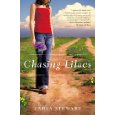
  • Referred to by some as a “coming of age” story, Chasing Lilacs, the debut novel by Carla Stewart, tells this late 50’s story of family and friends from the eyes of 12 year old Sammie (Samantha) Tucker who lives in Graham Camp, “not even a dot on the map”. It’s an industrial housing community with close neighbors and friendly streets and incinerators set up near the homes to burn the garbage of its residents. Chasing Lilacs, published by FaithWords (a division of Hachette Book Group), concludes this week’s CFBA Tour.


    Capturing the voice of a 12 year old girl circa 1958 in a small community located in the Panhandle of Texas is no small fete. Smart, pragmatic, and fairly typical, Sammie and her sometimes fickle girly-girl best friend Tuwana roam the neighborhood and put together their version of a local newspaper until Tuwana decides it’s childish and preparation to try out for cheerleading entering seventh grade seems far more important.


    Sammie’s life takes a difficult sidetrack because her mother suffers from headaches and an apparent addiction to some pills before her father and doctor conclude she needs to visit a mental hospital for a short stint to attempt to help her overcome her “depression”. The vivid imaginations of a young girl who is ill-informed of such measures cover just about every horrid angle, and the fears which rise up in Sammie seem justified and create an uneasiness right from the start. The reader learns that Sammie’s mom has had trouble since a certain event in their lives. This circumstance caused all kinds of emotional doubts and insecurities within Sammie’s young and tender psyche. When her mother returns from the sanitarium, Sammie’s tension and sense of responsibility in keeping her mother well amp up when she views episodes of memory loss in her mother’s actions.


    The pleasant and sometimes humorous addition of the 14 year old bad boy from California who invades the neighborhood when his dad drops him off to be reformed at his uncle’s gives a realistic feel to those days and times. Tuwana is beside herself to appeal to the new boy known as Cly, but he favors Sammie much to Tuwana’s dismay and pouty anger. The interactions between Cly and Sammie probably constitute my favorite parts of the story. (Big surprise, huh?) Sammie’s awkwardness and Cly’s bravado and sensitivity bring authenticity to youthful attractions and attachments.


    Meeting Goldie and her parakeets provides a sympathetic and faithful woman to subtly guide Sammie’s thoughts and reactions to different events as they unfold with her mother. Along with the grandfatherly Slim who teaches Cly, Sammie, and Joe (Sammie’s dad) to play backgammon, this community seems like any other with its gossips, status seekers, hard workers, and troubled individuals.


    When Aunt Vadine, Sammie’s mom’s sister, invades their household, life becomes a battle of wills with Sammie seeming to lose each skirmish.


    This is not a story without pain and anguish, but it is a story of redemptive relationships triumphing over façades and wrong impressions. It’s a story of loss, a story of wilted faith, of suffering, of hope and overcoming tragic circumstances. Through the eyes of a young girl who turns 13 toward the end of the book, her emotional roller coaster in the face of huge sadness leads her to eventual resolution and a new perspective with the help of those she loves and who truly do love her.


    The scent of lilacs wafts through the story reminding Sammie of the mom she loves in spite of all the hardship in their lives.


    Nit-picky stuff: I thought there were a few insignificant things used in an expression or in product which weren’t around in 1958. Maybe they were, but since I was around in 1958, I thought they came later.


    Secondly, I wouldn’t classify this as a “coming of age” story, but that’s just me. Carla Stewart’s Chasing Lilacs is a thoughtfully written novel with a potentially wide female audience—young adults could read this story on up to all ages—and it fits snugly into Women’s Fiction. A well done debut novel.


    51NKW5ymUjL__SL160_AA115_


    http://www.amazon.com/exec/obidos/ASIN/0446556556 


    Father, thank you for Carla and her heart for you. Please continue to bless her writing and all things done for your glory. Give her many stories, Lord, and the compelling urge to write them. In the Name of Jesus, Amen.