Into the Fire

Passionate thoughts about the world of writing and the Power of God

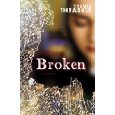
  • Broken by Travis Thrasher and published by Hachette Book Group’s FaithWords is a featured novel for the CFBA Tour. Let me start by saying I love Travis’s writing. It’s always straightforward, doesn’t pull punches, isn’t afraid to look at the seedy stuff and plunge right into it, and he’s never been one to write by the rules—which of course endears him to me. He uses present tense in this story, and he switches POVs while telling this rather sordid tale of Laila Torres, a drop-dead gorgeous young woman who’s seen way too much of an ugly lifestyle and barely lives to tell about it.


    It’s a dangerous fete for an author to make his “heroine” a hardened woman on the run from both a dangerous and ugly lifestyle which is only partially revealed in the beginning and from men who are pursuing her for what they plan to take from her. The reader gets pieces of Laila’s life through her journal, her nightmares, and her delusions, but it isn’t until midway through the story where some of the nightmares and delusions begin to come to life. The tricky part for the reader is establishing which of these episodes are real or imagined. The difficult part of reviewing the novel is trying not to spoil the total unique experience with too much information.


    The defining moment in Laila’s life comes at the age of 15 and colors everything else with its black crayon. We don’t experience this encounter until a while into the novel, but when we do, it makes us sick with dread and revulsion. From that moment in her history Laila stops correctly assimilating people and events until her next wretched decision at the tender age of 17 which serves to override her future sanity at different moments in her waking and sleeping hours.


    Using her incredible beauty to gain a measure of recognition as a model, it also leads her places she never intended to go and invents this damaged and cynical character we meet on the pages of Broken. On the run and with total reliance upon her own cunning, she learns she can’t outrun her past and with this revelation comes death and destruction and a slew of memories she can’t escape. When visions prove to be more than delusions, she realizes one of the reasons for her guilt isn’t really what she thought, and this sends her packing for who knows where yet again.


    When Laila, as a young girl, left her family in Texas to explore a career in New York that ended in Chicago, she figured it would be forever because of what she’d done at every different crisis in her youth, thinking none of those decisions could be excused or forgiven. With her misinterpretations of who God is based on the travesties of her life and choices, she figures she’s as good as dead, welcoming it like a drug to an addict until it’s in her face. Learning her younger brother is also pursuing her, she’s afraid for his life when it seems those chasing her will stop at nothing to get what they want.


    Those who know me know I believe in the supernatural. Demons do wicked things to and through people in this world. God sends ministering spirits (angels) to do his bidding however He determines to use them. There is always a supernatural element included in my stories. In Broken it’s almost in hindsight that the reader sees evidence of God’s intervention in some of Laila’s crises. Having said that, I found the incidents involving the “toy” gun and the trunk of the car to be convenient and contrived, and neither worked for me.


    The other plot point that didn’t work for me was the amount of money involved in this chase. It seemed like far too little to go to these lengths to retrieve.


    Barring those few examples which I felt weakened the story, Travis Thrasher has created another fascinating novel with an unusual heroine who is both hard to like and hard to resist. The satisfying conclusion brings Laila’s condemnation to an end, and as odd or cliché as it might seem, the story lingers like a haunting melody.
     

    51-QaHIjX2L__SL160_AA115_


    http://www.amazon.com/exec/obidos/ASIN/0446505552


    Lord, you’ve given Travis his diverse talents. Continue to guide his writing and bless the work of his hands done to honor you. In the Name of Jesus, Amen.
  • Just a few things to say. Repetition, I know. But as a self-published author, I really do take offense at some of the statements that roll off the fingers of those who know next to nothing about it.


    Some of you know The Shack was a self-published phenomenon. The overselling of the little novel forced those involved in writing and producing that book to select a royalty publisher to handle sales which included a fairly lucrative contract for future books if I’m not mistaken under their own imprint. Most writers (including the primary author of that little novel) will agree The Shack was not particularly well written. Needless to say, although the theology in its pages elicited great controversy which furthered sales, the writing itself didn’t seem to bother its readers—except for other writers.


    Once again I will state self-published books used to look the part and much of the writing was of poor quality. I’m quite sure there are still those kinds of books being produced. In the past self-published books deserved the negative stigma attached to them.


    However, if you know anything about some of the small custom-publishing presses, you will have learned this: they don’t put forth junk. WinePress Publishing and their derivatives put out a first class quality book from cover design to formatting and template selections. First class that takes a backseat to none. Marcher Lord Press for the speculative fiction writers: same thing. Quality in production from start to finish.


    The claims of “no editing” for self-published books and the enamored praise for editors making stories better, yada yada yada, simply doesn’t hold true with the two aforementioned publishing entities. Jeff Gerke of Marcher Lord Press is an editor and was previously employed by CBA publishers in that position. WinePress uses specific freelance editors just like the mainstream CBA publishers use and requires editing in certain publishing packages such as the one used for the production of The Famous One.


    The single thing that makes self-publishing fiction difficult is this: marketing. The two publishers I mentioned take care of listing your novels on Amazon.com, CBD, B&N.com, etcetera. I don’t know the specifics of marketing available through Marcher Lord Press, but WinePress offers several different packages for sale. And, no, they’re not cheap. But the same prospects for marketing your royalty published novel now sit in your lap as an author. The onus of marketing rests primarily with authors nowadays—particularly first time or little known authors.


    What I’m saying is this: it’s okay to be suspicious of self-published books, but it’s not okay to blanket them with condemnation or to assume they’re all poorly written and unedited because some doofus decided they had to see their story in print. While that might apply to some self-published authors, it’s less and less the case today in the difficult arena of publishing.


    Lord, help me to follow you. That’s all that really matters. In the Name of Jesus, Amen.

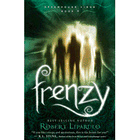
  • Robert Liparulo brings the current six book Dreamhouse Kings Series to a close with Frenzy, published by Thomas Nelson, and featured this week in the CFBA Tour. This series for young adult—and younger or older—readers concludes with more of the same frenetic visits to different times and places with the potential for tragedy in every new adventure.


    The only problem with doing a review for the final book in this series is not giving away the episodes which propel the story to its open-ended conclusion. The evil Taksidian and his brute Phemus captured Xander and David enslaving them in Atlantis hoping to dispose of them by using them as bait along with other kids in fighting yet another war. As these clever boys are wont to do, they escape before being loaded onto the ship which will lead them to a certain death. The creative and often absurd methods used to get away from even more peril adds a few brief moments of “light-hearted” relief to the harmful chaos experienced by this family when dashing through the time portals intentionally—or not.


    David endures even more injury to his already broken arm. Keal, former Army Ranger and current nurse to their great-great Uncle Jesse who’s suffering in the hospital after an attack by Taksidian, works around the clock to make an area in the crazy house that will hopefully remain secure. Dad and little sister Toria arrive back from their trip with information about Phemus, but Xander and David have already gained first-hand knowledge about his origin from their last harrowing trip through the portals.


    I’m such a sap that I actually cried at one point—which is really a tribute to how Robert wrote the scene. Parents who desire enjoyable books that uplift family values and closeness will not be disappointed in how this series ends. Perfectly depicting the characters of the cocky teenage Xander, the emotional younger brother David, and the sweet and helpful little sister Toria, it’s evident this story evolved from a family man’s perspective. Speculative or fantasy fiction often eludes to spiritual rights and wrongs and/or good versus evil, but Robert includes a defining moment to add real meaning to this interesting tale of a family destined to work their way through different times in history to defer some evil in every generation.


    With chapter breaks at exactly the right moments and pacing that lunges the story forward, the events which take place in this book work well for bringing this particular series to an end. Robert’s made no secret of how much he loved writing these books as well as how much he enjoyed all the young people he acquired as fans and friends in the process, so as many might hope (including my nine year old grandson!), the final words (The End) are followed by a question mark.


    I have to say Frenzy is my very favorite, a wonderful conclusion to a terrific series for young people of all ages. Read them all in order or buy the set for someone you love (including yourself).


    548160


    DreamhouseKings.com


    http://www.amazon.com/exec/obidos/ASIN/1595548165


    Father, I’ve asked many a time for your blessing upon my friend Robert. And you’ve supplied those blessings. Please continue to lead him in every area of his life and his writing and add to his insights and revelation knowledge as you deepen his relationship with you. In the Name of Jesus, Amen.   

  • Therefore, you kings, be wise;

    be warned, you rulers of the earth.

    Serve the Lord with fear

    and rejoice with trembling.

    Kiss the Son, lest he be angry

    and you be destroyed in your way,

    for his wrath can flare up in a moment.

    Blessed are all who take refuge in him.


    Psalm 2:10-12 (NIV)

  • Those words so apply not only to writing but to us. To me. I am a Work In Progress. One the Lord never forgets to add to, edits profusely or as needed, and keeps perfecting according to His perfect will. I probably take a little more work than you, but the beauty comes from His labor, and isn’t it cool that He can make beauty from ashes?


    In the natural I’m quite ordinary. In the Spirit I am made in His image, a daughter of the King of Kings. Beauty lives in me because He decided to live in me. Anything good that I do is of Him.


    The words He writes on my heart speak Truth and Value beyond what I can imagine. His penmanship and grammar are perfect, and I long to mirror them. I cannot achieve perfection, but I can know One who is. Because of Him, I can do and say and write what’s vital and meaningful.


    Apart from Him, I can do nothing.


    In the Name of Jesus, Amen.

  • Who doesn’t want to write . . .


    . . . a best-selling novel? Oh I know. The elitist literary crowd loves to insist that exquisite words in dizzyingly unique storytelling won’t draw the “average reader”, which is code for the largely illiterate or unable to recognize excellent writing when they read it. The writing of such rare authors could never appeal to the masses because they (the masses) are too—uh, hey, stupid—to know the value of such profundity as these writers produce. [Not unlike the current government thinks.]


    But, seriously—as if I wasn’t—some writers recognize their limitations and write to the audience who will support them. Whether or not their publisher’s efforts, or their own, can reach the target readers, these authors know to whom they intend to aim with their novels. Some writers simplify matters by merely desiring to entertain. They don’t make grandiose claims to minister through their pages. They want to tell a story to appeal to X, Y, and Z readers, not necessarily to A, B, and C readers. Some writers want to tackle humor and tickle the funny bones of readers who like quirky, dry wit, or slapstick stories. Others attempt to capture male and female readers with adult tales, suspense, mystery, and thriller novels. Some write only to women. Others primarily for men.


    Whatever the case, the “success” factor in publishing is spelled out in S A L E S. So let’s not kid ourselves. How thrilled would we be as writers if our novel(s) showed up on the NYT Bestseller List? If we wanted to continue to be published? Very thrilled.


    Writing as a Christian complicates the matter. Some will argue the point, but it’s truthful that you can’t serve two masters. Jesus made it quite clear. One of those masters will own you. So who will it be? God or . . . ? And who is the one who defines success for you as a writer? God or . . . ? This is tough for a writer. Whether or not it should be, it can be.


    One form of reasoning is expressed in the philosophy that being “the best” writer one can be, by studying his craft, by adhering to whatever is supposed to make writing “shine”, said writer will attain recognition, publication, abundant sales. Throw in as the add-on that God will be pleased with my hard work and the results of my labor.


    I would counter that with God will be pleased with the obedience to work hard for Him however He instructs and to be content with the results of your labor whether or not you achieve your interpretation of success. Not always what we want to hear, is it? I mean, c’mon. Is it?


    Who doesn’t want major sales, some acclaim, some respect from our peers if no one else? We work hard to put together stories. To perfect them—or attempt to do so. So the obvious hope lends itself to interpret success as the standard publishing contract with mucho sales. Right?


    Or not? What are your thoughts? Or rants?


    Lord, teach me contentment. Always. Everyday. The real blessing is in following you. In the Name of Jesus, Amen.  

  • My two favorite ice cream flavors are Pralines and Cream and Daiquiri Ice. Otherwise, I’m not much of an ice cream fan.


    What does ice cream have to do with writing? Nothing really. It’s just that if you’re a fan of vanilla fiction, it’s logical to assume that any stories which incorporate “weird” flavors will not appeal to you. You might ask if I’m putting down those lovers of vanilla fiction, and to settle that debate before it starts: I am not.


    In fact I tolerate most kinds of fiction (not all) because people need to be able to read what they like. Would you believe I know many readers both personally and from the e-world who love sagas? And not just the genre-types of historical, fantasy, and other speculative fiction. They would love to read contemporary sagas—in Christian fiction.


    It’s a well known and much discussed topic that some readers still believe Christian fiction to be “intolerable”. They read a handful of novels from years past and decided they were unworthy to be addressed as “good” literature. You can always tell they’ve not read a CBA novel in years nor have they read some of our “classic” authors. To each his own. To those of us who’ve read literally hundreds of CBA novels, we know the flavors and talents of those who’ve chosen to write it. I’m not going to enter the circular debate about what Christian fiction “really” is. It can simply be broadly defined by those who publish it.


    What I will say is there most likely is a flavor to satisfy every palate from the talented ranks of Christian writers no matter what your favorite is.


    Vanilla: Bland, appealing, and sweet


    Chocolate: Sharp and smooth


    Strawberry: Fruity and full of flavor


    Pralines and Cream: Nutty and rich in texture


    Daiquiri Ice: Exotic and bold


    What flavor are you in your reading and/or writing?


    Father, you’ve made us in all flavors. Nothing restricts your creativity. Thank you for your love of variety. In the Name of Jesus, Amen.

  •  

    “Southern Fiction” emotes immediate mental pictures for me. And sounds. And even tastes. Truth be told, I know very little about “the South” being one of them Yankee Northernahs—even worse: I’m from the Northwest. But to my credit, I’ve read a few of the Southern Fiction novels and enjoyed the different approaches each author took in telling their tales. Most of them weave some of their history into the storytelling and hold onto their particular expressions and accents and unique foods, not to mention their coveted disdain for the North.


    In This Fine Life by Eva Marie Everson, published by Revell, southern life is viewed first through the eyes of Catholic boarding school graduate Mariette Putnam in the year of 1959. From a privileged family with the means to send her to college or to find her a good candidate from the ranks of the wealthy to be her husband and provide her with a fine life, her father who owns a very successful business wants her to get an education while her mother much prefers the latter for her only daughter. But Mariette is smitten by Thane Scott, a handsome young blonde man who works for her father at an entry-level job. He’s forward, enticing, and being from a farming family, he’s anything but rich, and when he gives her an ultimatum after her parents forbid her to see him anymore, she can’t imagine spending her life without him and decides to elope with him that very night.


    After their initial passion in a cheap motel, the reality of their lives together provides a rude awakening for Mariette, but she’s just stubborn and defiant enough to plow through the poverty of their situation and their immediate first residence with Thane’s aunt while enduring the shock and ire of her parents. It doesn’t take long before Thane decides the Lord is calling him to be a pastor, something Mariette doesn’t quite understand, and this leads to another move from their own tiny apartment to her parents’ home during Thane’s schooling which finally produces a real relationship between Thane and Mariette’s family.


    Since the POV is through Mariette’s young eyes, the reader rides along on the journey of an immature love which starts out with the typical romantic antics of two people who know little about the big picture of life or even about each other. Their struggles to become husband and wife, to understand their roles as adults, for Thane to rise to the “man of God” role when Mariette shows no evidence of embracing the reality of his faith, accompanied by a tragic loss—all these challenges lead them to Thane’s first pastorate in a tiny town where Mariette feels like she’s on the outside looking in, a familiar feeling which kind of describes her life thus far.


    Since Mariette has yet to discover any real faith in Jesus, the “job” of pastor’s wife seems foreign to her and outside of her abilities since she can’t even cook “fried chicken” or much of anything else. She establishes a few relationships, one with a teenage girl who desperately wants to leave the town and never return, but without really knowing this God of her husband’s faith, she fails to understand much of what Thane must do. With the discovery of a terrible situation, Thane insists Mariette return to her parents’ home until it can be resolved.


    This Fine Life presents the story of a naive young couple who enter into marriage and travel through the trials of life together to attain a “fine life”. Told through the eyes of a young woman who can’t seem to grasp who God is until she faces her own desperation, it’s a coming of age story mixed with a coming to faith story filled with the petulant emotion of a young storyteller and the antics of an immature couple trying to navigate their way through lust, love, and the longing for things they believe, things they perceive, and things they simply can’t understand in their youth. It’s a tale of learning about life and faith and the inherent challenges between a man and a woman and a patient God.


    Cleanly written and stylized to sound like a young woman’s account, This Fine Life by Eva Marie Everson is up-market/commercial women’s fiction and will appeal to both the young and old of southern fiction fans as well as those who enjoy the relative innocence of the lives lived in the late 50s and early 60s.


    Available May 2010 at your favorite bookseller from Revell, a division of Baker Publishing Group.

    732745

    Father, you’ve given Eva Marie a niche and a voice in this place of writing. Please continue to bless her efforts to communicate your grace through her stories. In the Name of Jesus, Amen.

  •  

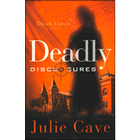
    The CFBA Tour features the first novel in a trilogy written by Julie Cave entitled Deadly Disclosures published by Master Books, a division of New Leaf Publishing Group located in Green Forest, Arkansas. The novel presents an attractive cover design and an interesting format for this first effort by Julie Cave with just a few missed copy-editing errors. The stated objective of Master Books reads as follows:

    “The world's largest publisher of creation-based material for all ages.”


    Julie Cave lives in Brisbane, Australia, with her family which kind of makes the plot of this novel unusual—at least to me. Deadly Disclosures takes place in Washington DC and centers on the FBI investigation of the kidnapping and murder of Thomas Whitfield, the Secretary of The Smithsonian, his being the first of four eventual killings. I can’t find any evidence of Julie ever living in the United States, but this story reads like an American novel.


    Before I get to the particulars of the story, I will say I can see the potential for Julie’s writing, but this novel displays the flaws of what I call “first novel syndrome”. Repetition, clichés, a lot of adverbs—which I agree can be overused—along with too many dialogue tags, over explanation of biblical principles and the way to salvation, all of these things tend to point to a first effort. They’re easily recognizable because I did all of them in my first novel.


    FBI Special Agent Dinah Harris has been demoted from the field to teaching a classroom at the Bureau because of a breakdown suffered after debilitating loss in her personal life resulting in an additional tragedy at work. Her former partner FBI Special Agent Ferguson talks her into joining him on a case after he gets her clearance to help him find out where the Secretary of The Smithsonian has disappeared without a trace.


    Choosing to make your heroine a suicidal alcoholic with a snarky personality is a daring venture for a first novel, but Julie does a fair job of transmitting Dinah’s pain and inability to cope with her losses. We’re given minimal information about the origin of her suffering, and I think we’re forced to wait too long for it to be revealed. The portrayal of her indulgences with alcohol is realistic and honest.


    Deadly Disclosures is somewhat agenda driven by the mission statement given above. The story incorporates a group of organized atheists using politics to eliminate Christian values as the source for morality while denying and attempting to suppress the biblical basis for mankind’s existence professed by creation scientists. This group is discovered during the investigation of the Secretary’s disappearance while trying to determine the reason he’s missing. Included in this ambitious plot are several school shootings, beginning with Columbine, and their impact on the backstory of atheistic Thomas Whitfield and the relationship he develops with his opposition in debates of evolution vs. creation, Andy Coleman.


    Much of the backstory is dropped in via separated passages which refer to past events in the lives of the characters. It feels like a convenient gimmick—or information dump—to fill in the blanks of their history but explains the process or “evolution” of the character’s journey. This method is used in television and film to show different past encounters between characters and is incorporated in other novels usually with a distant historical connection rather than those matters of recent history.


    With the discovery of Thomas Whitfield’s murder the investigation keeps coming back to the Board of The Smithsonian. However, after a few people are interviewed by the FBI, more people turn up dead. The tense final confrontation leads to the revelation of the real intentions of the atheistic group as well as the identity of the major players. The “perfect ending” is left open but accommodates a certain justice with a perhaps too convenient resolution. 


    Dinah Harris is well done but tedious in the repetition of her bitter sorrow and loneliness. It’s established why she buries herself in alcohol after the first two accounts. To continue to emphasize her reasoning without giving the reader the true source of her heartbreak gets old.


    As I said, the potential is there for Julie Cave, and hopefully the next books in this series will show her progress as a novelist.


    515840


    http://www.amazon.com/exec/obidos/ASIN/0890515840


    Father, there’s no question Julie’s desire is to serve you. Please open the doors for her to do just that. Bless her in all she does to honor you. In the Name of Jesus, Amen.
  • Then Jesus went through the towns and villages, teaching as he made his way to Jerusalem. Someone asked him, “Lord, are only a few people going to be saved?”


    He said to them, “Make every effort to enter through the narrow door, because many, I tell you, will try to enter and will not be able to. Once the owner of the house gets up and closes the door, you will stand outside knocking and pleading, ‘Sir, open the door for us.’


    “But he will answer, ‘I don’t know you or where you come from.’


    “Then you will say, ‘We ate and drank with you, and you taught in our streets.’


    “But he will reply, ‘I don’t know you or where you come from. Away from me, all you evildoers!’


    “There will be weeping there, and gnashing of teeth, when you see Abraham, Isaac and Jacob and all the prophets in the kingdom of God, but you yourselves thrown out. People will come from east and west and north and south, and will take their places at the feast in the kingdom of God. Indeed there are those who are last who will be first, and first who will be last.”


    Luke 13:22-30 (NIV)