Into the Fire

Passionate thoughts about the world of writing and the Power of God

  •  

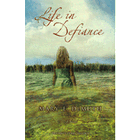
    The Defiance Texas Trilogy comes to a rather remarkable end in the one-of-a-kind voice of Mary E. DeMuth. Life in Defiance shows us the despicable, the tortured, the regretful, and ultimately the forgiven in this small Texas town.


    Told through Louise “Ouisie” Pepper’s point of view, we get a stark picture of the home life of the despicable Preacher Hap Pepper, Ouisie’s horribly abusive pastor husband who rules her life with a literal iron fist and a hateful tongue, oblivious to personal sin but oh so quick to condemn his wife, his children, and the woman who once had an affair with him (Emory Chance).


    Women who’ve experienced the horrors of physical and emotional abuse might recognize themselves in Ouisie Pepper who accepts her husband’s assaults and accusations and blames herself for failing to be the godly wife he needs. Escaping to alcohol to subdue her multiple pains, she yearns for a freedom she cannot imagine. (The vase of plastic flowers is ingenious.)


    Defiance life continues under the shadow of the death of young Daisy Marie Chance (from the first novel Daisy Chain), best friend of Hap and Ouisie’s son Jed. The pall stretches through the second novel (A Slow Burn) told through the eyes of Emory Chance, Daisy’s neglectful single mom, and slides into the final novel Life in Defiance as a heavy burden lurking in the woods where Daisy’s body was found. To complicate the unsuccessful search for her killer, Ouisie thinks she knows who did it but believes it was an accident. 


    The original characters on display in Life in Defiance capture a real life composite of all kinds of people both in and out of the church dynamic. Emory Chance has found Jesus through her own tragedies, and she’s good to go to the next level, dragging her unlikely best friend, the nearly destroyed pastor’s wife Ouisie Pepper, with her. Between Ouisie’s gruff neighbor Ethrea Ree, who keeps secrets of her own, and Emory, Ouisie Pepper finds the friendship she desperately needs to sustain her while she begins to wonder if Hap will in fact kill her in one of his escalating rages.


    When the author of a book about becoming the “perfect Christian wife” visits Ouisie after receiving an impulsively written confession of her life with Hap, the story jags in another interesting direction, none of it an improvement for Ouisie’s difficult circumstances.


    In a hideous chain of events with two amazing twists, Life in Defiance rids itself of two criminals, one despicable and unrepentant and another tortured by sins and memories.


    Mary’s voice stamps her as unique, her characterizations prove her ability to get inside people’s heads, and her stories meld unusual personal journeys with the pain of real life experiences. Life in Defiance concludes this trilogy in a powerful and uplifting fashion after the pain and dread of seeing a town full of people in desperate need of healing and closure.
     

    278382


    http://marydemuth.com/


    Thanks to Zondervan and http://www.blogtourspot.com/defiance-tour/ for my copy.


    Father, you’ve brought Mary along through many journeys, and her writing has been a beacon to so many. Continue to guide her and uplift her spirit as she travels this trip of life and writes as she goes. In the Name of Jesus, Amen.

  • He who does not love me will not obey my teaching. These words you hear me say are not my own; they belong to the Father who sent me.


    John 14:24 (NIV)

  • There are four things you can count on when you read a Kristen Heitzmann novel. In every book you will find a few quirky characters, an unusual and imaginative story, passionate people, and great dialogue. Kristen’s latest release Indivisible is no exception to her rules.


    Police Chief Jonah Westfall replaced his father as the head cop in Redford, Colorado, a small town ready for expansion at the base of mountains. Tia Manning makes candles and operates the shop her mother owns in absentia and uses her online psychology degree to operate a telephone service called Hopeline. Tia’s parents and sister and her family live in Arizona—all estranged from Tia, the less than perfect daughter and sister so many years ago. Piper rents a room from Tia and bakes for the infirm old soldier Sarge who cuts her no slack and tolerates no changes in his bakery. The new veterinarian Liz sets up her practice just outside of town and meets Chief Jonah when he brings her two mangled raccoons which were sown together in what looks like a possible cult killing. The big tall Miles buys tapers from Tia because they’re untouched by human hands. 


    Each one of these characters suffers from either familial or situational trauma or both. Facing their own struggles with varying degrees of success and failure, the Chief also faces the deep pull of his former alcoholism and the consistent rejection of his love for Tia because of a past mistake. Mixed with his personal problems, the potential for escalating crime with animal mutilations and his suspicions about a meth lab in his territory threaten the safety and peace of the small town.


    The multiple twists in this story keep the reader off balance but with ample clues to know some of the situations and perpetrators without figuring out exactly how the circumstances will be resolved.


    The UST between Jonah and Tia sparks, fizzles, and ignites again in the face of sadness and danger. Faith in God plays a subdued role in this story but is evident throughout and is credited with ultimately providing relief from some of the traumas in these damaged lives.


    Using some fascinating quotes to head up each chapter, the reader is drawn into the indivisible depth of the joining of hearts and bodies in noble and ignoble ventures and commitments.


    Some of you know I think Kristen Heitzmann writes some of the best romance offered by CBA. This is because it’s honest and at times it sizzles. My favorite lines in this novel read like this: 


    ***Potential Spoiler***


    He looked away and swore, then turned back and gripped her shoulders. “This thing, the way I feel, didn’t happen because of what we did, it’s why we did it.”


         . . .


    “That day on the ledge, when you followed me to the eagle nest? I wanted to make love to you. I wanted to take off your clothes and let the sun shine all over you. That’s what I was thinking while we talked about your sister.”  


    ***End of Spoiler***


    Yeah, baby.


    Indivisible isn’t my favorite Kristen Heitzmann novel, and I felt it should’ve been longer in order to allow some of the dangling subplots to resolve effectively, but it’s interesting and entertaining, although occasionally the relationship between Tia and Jonah gets annoying, but considering their ages, I suppose it’s par.


    073092 


    http://http://www.amazon.com/Indivisible-Novel-Kristen-Heitzmann/dp/140007309X/ref=sr_1_1?ie=UTF8&s=books&qid=1275621270&sr=1-1


    Lord, I pray your blessing over Kristen, that you would continue to give her fresh stories and opportunities to write those longer novels she does so well. I pray for your continued direction in her writing and in all she does to honor you. In the Name of Jesus, Amen. 

  • Is it odd to think a story can work if it’s just about life in general? I’ve said before that most of us live ordinary lives, and most of us don’t personally do hand-to-hand combat with terrorists in the Middle East. Most of us don’t investigate serial murders for our occupations. Most of us don’t run escort services. Most of us don’t cook in meth labs because our families are being threatened.


    Hey, you all know I read thrillers of all kinds, a bit of horror, mysteries and suspense, and a dwindling amount of romance. I love the excitement, the pace, the chase, the unique episodes with murderers—all of it. You know I watch all the CSIs, Bones, Criminal Minds, and the like. It should figure I would write it. Maybe someday I will.


    I still think there’s a beauty in writing about the ordinary. I think the value of portraying lives in the everyday adds meaning to who we are as individuals, as families, as people. Yes, I know: I write romance. I find value in real romance. Real being the operative word. Real romance gets ugly sometimes, and volatile, and tragic, and usually always causes some kind of growth in the hearts, minds, and spirits of those who participate with more than their bodies.


    The reality of life often carries with it a certain “mundane” label attached to it, and without a doubt we can slip into a boring existence. But it isn’t always the death defying adventure, the exotic trip to a dreamy place, the isolation of a solo experience, or the overall leaving behind of everything we decide has become mundane that rights the ship of the life blahs. I’m convinced the real perpetrator of such “feelings” and/or assessments can be found in the netherworld of the spiritual journey, not in the physical spontaneity or the adventurous attempts to capture excitement in adrenaline rushes and some superfluous validity in what we do rather than how we truly live in the normal everyday.


    People are intricate beings. Some are less complex than others but this fact doesn’t make them uncomplicated. If it wasn’t for our sin nature, we might be less so, but let’s face it: the sinful desires in the most boring lives create “normal” conflict which can prove to be unmanageable to so many so much of the time. Most people after serious dissension yearn for simplicity. They don’t eagerly anticipate the next big ruckus.


    I can’t personally understand the love of and attention to the “bonnet books” in Christian fiction. It’s difficult for me to understand the desire to restrict progress as if progress itself is responsible for any or all bad lifestyles. One need only read the Bible to find that every atrocious behavior known to man occurred long before the Amish or anyone else decided to live a regressive lifestyle. Some people yearn for restrictions and legalism as if they will then feel less responsible for structuring their own lives in a busy advancing society displaying immoral and decadent actions in the open. I’m not criticizing the Amish people or even the love for these novels. I just don’t get it.


    Even in the mundane, life isn’t simple. People experience emotional dilemmas in relationships, employment, and in all kinds of situations. Sin-laced living cannot be escaped, and it provides fodder for stories which can delve into the substance of living life below “ground level” and in three dimensions. Character-rich and character-driven stories can tackle life’s toughest problems and present attempts at solutions within the hearts, minds, and spirits of human beings. No simple task. To live. Or to write.


    The conflict, conflict, conflict, we hear trumpeted from the writing manuals forgets that conflict itself can be boring and tedious. Sometimes the beauty of everyday life is forfeited by grandiose schemes to involve people in circumstances most people never experience. I think those events of the ordinary, those things that everyone lives, can be the things that touch many deeply right where they’re at. Is that a misconception?


    Father, you’re the author of life. Period. Each day is a gift. A chance to know you more. An opportunity to learn what you desire of us. Thank you for that. In the Name of Jesus, Amen.

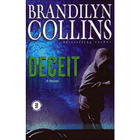
  • Brandilyn Collins highlights this week’s CFBA Tour with her latest release Deceit published by Zondervan. Brandilyn has since transferred her amazing abilities and “Seatbelt Suspense” to Broadman & Holman Publishers. All I can say is good choice for B&H.


    Vintage Brandilyn in this new one. Deceit tells the story of Skip Tracer Joanne Weeks who is convinced that real estate mogul, community pillar, and elder in her church Baxter Jackson killed her best friend Linda, his first wife. Her body has never been found, but Joanne knows Baxter’s ugly secret. When his second wife dies in what is ruled an accident by taking a tumble down their stairs, Joanne is consumed with proving Baxter a murderer.


    Her obsession is only heightened when she nearly runs over a masked man in a hooded sweatshirt on her isolated dark road in the middle of a horrendous rainstorm. When she exits her SUV to inspect the damage, he instructs her to find the Baxter’s foster daughter Melissa who disappeared six years ago at the age of 16 after Linda’s death.


    Fired up and determined to put her exceptional skills to work, Joanne loads up on Jelly Bellies and flies to her computer to get started. The power goes out. It’s pitch dark, the rain assaults the house, the wind roars, and she hears the back garage door slam shut.


    Absolute tension throbs throughout this story which takes place over just a few days, much of it without sleep for Joanne Weeks. The timeframe shifts from present tense to six years prior when the teenage Melissa encounters her new “family” placement at the grandiose mansion of Baxter and Linda Jackson after the ugly death of her alcoholic mother. Before too long, the young woman accidentally discovers trouble in paradise.


    Joanne uses her skills to locate Melissa but encounters acute danger and total resistance from Melissa. The harrowing results of her efforts to pin Linda’s death on Baxter take unexpected turns and prove almost deadly for Joanne.


    The multi-faceted title Deceit and the great cover of this book set the tone for this fast-paced story which won’t take you long to read. Written with intensity and a likable, determined protagonist with a serious addiction to Jelly Bellies, Deceit will make the fear factor palpable and the desire for justice amp up to match Joanne’s. The conclusion brings satisfaction on a couple of different levels. Well done, Mistress (or should it be Madam?) of Suspense, Brandilyn!


    276449


     http://http://www.amazon.com/exec/obidos/ASIN/0373442726


    Father, I pray you would continue to provide the stories to match Brandilyn's talent with the inspiration, the stamina, the determination she needs to write these novels which always point to you according to the storyline, honor you, and bring you joy. You've given her multiple talents in the publishing arena, and I pray you would widen her audience to an even greater number in order for people to find you where perhaps they least expect to do so. In the Name of Jesus, Amen.


  • No, I’m not talking about cheap novels with the bodice-ripping covers. I’m doing my bi-annual post about writing romance.


    Let’s attempt to take a fair approach to the subject of romance novels. There’s no question the topic brings scoffs and eye rolls from the majority of men. Romance traditionally grabs the hearts of females. It’s our gig—that romance thing. However, some women adore sappy romance while other ladies respond to the subtle stuff. Between over-the-top and undercover romance, the very word singes the ears of most males to the point where a more sensitive type man feels uncomfortable admitting to actually liking the thought of a little romance in a relationship or in story—albeit his idea of romance might not correspond to a female’s idea of romance.


    Mike Duran did a post on romance some time ago. (Mike’s getting a lot of mileage out of my blog lately.) He intimated that for a man romance doesn’t really exist without the eventual trip to the bedroom—or wherever—for consummation of bodies. This makes sense to me because romance is all about the possibility of physical contact. Some CBA fiction refuses to address this normal desire.


    Another reason I don’t think most men “like” romance is because they don’t want to “get in touch” with their vulnerability. No one likes to feel insecure, but men generally hate it more. And sensitive? Manly men balk at being called “sensitive” even when they are. How about inadequacy? When the men in books do it all right, say all the cool things, sweep every living version of a female off their feet? No way is any red-blooded American male going to read that kind of pap and drivel. 


    Another reason could be all the heart-pounding description associated with attraction. For men it’s quite simple really. You look, you like, you pursue, you conquer. Or not. What’s to write about or read about? All the drama makes for tedium and . . . embarrassment?


    Writing instructors and their books repeatedly insist conflict must exist on every page, must be amped up and accelerated. What that can mean for romance is the never ending nauseating battle between guy and girl before the “happy” ending. It’s interesting that primarily only women find this intriguing.


    Another flaw or perceived flaw of romance novels is the perfect guy and/or the perfect gal. He says all the right things—or she does all the right things. Or all the wrong things. He’s a bad boy. She’s a good girl. She’s a bad girl. He’s a good guy. Yes. I can testify these are part of the “nothing new under the sun” plot points of romance. However, in order to make these even remotely appealing, the characters must stand out in their authenticity of conduct, dialogue, and situational reactions to be effective or at least appealing. To me anyway.


    Romance is something most everyone “feels” at some point in a relationship. It’s a piece of falling in love and maintaining that love. It varies in intensity for every couple. Physical expression of the heart’s love for another is supposed to run deep. The pleasure caps the romance. Discounting romance eliminates an important part of relationship.


    Sad to say Christians often struggle in the bedroom just like unbelievers. They lose interest, they resent, they ignore, they play games, they reject, they lust after others outside their marriages. Romance becomes a thing of the past—or something they share with someone else—or something they replace with books and movies.


    The motives for reading romance probably vary from escaping one’s reality to accentuating and appreciating the beauty of human love. There’s nothing inherently wrong with romance in real life, but it can take all kinds of wrong turns in literature. I don’t blame men for not wanting to read the typical romance novel. And it’s true: they’re written for women. 


    I love reading romance from a male author’s perspective. Harry M. Kraus, MD, writes a variety of medical novels. When he tackles romance in his stories, there’s some real pop, and it’s good stuff. Travis Thrasher handles romance from a gut-level perspective, and he’s good at it. Steven James gives a different perspective with the widowed genius-level FBI Geographic Profiler Patrick Bowers who fumbles with his attractions to particular women and can’t quite commit to bona fide pursuit even when the invitation is extended to him.


    From a female author’s perspective, I love to take on the male position. I strive to be authentic which is ironic since the majority of novels I write won’t be read by men.


    There’s no point in attempting to “woo” the male gender to read romance novels. But there is a point in making those novels authentic to whoever reads them. What that translates to is a variety of choices for romance readers. And since recent discussions all over the writers’ web confront the formulaic offerings produced by CBA, isn’t it time romance writing challenged the “accepted” norms for stories?


    Father, romance was your idea. You’re the ultimate authority on all things “love”. Thank you for that, Lord. In the Name of Jesus, Amen.

  • American soldiers of all ages and kinds: this one’s for you.


    I honor you and ask the Lord’s blessing upon your lives in the Name of Jesus. I’m grateful that you serve the United States of America and strive to keep us safe. But you also fight to keep others safe from terrorists and enemies of all kinds. You fight to preserve freedom, to promote freedom, and to persevere for freedom wherever you are. Not everyone can do what you do. Not everyone sacrifices like you do. Not everyone bears the burden of keeping an entire nation safe along with their fellows in arms.


    Many soldiers gave their lives to preserve the safety and freedom for the citizens of the United States of America. Some of those lives were lost in combat, some in training exercises, some in the wastelands of addictions and disorders brought on by the horrors of war. I honor your service and remember your sacrifice. Thank you is never enough.


    God bless you in His mercy and provide you with His grace. In the Name of Jesus, Amen.

  • Woe to those who rise early in the morning

      to run after their drinks,

    who stay up late at night

      till they are inflamed with wine.

    They have harps and lyres at their banquets,

      tambourines and flutes and wine,

    but they have no regard for the deeds of the Lord,

      no respect for the work of his hands.

    Therefore my people will go into exile

      for lack of understanding;


    Isaiah 5:11-13 (NIV)

  • Much like the Tea Party movement, there is a civilized outcry regarding Christian publishing about the lack of genre selections from our publishing arm. If you shop at Christian bookstores, you’re going to see a predominance of Amish/historical/romance/Karen Kingsbury novels offered on the shelves. Some larger CBA bookstores/chains will stock a variety of genres, but the majority of selections will be found in the types of books mentioned above.


    If you want to read the outcry boiling over politely, go to Mike Duran’s post and then to Mike Dellosso’s post. (http://mikeduran.com/; http://mikedellosso.wordpress.com/). We know the publishers argue that it’s really all about what’s selling. However, I have long maintained that some/many of the Christian publishing representatives are out of touch with mainstream Christian readers who’ve exited the CBA to find more meaningful fare in the general/secular market—even with the excessive language and sex—because they want to read anything but what is given to them on the shelves of CBA stores. The result of this is online buying and places like Barnes & Noble and Borders getting the business which some of the Christian bookstores could’ve used.


    Christian bookstores or “brick and mortar” stores as the biz likes to call them are closing. The two stores of a small Christian chain in my area closed its doors quietly last year. Why is that? Everyone has an opinion, and here’s mine. The fiction shelf space kept shrinking. The sales for these novels wouldn’t compete with online buying. The selections were ordered by one individual who made the decisions for all the stores even though a customer could special order other novels if available in their overall inventory. There were too many other “things” to compete for space and dollars.


    Don’t get me wrong. Whatever it is that brings the income to a business for survival and allows them to flourish—this is what they need to do. The contention here is because publishers are essentially booksellers, CBA publishers are disenfranchising a portion of their market. It certainly isn’t for a shortage of writers. More queries and submissions every year even if less books are being produced because of economical downturns.


    So why is it that some CBA publishers produce what some readers consider fluff? Well, the general market produces an ample amount of fluff, too, but they also provide shelves and shelves of speculative fiction (fantasy, paranormal, sci-fi, their versions of supernatural) which is where a lot of Christian readers of this kind of fiction go to select their reading choices.


    I don’t think we have a shortage of bold, talented writers in CBA circles in nearly every genre. However, the preponderance for Amish/historical/romance, etc. eliminates the ability and selections of literature to appeal to mass amounts of other readers. I’m not saying these genres shouldn’t be primary if they sell in large quantities. I’m saying if the CBA doesn’t promote the other genres—or figure out how to do so effectively, they’re wasting valuable opportunities to increase their earnings via disenfranchised readers who hope to see their favorite types of stories on the shelves. How will they find them if they’re unaware they exist?


    The more daring of the current CBA publishers are found at Waterbrook/Multnomah, Thomas Nelson, Broadman & Holman, Faith Words and Center Street (Hachette Book Group), and Strang.


    Any thoughts on this conundrum?


    Lord, you’ve given us each a purpose. Help us not to be critical of others who travel those avenues you’ve chosen for them. Help us all to stay on your narrow path as we yield to you in obedience. In the Name of Jesus, Amen.  

  • So often it seems to be the other way around. Take then give.


    “You reap what you sow.” This implies you will receive what you’ve given out or worked toward—planted. In other words you do something first and then there will be a return. People apply this biblical principle to positive methods of the work ethic. Yet we all know it also affects your attitude, your countenance, your actions, and your words.


    There are times when you—okay, I’ll make this personal. There are times when I want to see the “sowing” right now. Of the good and the bad. The clock ticks and time pressures me to see results.


    The good things? Yeah, I want to reap some kind of “reward” for my writing. Irony? Today I received a letter from a woman I met one time at a function and never expected to hear from again. She’s the mother of a lady who no longer attends the same church as me (they moved). This woman took the time to read my monster book Hope Of Glory which I had given to her because she’s an avid reader. I gave her all the disclaimers, and she seemed thrilled anyway for the opportunity. Her letter made me feel like I’d touched her life, like the story enriched her, and that she was truly impressed. Later today I got a rejection for my seventh novel from an editor I’d spoken with at the conference I attended not too long ago. The blessing before the curse. Softened the blow even though the two novels couldn’t be more different from each other.


    The bad things? When people behave horribly, when they’re cruel, vindictive, ugly, and reprobate, I would like to see them face some justice. There is one of those persons in my life right now. One who used to be so close. Now on the fringe. Affecting many vulnerable lives with this destructive lifestyle. Yes, I would like to see some reaping for this sower.


    I’d rather give than take, but like most people I’m sure I take when I should give. How ‘bout you?


    Father, you know my heart. Help me to keep it clean, the intentions pure. Jesus, you’re all I’m livin’ for . . . In the Name of Jesus, Amen.