
Ah, those waterfalls. So very pretty and often amazing.
Thank you for the beauty, Lord. Can't say it enough and it's never enough. In the Name of Jesus, Amen.
Ah, those waterfalls. So very pretty and often amazing.
Thank you for the beauty, Lord. Can't say it enough and it's never enough. In the Name of Jesus, Amen.
Back to some smooth jazz for your listening pleasure.
Lord, you capture the love, beauty, and melancholy in your creation. Someday there will be no tears, no melancholy, for those who love Jesus. Thank you for your rescue. In the Name of Jesus, Amen.

Credit needs to be given and acknowledged to https://powerfulchristianfiction.wordpress.com/ for this heading and picture.
The definitive answer to the title question is an absolute NO. However, yet another question that needs asking: Is the Christian Fiction bookselling industry/publishing/business dead? That remains to be answered. If you'll look in the comment section of Friday's "Knockdown" post, you'll find some interesting, thoughtful, and revealing comments from authors Sally Bradley and Brenda S. Anderson.
In my opinion the breakout novel (as described by Steve Laube in the first paragraph of the post) that began a Christian Fiction revolution was Frank Peretti's This Present Darkness. Frank introduced the full length, spiritually and supernaturally focused story that captured relationships, temptations, demonic interferences, struggles, and an overall fascinating tale of the human condition with and without the Lord. He blew the doors off "Christian Fiction" and established it for years to come. He followed it up with a sequel and several more captivating stories that took more than a couple hours to read and thoughtfully addressed serious "in-house" Christian difficulties in the world and with other-worldly challenges. Although there were some major authors before him, he truly pioneered a fresh approach to writing fiction in the Christian market which gained the attention of the general market.
So where are we now? Closed Christian bookstores, an exodus by traditionally and non-trad authors to indie/self-publication for various reasons:
1. More and more publishers require a suggested marketing package designed by the author so the authors might as well do it by themselves for themselves.
2. The royalties and earnings paid to authors are much more via indie/self publishing so the potential to actually make more money outside the traditional market is certainly more appealing.
3. Freedom to write the stories the way authors choose to write them, to select their own cover designs, titles, etc.
4. A much quicker turnaround rate for book production.
The local Barnes & Noble bookstores generally have a small one-side of a two-part bookcase for Christian fiction and include Christian non-fiction with other "religions" in a section on the other side of these bookcases. From my nearest Barnes & Noble, the offerings are not new nor innovative as far as Christian novels go. The selections are as staid as the industry's decision to produce and sell "safe" books and new releases are infrequent and more by the well-known/established authors. There are no "sale" prices for these soft covers.
Please don't misunderstand me here. Those authors deserve those places on the bookshelves and their audiences should be supplied, but as far as developing new readers to the Christian Fiction genre, there are next to no places to accomplish that outside of indie authors on Amazon.
Christian booksellers have closed their doors, there is conflict at CBA, and those in the business end of all of this must be pondering to whom exactly are they going to sell their published wares. Their print books and Kindle versions are overpriced on Amazon and wherever they're found. They aren't presenting competitive products and prices and they have to be suffering the consequences of their decisions.
Christian fiction authors are alive and well and many of them can be found happily producing the stories they've been born to write or with the help of particular self-publishers.
So, again, a definitive NO to the question regarding the demise of Christian Fiction. In fact it's experiencing a revival of sorts.
Father, you know how it all turns out, what you desire from your people, how to rectify problems, and you continue to meet the needs of all of us who seek after you and desire to be what you designed us to be. Thank you for watching over us, Lord. We're always desperate for you. In the Name of Jesus, Amen.
While the Pharisees were gathered together, Jesus asked them, "What do you think about the Christ? Whose son is he?"
"The son of David," they replied.
He said to them, "How is it then that David, speaking by the Spirit, calls him 'Lord'? For he says,
'The Lord said to my Lord:
"Sit at my right hand
until I put your enemies
under your feet."'
"If then David calls him 'Lord', how can he be his son?" No one could say a word in reply, and from that day on no one dared to ask him any more questions.
Matthew 22:41-46 (NIV)

Steve Laube also remarked in his post that Christian publishing hasn't produced any noteworthy "breakout books" in a long time. And I quote: "(I define “breakout” as a title that rises to the top of the bestseller’s list and stays there for a long time, selling millions of copies.)" For me, the reason for this declaration falls squarely on the broad shoulders of the Christian publishing industry – all of it.
When I think of "breakout" novels in fiction, I think of This Present Darkness by Frank Peretti and Redeeming Love by Francine Rivers. Both of these are timeless novels, each unique and well written, still selling, and still discussed. Both bold and controversial in their own right but beloved by many and totally redemptive.
But, although it might be all about producing a breakout novel to the publisher(s), to the "ambiguous average" reader it's about producing good books – and that is subjective beyond description.
When you ask a random reader how they define Christian fiction, the words that generally get tossed around are "religious", "poorly written" (which is a joke considering a lot of the writing in the popular and bestselling secular/general market novels), even "judgmental". When you ask a random Christian reader to define Christian fiction, you usually get responses such as "God-centered", "clean" – often meaning no "bad" words or graphic sexual scenes – "redemptive" whether overtly or subtly.
Regardless of definitions and breakout novels, the economy did tank for the past eight years. It's making a remarkable comeback at the present time. However, during those hard years, many publishers pulled back and went into their "safe" mode. To an observer it felt like they went back to what they knew much of their familiar, faithful audience liked to read and figured if those readers would just purchase the same kind of fiction they'd been reading for years, the publishers would ride the slow wave until they could hopefully find a way to see a rising tide and maybe expand their menu. In the process they alienated many potential audiences who hungered for that deeper selection. By alienating a significant audience, their future success in reaching new or adventurous readers was jeopardized.
One of the alienations occurred when a portion of readers blanched at the inclusion of certain words which they loudly claimed were inappropriate for Christian readers and therefore writers (i.e. hell, damn, crap, boobs). Their vocal demands, accusations, and threats to publishers curtailed some realistic language spoken by characters in a limited capacity in the genre. The demands by publishing houses in the requirements for being selected for their houses stayed stringent and eliminated some authors from attempting to inquire. Once again, this isn't to say those words are necessary to present realistic drama in a story, but neither are they so utterly offensive or sinful to require being totally eliminated. The same complaints came from any romantic scene which implied sexual desire even in romance novels. Or where the physical appearance of a character became the subject of admiration. An example of this was a 70 year old female character in a bestselling Christian romance gushed over the attractiveness of a young, handsome male character. An Amazon reviewer was offended that a woman of her age rattled on about this hunk. Now that review offended me!
Well, writers don't necessarily quit writing during a tanking economy, and readers never quit reading. When all of the e-readers became commonplace, and the cost of reading a full length novel for much less became practical, the popularity of the instruments boomed. Along with that trend, writers decided all those novels they'd written could be formatted electronically, their covers independently consigned, personal editors hired, and suddenly they could publish their own books! The kind of books they liked to read would be available because they would write and produce them! And for those who are/were less, or not at all, techy there were self publishers waiting for the opportunities to serve them for much less than it cost to do a soft cover copy. Indie publishing zoomed into the forefront of Christian e-books. And the prices were right because they were usually much cheaper than the e-novels from traditional publishers – with greater royalties for their authors than provided by traditional publishers – and suddenly the plethora of e-books presented readers with unlimited selections in all kinds of genres.
There were notable trends during this malaise in Christian publishing. At the time, Amish fiction and historical romances loaded the shelves of Christian bookstores. However, during that same time in the general market, fantasy novels were blowing off the shelves. Christian publishing houses insisted that "their" audience wouldn't buy Christian fantasy so very few were produced. As a side note, during this time I attended a Christian writers' conference where almost 90% of the attendees and aspiring authors wrote and read fantasy. This disinterest in fantasy/sci-fi by most Christian publishers did produce a couple of offshoots from professionals within the industry who tried diligently to produce those kinds of novels exclusively.
It seems possible to me from conversations I've had with some professionals that once settled into the routine of publishing and selling, a separation can occur between the publishers, the booksellers, and their consumers: the readers. Since there are innumerable types of readers with an endless variety of tastes in fiction, it's important to maintain a working relationship with the audience being served. If a publisher assumes a certain audience will always be there, that their desires will remain stagnant, they could forfeit an entire new avenue and possibly lose some of those they've counted on to stay the same.
I've said it before multiple times and I'll add it again here. Any business, Christian publishing, retail, or otherwise, can choose to conduct their businesses however they desire, to cater to a specific audience, to add or subtract from their author stables, their products, and/or employees. Their successes and failures rest with their decisions, right and wrong.
Another noteworthy item that bears mentioning is the mistake-laden production of books in the last several years. Errors have been plentiful in both physical books and e-readers and were surprising at first but now have become commonplace. A missing letter, a wrong reference to a character, a misspelling, incorrect punctuation . . . and this isn't particular to any division of publishing. It's happening in both general market and Christian publishing. Usually attributed to cutting costs in copy-editing, its reoccurring consistency seems a strange choice for professionals.
Finally, the ongoing mystery of how to successfully market fiction remains. It's not difficult to market the bestselling authors whose names are immediately recognized and whose new releases are welcomed in the pre-order offers. But, and it's a big "but", to market a new author, to expect any unknown author to do a spectacular job of selling his/her novel, this creates a significant problem. More of this job has fallen in the laps of writers with multiple and multi-faceted suggestions/demands from the publisher. Unfairly, I might add, because the publishers falter at it regularly and expecting an author to produce the knowhow is presumptuous and ripe for failure. Some are good at it, but many are not. Besides, it's a mystery how to approach selling each book.
I realize this is a long mishmash of thoughts regarding publishing, the Christian Fiction genre, and, honestly, I don't intend to tie them all together to make a convenient end to this post. However, I welcome any comments you'd like to offer or discuss.
Father, you know the answers to all the questions. You know the questions before they're asked. You are the advocate of every believer, and we're desperate for you in all we do. Thank you for always being with us even when we choose the wrong way. Help us to remain obedient and eliminate those wrong turns. In the Name of Jesus, Amen.
I've written many posts on the subject of Christian Fiction, publishing the genre, the "rules" and "regulations" of meeting the "standards" of traditional Christian fiction, self-publishing (or "vanity"/independent), and the overall trials and decisions experienced in the writing/authoring arena of Christian literature.
Steve Laube posted this article on Monday (09/10/18) regarding the CBA (Christian Booksellers Association):
https://stevelaube.com/rumbles-in-cba/
It's not a "hit piece" by Mr. Laube but rather a thought provoking general composite of Christian retail today.
Okay, here comes the "hit piece" via my thoughts on the declining Christian retail market "on the ground" which in my area is non-existent – where there used to be six Christian bookstores within easy access.
Speaking from a retail standpoint, here we go (and from a fiction purview).
Number One: Too expensive. When you can buy the book online (including shipping) cheaper than you can drive to the store and purchase it, where do you think many shoppers will go to purchase it? When you see literally 20 copies each of certain authors' novels and can't find one of another author's several publications, where will shoppers go to purchase it? When there are so many paintings, vases, stickers, knickknacks, jewelry, etc. expanding to the point where book tables and shelves are diminishing, where will shoppers go to purchase books? Where there are an inordinate amount of non-fiction books compared to very few novels, where will the fiction reader shop?
Number Two: One of the worst retail practices I've ever heard of which is prevalent in Christian bookselling (and perhaps general marketing – I don't know) is allowing retailers to return books if they don't sell – even when ordered by the retailer. This fosters a complete lack of accountability by retail management and puts authors in a hard place regarding their sales/earnings/royalties' projections. Some stores accept returned books by consumers who "didn't like" the book after reading it! No. Retail is a tough, tough business, and usually it's the business with great customer service that survives provided the product is good. But even tough customers who know the "rules" of purchasing in a particular store will abide by those when treated well and fairly.
Point of Contention: Retailers must decide whether or not they're going to be a bookstore or some combination of books and sundries. Both can work, but the prices must be competitive with the online market or an outstanding coffee bar better occupy the same space to support the place.
Question: Why do traditional publishers sell their Kindle (and other e-reader) books for such an exorbitant price?
Tomorrow we'll discuss the rise of indie publishing and the associated complaints regarding the traditional Christian publishers.
Father, you improve everything if we give you the reins of our lives. Help us to listen and obey. In the Name of Jesus, Amen.

Magnificent!
Lord, words escape. Too beautiful. Thank you. In the Name of Jesus, Amen.
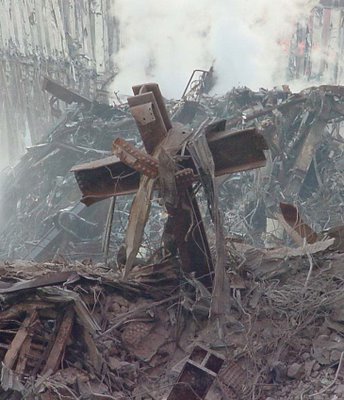
The deaths, the destruction, the sorrows, the memories, and yet the Cross . . .
Dear God, you have allowed the enemy of our souls to experience some victories, but you are never overcome, never defeated, never surprised. There is purpose in all the sorrows. We're desperate for you and the redemption you offer in the pit of sorrow and sin. Lead us all to the Cross and Jesus. In the Name of Jesus, Amen.
Thirst of Steel, Ronie Kendig's amazing third book in The Tox Files, is about so many things past, present, and future, that I would suggest when you sit down to read this third book, you set aside big blocks of time per sitting. This story is so complex, mysterious, spiritually tethered to the supernatural, it takes intense concentration to follow the sometimes herky-jerky world hopping drama which risks the lives of so many.
Tox is separated from Wraith, his and Ram's operator team, on what he hopes is his final mission as a favor to his fellow Wraith member and beloved friend Ram. As are most missions, this one is particularly dangerous because its goal is to put an end to the AFO (Arrow and Flame Order). However, the perceived leader of the murderous cult is after the renowned Adama Herev, the legendary Goliath's sword which is believed to be responsible for a curse that causes a bloodthirsty lust for slaying their enemies (the Jews) and physical conditions which resemble hemophilia in the descendants of Goliath. This curse has been known through the ages as "The Thirst of Steel" because pure rage simmers in the bloodstreams of those "infected" who must be treated regularly with serum injections to keep them strong and healthy.
Because of the danger of this unique sword, it's been disassembled with parts hidden in unknown places. The AFO wants to reassemble it and kill their enemies in a big battle, ending the curse, with the date for it looming. Their leader creates a plan for finding the pieces by kidnapping Ram's sister Tzivia (accomplished archeologist and researcher) and convincing her to find that sword to save her father who they've imprisoned. Ram's and Tzivia's father walked out on their family when they were both young, but his death was never confirmed and when Tzivia learns he's alive from the AFO leader, she agrees to try to find the pieces of the sword to save her long lost and suffering father. Ram is not convinced their father is worth the price and warns her not to do it, but she pays him no mind.
Tox is in deep cover. Cole "Tox" Russell learns everyday just how perilous his situation is, and he longs to see and hold his wife Haven. When Ram's and Tox's situation becomes critical, Wraith, Haven, and another operative (Mercy) who had prior experience with Ram are all read into the mission and sent to Russia and Latvia.
Betrayals, devotion, brutality, sickness, deaths, sorrow, joy, and supernatural intervention populate this masterful tale. Roni has written an exquisite trilogy in Conspiracy of Silence, Crown of Souls, and now Thirst of Steel. Cole "Tox" Russell remains my favorite hero after Mitch Rapp – and that's saying something. He's strong, has massive sex appeal – yes, it flows off him in waves* – tough, loyal, devoted to Haven and his country, savvy, and unafraid to do what must be done.
In many ways, this book is more about Ram than Tox – that's a daring approach because of having established such a powerful hero in Tox. Vince Flynn did it in one of his stories, but, as a devoted reader, I found myself looking/hoping for more of Mitch, and in this case a little more of Tox. But that's just me. I have no complaints about this book. Ronie has compiled three amazing novels, real full length books, that keep you embedded in the stories even when you're forced to lay the book down for awhile. Eliciting many tears from this reader toward the end, I love this series.
Highly and enthusiastically recommend The Tox Files. You must start with Book 1 and read them all. Love the covers of each one and normally I don't like exposed faces, but this guy? Just wow.
(*There's a fight scene where Tox in deep cover must subdue the flailing, swirling, lethal Tzivia, who is proficient in Krav Maga, but the mastery and strength of Tox is somehow both compassionate and, yes, sensual. [Pages 156-7 in the soft cover])
Father, thank you for Roni's insights, both spiritually and emotionally. May you continue to fill her up with your abundance, revelation knowledge, inspiration, and provocative stories. Please keep her safe from all harm and bless her with your closeness. In the Name of Jesus, Amen.
The chief priests and the whole Sanhedrin were looking for false evidence against Jesus so that they could put him to death. But they did not find any, though many false witnesses came forward.
Matthew 26:59-60 (NIV)

