Into the Fire

Passionate thoughts about the world of writing and the Power of God

  •  

    Vince Flynn Novels


    Vince Flynn gets a category all his own. For readers who love political thrillers and are true patriots. You can now start the uninitiated readers with American Assassin which is a prequel to all of the Mitch Rapp stories. But if you want to read them in the order they were written, Vince Flynn first wrote Term Limits which was written in the mid-90s but is a picture of today. Mitch Rapp isn’t introduced to us until Vince’s second novel. In all fairness to getting the ultimate experience from these books, they really should be read in order, so here they are in the order they were published:


    Term Limits 1997, Transfer of Power 1999, The Third Option 2000, Separation of Power 2001, Executive Power 2002, Memorial Day 2004, Consent to Kill 2005, Act of Treason 2006, Protect and Defend 2007, Extreme Measures 2008, Pursuit of Honor 2009, American Assassin 2010


    Military Thriller


    The Malacca Conspiracy by Don Brown


    Don writes great military novels. The Malacca Conspiracy brings back the super JAG attorney Lt. Commander Zack Brewer. Don Brown, like Vince Flynn, doesn’t pull any punches as to who the terrorists are in the world. A dynamic plot with a strong protagonist. (Also best if read after Treason; Hostage; Defiance)


    Contemporary (Hard to classify)


    Admission by Travis Thrasher


    Admission is not a new novel, but it’s a good one. It takes a close-up look at a group of college friends who experience a season of their lives they ultimately would like to forget, but they can’t. When unusual circumstances force the truth from its hideaway, a few lives are finally set free.


    Crossing Oceans by Gina Holmes


    A heart-wrenching story of love and sacrifice and family healing. Very good debut novel. Gina’s got a unique voice.


    Once in a Blue Moon by Leanna Ellis


    A good novel with some quirky characters in unusual settings, a clever and touching story about searching for those things in life which mean so much but seem elusive.


    Hunter’s Moon by Don Hoesel


    A writer returns to his hometown and estranged relatives while in the middle of a divorce. Discovering new information about a circumstance he’s tried to forget, his life is endangered while learning the real reason for some of the dissension. A well-written and entertaining story with a likable rogue of a protagonist.   


    Young Adult


    Frenzy by Robert Liparulo


    The conclusion to this six book segment of the Dreamhouse Kings Series, Frenzy is easily my favorite as the terrors of the King family’s weird house and the multiple travels back in history to search for the wife and mom come to a satisfactory and touching end. Do your recipient of this gift a favor and buy him/her the six-book set. Each book leads into the following one. This series can be enjoyed by adults, too.


    Other Series Novels


    Life in Defiance by Mary E. DeMuth


    This story ends the Defiance, Texas Trilogy, and it’s a very good conclusion to Mary’s series featuring Louise (Ouisie) Pepper, the local pastor’s wife who lives with horrible abuse from her husband. Mary DeMuth's individual voice and style present us with a small community rocked by tragedy and hidden sorrows. Again, to do this book justice, the whole series should be given (Daisy Chain; A Slow Burn; Life in Defiance).


    Father, you have blessed all of these wonderful authors with stories and books. I pray your guidance to continue in their lives, that they would keep you in front of all they do and write, and that they would feel your pleasure. In the Name of Jesus, Amen.
  •                9780825441912_p0_v1_s260x420

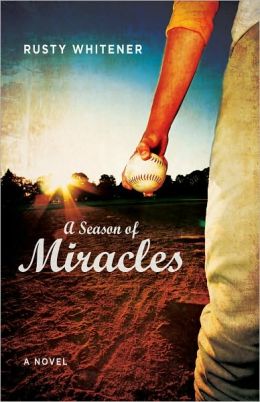
    I’m a firm believer in enjoying a film just for the sake of it or reading a novel for the pure feel-good experience. A Season of Miracles by Rusty Whitener, published by Kregel Publications, and featured in this week’s CFBA Tour delivers that experience in spades. Looking back to the glory days of a Little League team called the Robins and told from the 12 year old narrator’s (Zack) perspective in the 1970’s Alabama sunshine, we get occasional hints that the young man’s view of this particular season is told in its aftermath and from his grown-up acquired wisdom—A Season of Miracles that changed not only one boy’s life but the lives of an entire team.


    Okay, you might think it sounds sappy. Too sugary sweet. Maybe even “too Christian”, but it’s a realistic tale of a small town with kids (and coaches and parents) who live and breathe for their Little League games even if they’re not any good and even if they’re not baseball savvy. The idea of belonging to a team even when you’re too small for the batting helmet to fit right or you’re too hefty to run fast or you’re just plain average in your skills, you get to play with your guys and for awhile in life that’s all that really matters.  


    When Zack invites a strange kid named Rafer to practice with him and his teammates before the try-outs start for the year, none of them are prepared for what this oddball who barely speaks can do with his bat. With visions of winning a championship against a formidable opponent, these Robins desperately want to beat the cocky Hawks who have a lot of talent, a few bullies, and a Championship under their collective belts—or bats.


    This is a story of boys, and one young lady, a dog named Sawdust, baseball, a different boy, his hurting father, and the amazing interaction of a community filled with ordinary people who are allowed to experience the extraordinary in one short Little League season.


    The writing is just right to tell this story, and Rusty Whitener never takes advantage of sensitive subjects but gives what makes us feel is an honest account of all those little incidents which expand to become so meaningful in our lives and stay with us through all the other events, large and small, and still carry the same magnitude as when we first experienced them. The sensation of eternity splashing its coveted and perfect moments in our faces to assure us it’s real when everyday we face those who harp against the divine—these flashes of holiness dance through the pages of A Season of Miracles.


    To relay any more information about the story itself would be like telling you the ending to a good movie. I’m not going to do it. This is a story for all ages told well and in a way that will elicit tears and laughter and instill hope where perhaps that very thing is what’s so desperately needed. Filled with people you surely know or have known, A Season of Miracles is more about all of us and our journeys in this life somehow captured in a team of young kids, their parents, and those who influence their lives one way or another.


    This will make my suggestions for Christmas gifts. It’s a worthy read.

    http://www.amazon.com/exec/obidos/ASIN/ 0825441919


    Father, you know Rusty’s heart is laid out on the pages of this novel and I’m willing to bet in all of his work. Please continue to bless all things he does for your glory and continue to provide that heartfelt prose that makes great stories. In the Name of Jesus, Amen.

  •  

    Okay. I know. Some of you gasp at this, but, hey, some people actually do shop early and why not give them some book ideas because most of us here all love books, and we might be surprised at who else would appreciate receiving them as gifts.


    Since I so rarely read non-fiction, I’ll start with it. I recommend two very different selections this year (both reviewed on this blog).


    Thin Places by Mary E. DeMuth


    Thin Places is a memoir written by non-fiction and fiction author Mary DeMuth. It’s a gut-wrenching, touching, bold, and ultimately redemptive recollection of the horrors of Mary’s childhood. If you know anyone who’s suffered through sexual abuse, this is the book for them. And for those of you who want to know what it’s like to experience those horrors as a child and grow into a productive and spiritually secure adult, I highly recommend Thin Places.


    A Friend in the Storm by Cheryl Ricker


    This hardbound little comfort book would make a nice gift for anyone but especially for those who are going through a difficult time. Cheryl wrote the poems accompanied by scripture verses and numerous quotations to fit each page’s topic for a woman she met who had cancer, but it reaches beyond illnesses with its simple but elegant approach to suffering and sorrow. Giving relief through brief tastes of joy, it’s the just right gift book for someone who really can’t handle a treatise on enduring hard things.


    So. On we go to fiction. These novels are all reviewed on this blog and represent my 2010 selections. If you want a more complete list of excellent books, go to the archives and find my Christmas in October post for 2009. I’ll divide my selections into categories.


    Feel-Good Novels:


    Jenna’s Cowboy by Sharon Gillenwater


    This is a sweet romance novel that deals with Post Traumatic Stress Disorder in a meaningful way, and I actually enjoyed the story. For those friends or relatives who love a nice little romance novel, this is the one for them.


    A Season of Miracles by Rusty Whitener


    [My review for this novel will be up on Wednesday.] Rusty Whitener hits a homerun with this reflective glimpse at one season of Little League baseball back in the 70s in Alabama. Tears and laughter for those who read it. A story for all ages.


    Speculative:


    Immanuels’s Veins by Ted Dekker:


    Not my favorite genre, and I do not recommend this one for the tweens and teens who have embraced the vampire novels. This is a far too sensual novel for careful parents to foist upon their kids. No matter the sophistication of some youth, this novel will most likely have young people exiting the novel with some attraction to the sensual power of the wrong side. This book should be for adult readers although I’m sure many teens will read Dekker’s take on the bloodthirsty. I’m just not sure those young people will get the real message from the experience.


    Thrillers/Horror:


    The Bishop by Steven James


    I recommend The Bishop but in order to fully benefit from this genuine thriller you simply must start at the beginning of the Patrick Bowers Series. The Pawn, The Rook, and The Knight precede The Bishop so if you’re able to be extremely generous, this is a knock-out series for lovers of intense thrillers. Special Agent Patrick Bowers is a genius Geospatial Profiler who watches the patterns of serial killers to figure out their basic location of operation. While recovering from his wife’s death and the challenges of raising his teenage step-daughter, hideous killers try to outsmart him and his colleagues, often making it personal.


    Darlington Woods by Mike Dellosso


    The death of his wife and his missing son drive a man to Darlington Woods with an odd waitress who knows more about the place than she reveals. The horrible creatures that surface in the dark of the woods bring terror to a small community who’ve lived in fear for a long time. When evil seems to wield the upper hand in the darkness, the evil is engaged by the real power. Great twists toward the end.


    Mystery/Suspense


    Deceit by Brandilyn Collins


    Providing a mature female character who is a Skip Tracer, this story portrays her determination to expose the killer of her best friend. Twists and turns and unexpected results beset the heroine every step of the way. Staccato prose that keeps the reader on his/her toes.


    Back on Murder by J. Mark Bertrand


    First person present tense gives the reader an in depth look at police procedures with an emotionally wounded protagonist, a detective who dares the reader to get in his corner while doing his best to prove he’s “back on murder” as the case of a missing girl intersects with a murder investigation. Very well done.


    The Clouds Roll Away by Sibella Giorello


    Rejoining FBI Special Agent Raleigh Harmon is always a treat. This is the third novel by Sibella Giorello to take us through the heartaches and disciplines of this great character. Her intuitive skills don’t seem to register with her hard-headed boss, but Raleigh keeps after her suspicions no matter how close to home they get. The three novels do stand on their own but the layers of Raleigh’s character deserve starting at the beginning with The Stones Cry Out to be followed by The Rivers Run Dry and then The Clouds Roll Away. All very well written.


    To be continued . . .

  •  

    You know the authors who make you feel small? Not because of anything they did to you personally but because you can’t keep your jaw in place or your laughter silenced or your tears from running down your face after reading their work. Grant you there may not be many of them, but when you read them and they touch your soul: you feel small. Inadequate. Like a pretender in this writing gig. But then . . .


    When I finally abandoned the critical reading scenario—you know what I mean: picking out every rule broken, every no-no according to the powers that be—I could again read for voice, style, and story and leave behind the formulaic standards set in place for beginners by those who established what they think enhances the reading experience. Through my own investigations I discovered the beauty and unpredictability of what I’ve termed “the average reader”. They don’t care about “the rules” for the most part. They don’t necessarily recognize “bad” or “good” writing in spite of the editorial insistence that the reason they enjoy certain stories is because of how they’re written. Simply untrue. If you leave out or leave in those adverbs? They won’t notice.


    You might think I’m putting them down here or worse being condescending to their literacy. I most certainly am not. They read because they love the experience, they want to be entertained or immersed in another time, place, circumstance, and the truth is if it’s somewhere they want to go: they don’t care how they get there. They have no writing aspirations. They simply love to read. What a freedom there is in that. It’s a pleasure for the sheer experience.


    Now. It does seem as though some do not wish to write for them because they do look down on or condescend to them. I would venture to say there are even a few authors who might be insulted by the praises from “the average reader” which would really be a shame if, in fact, a reality.


    Plug in to this topic the fact that no one has been able to consistently figure out how to successfully market fiction, and you get multiple discussions/arguments about what “good” fiction is and why it’s “good”, and what constitutes “bad” fiction, and why some really well-written and/or entertaining novels don’t sell well (i.e. “Literary fiction doesn’t sell well in the CBA.”).


    Keep all these points in mind as I explain why I simply write what I want to read. I know my own voice—it’s been there from the beginning. I know my own style, and it’s improved since my first novel (the editor’s nightmare), and I believe I know my strengths and weaknesses. I write differently in the technical aspects now that I’m on novels eight and nine. Not hugely different but slightly tighter, I guess. And by saying “tighter”, I’m not saying those 80,000 word jobs fall from my fingertips. Whatever you do in your first novel, whether it be too many unnecessary words or too few necessary words, in the ones that follow you’ll probably slowly reverse the process. Or if you leave them sit long enough, when you go back to them, your editing will take care of the progress of your writing skills.


    All of that to say this: I will never be a “perfect” writer. Neither will you. Not on this earth in this lifetime. Yes, we are called to excellence, rather to excel in order to bring our personal form of worship to our Creator. Not to show off. Not to prove how “worthy” we are as servants of the Lord in our craft(s) of choice. Just because we work hard at making words work well, we are still flesh and sin-stained blood. The touches of perfection come directly from the Holy Spirit rising up to anoint a moment in time when we’re unflinching in our surrender to God’s glory.


    Writing arrogance is often clothed in a pseudo-spiritual form of humility. “I work so hard at finding just the right words because it is my charge to honor God with my work.” God loves the efforts of the least of us to give honor to Him. Our hearts speak what our words cannot. He reads the pulsing beats of our motives. He sees what even we blind ourselves to in our efforts. Whose recognition do we seek? How dedicated are we to serve Him regardless of what we receive?


    Perfection comes from Him alone. I am released from somehow manufacturing it because I love Him. I can only honor Him by my submission to Him. However that is worked out in me for Him will please Him. But when it’s me who strives and seeks to prove my dedication, my worth, my “excellence” in craft for Him, it somehow removes Him from the results and shines the light on my efforts instead of His ability to produce something valuable from this fractured vessel made of dirt and often filled with grime.


    Apart from you I can do nothing, Father. Jesus, you saved me from myself. Holy Spirit, I ask for your anointing upon my words. In the Name of Jesus, Amen.  

  •  

    God is our refuge and strength, an ever present help in trouble.

    Therefore we will not fear, though the earth give way . . .

    . . .

    The Lord Almighty is with us . . .

    . . .

    The Lord Almighty is with us . . .


    Psalm 46:1, 7, 11 (NIV)

  •  

    http://writingonboard.blogspot.com/


    Thanks, my friend and author Normandie Ward Fischer. May the Lord bless you for your generous and helpful spirit. In the Name of Jesus, Amen. 

  •  

    You could measure how much I know about nunneries on the tip of a preemie baby’s finger, but suffice it to say from my tiny understanding those who occupy them have a set of rules which do not get broken without repercussions to those who break them. I would guess some nunneries are more rigid than others. I assume there are vows taken and attempted to be kept by the occupants and leadership, and certain patterns and formats for what they consider true worship and living out their religion are exhibited in private and group settings for service first to God but logically and spiritually trickling down to others.


    A good deal of fiction produced by CBA publishers could easily compare in theory to the product of pseudo-nunneries. Some of it is religious, formulaic, follows a distinct pattern, and desires to provide a service of sorts to its readers by not offending them and giving them “clean” literature. Within some categories there is little or no variation so those readers know exactly what to expect and for some reason can get irritable and vocal when their perceptions of what “should” be presented to them is altered in any way.


    I do believe Christian fiction is progressing from “cloistered” to . . . well, to beyond that. It’s advancing and expanding as evidenced more predominantly with some publishers than others. The most avant-garde of the group would probably be Thomas Nelson (i.e. Immanuel’s Veins by Ted Dekker, The Passion of Mary-Margaret by Lisa Samson) because I’m fairly sure those two novels probably elicited a fair amount of complaints from the vocal nunnery-fiction crowd. That would be my guess anyway. Not at all conventional stories.


    We’ve discussed here multiple times how the needs/desires of many Christian readers simply aren’t being addressed and therefore remain unmet in the Christian fiction industry. Since the industry perception requires making sure those readers within a particular target group carry the industry, by insisting that group occupies the biggest market share, some publishers write off the bulk of other readers who would prefer to find redemptive themes in all genres without formulaic religious stories appearing on the pages.


    Since I read and review a lot of Christian fiction, and blog about it, I can say there are many talented authors who write amazing stories in most genres. The thriller genre is allowed to take some wild chances with serial killers and violence and very few references to God within their stories. They’re not squeaky clean by anyone’s measure and examine the evil in our midst without making it tidy.


    I write love stories, heavy on the romance. I would say the romance genre is the weakest in that so much of it is category romance, predictable, and light on the realities of the male/female dynamic which is sexual attraction. However, this is also the biggest selling genre (and not only in the CBA). However again, this audience is limited and restricted by the invisible lines of what is acceptable in this genre, and the audience for those novels which examines that dynamic in a deeper fashion remains overlooked and ignored. Such is the nunnery of Christian Fiction.


    God, thank you that you welcome all who seek you. Thank you that where we come from or how we speak has no bearing on your willingness to draw us to you. Your love, O Lord, reaches to the heavens . . . Thank you, Jesus.

  •  

    You know the controversy about the evolution of publishing. E-books could phase out “real” books. And so on . . .


    Think about these factors in CBA publishing:


    The publishing industry insists it’s not viable to print smaller runs for niche novels even with the advancement of Print on Demand.


    The publishing industry insists readers don’t want sagas or long novels.


    The publishing industry regrets their return policy on unsold novels which was a bogus idea from the outset.


    The publishing industry expects the author to do the majority of marketing even though they have “professionals” on staff to do that and no one has come up with a surefire way to sell novels (except God).


    When the clear majority of published novels don’t earn back their advances, the publishers refuse to implicate their selection process might be at fault.


    At least that’s how it appears from this neck of the woods. Yeah, it’s a cliché. Get over it. I’ve seen a lot of them in the published novels I’ve read recently.


    E-books, schmee-books. What’s the difference if publishers continue to follow their own parameters without recognizing maybe some change is needed at the core?


    Father, you are always asking us to grow, prompting and prodding us to move deeper into who you are in us. Help us all. In the Name of Jesus, Amen.


  •  

    There’s something about women. If they’re obnoxious, they seem more obnoxious than men. If they’re hardened in their character, they seem more conniving than men. If they cuss and swear, it’s more of an assault to the ears and souls than when a man uses the same words. Why is that?


    I realize some of you probably don’t feel this way. However, I can remember feeling this way since I was in high school and worked at summer jobs with various women. I once worked in a credit department with all women of various ages. Our boss was a man with a hierarchy of women beneath him. Mostly what I did was file, record transactions on the microfiche (there’s an ancient beast for ya), and okay credit transactions anonymously via telephone by giving a number after checking the credit history of the user. As you might discern: BORING.


    So I decided to lighten things up a bit. The cardinal rule in that office was to be sure that no staples remained in the paperwork that had to be filmed in the microfiche. Well . . . of course staples were a pain to remove and a lot of them showed up holding together pieces of paper that had to be filmed individually. I thought I’d make a little light-hearted reminder noting the lax practices of taking out those bothersome staples. I wrote it with one or two co-conspirators, signed it “The Mad Filmer” and managed to get several copies placed on multiple desks. All I remember about what I wrote was that it was brief and an attempt at reasonable humor.


    Um. One of the top women couldn’t find any “funny” in it. Instead she interpreted it as funny business which irritated her no end. Hey, it wasn’t my rule. My conspirators and I never owned up to who wrote and distributed the notes, and we never attempted to bring humor into that pit of a business office ever again. Needless to say, there were few smiles and not much fun, and it wasn’t a favorite summer job—especially because of the women. Catty, unhappy, and basically unpleasant. Not to mention the unspoken rivalry between the credit office women and the executive secretaries just so many feet away on that same floor.


    Women can be vicious, malevolent, manipulative, and coarse. But then others can be genuine, good leaders, fair-minded, and kind. I’ve worked for both kinds of women.


    Honestly, I think it’s a spiritual matter that goes all the way back to the garden. That desire to “rule” over a man innate in the transformed sin-nature.


    Anyone else feel like I do about the female gender?


    Oh, God. Help me to be who you want me to be. To push back at the sin nature through the power of your Spirit. In the Name of Jesus, Amen.  

  •  

    In Lynette Eason’s Book Two of the Women of Justice Series, Jamie Cash examines the bones unearthed by a backhoe in the outskirts of a cemetery. FBI Special Agent Dakota Richards is falling hard for the forensic anthropologist, but he recognizes something serious in her past keeps her at a distance emotionally. What the bones reveal to Jamie forces the panic she thought she’d mastered to resurface with a vengeance. Don’t Look Back published by Revell shows us the terror Jamie faced 12 years prior as she methodically discovers her attacker is back to finish what he started when he held her captive and meant to kill her.


    In Book One, Too Close to Home (reviewed here), Jamie’s sister, FBI computer wiz Samantha, worked with Special Agent Connor Wolfe to catch a killer. Sam and Connor are now married. Connor and Sam, and Dakota and Jamie are working overtime to find out any connections between the victims using new psychological profiler George Horton to help them figure out the mindset of this serial killer. When the killer gets personal, penetrating all security assigned to Jamie, Jamie realizes there is no safe place for her anymore.


    Don’t Look Back presents a valiant young woman in Jamie who endured untold horrors at the hands of the man who regarded himself as “The Hero” to her and the others for whom he “stopped the pain”. She’s managed to work herself into a semi-normal life but doubts she’ll ever be able to properly relate to a man until the patient Dakota gives her the space, compassion, and admiration she needs to learn to trust him.


    The suspense is steady and builds. The writing and storytelling are solid with a few too many clichés and one convenient ploy near the very end to thwart the evil intent. The hints to the villain aren’t as obvious as in Lynette’s previous book in this series but no surprise to careful readers. The twist at the end works well, and this story will satisfy those readers who enjoy light romance combined with the legitimate hunt for a meticulous and “invisible” serial killer.


    733704 

    Available from Revell, a division of Baker Books.


    Father, continue to bless Lynette’s efforts to honor you with her stories. Watch over her and fill her up with fresh insights to put on the pages. In the Name of Jesus, Amen.