Into the Fire

Passionate thoughts about the world of writing and the Power of God

  •  

    Contend, O Lord, with those who contend with me;

     fight against those who fight against me.

    Take up shield and buckler;

     arise and come to my aid.


    Brandish spear and javelin

     against those who pursue me.

    Say to my soul,

     “I am your salvation.”


    Psalm 35:1-3 (NIV)

  •  

    As a writer, I experience a certain hesitancy with every new novel I open. As an author, I’m both apprehensive and anticipatory of experiencing the wow factor. Truth be told, every once in awhile I smile at those moments in my own storytelling when the language and the situation merge with stellar results. Now who knows if I’m the only one who feels that way about a certain sentence, passage, or dialogue exchange, but when it happens, it’s WOW! And I know who gets the credit for it. Not me.


    Oh go ahead and roll your eyes, you skeptics. You think because you’ve learned your craft and your muse is workin’ it, that little sentence or sketch or clever repartee appeared from your nimble mind, an expression of your innate and learned intelligence. Well . . . I can’t claim that. I know it comes directly from the Holy Spirit to me because I’m not that clever or smart enough to be responsible for something moving and important in the world of writing books.


    So what is “That WOW! Thing”? Who knows? Seriously. What makes me stop and whisper wow might get passed by in your reading. However, there are always a handful of writers who get that wow thing goin’ on from a diverse group of readers/audiences.


    Yesterday’s post alluded to the difficulties in impressing other writers. I find it fascinating that so many accomplished authors and other professionals in the Christian publishing industry read extensively in the general market simply because they admire the writing. They find that wow thing in most books with little or no redemptive stories—not saying here that all general market novels don’t contain redemptive themes but many of them certainly do not. The general market does present some magnificent writers but don’t fool yourself into thinking that’s all they produce. Not true. And if you used the proportionate production of novels in the general market to the number of novels in the CBA, you’d probably find the percentage of well-written to not-so-much close to the same.


    You’d also find that some of the bestsellers in the general market (i.e. Brown’s Code books and Meyer’s Twilight series) have managed to sustain the reputations of their authors being “hacks”. I can’t say whether or not this is true. None of their writings interest me. Their success, however, in spite of the accusations, accentuates that people just want a “good” story. What transpires as a “good” story always sets up another animated argument—er, discussion.


    That wow thing means something occurs outside the “norm” of reading—or writing—stories. The way the story is told, the words used to tell it, the twists, the opening, the events, or the conclusion—something touches the reader and brings their sense of involvement to a new level. Whether it’s admiration, identification, involvement, affinity, or all of the aforementioned factors, the author manages to create a sense of having experienced something truly different and something remarkably special from reading the words on the pages.


    Let’s be honest. As writers, most of us want to present our readers with that wow thing. We’re wise enough to know it’s very hard to do. But because we value it in our reading experience, we labor to produce it, sensing without God’s intervention, the genuine wow factor is elusive—and divine.


    At least I do.


    Father, please incorporate the divine into my writing. Nothing could be better than your touch. In the Name of Jesus, Amen.

  •  

    I’m slowly learning it takes a lot more to impress me than it used to. I suppose that’s usually the case as you “grow” into something and gain knowledge or form an opinion you’re willing to defend or a belief system that’s provided a solid anchor.

    This isn’t about people. It’s about writing, of course, the publishing industry, professionals within that industry, and how people walk out their faith both within and without said industry and the pages of their stories.

    Sometimes the people (authors/writers) and the writing seem inseparable. And maybe they are—period. And maybe that’s why it takes more to impress me than it used to. I’m drawn to passionate people. It’s an easy assumption to slide right into favoring passionate literature.

    Methodical, rule-following fiction makes me restless. The conundrum of wanting to hurry and finish the book conflicts with not wanting to finish it at all. The predictability and careful constructs of words bring disappointment and, yes, those pesky questions like, “Is this what most people want to read?” Look, I’m not criticizing those authors or their audience. I’m a champion of the mantra “Everyone deserves something to read”, and I don’t think anyone else should jab at them for their choices.

    I think 2010 produced more forgettable novels for me than it did ones I want to champion. You know I discovered Vince Flynn’s books which I read with a fervor. Yesterday I bought American Assassin and have just a few pages left in my final CFBA review book for the year—which I’m pleasantly surprised to read—and I can jam into the prequel for all of the Mitch Rapp books. Yay! The Vince Flynn novels and a few others were the highlight of my reading year.

    An obvious question is how can a novel not be predictable considering all the books I read? And it’s a valid question both for me and professionals, which rather easily provides pat excuses for all the rejections. However, it often isn’t the plot predictability that frustrates me but the characters and their reactions to the plot elements and how those situations and reactions are written. Vague sounding, isn’t it? But perhaps you understand what I mean.

    Characters separate forgettable stories from unforgettable ones. Whether or not the story is supposedly plot-driven or character-driven, intricate characters make the difference. I have to be involved in the character’s life or lives to care about the book.

    That brings up another point about the current publishing trends. The move away from epics and sagas in CBA, outside of some thrillers and speculative fiction, means that authors limit the involvement a reader spends in the lives of his characters. And, let’s face it, some authors are better at creating intimate knowledge of their characters in a medium-size or shorter novel than others are. I think that’s why nearly every other novel out there is written in first person nowadays.

    Anyway, perhaps you enjoyed your reading experiences more than I this year. What were some of your favorites?

    Lord, I’m desperate for you. In the Name of Jesus, Amen.   

  •  

    Haven't done this for quite some time. Favorite "L" words:

    Lovely

    Lucid

    Languish

    Livid

    Lasting

    Luminescence

    Lilting

    Lithe

    Lover

    Loquacious

    Lately

    Lunge

    Lock

    Lady

    Lord

    How 'bout some of your favorite "L" words?


    Lord, you are the creator of words and worlds and wisdom. Thank you for sharing it all with us. In the Name of Jesus, Amen.


  •  

    I’ve defended self-publishing on this blog. I’ve also stressed that promoting self-published fiction is an Everest experience, especially if you’re not fond of marketing and are not a marketing guru. However, having said that, more and more is being required of authors in the marketing department, and some publishers are much more helpful and benevolent than others. Money is always an issue.


    If you’ve worked diligently to learn the craft, have written a few novels, and seem to be ramming into the proverbial brick wall at every query or proposal venture, there remains the possibility of self-publishing. Some of the better outfits include editing in their packaging prices. Always look at their sample covers of produced books.


    As far as professional people and product from custom publishing, I will always recommend WinePress Publishing. You will have a quality book when you’re done. They offer all kinds of publicity packages, but they’re pricey—and aren’t they always? But seamless production from start to finish with people who never weary of answering your questions—even if you’re sure they must be tired of hearing from you.


    http://www.winepresspublishing.com/


    Here are just a few other publishing options to consider*:


    http://www.acwpress.com/


    http://www.comfortpublishing.com/content/default.aspx


    http://www.wherethemapends.com/marcherlord/marcherlord.htm  (Speculative Fiction)


    http://thewildrosepress.com/publisher/index.php?option=com_frontpage&Itemid=1


    Sometimes you have to choose outside the box of the accepted norm. Only you and the Lord know when and what that is. There are options for the serious writer and they no longer exist only in royalty publishing.

    *Just to clarify: some of these are small independent presses, not all are custom/self-publishing presses.


    Father, help me make the decisions you’ve ordained for me. You know my steps, and your design is the only one I want to follow. Thank you for being so gracious to me. In the Name of Jesus, Amen.

  •  

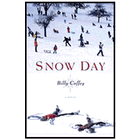
    Billy Coffey’s debut novel Snow Day, published by Hachette Book Group’s FaithWords, is featured this week on the CFBA Tour. A one-day read, this novel qualifies as literary fiction with a down-home southern feel to it.


    Snow Day uses the kind of emotional imagery and thoughtful language which causes literary lovers to gather in a collective swoon. Particularly female literary lovers. If you visit Billy’s blog, you will notice the majority of comments are from the feminine gender as are most of the back cover endorsements for the book. This isn’t to suggest that men won’t relate to Billy’s story since it’s told from the first person male’s POV. It is to say that, in my opinion, those men who will read this novel might be classified as the “sensitive” types rather than macho men who seek adventure and action and less self-examination in their novel reading.


    Stripped down, Snow Day is a story about a 30-something man who faces a mid-life crisis. He’s nothing like he thought he would be when he projected his future from the limited insights of a high school senior. Although happily married with two young children, a boy and a girl, his dead-end job is on the verge of cutting him and others loose right before Christmas. A snow storm rushes into his small town in Virginia, and he decides to take an “emergency snow day” because he doesn’t want to have to go to the factory to find out he’s being laid off.


    More of a character and philosophical study with Christian overtones and/or a devotional-flavored account than a true novel, Billy provides several entertaining and poignant pictures and observations of characters in his little corner of the world while revealing his character’s (Peter Boyd) fears, dissections of personal worth, and the mental avenues he’s traveled to arrive at his assessments of his life along the way.


    The story begins at the start of the snow day with the heaviness of potentially losing his job as the catalyst for the soul searching which takes place throughout the day, and it ends with an epilogue which gives the reader a positive conclusion to this man’s journey.


    Making honest evaluations of his manly motives and admitting his clumsy mistakes and failures in observations, his endearing character Peter Boyd typifies a relatively young man taking stock of his lifetime achievements and, using a standard invented by others in this world, he comes up pitifully short. Maintaining that small town atmosphere in his adventures and remaining within his emotional landscape throughout his snow day, Peter manages some clarity by the time it’s over.


    I can’t help but wonder why FaithWords chose to release Snow Day now when it might’ve been more effectively marketed in mid-to late November and December during the Christmas season (when it actually takes place) for shoppers seeking a quaint little story to give as gifts to those who might read a short novel which is long on thoughtful prose.


    568265


    http://www.amazon.com/exec/obidos/ASIN/0446568260


    Father, you know Billy’s heart and soul. Keep leading him forward to the places you have for him to go and supply the stories along the way. In the Name of Jesus, Amen.

  •  

    Be very careful, then, how you live—not as unwise but as wise, making the most of every opportunity, because the days are evil.


    Ephesians 5:15-16 (NIV)

  •  

    Saturday Michael and I will meet for lunch with Kirk, who I met at this year’s local conference in May, and his wife Patty. I met Kirk sitting next to him at an editor appointment. He claims he’s not outgoing, but he’s clever, funny, and serious about writing, and he let me sit with him at a table during one of the idle times. We hit it off and became writerly friends. This’ll be the first time we’ve gotten together since the conference, and no doubt it’s going to be fun.


    In the queue to be reviewed: Snow Day by Billy Coffey; Don’t Look Back by Lynette Eason


    Can’t wait to read: Chris Fabry’s latest Almost Heaven; Randy Singer’s Fatal Convictions


    We have a new dog. The lady who raised him has been diagnosed as terminal, and she wanted to find him a good home. He’s a German Shepherd, our personal favorites. He lived in a small apartment. It’s been major culture shock for him with our home and land, but he’s adjusting. Beautiful, just over a year old, still with a puppy mind—but smart. We’re grateful the connection was made from the other side of our state to us from a shop where Michael delivers product. We made a day trip three weeks ago Saturday to pick him up.


    I wish the elections were today.


    Father, you care for me and about me. I’m desperate for you. Day in and day out. Help me to be the one you want me to be. In the Name of Jesus, Amen.

  •  

    Editing. Like any other part of publishing, there are a multitude of editors and editorial opinions as to what makes good writing and how exactly to transform your mediocre words into a potential masterpiece. Forgive the exaggeration. No one doubts the benefits of a good editor. Good being the operative word.


    I have some questions for editors. If you don’t favor a genre, i.e. romance, and you’re faced with a romance to edit, would you recuse yourself from the edit? I would have a difficult time even reading fantasy, let alone having to trudge through corrections.


    If as an editor, you’re a Hemingway fan and your potential project is an unabashed saga writer such as James Michener, would you recuse yourself?


    What options are available to editors?


    Speaking from the writing end of the spectrum, I’d prefer to have an editor who actually prefers the genre of my stories.


    My friends Normandie Fischer, Sandi Rog, and Sally Bradley are editors, and Mick Silva now freelances. Would love to hear their input.


    Lord, thank you for all the many parts of your body. All the many parts that matter to you. Lead us all to those places where you want us to go to do those things you want us to do. In the Name of Jesus, Amen.

  •  

    There’s nothing quite like determining to write a novel—and then actually doing it. I’m quite sure it’s easier for some than others. I can speak to my own endeavors and make observations garnered from those with whom I’ve spoken who are in the throes of writing their first novel or are anticipating doing that or who have gotten halfway or two-thirds through one and haven’t revisited the manuscript for . . . years. They still think about it, but they’ve either occupied their windows of writing time no matter how great or small with other things—like blogs and TV and the kids and the dog and reading or anything but that half-finished novel they haven’t even read in how long?


    I’m a testimony to the long hard march through the writing desert with that first novel. Those of you who’ve known me awhile remember the 8 and ½ year journey I took in composing my first novel. A direct “order” from the Lord Himself, (I no longer concern myself with the eye-rolling) I began it with a flourish, participating in the rapid unfolding of a story that quickly ascertained its own life right under my fingers as my pen (longhand) could barely keep up with the inspiration. And then . . . work, horses and racing (seven days a week), home-schooling a few years, lay ministry at church, etc. No writing. Not for big chunks of time. Then re-reading. Then writing some more. Then nothing but the same interferences. Some people get up early to do their dutiful writing, but when I got up at 4 AM to get to the track, there would be no “early” writing. Nor late. Anyway, you know the story.


    Writing your first novel takes the d-word. Discipline. And if you’ve never had to administer this action in writing form, it ain’t easy—for a lot of us. Sitting still and using whatever means the Lord has given us to construct story—be it outlines or the commonly referred to “seat-of-the-pants” methodology—either way, it’s a learning process that can only be experienced on-the-job so to speak. And since you can only discover your style and voice by trial and error no matter how many instructions you’ve received in classes or through other sources, there you sit with a story formed or forming in your head and only your fingers or dictation to get it into print matter. It sounds way too easy, doesn’t it?


    There’s also the learning of writing traits. I realized while into my second novel, which came much easier than the first, I would take breaks from the story. At first it’s a bit unsettling because I wondered if those “breaks” would once again move into months-long hiatuses. Nope. Just a time of refreshing. Not long. And then I raced back to the story. This is how the last five were written. However, 2009 was a vacation year for me from a completed novel. I’m not sure exactly why. I can tell you this, though. Getting back to novels eight and nine has been a rocky, slow-going, undisciplined endeavor. That’s me: if I let up on something . . . well, discipline doesn’t come dutifully like I hope it will. I have to force it into my life. Drive a stake in the ground and handcuff myself to it on a short leash.


    One of the reasons for this anomaly is the pleasure factor. When the story’s just beginning, it’s fun and exciting. When it’s ongoing, sometimes it’s rough. Sometimes we don’t hurry back to it after a “break” because we’re not used to listening to what some call “the muse”. We’ve tuned it out for so long, it’s actually annoying to be forced to listen even when we know we want to hear what it has to say. My inspiration for these stories is none other than the Holy Spirit. Period. I am completely idea-less without Him. So, even though I trust He will get my attention where it belongs in my writing world, I also recognize my stubbornness when it comes to disciplining myself in the novel realm. Shame on me.


    [Side note here for “new” readers: Just because I lay claim to the Holy Spirit as my inspiration does not mean my work is perfect. I write the words. He gives me the ideas, certain wonderful phrases and characters now and then, but He is not responsible for my failures. I am. The end result is on me. When I sense His pleasure with my effort, I know there’s a reason for me writing it. Even when I don’t know His plans.]


    I think this post is the beginning of a push on my part. I know the process—it’s working my way back to doing it. I love the characters and storylines in these two books. I need to catch the vision. Again. And again. Go. Do. It. Pray for me, will ya? And let me know if you need prayer for your writing endeavor(s) too.


    Father, you know me. Help me. I want to obey. Give me something I need to press on. Please. In the Name of Jesus, Amen.